If you are thinking about travelling to India for Ayurveda treatment, you are in good company, and the journey is far easier to plan than it first appears.
This complete guide is written for Australian patients and their families. It walks you through how Ayurveda works, which conditions people commonly seek it for, how to choose a trustworthy centre, what the visa and travel steps look like, what a typical programme feels like day by day, and how to prepare so that you arrive relaxed and ready to benefit.
Quick Facts - Ayurveda Treatment in India for Australian Patients
| Topic | Summary |
|---|---|
| Visa options | Ayush visa (AY-1 patient, AY-2 attendant) or e-Medical visa |
| Departure cities | Sydney, Melbourne, Brisbane and Perth |
| Time difference | India is 4.5 hours behind India on the east coast outside daylight saving, 5.5 hours behind when daylight saving applies in the southern states, and about 2.5 hours behind in Perth |
| Typical stay | 7, 14, 21 or 28 days |
| Regulator | National Commission for Indian System of Medicine (NCISM) |
| Insurance | Elective Ayurveda abroad is generally not covered; confirm with your plan |
| Electricity | 230V, with Type C, D and M sockets |
What is Ayurveda, and why are Australian travellers choosing it?
Ayurveda, which means the science of life, is a system of medicine that has been practised in India for thousands of years. It looks at the whole person: your digestion, sleep, stress, daily rhythm, diet and the way your body responds to the seasons. Rather than focusing on one symptom in isolation, an Ayurvedic physician asks what is out of balance, and then builds a plan around you.
For many Australian travellers, the appeal is time and attention. A first consultation in India often lasts an hour or more, and treatment is usually delivered as a residential programme, so that therapies, meals, rest and gentle movement all work together. People often describe returning home feeling lighter, calmer and more in tune with their own habits.
Ayurveda is also a recognised, regulated system in India. The government supports it through the Ministry of Ayush, and practitioners are registered under the National Commission for Indian System of Medicine (NCISM). That framework matters, because it gives you something concrete to look for when you choose a centre.
The core ideas, in plain language
You do not need to study Sanskrit to benefit from Ayurveda, but a few ideas will help you follow your doctor's advice.
- The three doshas. Vata, pitta and kapha describe broad patterns of movement, warmth and structure in the body. Your physician looks at which are strong or unsettled in you.
- Agni, or digestive fire. Good digestion is central to health in Ayurveda, which is why diet advice is such a big part of any programme.
- Prakriti, your natural constitution. Your doctor considers your lifelong tendencies alongside your current condition.
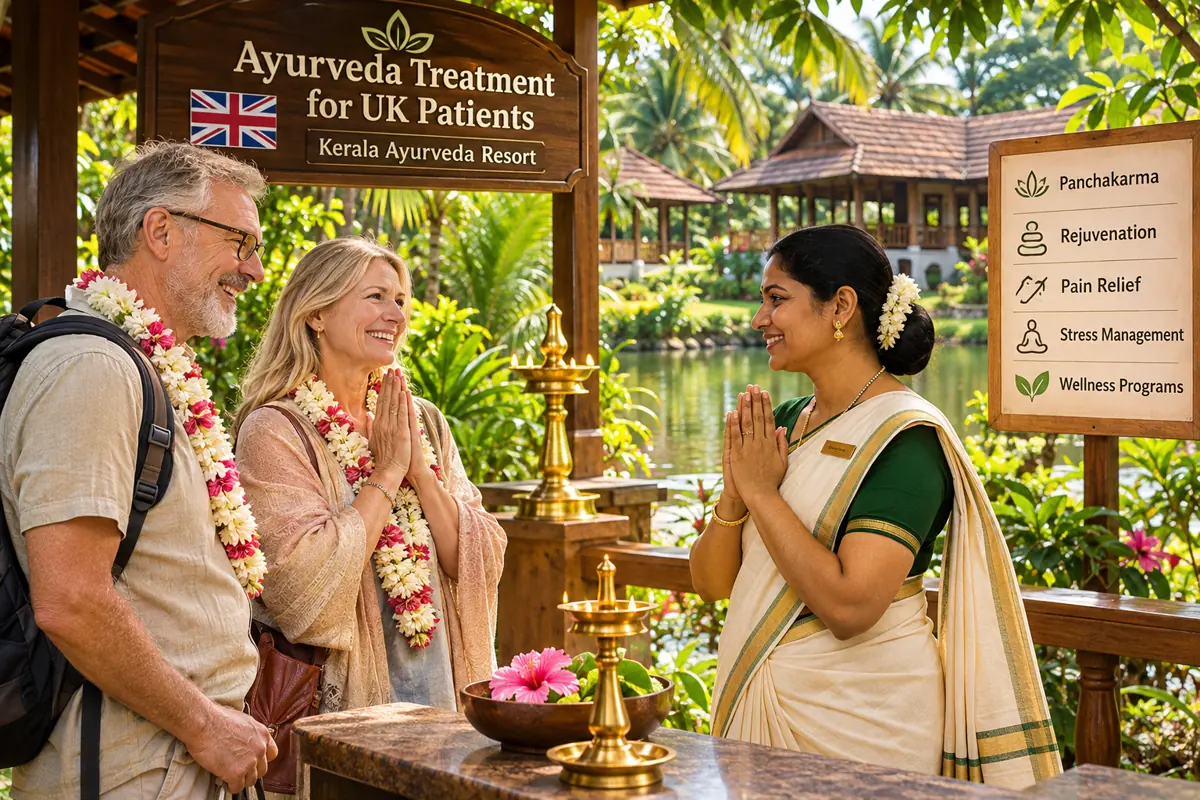
- Panchakarma. A set of cleansing and rejuvenating therapies, tailored to the person, that many residential programmes are built around.
- Dinacharya and ritucharya. Daily and seasonal routines that you can carry home with you.
Common reasons people travel for Ayurveda
People come with many goals, and an honest centre will tell you clearly what Ayurveda can and cannot help with. Commonly, guests seek support for:
- Joint and musculoskeletal comfort, including back, neck and knee concerns.
- Stress, sleep and general wellbeing.
- Digestive health and metabolic balance.
- Skin concerns.
- Recovery and rejuvenation after a demanding period, or a yearly seasonal reset.
- Lifestyle and weight support, combined with diet and gentle activity.
Ayurveda is a complementary approach. It works best alongside, not instead of, the care you receive from your own doctor, and a good Ayurvedic physician will say so openly. If you have a diagnosed condition, let your regular doctor know about your plans before you go.
Step 1: Start with a conversation
The most reassuring first step is simply to talk with an Ayurvedic physician before you commit to anything. Many centres offer an online consultation where you can describe your health history, share your goals and ask all of your questions. It is also an opportunity to get a feel for whether the doctor listens, explains clearly and sets realistic expectations.
India is 4.5 hours behind India on the east coast outside daylight saving, 5.5 hours behind when daylight saving applies in the southern states, and about 2.5 hours behind in Perth, so video calls work best at mid-morning to early evening in Australia, which is early to late morning in India. A little scheduling flexibility on both sides goes a long way.
Step 3: Choose a centre you can trust
India has centres of every kind, from small family-run clinics to large hospitals and resort-style retreats. A few questions will help you find one you can rely on.
- Qualified doctors. Are the physicians registered Ayurvedic doctors (a BAMS degree or higher) with a registration you can verify?
- Recognised accreditation. In India, look for NABH accreditation or Ministry of Ayush recognition, and ask whether the centre follows national guidelines.
- Clear, personalised plans. Does the doctor tailor your programme, rather than offering one fixed package for everyone?
- Open communication. Will they answer questions before you travel, in clear English?
- Transparent information. Can they explain what each therapy involves, how long it takes and what to expect?
- Genuine guest feedback. Look for detailed accounts from past international guests.
A trustworthy centre is delighted when you ask these questions. Take your time, and trust your instincts about who makes you feel most at ease.
Step 4: The visa, made simple
Australian patients can travel to India for treatment using either of two online routes, depending on the eligibility of their passport. The first is the Ayush visa, a category introduced for people seeking treatment under Indian systems of medicine, with AY-1 for the patient and AY-2 for an attendant. The second is the e-Medical visa, which is applied for on the official Indian e-Visa portal. Your treatment centre will usually guide you to the category it prefers.
In both cases you will typically need a letter from your Indian centre confirming your treatment dates, your passport details and photograph, a return or onward ticket and proof of funds. The e-Medical visa is valid for 60 days from first arrival with triple entry, and it is non-extendable, so choose your dates inside that window. Our step-by-step guide to the India e-Medical visa for Australian citizens covers each stage in detail, and it is worth applying a few weeks ahead so there is no rush.
Visa rules and fees are set by the Government of India and can change, so always check the official portal for the latest requirements.
Step 5: Flights from Sydney
Connecting itineraries via Singapore, Kuala Lumpur or the Gulf typically take 14 to 20 hours of flying time, and some routes run via Delhi or Chennai. Most guests plan to arrive at a designated e-Visa airport, and routes commonly run via Singapore, Kuala Lumpur, Bangkok, or a Gulf hub such as Doha, Dubai or Abu Dhabi. Book flights after your visa is approved, and aim to land a day before your programme starts so you can rest. Our flights guide for Australian patients describes routes and comfort tips.
What does Ayurveda treatment actually feel like?
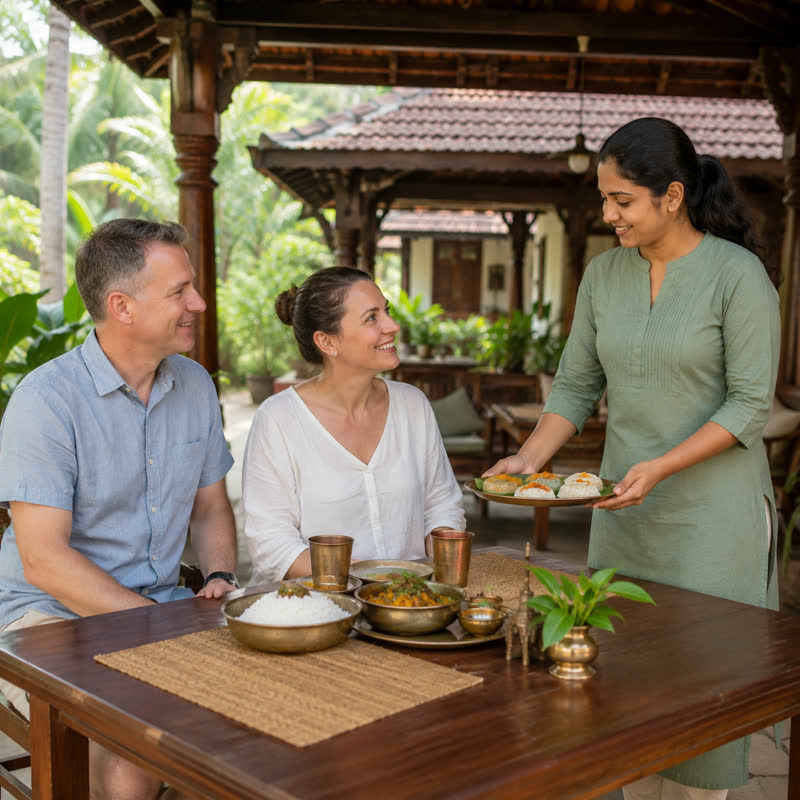
Most residential programmes follow a gentle daily rhythm. You wake early, perhaps with a herbal drink, have a consultation with your physician, and then receive your therapies in the morning. These often include warm herbal oil massage, steam therapy and other treatments chosen specifically for you. Meals are fresh, simple and freshly cooked to support your plan. Afternoons are for rest, reading, a short walk or yoga and meditation. Evenings are quiet, and early nights help your body settle.
- Abhyanga: a rhythmic, warm oil massage.
- Shirodhara: a continuous, soothing stream of warm oil over the forehead, loved for its calming effect.
- Swedana: herbal steam to relax the body.
- Basti and other panchakarma therapies: prescribed by your doctor only when they suit you.
- Yoga, pranayama and meditation: gentle practices you can continue at home.
Your physician reviews your progress throughout your stay and adjusts your plan as you respond. Most guests find that the slow pace, the nourishing food and the daily care are as restorative as the therapies themselves.
How long should you stay?
The right length depends on your goals, your health and your schedule. Typical programmes are:
| Programme length | Who it often suits |
|---|---|
| 7 days | A gentle introduction, or a rejuvenation break |
| 14 days | A balanced programme suited to many first-time guests |
| 21 days | A deeper programme with more time between therapies |
| 28 days | A full panchakarma-style course for those who wish to go further |
Your Ayurvedic physician will recommend a length after reviewing your history.
Is it safe? Quality, regulation and good habits
Ayurveda has a long record in India, and national regulation is steadily strengthening. The NCISM sets education and practice standards, and the Ministry of Ayush promotes quality and research. For your own peace of mind, a few good habits make the experience even smoother.
- Share your complete medical history and all medicines with your Ayurvedic doctor, and your own doctor at home.
- Ask what each herbal medicine contains, and keep a list of what you are given.
- Take any prescribed medicines as usual unless your doctors advise otherwise together.
- Let your centre know about allergies, pregnancy or planned procedures.
- Choose registered, accredited centres and ask to see credentials.
When you plan well and communicate openly, Ayurveda in India is a deeply positive experience for most guests.
Understanding costs and insurance
Costs vary with the type of centre, the length of your stay, your room, your therapies and the season. It helps to budget for four areas:
- Your programme: consultation, treatments, meals and accommodation.
- Flights and your visa.
- Travel insurance, which many guests choose for peace of mind.
- Local transfers, personal spending and any sightseeing you would like to enjoy.
Medicare generally does not pay for treatment received outside Australia, and it does not usually cover elective treatment by Ayurvedic practitioners. Private health insurance extras policies sometimes include natural therapies in Australia, but those benefits generally apply to care here, not abroad. Ask your fund directly and ask for the answer in writing. Ask your centre to explain what is included in the price it gives you, so there are no surprises. Our guide to insurance and Ayurveda treatment abroad describes the options.
Practical tips for a smooth stay
- Jet lag. Arrive a day early, get outdoor light, drink water and keep the first day easy.
- Phone and internet. A local SIM or an international plan keeps you connected. Ask your centre about wifi.
- Food. Your centre will cook to your plan. Away from the centre, choose freshly cooked food and bottled or filtered water.
- Packing. Light, loose cotton clothes, comfortable sandals, a light jacket for air-conditioned rooms, sun protection and any usual medicines in original packaging.
- Electricity. Australian plugs are Type I and India uses 230V with Type C, D and M sockets, so a universal adapter will keep you powered up.
- Money. Carry a card that works internationally and a small amount of local currency.
- Weather. Kerala is warm and humid for much of the year, with a monsoon season that many guests find especially beautiful and well suited to treatment.
Bringing a family member or friend
Many guests travel with a spouse, relative or friend. Companions can apply for an attendant visa (AY-2, or an e-Medical Attendant visa), and most centres can arrange a twin room or nearby accommodation. A companion can join some activities, such as yoga and meals, and can enjoy local sights while you rest.
Common misconceptions, gently cleared up
| Misconception | The reality |
|---|---|
| Ayurveda is only massage | Massage is one part. Diet, herbal medicine, routine and yoga are equally important |
| It is only for older adults | Guests of all ages come for rest, recovery and prevention |
| Treatment is the same for everyone | A good physician personalises your plan to your constitution and goals |
| It replaces my doctor | It is complementary and best used alongside your usual care |
| India is too far or too complicated | With a visa and one connecting flight, many guests find it easier than expected |
Pre-departure checklist
- Consultation completed and programme dates agreed.
- Medical reports shared and your treatment plan reviewed.
- Visa approved and printed, passport valid for six months with two blank pages.
- Flights booked to a designated entry airport.
- Travel insurance arranged.
- Airport pickup and accommodation confirmed.
- Usual medicines packed in original packaging, with a doctor's note if you wish.
- Adapter, light clothing, comfortable shoes and sun protection packed.
- Your own doctor informed of your plans.
Choosing the season
Many Australian travellers plan their stay around the Australian winter and spring, when India is cooler and drier, with the cooler months from November to February especially popular. Kerala is warm all year, and each season has its own charm. The monsoon is traditionally prized for treatment, with cooler air and a green, peaceful landscape, while the winter months are brighter and drier.
Planning around time zones and daily life
A little scheduling goes a long way. India is 4.5 hours behind India on the east coast outside daylight saving, 5.5 hours behind when daylight saving applies in the southern states, and about 2.5 hours behind in Perth, so it helps to agree on call times with your centre early. Before you leave, arrange for someone to collect your mail, tell your bank you are travelling, and let your employer know how reachable you will be. Many guests set a simple routine of one short call home each day.
Leave a day or two of flexibility on either side of your programme. Arriving early lets you rest, and a gentle day before flying home helps you return refreshed rather than rushed.
How MyVaidyam can support you
MyVaidyam supports international patients at every stage of the journey, so you never have to plan alone.
- An online consultation with an Ayurvedic physician to discuss your goals and questions.
- Help reviewing your medical reports and preparing them for the doctor.
- Guidance in choosing an accredited treatment centre that suits you.
- Support with your visa documents, including coordination of your hospital letter.
- Advice on flights, airport pickup and accommodation.
- A friendly point of contact during your stay, and follow-up after you return home.
You are welcome to reach out at any stage with questions.