This guide compares the two gently and respectfully, so that you know what to expect when you move from naturopathy at home to Ayurveda in India.
Quick Facts - Ayurveda vs Naturheilkunde
| Topic | Summary |
|---|---|
| Origin | Ayurveda: India, thousands of years; Naturheilkunde: European traditions including Kneipp, phytotherapy and hydrotherapy |
| Training in India | BAMS degree (Bachelor of Ayurvedic Medicine and Surgery) and higher degrees |
| Regulation in India | National Commission for Indian System of Medicine (NCISM); Ministry of Ayush |
| Typical format | Residential programmes with consultation, therapies, diet and rest |
| Common ground | Whole-person approach, diet, rest and natural remedies |
| Best use | Complementary to the care of your own doctor |
How Ayurveda is organised in India
In India, Ayurveda is a formal medical system. Doctors study for a BAMS degree and may continue to a master's or doctorate, practitioners register with state and national bodies, and the National Commission for Indian System of Medicine (NCISM) sets standards for education and practice. The Ministry of Ayush promotes the system and research. This framework gives you concrete things to ask a centre about.
How naturopathy is organised at home
In Germany, Naturheilkunde is practised by a variety of professionals: doctors who have added naturopathic training, and Heilpraktiker, who practise under a separate legal framework. Because titles and training differ, German patients are used to asking about qualifications, and that same habit serves you well in India.
What is similar
- A thorough conversation about your history, habits and lifestyle.
- Emphasis on diet, digestion, movement, rest and stress.
- Plant-based remedies and gentle physical therapies.
- A focus on prevention and long-term balance.
What feels different in India
- Residential programmes. Many guests stay several weeks, with therapies, meals and rest organised around the plan.
- Oil-based therapies and panchakarma. Warm oil massage, herbal steam, shirodhara and related treatments are central.
- Individual constitution. The doctor considers your doshas and prakriti when planning diet and medicines.
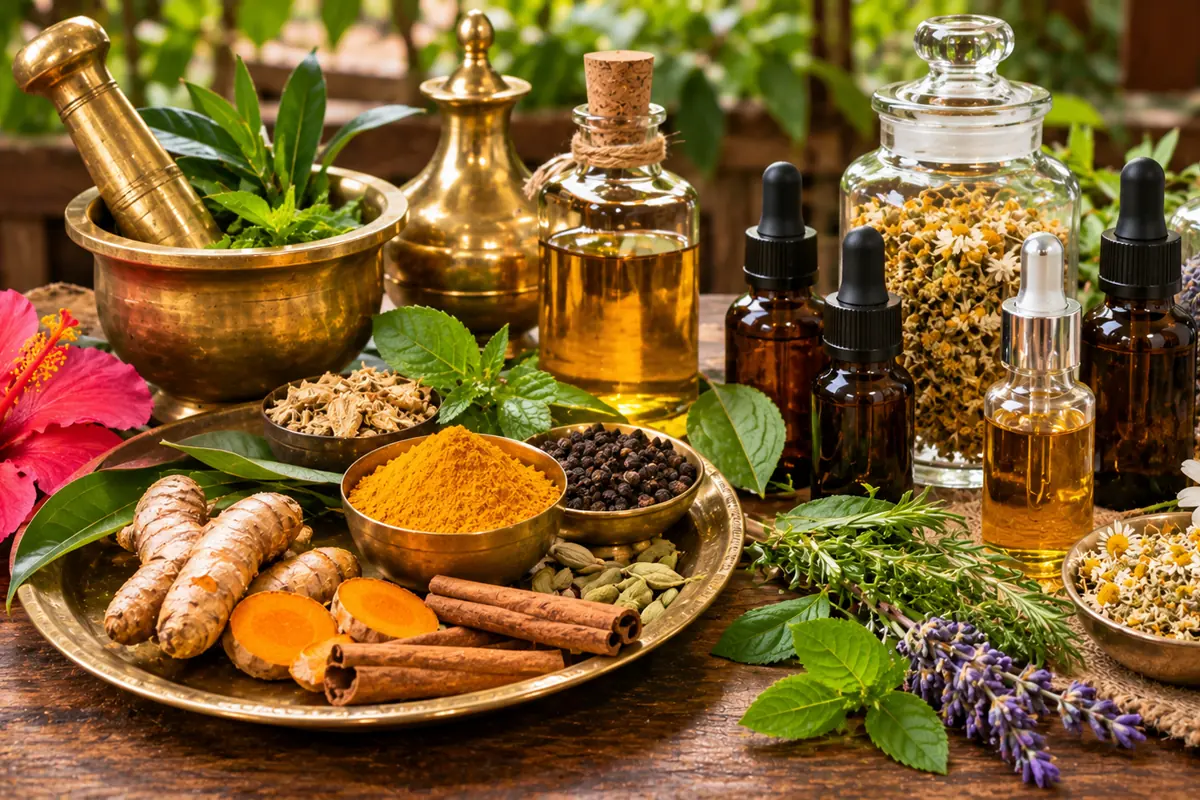
- Ayurvedic medicines. Herbal preparations are prescribed in forms such as powders, decoctions, oils and tablets.
- Daily rhythm. Early rising, regular meals and early nights are part of the treatment.
Comparing the two at a glance
| Aspect | Comparison |
|---|---|
| Origin | Ayurveda: India; Naturheilkunde: European traditions |
| Practitioners | Ayurveda in India: registered doctors with BAMS or higher; Germany: doctors with naturopathic training and Heilpraktiker |
| Setting | Ayurveda: often residential programmes; Naturheilkunde: usually outpatient or spa-style |
| Remedies | Ayurveda: herbal formulations, oil therapies, diet; Naturheilkunde: phytotherapy, hydrotherapy, diet |
Using both well
Many German guests find the two complement each other. You might continue Kneipp-style habits and a plant-based diet at home, and use an Ayurvedic stay for a deeper reset. Tell your doctors at home and in India about each other, so that nothing you take or do overlaps.
Questions to ask your Ayurvedic doctor
- How will you personalise my programme?
- Which of my existing habits, such as herbal teas or supplements, fit with your plan?
- How should I coordinate with my own doctor or Heilpraktiker?
- What should I continue at home?
Safety and good habits
Share your complete medical history and all medicines and supplements with the Ayurvedic doctor, ask what each herbal preparation contains and keep a list. Your own doctor should know your plans, particularly if you take prescription medicines.
Kur and Ayurveda
Guests used to a German Kur may find Ayurveda's residential programmes pleasantly familiar: a structured stay, daily treatments, regulated meals and time in nature. The therapies and the philosophy behind them are different, which is part of the interest.
Diet in each tradition
Both traditions value freshly prepared, plant-rich food. Ayurveda adds guidance on warmth, spices and meal timing according to your constitution and the season.
Herbs and plants
Many familiar herbs have counterparts in both traditions, but the formulations and combinations differ. Always ask what is in a preparation and share it with your doctor.
Language and communication
Ask centres about their language support, and prepare a medical summary in English. A clear written plan helps your own doctor at home too.
Keeping an open mind
Come with curiosity, ask questions and notice how your body responds. Most guests find that the combination of attention, food and rest is the heart of the experience.
A few words on pacing
Many guests are surprised by how much the unhurried pace helps. Treat the first few days as a time to settle in rather than to achieve anything, and let the routine of meals, rest and treatment do its quiet work.
Staying connected with home
A local SIM or an international plan makes it easy to message family and share photos. A short daily call home is often enough to keep loved ones reassured and lets you enjoy the rest of your time fully present.
Keeping a simple journal
A few lines each evening about your sleep, digestion, energy and mood help you notice changes, and they give your physician useful detail at your next review. They also make a lovely record of your stay.
Dressing for comfort
Light cotton clothing in soft colours, comfortable sandals and a thin shawl or jacket for air-conditioned rooms suit most programmes. Your centre can tell you whether treatment robes are provided.
Asking questions freely
Good care is a conversation. Ask your physician to explain each treatment, the reason for each medicine and what to expect. A caring doctor will welcome your curiosity and adjust the explanation to what is most helpful for you.
Rest is part of the treatment
Early nights, a quiet afternoon and time outdoors are not extras; they are part of the plan. Give yourself permission to rest without guilt, and let your body settle into the rhythm of the programme.
Choosing a comfortable room
When you discuss accommodation with your centre, mention any needs such as a quiet room, ground-floor access or a bathroom with a shower stool. Small details make a big difference to comfort during your stay.
Looking forward to home
Think ahead to how you will carry your routine home. Even two or three habits, such as warm morning water, a regular dinner time and a short evening walk, can keep the benefits going long after the trip.
How MyVaidyam can support you
MyVaidyam is happy to help German guests understand what to expect from Ayurveda in India.
- An online consultation with an Ayurvedic physician.
- Help preparing your medical summary and questions.
- Guidance on choosing an accredited centre.
- Visa, travel and arrival support, and follow-up after you return.
You are welcome to reach out at any stage with questions.