This guide explains the Ayurvedic view, what a stay typically includes and how to plan with confidence. Ayurveda is offered as a complementary, supportive approach alongside your own doctor's care, never a replacement for it.
Quick Facts - Digestive Disorders and IBS
| Topic | Summary |
|---|---|
| NCCIH overall (IBS) | Evidence for complementary approaches is weak to mixed |
| Gut-directed hypnotherapy | Comparatively encouraging evidence |
| Peppermint oil (enteric-coated) | Modest short-term relief; trials conflict |
| Probiotics | Not conclusively shown; ACG 2021 recommends against them for global symptoms |
| Herbal remedies | Mostly weak studies; undisclosed ingredients are possible |
| Ayurvedic digestive programmes | No studies found; supportive only |
Understanding the gentler ways to feel better
Small things matter in long-term conditions: gentle daily movement, regular sleep, calm routines, warm nourishing meals and company. A residential stay brings these together in one unhurried programme, and many guests carry several of them home.
Understanding IBS
Irritable bowel syndrome is a common condition of abdominal pain and changing bowel habits. NCCIH reviewed complementary approaches and found evidence weak to mixed overall, with gut-directed hypnotherapy comparatively encouraging, enteric-coated peppermint oil giving modest short-term relief in conflicting trials, and probiotics not conclusively shown to help.
What a stay offers
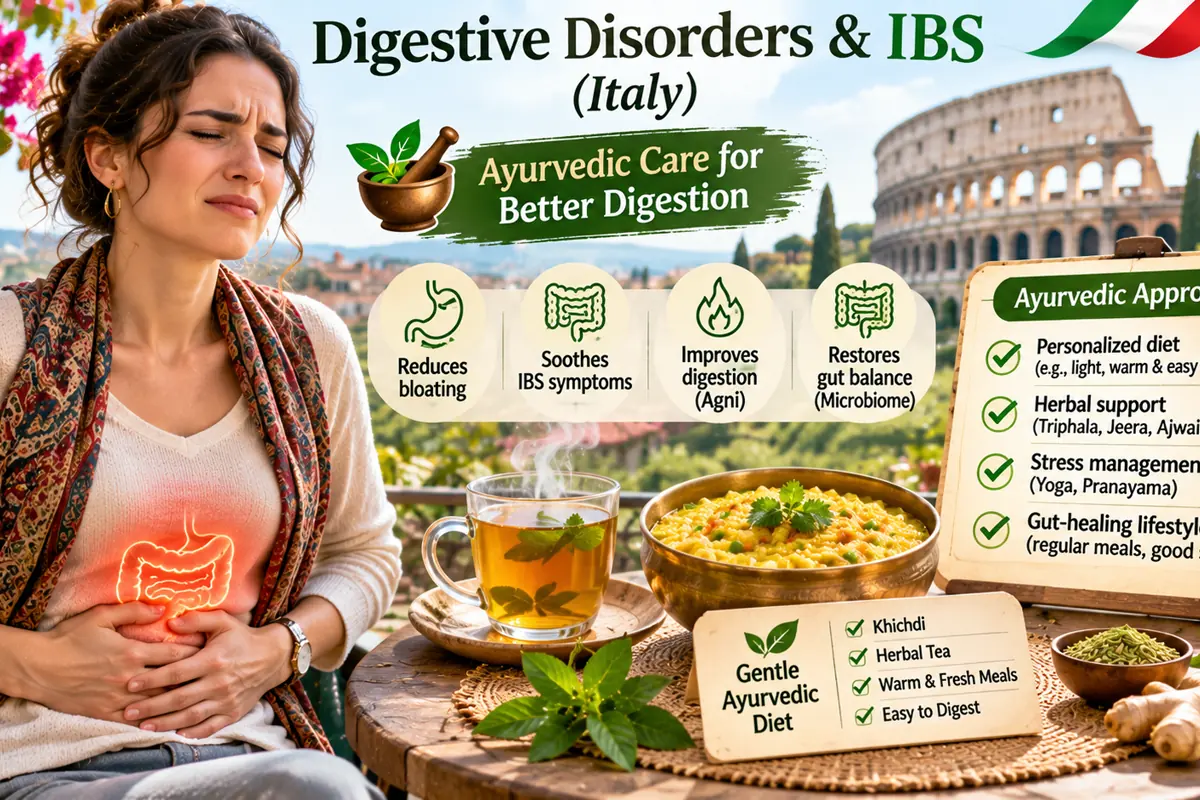
No studies of Ayurvedic digestive programmes were found, so we describe a stay as supportive. What it does offer is regular, warm, simply cooked meals, calm mealtimes, gentle movement, breathing practice and good sleep, which many people with IBS find comforting.
Food during a stay
Meals are simple and warm, with rice, lentils and cooked vegetables, and little raw or fried food. If you have food triggers, tell the kitchen in advance. Our guide to the Ayurvedic and Mediterranean diets explains what Italian guests can expect.
Herbal remedies and safety
NCCIH notes that herbal remedies for IBS are mostly supported by weak studies and that undisclosed ingredients are possible. Choose reputable manufacturers, ask for ingredient lists and share them with your doctor.
Coordinating with your Italian doctor
See your doctor first to confirm the diagnosis and rule out other causes, particularly if symptoms are new or changing. Share your plans and keep your prescribed treatment.
Making the most of a stay
Set a few simple goals with your doctor, bring your records and a notebook, and let the routine carry you. Rest is part of the programme, and so is asking questions. Many guests find the first week the hardest and the last week the most rewarding.
Cost and value
Costs depend on room, length, therapies, physician time and medicines. Ask for itemised, dated quotes for the same dates and inclusions from each centre, and add flights, visa and insurance. A clear quote is the foundation of a stress-free booking.
Visa, flights and timing
Most guests travel on an Indian e-visa suited to medical or wellness purposes, with a companion on an attendant visa. Check the official portal, plan flights that arrive at a comfortable hour and choose a season that suits you.
Keeping a simple diary
A small notebook is one of the most useful things to bring. Each evening, jot down how you feel, your sleep, your energy and anything you would like to ask. After a week or two the pattern often becomes clear, and you and the physician can fine-tune the plan. A few notes each evening help both your doctors. The same notes give your own doctor a helpful picture when you return.
Travelling comfortably
A little planning makes the journey smoother. Book an aisle seat so you can stand and stretch, keep your medicines and reports in your hand luggage, and choose a flight that arrives at a comfortable hour. Carry your medicines and a doctor's letter in your hand luggage, and keep your documents together. Ask the centre to arrange the transfer and a restful first day. Our guide to the attendant visa explains how a family member can travel with you.
Conversations to have before you travel
A short chat with your own doctor makes the stay smoother. Many guests ask:
- Are my medicines and plans up to date for the trip?
- How should I continue in the weeks after I return?
- Is there anything you would like the Ayurveda team to know?
- When would you like to see me after I return?
Sharing the answers with the Ayurveda physician helps the two teams work in step, and leaves you feeling confident and well supported.
Travelling with family or a companion
Many guests travel with a spouse, a friend or an adult child, and a companion can make the whole experience easier. Ask each centre whether companions can share your room or stay nearby, whether they can join meals, yoga and walks, and whether there is a pleasant place for them to relax while you have therapies. A companion can help with logistics, share the quiet days and keep your family informed. Our guide to the attendant visa explains the paperwork.
After you return
Many guests keep up a simple diet, an earlier bedtime and gentle daily movement for several weeks, and review their health with their own doctor. Ask the centre for a written summary of your programme, your diet and your exercises, and share it with your own doctor at your next visit. A follow-up video call with the physician a few weeks later is a good way to review how you are feeling. Our guide to continuing Ayurveda at home explains how to keep the benefits going.
Common questions
Do I keep my medicines? Yes, unless your own doctor advises otherwise. Can I ask for a written plan? Yes, and you should. Can a companion join me? Many centres allow it. Who advises me? Your Ayurvedic doctor with your own doctor.
Choosing a centre
Rather than looking for a ranking, compare what matters to you: a qualified Ayurveda physician, a clear assessment, a written day-by-day plan, hygiene standards, accessible rooms and good access to a hospital. Ask each centre the same questions:
- Who will be my physician, and what are their qualifications?
- Which parts of my plan have I discussed with my own doctor?
- How will you coordinate with my home doctor?
- How are herbal medicines sourced, and can I see the ingredient list?
- What does the quote include, and what is extra?
Preparing for your stay
Bring your reports and a list of food triggers, and keep taking prescribed medicines.
Planning your budget
Cost depends on room, length, therapies, physician time and medicines. Ask each centre for an itemised, dated quote for the same dates and inclusions, and add visa, flights, insurance and transfers. See the cost guide and verifying a doctor.
Travelling with confidence, and how MyVaidyam can help
- Share your reports and current medicines with the Ayurveda physician before you travel.
- Continue your prescribed medicines, and let your own doctor know your plans.
- Ask for ingredient lists for any herbal medicine, and choose labelled preparations.
- Plan rest after the flight so you can begin your stay comfortably.
- See your doctor first, and keep prescribed treatment.
MyVaidyam can arrange a free online pre-consultation, have your reports reviewed by an Ayurvedic physician and request day-by-day plans and itemised quotes from centres so you can compare them calmly. Contact MyVaidyam to book your free online consultation.
Frequently Asked Questions on Digestive Disorders and IBS
References
- NCCIH, US National Institutes of Health. Irritable bowel syndrome and complementary health approaches: what the science says
- NCCIH, US National Institutes of Health. 7 tips: irritable bowel syndrome and complementary health approaches
- NCCIH, US National Institutes of Health. Ayurvedic medicine: in depth
- Ministry of Ayush, Government of India. Official website