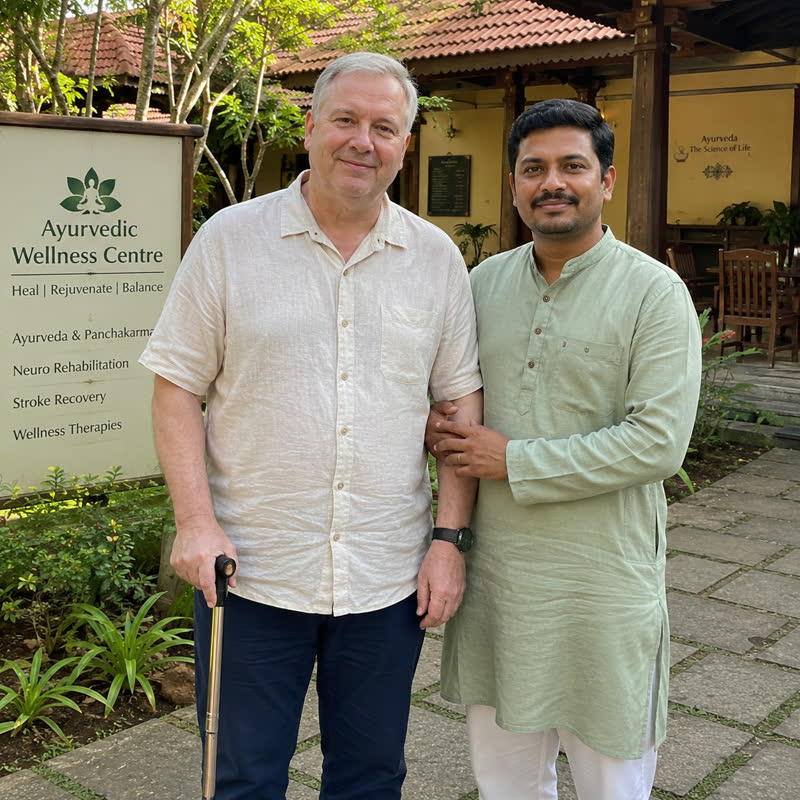
This guide explains how the attendant visa works, how to plan accommodation and daily life together and what Canadian guests commonly ask.
Quick Facts - Traveling with a Family Member
| Topic | Summary |
|---|---|
| Attendant visa | The e-Visa portal lists an e-Medical Attendant visa for those accompanying an e-Medical visa holder |
| How many | Two attendant visas can be granted against one e-Medical visa, per the portal |
| Validity | Check the figure shown on the portal for your visa before applying |
| Accommodation | Often a shared or adjoining room, or a separate room; ask in writing |
| Who benefits most | Guests who are frail, recovering or who would simply enjoy company |
| Canadian travellers | Check the Government of Canada travel advice for India before you go |
| Last checked | 26 October 2026; confirm on the official portal and with the Indian High Commission or consulate |
Why many Canadian guests travel together
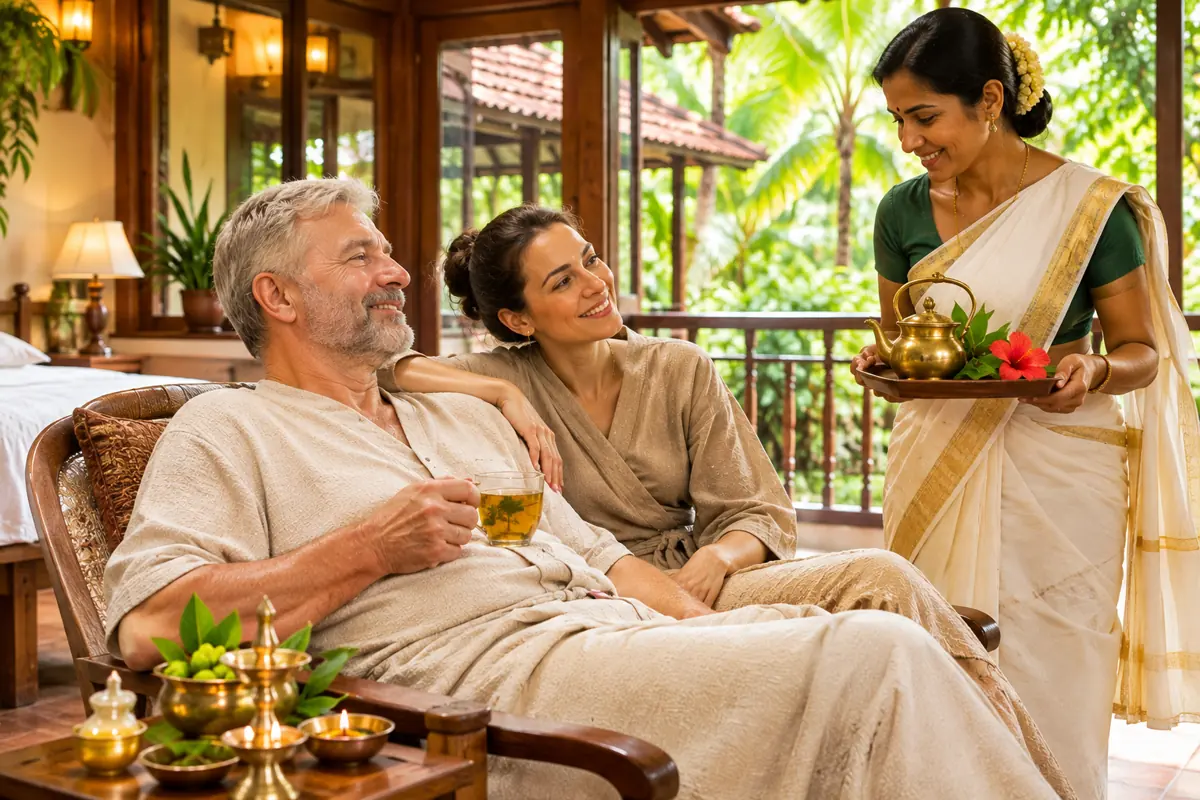
The journey from Canada is long, and a companion makes it easier: someone to share the flight, help with bags, remember questions and enjoy the experience with you. Companions are especially helpful for guests who are recovering, have limited mobility or would simply feel more at ease with familiar company.
How the attendant visa works
The official portal lists an e-Medical Attendant visa for those accompanying a patient who holds an e-Medical visa. Up to two attendants can be granted against one patient visa, and each applies separately with their own passport and photograph. Apply for the patient's visa first, then for the attendants, using matching dates.
Canadian passports and timing
Canadian citizens can check eligibility on the official portal and apply online, usually a few weeks before travel. Make sure each passport is valid for at least six months and has blank pages. If any passport is close to expiry, renew it before applying.
Accommodation for your companion
Centres commonly offer a shared or adjoining room, or a separate room. Ask for details about beds, bathroom, meals and whether the companion can join yoga or meals. Confirm everything in writing before you travel.
Daily life together
Companions often enjoy gentle walks, reading, yoga and local outings while the patient rests. Therapies and medicines are prescribed by the doctor for the patient only, so a companion who wants their own programme should have a consultation. Time together at meals and in the evening makes the stay memorable.
Flights and arrival from Canada
Book flights together so you arrive at the same time, and share your pickup details. Direct flights run from Toronto and Vancouver to Delhi and Mumbai, with onward domestic flights to Kerala; check current schedules. The time difference means the first day is best spent gently.
Insurance and documents
- Travel insurance for both travellers.
- Copies of both passports and visas.
- The hospital letter, return tickets and centre contact details.
- Your provincial health card is not valid in India, so check your coverage.
Questions to ask your centre
- What room options are there for a companion?
- Are meals included for the companion?
- Can the companion join yoga and activities?
- What help is available with transport and sightseeing?
Winter departures
Many Canadian guests travel in winter, when Kerala is warm and dry. Pack layers for cold airports at home and light cotton for arrival.
Language
English is widely spoken in Kerala's centres, and French-speaking guests can ask in advance whether a French speaker is available.
Electricity
Canada uses 120V and India 230V, so bring a universal adapter and check that devices are dual-voltage.
Planning rest days
Not every day needs an activity. Build quiet days so both of you can rest, and let the patient set the pace.
Staying in touch with home
Wifi at the centre and a local SIM make calls home easy. Agree a time that works across time zones.
Keeping receipts
Keep itemised receipts for both of you, which are helpful for budgeting and any enquiries later.
A few words on pacing
Many guests are surprised by how much the unhurried pace helps. Treat the first few days as a time to settle in rather than to achieve anything, and let the routine of meals, rest and treatment do its quiet work.
Staying connected with home
A local SIM or an international plan makes it easy to message family and share photos. A short daily call home is often enough to keep loved ones reassured and lets you enjoy the rest of your time fully present.
Keeping a simple journal
A few lines each evening about your sleep, digestion, energy and mood help you notice changes, and they give your physician useful detail at your next review. They also make a lovely record of your stay.
Dressing for comfort
Light cotton clothing in soft colours, comfortable sandals and a thin shawl or jacket for air-conditioned rooms suit most programmes. Your centre can tell you whether treatment robes are provided.
Asking questions freely
Good care is a conversation. Ask your physician to explain each treatment, the reason for each medicine and what to expect. A caring doctor will welcome your curiosity and adjust the explanation to what is most helpful for you.
Rest is part of the treatment
Early nights, a quiet afternoon and time outdoors are not extras; they are part of the plan. Give yourself permission to rest without guilt, and let your body settle into the rhythm of the programme.
Choosing a comfortable room
When you discuss accommodation with your centre, mention any needs such as a quiet room, ground-floor access or a bathroom with a shower stool. Small details make a big difference to comfort during your stay.
Looking forward to home
Think ahead to how you will carry your routine home. Even two or three habits, such as warm morning water, a regular dinner time and a short evening walk, can keep the benefits going long after the trip.
Take your time
There is no prize for rushing. Good decisions about travel and treatment are made calmly, with the facts in front of you and your questions answered. If something feels unclear, pause and ask.
Small habits that help
Keep one folder for every document, write down your questions as they arise, and set reminders for key dates. These tiny habits turn a long to-do list into an easy routine.
Asking for things in writing
Whenever a detail matters, such as dates, inclusions or arrangements, ask for it in a short written message. It protects everyone, avoids misunderstandings and gives you a record to refer back to.
Involving your family
Share your plans with someone at home, including your itinerary and your centre's contact details. Many people find that talking the plan through with family brings both reassurance and useful questions.
How MyVaidyam can support you
MyVaidyam is happy to help Canadian families plan a comfortable journey together.
- Guidance on the attendant visa and documents.
- Coordination of accommodation for you and your companion.
- Advice on flights from Canada and airport pickup.
- A friendly point of contact for both of you.
You are welcome to reach out at any stage with questions.