This guide covers attendant visas, accommodation, privacy in treatment, practical tips for women patients and questions to ask your centre.
Quick Facts - Traveling with Family and Female Patients
| Topic | Summary |
|---|---|
| Attendant visas | Up to two e-Medical Attendant visas per e-Medical visa, per the portal |
| Privacy | Privacy during examination and treatment is an expected standard at classified centres |
| Female therapists | Approved centres in Kerala are expected to have female masseurs available |
| Separate facilities | Treatment rooms and bathrooms for men and women |
| Women's helpline | 1091 (police 100, national emergency 112) |
| Rules for women travelling | Check Saudi travel rules and the Indian mission's guidance for your situation |
Travelling as a family
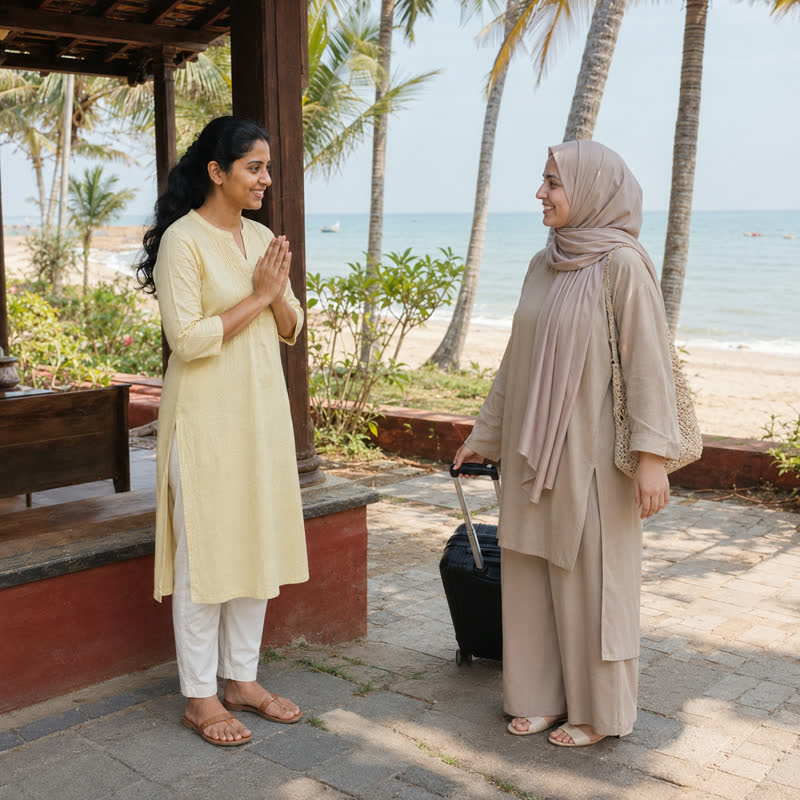
Families often travel together, with parents, spouses or adult children accompanying the patient. An e-Medical Attendant visa lets companions stay with you, and the official portal states that up to two can be granted against one patient visa. Each companion applies separately.
Attendants and accommodation
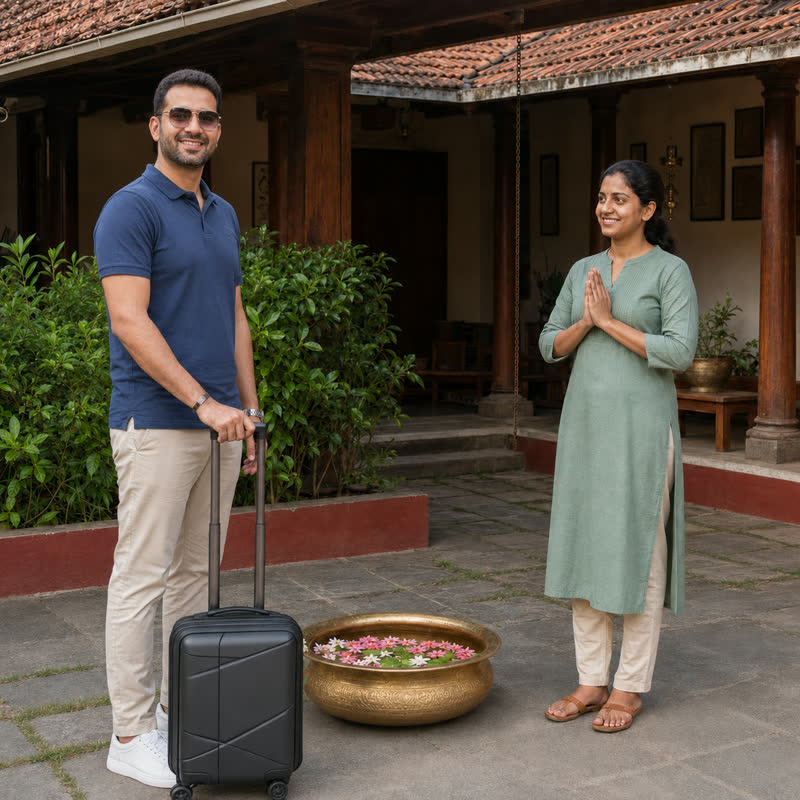
Many centres offer family rooms, adjoining rooms or nearby apartments. Ask about bed arrangements, bathrooms, meals for the family and whether the companion can join yoga. Confirm everything in writing before you travel.
Privacy and comfort in treatment
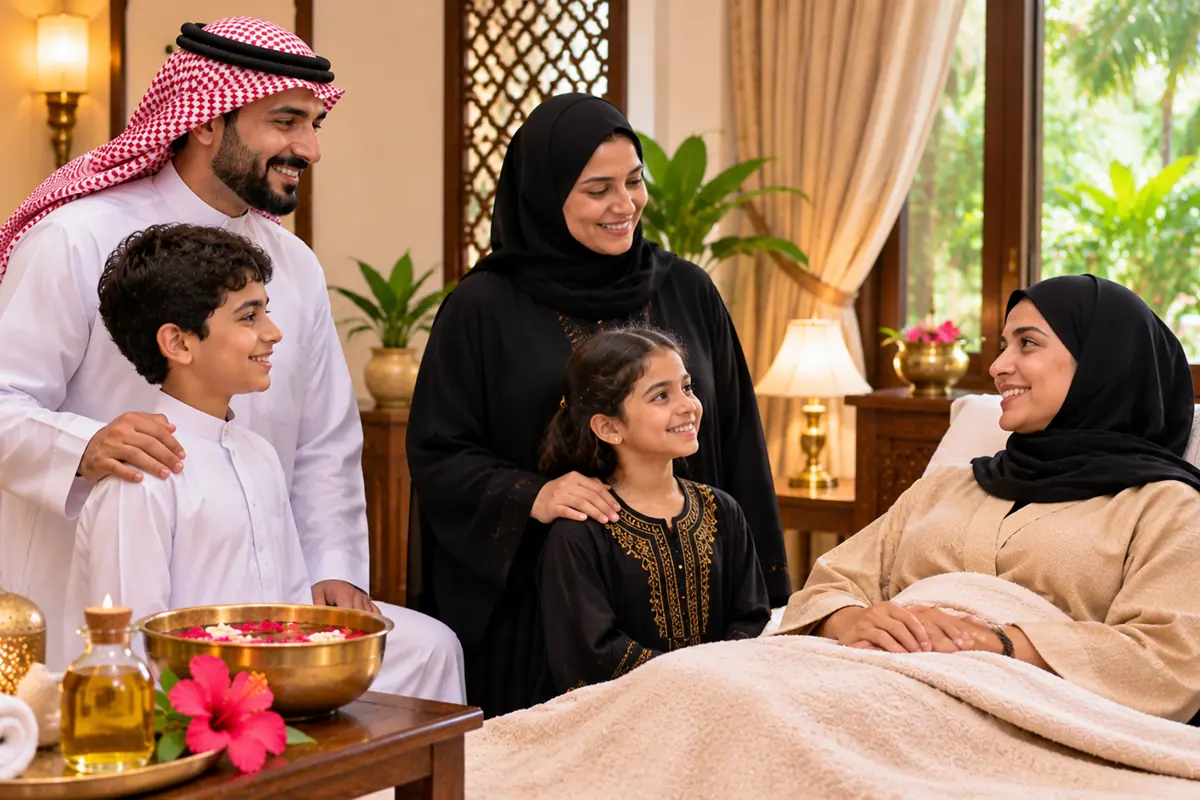
Privacy during examination and treatment is an expected standard for centres classified by Kerala Tourism, which also lists the availability of at least one female masseur and separate treatment rooms and bathrooms for men and women. Ask your centre to confirm exactly how this works for your treatment.
Practical tips for women patients
- Ask to be treated by a female therapist and a female doctor if you prefer.
- Ask about private changing areas and treatment rooms.
- Share your preferences with the centre before arrival.
- Bring modest, comfortable clothing and a shawl.
- Keep your companion's number handy.
Meals and daily life
Centres prepare freshly cooked vegetarian meals suited to your plan, and many are happy to accommodate dietary needs and preferences. Share these in advance so the kitchen can plan.
Getting around
Use pre-arranged drivers or app-based and pre-paid taxis, especially at night. Share your plans with the centre before going out and carry its address and phone number. India's national emergency number is 112, the police is 100 and the women's helpline is 1091.
Visa and flights from Saudi Arabia
Check the official Indian e-Visa portal for passport eligibility and requirements, and book flights to a designated airport after your visa is approved. Direct flights to Kerala are around four to five hours where available. Our guides to the e-Medical visa and to flights from Saudi Arabia explain more.
Questions to ask your centre
- Are female doctors and therapists available?
- How is privacy managed during treatment?
- What are the room options for family?
- Are halal and dietary preferences accommodated?
- What transport and pickup do you arrange?
Prayer and daily routine
Ask your centre about a quiet space for prayer and how treatment times can fit around your routine. Many centres are happy to adapt the schedule.
Language and communication
English is widely used, and some centres have Arabic speakers or translators. Ask in advance if that would help.
Clothing for comfort
Light, loose cotton clothing suits the warm, humid climate and is comfortable for treatments.
Travelling with children
If children join the family, ask about child-friendly accommodation and activities, and the centre's policies for young guests.
Staying in touch
A local SIM and the centre's wifi make calls home easy; the time difference is only 2.5 hours.
Planning rest days
Build gentle days into your plan so everyone can rest, and let the patient set the pace.
A few words on pacing
Many guests are surprised by how much the unhurried pace helps. Treat the first few days as a time to settle in rather than to achieve anything, and let the routine of meals, rest and treatment do its quiet work.
Staying connected with home
A local SIM or an international plan makes it easy to message family and share photos. A short daily call home is often enough to keep loved ones reassured and lets you enjoy the rest of your time fully present.
Keeping a simple journal
A few lines each evening about your sleep, digestion, energy and mood help you notice changes, and they give your physician useful detail at your next review. They also make a lovely record of your stay.
Dressing for comfort
Light cotton clothing in soft colours, comfortable sandals and a thin shawl or jacket for air-conditioned rooms suit most programmes. Your centre can tell you whether treatment robes are provided.
Asking questions freely
Good care is a conversation. Ask your physician to explain each treatment, the reason for each medicine and what to expect. A caring doctor will welcome your curiosity and adjust the explanation to what is most helpful for you.
Rest is part of the treatment
Early nights, a quiet afternoon and time outdoors are not extras; they are part of the plan. Give yourself permission to rest without guilt, and let your body settle into the rhythm of the programme.
Choosing a comfortable room
When you discuss accommodation with your centre, mention any needs such as a quiet room, ground-floor access or a bathroom with a shower stool. Small details make a big difference to comfort during your stay.
Looking forward to home
Think ahead to how you will carry your routine home. Even two or three habits, such as warm morning water, a regular dinner time and a short evening walk, can keep the benefits going long after the trip.
Take your time
There is no prize for rushing. Good decisions about travel and treatment are made calmly, with the facts in front of you and your questions answered. If something feels unclear, pause and ask.
Small habits that help
Keep one folder for every document, write down your questions as they arise, and set reminders for key dates. These tiny habits turn a long to-do list into an easy routine.
Asking for things in writing
Whenever a detail matters, such as dates, inclusions or arrangements, ask for it in a short written message. It protects everyone, avoids misunderstandings and gives you a record to refer back to.
Involving your family
Share your plans with someone at home, including your itinerary and your centre's contact details. Many people find that talking the plan through with family brings both reassurance and useful questions.
Checking official sources
Rules, schedules and portals can change. A quick look at the relevant official website shortly before you act is the simplest way to keep your information current.
Trusting your instincts
If an arrangement feels rushed, vague or too good to be true, step back and ask more questions. Genuine centres welcome careful, informed guests.
How MyVaidyam can support you
MyVaidyam is happy to help families plan a comfortable, private and well-organised stay.
- Guidance on attendant visas and travel documents.
- Help choosing centres with the facilities and privacy you prefer.
- Coordination of family accommodation and airport pickup.
- A friendly point of contact before and during your stay.
You are welcome to reach out at any stage with questions.