This guide sets out the strengths of each, so that you can choose with confidence.
Quick Facts - Should You Book Directly or Through a Medical Tourism Advisor?
| Topic | Summary |
|---|---|
| Direct | More control, more work |
| Advisor | Help comparing and coordinating |
| Quality | Varies among advisors and centres |
| Safety | Verified doctors, clear terms |
| Always | Written plan and confirmations |
Two sensible routes
Booking directly means you talk to the centre yourself. Using an advisor means someone helps you compare options and coordinate details. Neither route is better in itself.
Booking directly
- You speak with the centre and the doctor yourself.
- You manage visa, flights and arrangements.
- It suits people who enjoy planning.
- You need to verify details yourself.
Using an advisor
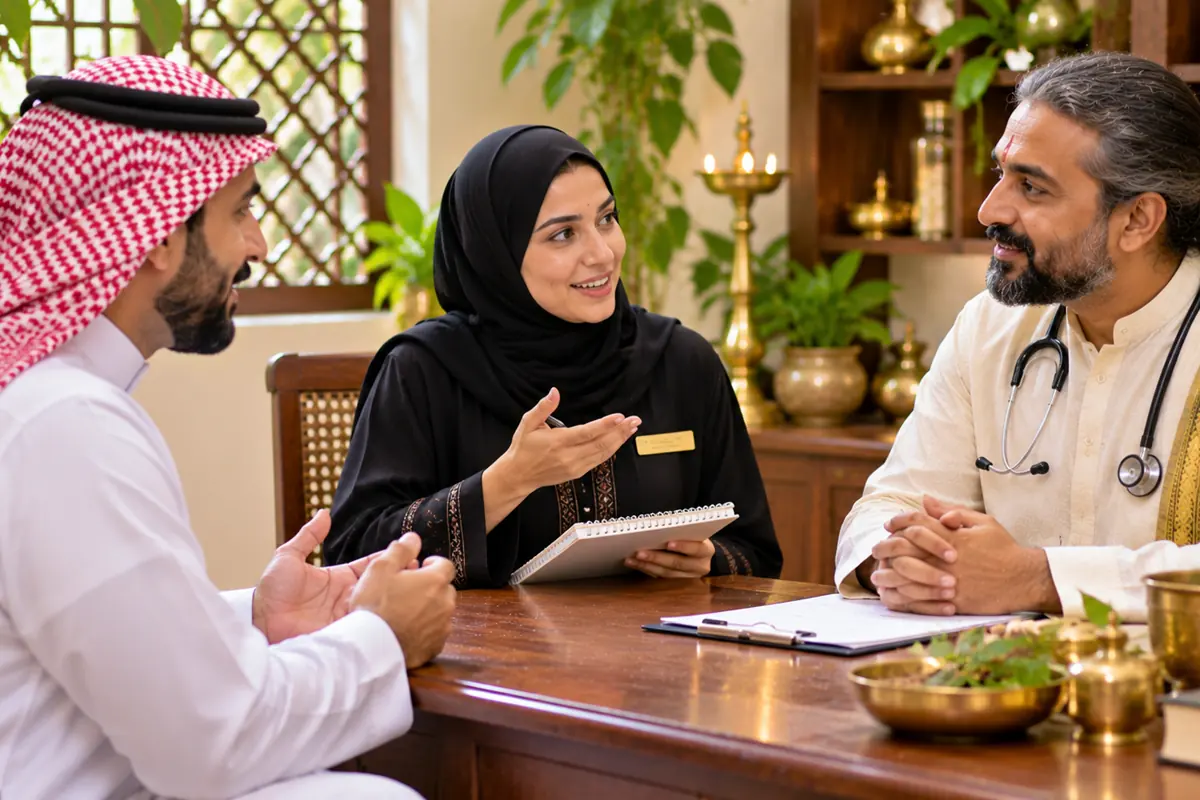
- Help comparing centres and preparing questions.
- Coordination of consultation, visa and travel.
- Useful if you are short of time or unfamiliar with India.
- Check the advisor's experience and clarity.
Comparing the routes
| Area | Direct vs advisor |
|---|---|
| Control | Higher; shared |
| Effort | More; less |
| Verification | Your task; ask the advisor how they verify |
| Support | From the centre; from advisor and centre |
Safety is about verification
Whichever route you take, verify the doctor, the centre's registration and the payment details, and get the plan in writing.
Questions to ask an advisor
- How do you verify centres and doctors?
- Which centres do you work with, and why?
- What support do you offer, before and after the trip?
- How are payments handled?
Choosing what suits you
If you enjoy research and have time, direct booking can be satisfying. If you prefer guidance, an advisor can make things smoother.
Mixing both
You can speak to the centre directly while using an advisor for coordination.
Reading terms
Read written terms carefully on either route.
Speaking with more than one centre
Many guests find it helpful to speak with two or three centres before deciding. Ask each the same questions, keep the written replies and compare them calmly. The comparison usually makes your own preferences clear.
The value of a written plan
A written plan turns a conversation into something you can read again, share with your own doctor and refer back to during your stay. It should name the doctor, describe the therapies and daily rhythm, list what is included and explain how the programme ends.
Involving your own doctor
Your regular doctor knows your history and medicines best. Share the plan and the list of herbal preparations with them, and ask whether they have any questions or suggestions. Care that is coordinated is care that is safer and more comfortable.
Taking notes during consultations
Keep a simple notebook or document for each conversation: the date, the person you spoke with, what was said and what you still wish to ask. After a few conversations, the notes give you a clear, personal picture.
Looking after practicalities early
Visa, flights, insurance and arrival arrangements all go more smoothly when started early. Once your dates are settled, apply for your e-Medical visa a few weeks ahead and book flights after approval.
Staying open and unhurried
A good decision is rarely a rushed one. Give yourself time to ask, to reflect and to talk with family. The right centre will be glad you did.
Keeping your expectations realistic
Ayurveda is a gentle, complementary approach. Most guests come away feeling rested and more in tune with their own habits, and many notice improvements in sleep, digestion or energy. Deeper changes take time and continue at home.
Preparing your questions
Before each call, write three or four questions: about the doctor, the plan, the setting and the arrangements. Starting from your own questions keeps the conversation focused and useful.
Trusting the way you are treated
The way a centre answers messages, explains its plans and respects your pace is an excellent preview of how it will care for you during your stay. Kindness and clarity before you arrive are a very good sign.
After your stay
Ask for a written summary, simple routines and a follow-up schedule before you leave, and share the summary with your own doctor. The days after a programme are part of the treatment.
A few words on pacing
Many guests are surprised by how much the unhurried pace helps. Treat the first few days as a time to settle in rather than to achieve anything, and let the routine of meals, rest and treatment do its quiet work.
Staying connected with home
A local SIM or an international plan makes it easy to message family and share photos. A short daily call home is often enough to keep loved ones reassured and lets you enjoy the rest of your time fully present.
Keeping a simple journal
A few lines each evening about your sleep, digestion, energy and mood help you notice changes, and they give your physician useful detail at your next review. They also make a lovely record of your stay.
Dressing for comfort
Light cotton clothing in soft colours, comfortable sandals and a thin shawl or jacket for air-conditioned rooms suit most programmes. Your centre can tell you whether treatment robes are provided.
Asking questions freely
Good care is a conversation. Ask your physician to explain each treatment, the reason for each medicine and what to expect. A caring doctor will welcome your curiosity and adjust the explanation to what is most helpful for you.
Rest is part of the treatment
Early nights, a quiet afternoon and time outdoors are not extras; they are part of the plan. Give yourself permission to rest without guilt, and let your body settle into the rhythm of the programme.
Choosing a comfortable room
When you discuss accommodation with your centre, mention any needs such as a quiet room, ground-floor access or a bathroom with a shower stool. Small details make a big difference to comfort during your stay.
Looking forward to home
Think ahead to how you will carry your routine home. Even two or three habits, such as warm morning water, a regular dinner time and a short evening walk, can keep the benefits going long after the trip.
Take your time
There is no prize for rushing. Good decisions about travel and treatment are made calmly, with the facts in front of you and your questions answered. If something feels unclear, pause and ask.
Small habits that help
Keep one folder for every document, write down your questions as they arise, and set reminders for key dates. These tiny habits turn a long to-do list into an easy routine.
Asking for things in writing
Whenever a detail matters, such as dates, inclusions or arrangements, ask for it in a short written message. It protects everyone, avoids misunderstandings and gives you a record to refer back to.
Involving your family
Share your plans with someone at home, including your itinerary and your centre's contact details. Many people find that talking the plan through with family brings both reassurance and useful questions.
Checking official sources
Rules, schedules and portals can change. A quick look at the relevant official website shortly before you act is the simplest way to keep your information current.
How MyVaidyam can support you
MyVaidyam is happy to answer your questions, whichever route you choose.
- An online consultation with an Ayurvedic physician.
- Guidance on choosing an accredited centre.
- Help comparing written plans and preparing your questions.
- Support with visa, travel and arrival, and follow-up after you return.
You are welcome to reach out at any stage with questions.