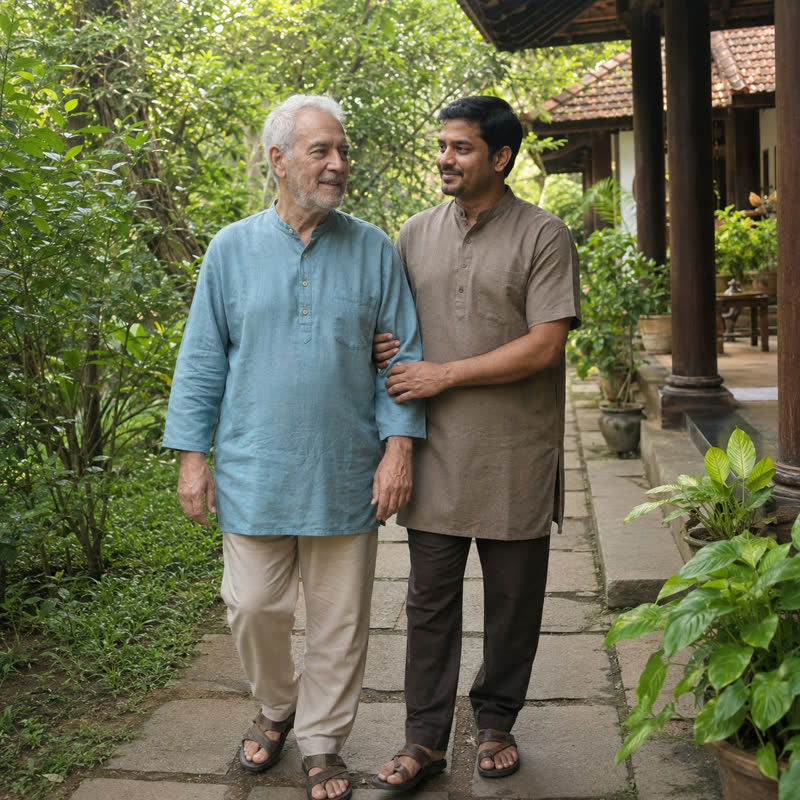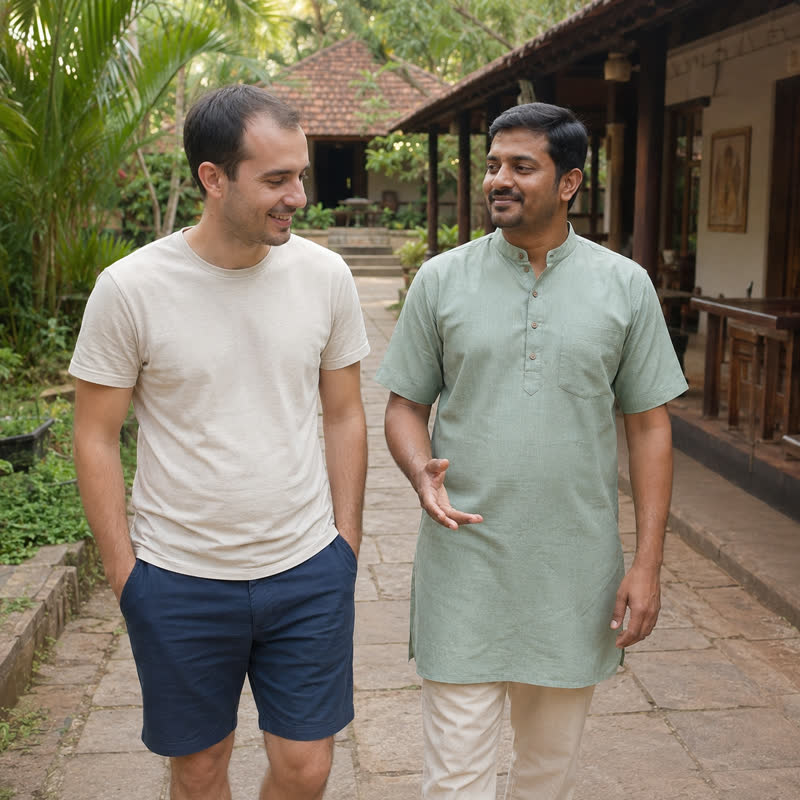
This guide explains what an Ayurvedic hospital in Kerala is, how it differs from a retreat or a small clinic, what to look for when you choose one, which questions to ask, how to prepare and how to plan the journey. And throughout, it shows how MyVaidyam can walk beside you as your friend and guide.
Ayurveda is offered here as a complementary, supportive approach that works alongside your own doctor's care, never as a replacement for it.
Quick Facts - Ayurvedic Hospitals in Kerala
| Topic | Summary |
|---|---|
| What it is | A doctor-led Ayurvedic centre with consultations, records, nursing support and structured care |
| Best for | Long-standing concerns, regular medicines, a wish for close monitoring |
| Compared with a retreat | A retreat emphasises rest; its medical input varies, so ask |
| Compared with a clinic | A clinic offers consultations and outpatient care, with fewer or no inpatient rooms |
| Standards | Kerala's Ayur Silver, Gold and Diamond categories; NABH accreditation for AYUSH hospitals |
| Typical lengths | 7, 14, 21 and 28 days |
| Visa | e-Medical visa: 60 days from first arrival, triple entry, non-extendable |
| Your companion | MyVaidyam: planning, coordination and support before, during and after |
What is an Ayurvedic hospital?
An Ayurvedic hospital is a centre in which care is led by Ayurvedic doctors and organised in a structured, clinical way. You will usually find a consultation process, written records, treatment rooms, a pharmacy, a kitchen and nursing support, with inpatient rooms where guests stay for the length of their programme. The atmosphere may be homely rather than clinical, and many hospitals are set in beautiful gardens.
Kerala has a long Ayurvedic tradition, with physician families known as the Ashtavaidyas who helped build a scholarly culture of Ayurveda, notably between the 13th and 17th centuries. Today the state is home to a wide range of Ayurvedic hospitals, from long-established institutions to newer centres that welcome international guests.
Hospital, retreat or clinic?
It helps to understand the three main styles, because the right one depends on what you need.
| Style | What it offers | Often suits |
|---|---|---|
| Ayurvedic hospital | Doctor-led, with records, nursing support and inpatient rooms | Medical concerns, regular medicines, close monitoring |
| Retreat or resort | Garden settings, yoga and rest; medical input varies | Rest, stress relief, general wellbeing |
| Clinic | Consultations and outpatient care; few or no inpatient rooms | Short consultations, follow-up, gentle outpatient therapies |
There is no single best option. Many centres blend these styles, offering the calm of a retreat with the reassurance of doctor-led care. If you take regular medicines or have a long-standing concern, a hospital or hybrid centre is usually the wise choice.
The team around you
Your physician
Assesses you, plans your programme and reviews you each day of the main phase.
Nursing staff
Monitor your comfort, medicines and wellbeing, including through the night.
Therapists
Trained practitioners who give your massage, steam and other therapies.
The kitchen
Prepares meals planned for your constitution and stage of programme.
The pharmacy
Prepares or supplies the herbal medicines in your plan, with names you can share.
Medical backup
A nearby hospital and a clear plan if you need conventional care.
MyVaidyam helps you ask the right questions about each part of the team.
In a good hospital, you are cared for by a team, not only by one doctor. Knowing who is who makes your stay feel safe and familiar. Ask the hospital to explain how the team works and who you can call on at any hour.
What a hospital stay is like
Most guests are surprised by how peaceful it feels. You arrive, meet your physician and settle into your room. The doctor assesses you, confirms the plan and sees you regularly. Your days follow a gentle rhythm of therapies, meals, rest and perhaps yoga, with nurses and therapists close at hand.
Because the care is residential, everything is simple: your meals are prepared for you, your treatments are timed to suit your rest and the doctor can adjust the plan as you respond. Many guests describe a sense of being quietly looked after, which is a rare and lovely feeling.
What to look for when you choose
A calm, structured approach helps. Look at these, roughly in order of importance:
- The physician. A qualified Ayurvedic doctor (BAMS or MD Ayurveda), registered with the appropriate board, who will see you personally and speak in a language you share.
- The written plan. A clear plan that names the doctor, describes the therapies and rhythm, lists inclusions and explains follow-up.
- Medical backup. Who is on duty at night, how emergencies are handled and which conventional hospital is nearby.
- Standards. Kerala's classification, NABH accreditation and the Ministry of Ayush's recognition levels.
- Records and communication. Clear notes of your plan and medicines, shared with you in plain language.
- Setting and food. Quiet surroundings, clean rooms and fresh, suitable meals.
- Honesty. Be wary of promises of cure for serious illness, advice to stop prescribed medicines or pressure to decide quickly.
Understanding standards: classification, accreditation and recognition
Kerala classifies Ayurveda centres into categories such as Ayur Silver, Gold and Diamond, and some sources list further categories, so confirm the current list with the state tourism department. Separately, NABH, the National Accreditation Board for Hospitals and Healthcare Providers, runs an accreditation programme for AYUSH hospitals and Panchakarma clinics, in association with the Ministry of Ayush, which has existed since 2009. Certificates last three years, with surveillance assessments in between. The Ministry of Ayush also has recognition levels, Ayush Rajat, Swarna and Heerak, built on NABH standards.
These are useful signs of good systems, such as hygiene, records and patient safety. They are not guarantees of any result, and there is no single official ranking of Ayurvedic hospitals in India or Kerala. Ask for the certificate, check its validity dates and treat any list of the best hospitals as a starting point for your own questions.
Working with your own doctor
A good Ayurvedic hospital is comfortable working alongside your regular doctors. Share your medical history, current medicines and recent reports beforehand, and let your own doctor see the plan. Some hospitals can arrange basic tests or specialist input if needed, so ask what is available. Please keep taking your prescribed medicines and talk to your own doctor before any change. Ayurveda is a supportive companion, not a replacement.
Questions to ask a hospital
A short, friendly message with your questions, and a request for written replies, works beautifully. A few to begin with:
- Who will be my treating doctor, and can I speak with them before I decide?
- Who is on duty at night, and how are emergencies handled?
- Which conventional hospital is nearby, and how far is it?
- What accreditation or classification does the hospital hold, and may I see the certificate?
- How will my medicines and plan be recorded and shared with me?
- What follow-up will I have after I return home?
Food, rooms and comfort in a hospital
Hospital rooms in Kerala range from simple and peaceful to quite comfortable, often with a garden view. Meals are typically warm, simple and freshly cooked, planned around your programme, and the kitchen will adapt them for allergies and dietary needs if you mention them at the start. Most hospitals offer wifi, and a short call home each day keeps family reassured.
Travelling with a companion
Many guests bring a spouse, friend or family member, and a hospital can make a companion feel at ease too. Ask about a companion's room, meals and visa arrangements, and which parts of the programme they may join. Some companions enjoy a gentle programme of their own, which makes the stay a shared experience.
Who a hospital stay suits
An Ayurvedic hospital can suit adults who are seeking support for a long-standing concern, those who take regular medicines and want careful monitoring, and guests who simply feel more at ease with doctor-led care. It is also a sensible choice for older guests and for those travelling with a companion who would like reassurance.
Panchakarma and some other therapies are not suitable for everyone. Pregnancy, some serious medical conditions, recent surgery and certain medicines may call for a gentler plan, which is exactly why a physician's assessment comes first.
Choosing a length and planning the journey
A week offers a restful introduction, two weeks a balanced programme and three or four weeks a deeper one. Your physician will recommend what suits you. Apply for your e-Medical visa on India's official portal, usually with a hospital letter, a few weeks before travel. It is valid for 60 days from first arrival, allows three entries and cannot be extended, so leave a comfortable margin. Book flights after approval, arrange travel insurance and choose an arrival time that suits the hospital's pickup. Many guests fly into Thiruvananthapuram or Kochi. Check the portal for current rules before you apply.
Bringing it home
Before you leave, ask for a written summary, a simple daily routine, diet notes and a follow-up plan, and share them with your own doctor. Good hospitals are glad to keep in touch after you return. Even two or three habits, such as a regular dinner time, warm morning water and a short evening walk, can carry the benefits of your stay into everyday life.
Your friend and hand-holder in choosing a hospital: MyVaidyam
Choosing a hospital in another country is a big step, and that is exactly the kind of weight MyVaidyam is here to share. We walk with you from your very first question to the day you return home, helping you ask the right questions and making sure that nothing is left to chance.
- An online consultation with an Ayurvedic physician to discuss your goals and whether a hospital setting suits you.
- Help requesting and checking a doctor's qualifications and a hospital's standards.
- Guidance on understanding Kerala's classification and NABH accreditation.
- Help comparing written plans from two or three hospitals side by side.
- Support with your e-Medical visa documents, flights, airport pickup and accommodation, including arrangements for a companion.
- A warm point of contact during your stay, and follow-up after you return home.
You are welcome to reach out at any stage. We would be delighted to help you choose with confidence.