This guide explains the Ayurvedic view, what a stay typically includes and how to plan with confidence. Ayurveda is offered as a complementary, supportive approach alongside your own doctor's care, never a replacement for it.
Quick Facts - Ayurveda Programmes for Chronic Back Pain for International Patients in India
| Topic | Summary |
|---|---|
| Ayurvedic view | Back pain is discussed through vata and the health of muscles and joints |
| What a stay offers | Oil massage, heat, herbal care, diet, yoga |
| Usual care (NICE 2016) | Exercise first; massage or manipulation only alongside exercise |
| Research | A 64-patient trial found short-term pain relief; longer studies are needed |
| Aim | Comfort and function |
| Cost | Compare itemised, dated quotes |
Understanding chronic back pain
NICE guidance, as summarised by MDDUS, describes exercise as the first step in managing low back pain, with massage or manipulation offered only alongside exercise. Back pain is very common, it often fluctuates, and it is rarely due to a single cause. Sitting for long periods, stress, poor sleep, reduced fitness and previous strain all play a part, and the best results usually come from steady, gentle movement combined with patience and good habits.
A residential Ayurveda stay supports this approach by placing daily movement, warmth, rest and good meals in one calm schedule.
How Ayurveda looks at back pain
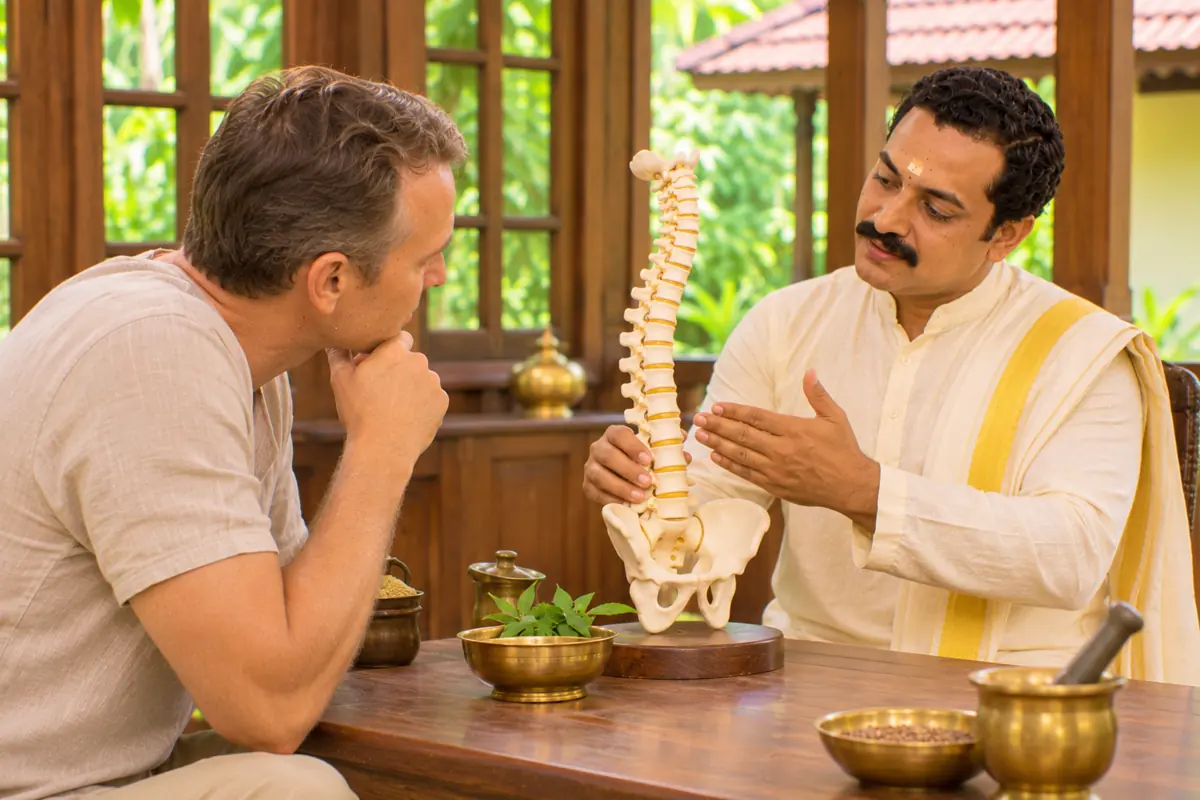
Ayurveda links long-standing back pain with vata and with the strength and nourishment of the muscles, joints and spine. After a careful assessment and review of your scans, the physician plans warm oil therapies, herbal medicines, diet and yoga that suit your body and your routine.
Building on your usual care
NICE guidance, as summarised by MDDUS, places exercise first for low back pain, with massage or manipulation offered only together with exercise. A residential stay suits this well, because gentle daily movement, yoga and rest are built into the timetable alongside the therapies.
What the research shows
A randomised trial in the Journal of Alternative and Complementary Medicine (2017) compared two weeks of Ayurvedic massage with a medicated oil against heat therapy in 64 adults with chronic low back pain. Pain eased more with the Ayurvedic massage in the short term, both treatments were well tolerated, and the authors called for longer studies. NCCIH notes research on Ayurveda overall is limited.
What a residential programme may include
| Element | What it generally involves |
|---|---|
| Assessment | History, examination and review of scans |
| Oil massage | Warm medicated oil, applied in a calm, unhurried session |
| Heat therapies | Warm applications to the lower back, such as Kati Basti |
| Herbal medicines | Preparations chosen by the doctor and checked against your medicines |
| Yoga | Gentle stretching and core-strengthening, at your pace |
| Home plan | Exercises and posture habits to continue |
A typical day on a back-care programme
- Early morning: gentle stretches or yoga, then a warm breakfast.
- Mid-morning: a physician review and oil massage or heat therapy.
- Afternoon: rest, a light lunch and a short walk.
- Evening: relaxation, an early dinner and a restful night.
Choosing a centre
Rather than looking for a ranking, compare what matters to you: a qualified physician, a clear assessment, a written day-by-day plan, hygiene standards and good access to a hospital. Ask each centre the same questions and compare the answers.
The Ayurvedic view of the spine
Ayurveda links long-standing back pain with vata and with the nourishment of the muscles, ligaments and spine. Terms such as Kati Graha or Trika Shula describe stiffness and pain in the lower back, and the tradition emphasises warm oil, gentle heat, nourishing food, rest and regular movement. Physicians compare these descriptions with modern diagnoses while recognising that the frameworks are not identical.
A careful physician therefore reads your scans and history alongside the traditional picture and plans a gentle programme.
The therapies you may meet
Here is what the most common back-care therapies involve. Your physician chooses which are suited to you.
- Abhyanga: a warm herbal-oil massage, adapted to your comfort.
- Kati Basti: warm medicated oil held in a small reservoir over the lower back.
- Swedana: gentle steam or warm applications for the back.
- Patra Pinda Sweda and Njavarakizhi: warm boluses of herbs or medicated rice pressed over the muscles.
- Herbal medicines: preparations chosen to suit you and checked against your medicines.
- Yoga and breathing: gentle positions adapted for your back.
Our guide to Kati Basti and Janu Basti describes one of these in more detail.
A sample two-week rhythm
Every programme is individual, and this outline is only an illustration of how a stay can unfold.
- Days 1 to 3, settling in: arrival rest, a full consultation, review of scans and a gentle start with mild massage and light meals.
- Days 4 to 10, the main therapies: a daily rhythm of oil massage, Kati Basti or warm applications, herbal medicines, gentle movement and rest.
- Days 11 to 14, consolidating: a lighter schedule, a review of how your back feels and a written plan for exercises and posture habits.
Many guests extend their stay, and the physician will advise after the first review.
Movement that supports the back
Because exercise is the foundation of back care, a stay emphasises it. Typical sessions include slow walking, gentle range-of-movement stretches, core-strengthening exercises and yoga postures adapted for the lower back. Teachers show comfortable ways to sit, stand, lift and get in and out of bed, and how to take short breaks from sitting. Everything is paced to your comfort. Ask the centre to write your exercises down so that you can continue them at home.
Food, sleep and everyday comfort
Warm, simple, freshly cooked meals at regular times keep digestion comfortable, and good sleep helps the back recover. A residential centre makes it easy to settle into an early night. Ask about a firm, supportive mattress and a pillow between the knees for side sleeping. Many guests return home with a calmer evening routine and a few new positions that help.
Desk, driving and daily habits
Small changes in everyday positions make a difference: a cushion behind the lower back, regular short breaks from sitting, a desk at the right height and a car seat adjusted for support. The team can show you simple adjustments, and many guests find that a few new habits matter as much as any therapy.
Kerala, climate and the best season
Many Ayurveda centres are in Kerala, where the warm, humid climate is traditionally considered kind to the body and the monsoon months are popular for oil therapies. The drier months from October to March are comfortable for travel and sightseeing. For back pain, ask each centre which season it recommends, and whether rooms are air-conditioned or well ventilated. Ask for a supportive bed and a room near the dining area. Our guide to the best time to travel compares the seasons.
Keeping a simple diary
A small notebook is one of the most useful things to bring. Each evening, jot down how your back felt on waking, how long you could sit and walk, which activities were easy and how you slept. After a week or two the pattern often becomes clear, and you and the physician can fine-tune the plan. A one-to-ten comfort score each morning and evening makes progress easy to see. The same notes give your own doctor a helpful picture when you return.
Travelling comfortably
A little planning makes the journey smoother. Book an aisle seat so you can stand and stretch, keep your medicines and reports in your hand luggage, and choose a flight that arrives at a comfortable hour. Choose an aisle seat, stand and walk every hour, and use a small cushion for lower-back support. Ask the centre to arrange the transfer and a restful first day. Our guide to the attendant visa explains how a family member can travel with you.
Conversations to have before you travel
A short chat with your own doctor makes the stay smoother. Many guests ask:
- Are my scans and medicines up to date for travel?
- Which exercises would you like me to continue?
- Is there anything you would like the Ayurveda team to know?
- When would you like to see me after I return?
Sharing the answers with the Ayurveda physician helps the two teams work in step, and leaves you feeling confident and well supported.
Who tends to enjoy a stay
Guests who enjoy these programmes are often people with long-standing back discomfort who would like a calm place to rest and move gently, those whose work involves long periods of sitting, and anyone who would like to learn practical habits. If you are unsure whether a stay suits you, a free online consultation is a good first step, before you book anything.
Choosing a centre
Rather than looking for a ranking, compare what matters to you: a qualified Ayurveda physician, a clear assessment, a written day-by-day plan, hygiene standards, accessible rooms and good access to a hospital. Ask each centre the same questions:
- Who will be my physician, and what are their qualifications?
- How are therapies adapted to back comfort?
- Are rooms and chairs supportive, with minimal stairs?
- How are herbal medicines sourced, and can I see the ingredient list?
- What does the quote include, and what is extra?
Planning your budget
Cost depends on room, length, therapies, physician time and medicines. Ask each centre for an itemised, dated quote for the same dates and inclusions, and add visa, flights, insurance and transfers. See the cost guide and verifying a doctor.
Travelling with confidence, and how MyVaidyam can help
- Share your reports and current medicines with the Ayurveda physician before you travel.
- Continue your prescribed medicines, and let your own doctor know your plans.
- Ask for ingredient lists for any herbal medicine, and choose labelled preparations.
- Plan rest after the flight so you can begin your stay comfortably.
- Bring recent scan reports, and ask your doctor about exercises to continue.
MyVaidyam can arrange a free online pre-consultation, have your reports reviewed by an Ayurvedic physician and request day-by-day plans and itemised quotes from centres so you can compare them calmly. Contact MyVaidyam to book your free online consultation.
Frequently Asked Questions on Ayurveda Programmes for Chronic Back Pain for International Patients in India
References
- PubMed. Effectiveness of Ayurvedic massage (Sahacharadi Taila) in patients with chronic low back pain: a randomized controlled trial (J Altern Complement Med, 2017)
- MDDUS. Exercise and NSAIDs first in low back pain, says NICE
- NCCIH, US National Institutes of Health. Ayurvedic medicine: in depth
- World Health Organization. WHO benchmarks for the practice of Ayurveda