A residential Ayurveda programme in Kerala can offer exactly that kind of space.
This guide explains how Ayurveda views PCOS, what a Kerala programme usually involves, how food, movement, sleep and calm fit in, how to work alongside your gynaecologist or endocrinologist, and how to choose a centre and plan the journey. And throughout, it shows how MyVaidyam can walk beside you as your friend and guide.
Ayurveda is offered here as a complementary, supportive approach that works alongside your own doctor's care, never as a replacement for it. It does not claim to cure PCOS.
Quick Facts - Ayurveda Treatment for PCOS in Kerala for International Patients
| Topic | Summary |
|---|---|
| Approach | Complementary and supportive, alongside your gynaecologist or endocrinologist |
| About PCOS | A common hormonal and metabolic condition that affects cycles, skin, hair and weight, among other things |
| Typical elements | Diet, gentle therapies, movement, herbal support, stress and sleep care |
| Common aims | Wellbeing, balance, sustainable habits and a calmer daily rhythm |
| Typical lengths | Two to four weeks, with a plan and follow-up for home |
| Share beforehand | Hormone reports, ultrasound findings, current medicines and cycle history |
| Visa | e-Medical visa: 60 days from first arrival, triple entry, non-extendable |
| Your companion | MyVaidyam: planning, coordination and support before, during and after |
How Ayurveda looks at PCOS
PCOS is a common condition in which hormones and metabolism fall out of step. It can show up as irregular cycles, changes in skin and hair, weight changes, tiredness and mood changes, and every woman experiences it a little differently. Modern medicine treats it with a combination of lifestyle measures and, where needed, medicines, and everyday habits such as food, activity and sleep are widely recognised as important.
Ayurveda has no single classical name that matches PCOS exactly. Instead, a physician considers the whole picture: your menstrual pattern, digestion, appetite, weight, energy, stress, sleep and constitution, and builds a plan to support balance. The aim is supportive. It is to help you feel more in tune with your body, to ease the strain of daily life and to build routines you can keep at home.
What a Kerala PCOS programme usually involves
Most programmes follow a gentle rhythm of consultation, diet, therapies, movement and rest, planned for you.
- Consultation. The physician reviews your cycle history, reports and goals, and confirms your plan.
- Diet. Warm, freshly cooked, nourishing meals at regular times, planned for your constitution.
- Gentle therapies. Warm oil massage, herbal steam and calming therapies such as shirodhara, chosen for you.
- Herbal support. Preparations chosen by your physician, with names you can share with your own doctors.
- Movement. Walking, gentle yoga and breathing within your comfort.
- Stress and sleep care. Meditation, quiet days and early nights.
When suitable, some programmes include gentle cleansing therapies planned and supervised by the physician. Not everyone needs these, and they are not used in every situation, so please tell the physician whether you are trying to conceive or may be pregnant.
Five everyday supports for hormonal balance
Nourishing food
Regular, warm, freshly cooked meals planned for you
Joyful movement
Walking, yoga and gentle strengthening
Restful sleep
Early nights and a calm evening routine
You, at the centre of the plan
Calm and stress care
Breathing, meditation and quiet time
Cycle awareness
Noting your rhythm to share with your doctors
Medical partnership
Your gynaecologist and physician in step
MyVaidyam helps you bring these into one clear, written plan.
Food: nourishing and regular
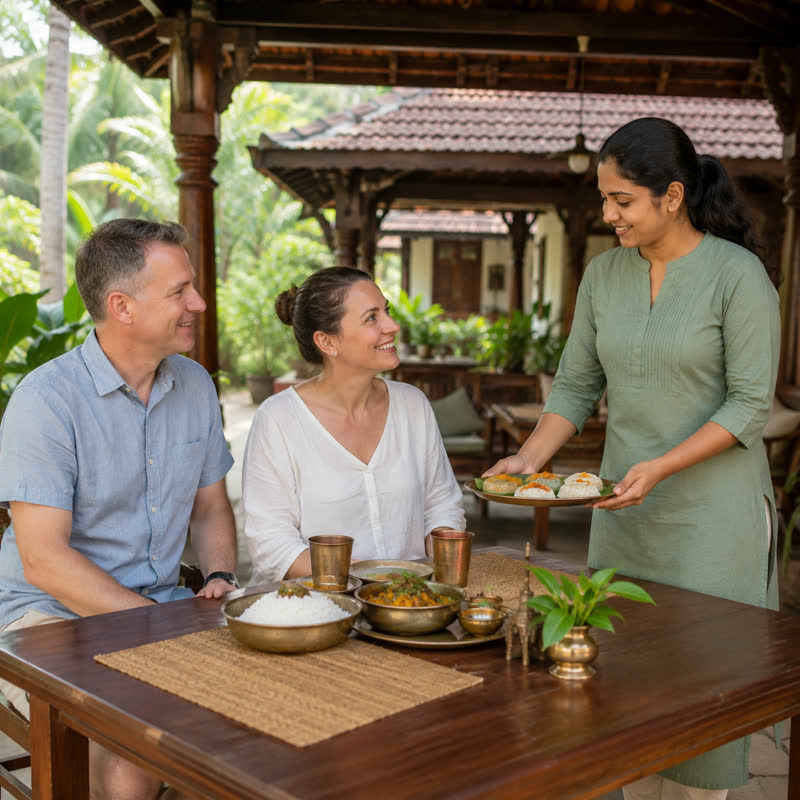
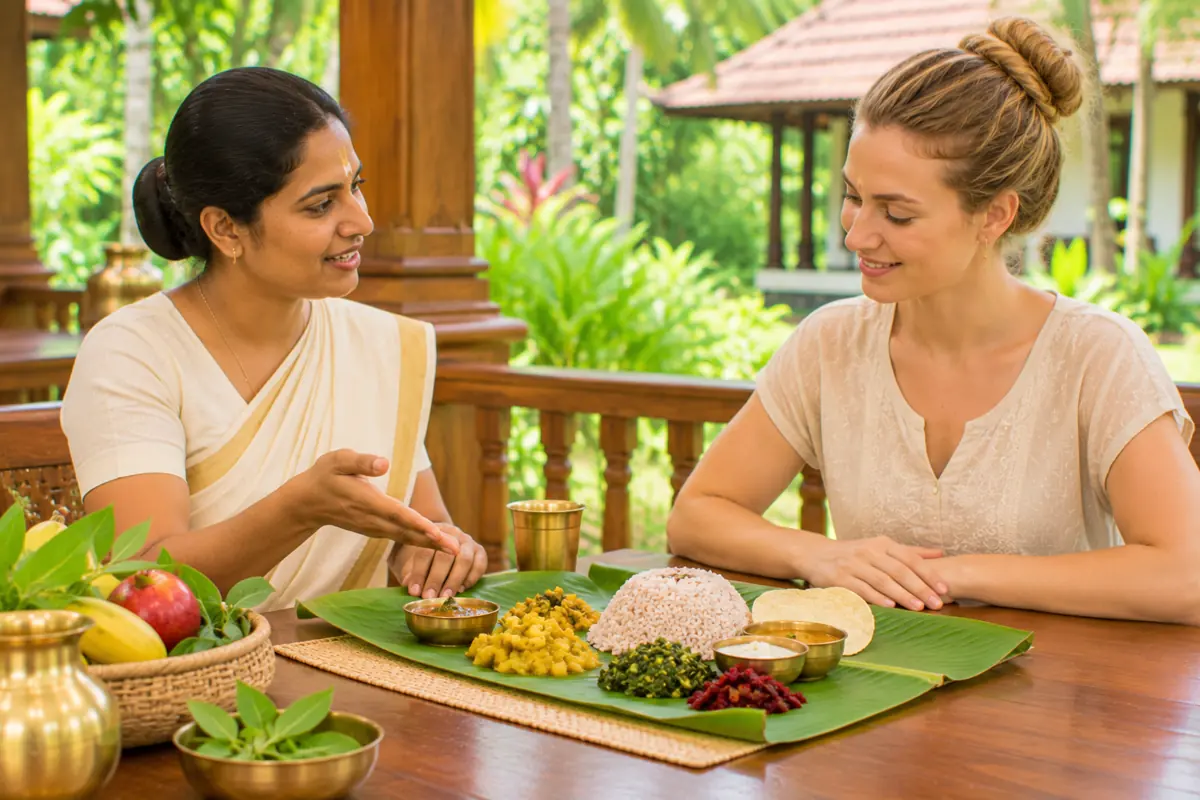
Food is at the heart of the programme, and it is meant to be enjoyable. Kerala centres typically serve warm, freshly cooked meals of rice, lentils, vegetables and gentle spices, planned around your programme and eaten at regular times.
Movement, sleep and calm
Movement in a Kerala programme is gentle and personal: walking in the garden, stretching and yoga within your comfort. Sleep and calm are equally important. Early nights, quiet afternoons and meditation help the body settle, and many women find that when sleep and stress ease, everything else feels more manageable.
The therapies you may meet
Your physician chooses what suits you. Not everyone needs every one of these.
| Therapy | What it involves |
|---|---|
| Abhyanga | Warm herbal oil massage that relaxes the body |
| Swedana | Gentle herbal steam that follows massage |
| Shirodhara | A slow stream of warm oil over the forehead, often chosen for calm and sleep |
| Udvartana | A massage with dry herbal powders, sometimes included when suitable |
| Herbal preparations | Medicines chosen by your physician for your plan |
| Supervised cleansing therapies | Planned and supervised by the physician, only when suitable |
Working alongside your doctors
The best results come when everyone is on the same page. Share your hormone reports, ultrasound findings, cycle history and a complete list of your medicines and supplements with the Ayurvedic physician beforehand, and let your gynaecologist or endocrinologist see the plan. Please keep taking your prescribed medicines and talk to your own doctor before any change. If you are trying to conceive, or may be pregnant, tell the physician at the outset, so that the plan and the herbal preparations are chosen appropriately. After your stay, share your written summary with your doctors.
How long should a programme be?
Many programmes run for two to four weeks, which allows time to settle into the routine, receive therapies and learn habits that you can carry home. Changes in the menstrual cycle take time, often several months, so it helps to think of the stay as a beginning rather than an end, supported by a home plan and follow-up. Your physician will recommend the length that suits you. Remember that the e-Medical visa is valid for 60 days from first arrival and cannot be extended, so choose your dates with a comfortable margin.
Choosing a centre for women's health
Look at these, roughly in order of importance:
- The physician. A qualified Ayurvedic doctor (BAMS or MD Ayurveda), registered with the appropriate board, with experience of women's health concerns.
- The written plan. A clear plan with the diet, therapies, medicines and follow-up.
- Privacy and comfort. Respect for privacy, and, if you prefer, female therapists.
- Medical backup. Who is on duty at night, and which hospital is nearby.
- Standards. Kerala's classification (Ayur Silver, Gold and Diamond, among others) and NABH accreditation are useful signs, though not guarantees.
- Honesty. Be wary of promises of cure, advice to stop prescribed medicines or pressure to decide quickly.
Planning the journey
Apply for your e-Medical visa on India's official portal, usually with a hospital letter, a few weeks before travel. It is valid for 60 days from first arrival, allows three entries and cannot be extended. Book flights after approval, arrange travel insurance and choose an arrival time that suits your centre's pickup. Many guests fly into Thiruvananthapuram or Kochi. Check the portal for current rules before you apply.
Taking the habits home
Before you leave, ask for a written summary, a simple daily routine, diet notes and a follow-up plan, and share them with your doctors. Start with two or three habits that feel easy, such as regular mealtimes, a daily walk and an early night, and add more gradually.
Your friend and hand-holder on the way to Kerala: MyVaidyam
Taking the first step towards a calmer, more balanced routine deserves support, and that is where MyVaidyam comes in. We walk with you from your very first question to the day you return home, and after, answering your questions patiently and making sure that nothing is left to chance.
- An online consultation with an Ayurvedic physician to discuss your goals and cycle history.
- Help preparing your health summary, reports and medicines list, and a written plan after your consultation.
- Guidance on choosing an accredited Kerala centre with experience of women's health.
- Support with your e-Medical visa documents and the hospital letter.
- Advice on flights, airport pickup and accommodation, including arrangements for a companion.
- A warm point of contact during your stay, and follow-up after you return home.
You are welcome to reach out at any stage. We would be delighted to help you plan a supportive, encouraging stay in Kerala.