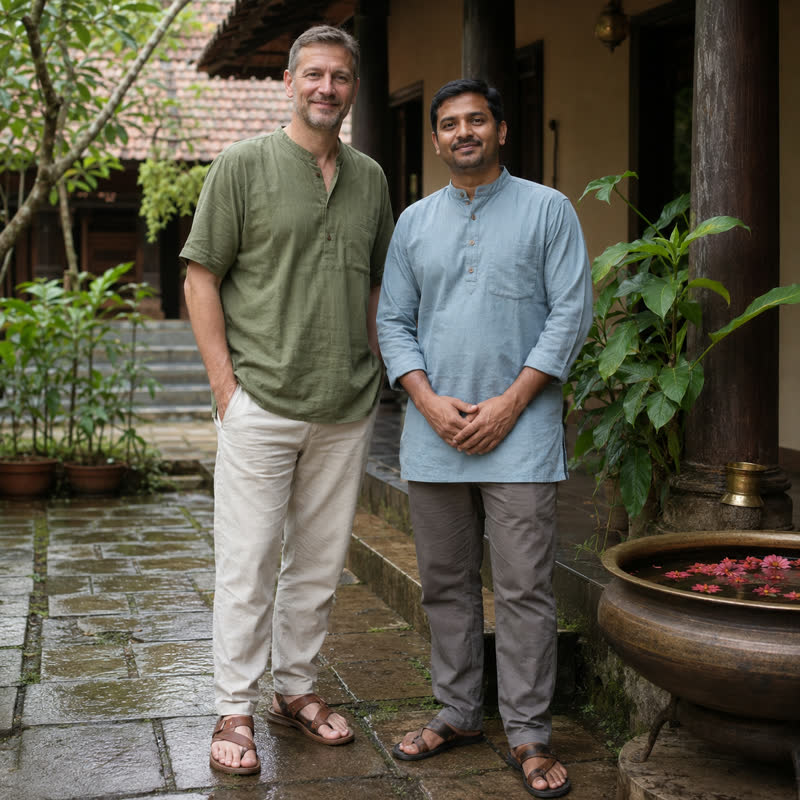
This guide explains what burnout is, what a programme in India typically includes, how to get the most from your stay, and how to choose a centre with confidence. Ayurveda is offered as a complementary, supportive approach alongside your own doctor's care, never a replacement for it.
Quick Facts - Ayurveda Burnout Recovery Programme for International Patients in India
| Topic | Summary |
|---|---|
| Burn-out (WHO) | An occupational phenomenon linked to chronic workplace stress |
| Best first step | A check-up with your own doctor |
| Supportive practices | Mindfulness, yoga, relaxation, regular sleep and meals |
| Typical programme | Consultation, daily routine, therapies, meals, movement, meditation |
| Aftercare | A written plan to continue at home |
| Pricing | Itemised, dated quotes from each centre on request |
• The WHO describes burn-out as a result of chronic workplace stress, marked by exhaustion,
- mental distance from work and reduced effectiveness.
• A short medical check before you travel makes sure your stay is the right fit and your programme is
- planned around your health.
• Independent research supports mindfulness, yoga-style movement and relaxation practices as
- helpful for managing stress, and these are core parts of most programmes.
• The most lasting benefit comes from leaving with a written plan you can continue at home.
Understanding burnout, and starting with a health check
The World Health Organization's ICD-11 describes burn-out as a syndrome resulting from chronic workplace stress that has not been successfully managed. It has three dimensions: feeling drained of energy, growing mental distance or cynicism toward your job, and reduced professional effectiveness. It is recognised as an occupational phenomenon rather than a medical condition.
Because tiredness can have several causes, including sleep problems, thyroid conditions, low mood or anxiety, we recommend a check-up with your own doctor before you plan a stay. This is good news for your trip: it means your programme can be tailored to your health, and any underlying issue gets the right care. If you are already receiving treatment or taking medicines, continue with them and share the details with the centre's physicians.
If you are experiencing persistent low mood, panic or thoughts of self-harm, please speak to your doctor or local crisis services first. A wellness stay is best planned once you have that support in place.
What the research says about managing stress
The US National Center for Complementary and Integrative Health (NCCIH) reports that mind and body approaches may help people manage stress and anxiety. It describes moderate evidence for mindfulness meditation, and promising but more limited evidence for yoga, with generally good safety. These practices sit at the heart of most Ayurveda recovery programmes, alongside restorative routines such as regular sleep, nourishing meals and time in calm surroundings.
Ayurveda is a traditional system of medicine with a long history in India. Scientific research on Ayurvedic programmes specifically for burnout is still developing, which is why we present them as a supportive, complementary experience and why we encourage you to keep your own doctor involved.
What a programme in India offers
Chronic stress often leaves little room for rest, and a residential stay is designed to give you that room. Programmes commonly include:
• A consultation with an Ayurvedic physician to shape your daily plan • Regular meals, set sleep times and a calm daily rhythm • Gentle yoga, breathing exercises and guided meditation • Relaxing oil massage and warm therapies that many guests find deeply soothing • Time away from screens, inboxes and daily demands, often in peaceful, green settings
These are restorative comforts and routines. They are offered to support your wellbeing, not to treat a disease.
Making the benefits last when you return
The best programmes treat your stay as the start of a longer routine. Before you book, ask the centre what you can keep doing at home: a sleep schedule, movement and relaxation practices, simple dietary guidance. Think too about changes at work, such as clearer boundaries and support from your team, and whether some leave or occupational support at home would complement your stay.
Look for a centre that sends you home with a written aftercare plan. It turns a restful week or two into habits you can carry forward.
Choosing a centre and understanding cost
Costs vary by centre, length of stay and accommodation, so we recommend asking each centre for an itemised, dated quote that shows what is included, including consultations, therapies, meals, medicines and any extras, along with refund terms.
When comparing centres, look for:
• Named, qualified Ayurvedic physicians
• A medical screening on arrival • Clear, honest descriptions of what the programme offers • Ingredient lists for any herbal products you are given • A written aftercare plan
It also helps to weigh the cost of a stay against the value of time away from work.
Travelling with confidence, and how MyVaidyam can help
A few simple steps help you get the most from your stay:
• Have a check-up with your own doctor before you travel. • Continue prescribed medicines, including antidepressants and sleep medicines, unless your doctor
- advises otherwise.
• Ask for ingredient lists for any herbal products, and avoid unlabelled preparations. • Allow a day or two to recover from a long journey and jet lag before starting your programme. • Choose centres that are open about what a stay can and cannot do.
MyVaidyam can arrange a free online pre-consultation to discuss your goals, then request day-by-day programme plans, aftercare arrangements and itemised quotes from centres on your behalf. Contact MyVaidyam to book your free online consultation.
Frequently Asked Questions on Ayurveda Burnout Recovery Programme for International Patients in India
References
- World Health Organization. Burn-out an "occupational phenomenon": International Classification of Diseases.
- NCCIH, US National Institutes of Health. Mind and body approaches for stress and anxiety: what the science says.
- NIMH, US National Institutes of Health. I'm so stressed out! Fact sheet.
- NCCIH, US National Institutes of Health. Ayurvedic medicine: in depth.