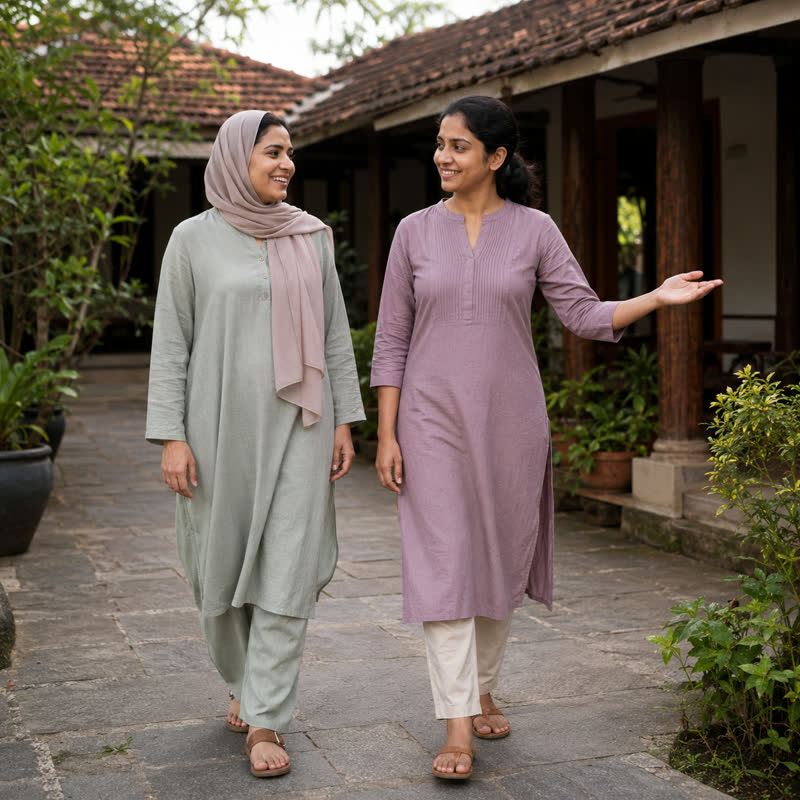
What is needed is not another stricter plan, but a different kind of plan: one built on rhythm, enough food, movement you can keep and kindness.
This guide explains in plain language why weight returns after diets, why your doctor's guidance comes first, how supportive Ayurvedic care approaches weight through regular warm food, routine, movement and calm, what a residential programme may include and how to keep the benefits at home. And throughout, it shows how MyVaidyam can walk beside you as your friend and guide.
Ayurveda is offered here as a complementary, supportive approach that works alongside your own doctor's care, never as a replacement for it. It does not promise weight loss or prevent regain.
Quick Facts - Ayurveda Support for Weight Regain After Previous Diet Programs for International Patients
| Topic | Summary |
|---|---|
| The problem | Weight returning after earlier diets |
| First step | Check-up and advice from your doctor |
| Ayurvedic support | Regular warm food, routine, movement, calm |
| Principle | Sustainable habits, not strict restriction |
| Keep | Prescribed medicines and your doctor's advice |
| Not | A promise of weight loss or preventing regain |
| Visa | e-Medical visa: 60 days from first arrival, triple entry, non-extendable |
| Your companion | MyVaidyam: planning, coordination and support before, during and after |
Why weight returns
When we eat much less for a while, the body adapts: hunger rises, energy use falls, and cravings grow. Strict plans are hard to sustain, and when ordinary life returns, so do ordinary habits, often with a rebound. Stress, poor sleep, medicines, hormones and emotions also play parts. Understanding this removes much of the self-blame, and opens the way to a kinder, steadier approach.
The cycle many people know
The usual loop
Strict diet
Rules, hunger
Loss
Weight falls
Regain
Old habits return
A steadier path
Regular food
Enough, warm, simple
Daily movement
Walking, strength
Sleep, calm
Less stress eating
The aim is to step off the loop, and to build habits that do not depend on constant effort.
Start with your doctor
Please have a check-up, including blood pressure, sugar, cholesterol, thyroid and medicines review, since some conditions and medicines affect weight. Ask for realistic targets. If you take medicines for diabetes, blood pressure or other conditions, continue them as prescribed, and discuss any programme with your doctor first. Share the results with the centre.
How Ayurveda looks at it
Ayurveda sees weight gain as associated with a slowing of digestion and a build-up of heavy, sticky qualities, and approaches it through kindling digestion and lightening, with warm, regular, freshly cooked food, daily movement, early rising and calm. Importantly, it warns against extreme dieting, which it associates with depleting the body and unsettling the mind. Balance is the aim.
What a supportive programme may include
- A physician's consultation, listening to your dieting history.
- Regular, warm, freshly cooked, satisfying meals, in sensible portions.
- Daily walking, yoga and, where suitable, gentle strength work.
- Warm herbal oil massage and dry-powder massage, where suitable.
- Breathing, relaxation and good sleep.
- Education on food, hunger, portions and habits.
Eating enough, regularly
Skipping meals and severe restriction often lead to bingeing later. A residential stay lets you experience steady, satisfying meals at regular times, and notice how hunger and energy settle. Many guests discover that when they eat enough, cravings fade. Your physician and a dietitian will help you translate this to your own kitchen.
Movement you can keep
The exercise that lasts is the one you enjoy. Walking, yoga, swimming, cycling and dancing all count, with a little strength work, building gradually towards about thirty minutes on most days. If you have joint, heart or other concerns, a physiotherapist can set a safe starting point.
Emotions, stress and eating
For many people, eating is bound up with stress, boredom, loneliness or reward. Breathing practices, meditation, relaxation therapies and a calm routine give other ways to meet these feelings. If eating feels out of control or distressing, please speak with your doctor, who can offer additional support alongside the centre's care.
A day at a residential centre
| Time | Typical activity |
|---|---|
| Early morning | Warm water, breathing, stretches |
| Morning | Walk or yoga, warm therapy |
| Late morning | Guided exercise or physiotherapy |
| Midday | Satisfying, balanced main meal and rest |
| Afternoon | Relaxation, education session |
| Evening | Light early supper, calm, early sleep |
Measuring success differently
Weight on a scale is only one measure. Energy, sleep, mood, fitness, waist, blood pressure and how clothes fit all tell you more. A good centre records several of these, and celebrates habits kept, and not only kilograms lost.
Taking it home
- Eat regular, warm, satisfying meals.
- Walk daily, and add strength and stretching.
- Protect your sleep.
- Plan for tricky times, such as holidays and stress.
- Follow up with your doctor and share the centre's summary.
Setting honest expectations
Weight management is a long game, and no programme can promise weight loss or prevent regain. A residential stay can offer a calm, structured start, practical learning and habits to carry home. Many guests value most the end of the dieting cycle and the return of a calmer relationship with food.
Working alongside your own doctors
Please keep your own doctors informed. Share your medical summary, bring your reports and keep taking whatever you have been prescribed. Please keep taking prescribed medicines, and discuss any new programme with your own doctors first. Please do not change medicines without medical advice.
Choosing a centre
Look for a qualified Ayurvedic doctor (BAMS or MD Ayurveda), registered with the appropriate board, a dietitian or physiotherapist on the team, and a clear written plan. Be cautious of anyone who promises rapid weight loss, sells products or advises extreme fasting.
Planning the journey
Apply for your e-Medical visa on India's official portal, usually with a hospital letter, a few weeks before travel. It is valid for 60 days from first arrival, allows three entries and cannot be extended. Book flights after approval, arrange travel insurance and choose an arrival time that gives you a rested first day. Check the portal for current rules before you apply.
Your friend and hand-holder in finding the right programme: MyVaidyam
A good plan starts with a good conversation, and that is where MyVaidyam comes in. We walk with you from your very first question to the day you return home, answering every question patiently and making sure that nothing is left to chance.
- An online consultation with an Ayurvedic physician to discuss your history and goals.
- Help preparing your health summary and check-up results.
- Guidance on choosing a reputable centre with a balanced, kind programme.
- Help understanding your written plan.
- Support with your e-Medical visa documents, flights, airport pickup and accommodation.
- A warm point of contact during your stay, and follow-up after you return home.
You are welcome to reach out at any stage. We would be delighted to help you begin.