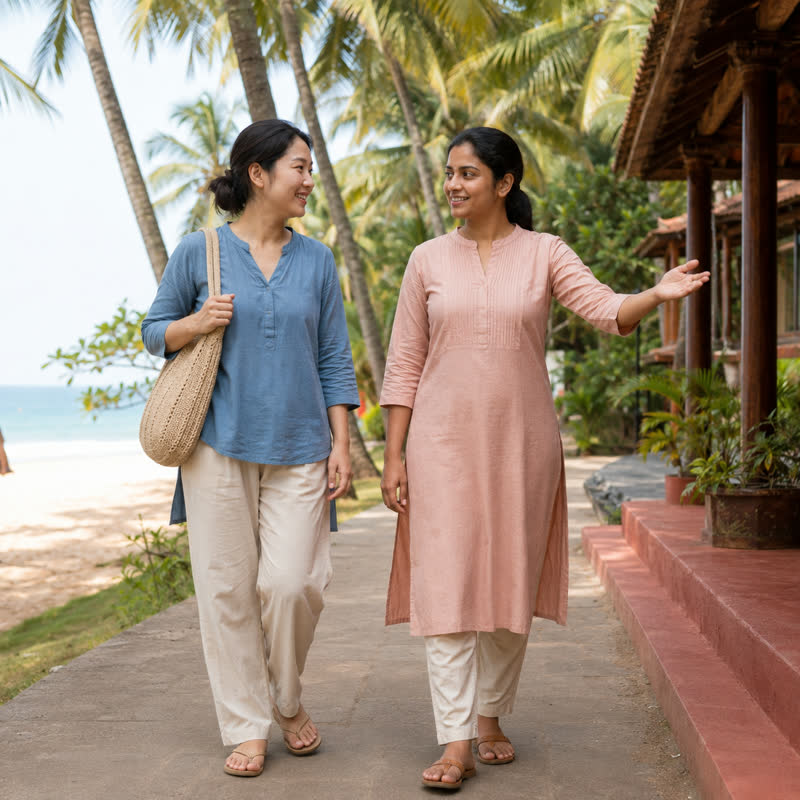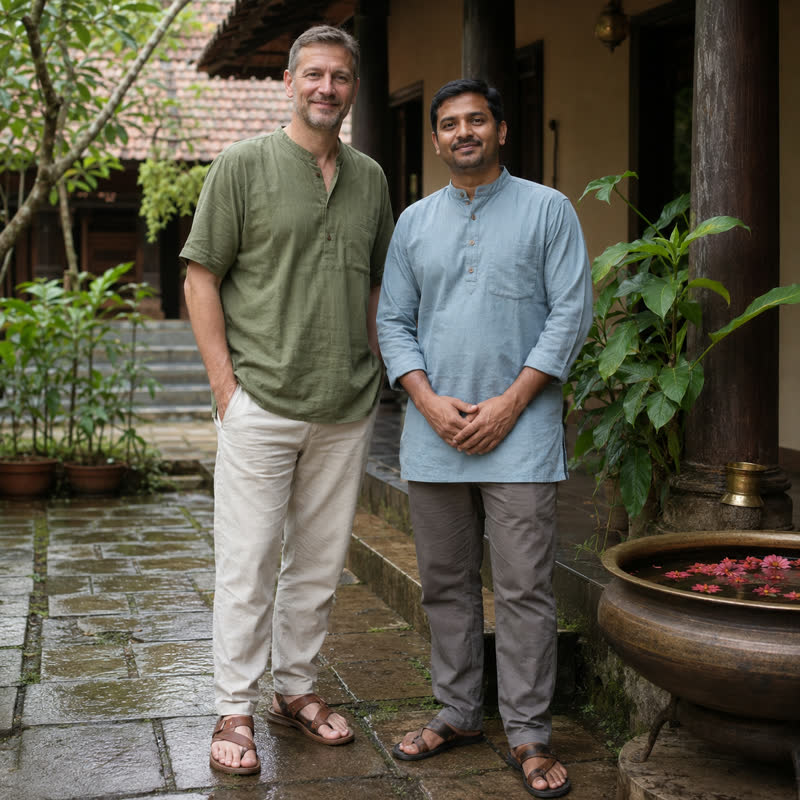
This tradition, rooted in Ayurveda, rests on a simple idea: a mother who is well looked after recovers better and is better able to care for her baby.
This guide explains in plain language what traditional postnatal Ayurvedic care in India includes: why the mother's own doctors lead, how the Ayurvedic physician approaches recovery, the food, massage, warmth and rest at its heart, how care can address weakness, fatigue and aches, what a residential stay may look like, how family can help and how to carry the care home. And throughout, it shows how MyVaidyam can walk beside you as your friend and guide.
Ayurveda is offered here as a complementary, supportive approach that works alongside your own doctor's care, never as a replacement for it. It makes no promises about recovery, and it also covers postpartum weakness and fatigue, and postpartum muscle and joint discomfort.
Quick Facts - Traditional Postnatal Ayurveda Care in India
| Topic | Summary |
|---|---|
| What it is | Traditional care for the mother after childbirth |
| First step | Clearance from the obstetrician and paediatrician |
| Core elements | Rest, warm food, oil massage, warmth, support |
| Also helps with | Tiredness, weakness, aches, routine |
| Adapted to | Type of delivery, health, breastfeeding |
| Not | A promise of any particular recovery |
| Visa | e-Medical visa: 60 days from first arrival, triple entry, non-extendable |
| Your companion | MyVaidyam: planning, coordination and support before, during and after |
A season of being looked after
Across India, new mothers are traditionally given weeks of protected rest. Grandmothers and aunts cook special foods, massage the mother and baby with warm oil, and take over the household. Ayurveda describes this period as one when the body has opened and given a great deal, and needs deliberate rebuilding. Many mothers say that being cared for in this way was the most precious part of early motherhood.
The postnatal journey, in three phases
1. Rest and warmth
First weeks: rest, warm light food, gentle touch
2. Rebuilding
Weeks to months: strength, nourishment, gentle movement
3. Balance
Later: routine, sleep, energy, confidence
The emphasis shifts gently as the weeks pass, always guided by how the mother feels.
Start with your doctors
Please speak first to your obstetrician about your recovery, including any stitches, caesarean wound, blood pressure, bleeding, anaemia and breastfeeding, and ask whether travel and a residential stay are suitable at your stage. Ask the baby's paediatrician about travelling with the baby, and about feeding and vaccination. Continue all prescribed medicines and supplements, and share the summaries with the centre.
How Ayurveda looks at postnatal care
Ayurveda sees childbirth as a time when the body loses strength, fluids and warmth, and becomes dry and sensitive. Its postnatal care, called sutika paricharya, therefore stresses rest, warmth, oil, nourishing and easily digested food, protection from cold and wind, good sleep and emotional support. The aim is to rebuild gently and steadily, and not to rush.
What a supportive programme may include
- A consultation covering delivery, recovery, feeding, sleep and mood.
- Warm, freshly cooked, nourishing food, with traditional spiced preparations.
- Gentle warm herbal oil massage, adapted to the mother's recovery.
- Warm baths or gentle warm applications, where suitable.
- Rest, early sleep and help with the baby.
- Gentle breathing, relaxation and, later, gentle movement.
Food for recovery
Traditional postnatal food is warm, soft and rich in nourishment: soups, lentils, rice porridges, ghee, jaggery, sesame, nuts, dates, and spices such as ginger, cumin, fennel and ajwain, which are valued for digestion and, traditionally, for milk. Heavy, cold and very spicy food is kept light. If you are breastfeeding, tell the physician, and avoid trying any new herb without checking with your own doctor and the paediatrician.
Oil massage and warmth
Gentle oil massage is the best-known part of postnatal care. Warm herbal oil is used in soft, comforting strokes, followed by rest and warmth, which many mothers find deeply soothing. Pressure is adapted to the type of delivery, and the abdomen and any wound area are treated with care or avoided, as your doctor advises. Massage is generally begun only when the obstetrician is happy for it.
Weakness and fatigue
Tiredness after birth is common, and is made worse by broken sleep, feeding and anaemia. Supportive care focuses on nourishing food, hydration, rest in the daytime, gentle massage, calm and early nights. Please let your doctor check for anaemia, thyroid and other causes of lasting fatigue, and continue any iron or vitamin supplements that have been prescribed.
Aches, back pain and joint discomfort
Feeding, lifting and carrying a baby, together with changed posture and loosened ligaments, can leave the back, neck, shoulders, wrists and hips sore. Supportive care offers warm oil massage, gentle warmth, posture advice, feeding positions and slow stretching, and some centres include a physiotherapist. Persistent or severe pain should be reviewed by your doctor.
Mind and mood
The weeks after birth are emotionally tender. Sleeplessness, tearfulness and mood changes are common. Rest, company, nourishing food, gentle touch and being listened to all help. Please speak to your doctor if low mood or anxiety are heavy or last, because additional support is available and nothing to be shy about. A caring environment makes it easier to ask.
A day at a residential centre
| Time | Typical activity |
|---|---|
| Early morning | Warm water, gentle breathing, rest |
| Morning | Warm, nourishing breakfast, gentle oil therapy |
| Late morning | Rest, baby time, gentle stretches |
| Midday | Nourishing main meal, then a long rest |
| Afternoon | Relaxation, quiet time, feeding |
| Evening | Light warm supper, calm, early sleep |
Travelling with a newborn
If travelling with your baby, plan a calm journey with a companion, ask your paediatrician about timing and preparations, and choose a centre with a clean, quiet environment and access to paediatric care nearby. Many families travel with grandparents or a partner, who can share the care, learn the massage and food techniques, and let the mother truly rest.
Role of family
Traditionally, the whole family carries the mother. A partner or relative can learn to prepare the food, give gentle massage, and handle the baby so that the mother can sleep. This support is as important as any therapy, and a good centre includes the family in the teaching so that they can continue it at home. Fathers and partners often say that learning to care for mother and baby in this way brought them closer, and gave them confidence from the very first weeks.
Taking it home
- Keep the warm, nourishing food and regular meals.
- Rest in the daytime whenever the baby sleeps.
- Continue gentle oil massage if your doctor agrees.
- Add gentle walks and stretches slowly.
- Keep your follow-up visits, and share the centre's summary with your doctor.
Setting honest expectations
Recovery after birth is individual and takes time, and no programme can promise any particular result. A residential stay can offer rest, nourishment, gentle care and teaching for the whole family, and many mothers say the greatest gift is simply being looked after.
Feeding and the baby
Breastfeeding is a priority for many mothers, and good postnatal care supports it through rest, hydration, nourishing food and calm. Traditional foods are chosen to be gentle on digestion for both mother and baby. If the baby is unsettled, gassy or feeding poorly, please ask the paediatrician, and let the centre know so that the food can be adjusted. Your own doctors decide on any herb or supplement while you are feeding.
Questions to ask before you book
- How will my delivery and recovery shape the plan?
- Are women therapists and practitioners available?
- What is arranged for the baby, and for my companion?
- Which treatments will be avoided for me?
- How near is a hospital with maternity and paediatric care?
Working alongside your own doctors
Please keep your own doctors informed. Share your medical summary, bring your reports and keep taking whatever you have been prescribed. Please keep taking prescribed medicines and supplements, and discuss any programme or herbal preparation with your obstetrician and paediatrician first. Please do not change medicines without medical advice.
Choosing a centre
Look for a qualified Ayurvedic doctor (BAMS or MD Ayurveda), registered with the appropriate board, experienced women practitioners and therapists, a clean and quiet setting, an arrangement for the baby, nearby medical support and a clear written plan. Be cautious of anyone who promises to restore your figure, boost milk supply, or sells tonics without assessing you.
Planning the journey
Apply for your e-Medical visa on India's official portal, usually with a hospital letter, a few weeks before travel. It is valid for 60 days from first arrival, allows three entries and cannot be extended. Book flights after approval, arrange travel insurance and choose an arrival time that gives you a rested first day. Check the portal for current rules before you apply.
Your friend and hand-holder in your recovery journey: MyVaidyam
A good plan starts with a good conversation, and that is where MyVaidyam comes in. We walk with you from your very first question to the day you return home, answering every question patiently and making sure that nothing is left to chance.
- An online consultation with an Ayurvedic physician to discuss your recovery and goals.
- Help preparing your health summary and your doctors' clearance.
- Guidance on choosing a reputable centre with women practitioners, quiet rooms and care for the baby.
- Help understanding your written plan.
- Support with your e-Medical visa documents, flights, airport pickup and accommodation, including for your companion.
- A warm point of contact during your stay, and follow-up after you return home.
You are welcome to reach out at any stage. We would be delighted to help you begin.