This guide helps Swiss guests, who are used to high standards, recognise what quality in an Ayurveda programme looks like and what to ask about before choosing a centre.
Quick Facts - Premium Ayurveda Programs in India for Swiss Clients
| Topic | Summary |
|---|---|
| Classification (Kerala Tourism) | Green Leaf and Olive Leaf classifications |
| Physician | Qualified, with a recognised Ayurveda degree |
| Therapists | Trained at recognised institutions |
| Medicines | From approved and reputable manufacturers |
| Privacy | Male and female therapists; separate treatment rooms |
| Individual planning | A doctor-led plan, reviewed through your stay |
| Outcomes | No centre can guarantee outcomes |
Beautiful settings, real substance
A serene setting makes a stay more enjoyable, and good service makes it more comfortable. What makes a programme genuinely valuable is what happens behind the scenes: a qualified physician who knows your history, therapists trained to a high standard, medicines from reputable sources and a plan designed for you.
What substance means
- A physician with a recognised Ayurveda degree who sees you regularly.
- Therapists trained at recognised institutions.
- Herbal medicines from approved, reputable manufacturers, with ingredients explained.
- Clear hygiene, safety and record-keeping.
- Honest explanations of what Ayurveda can and cannot do.
What comfort and privacy can reasonably include
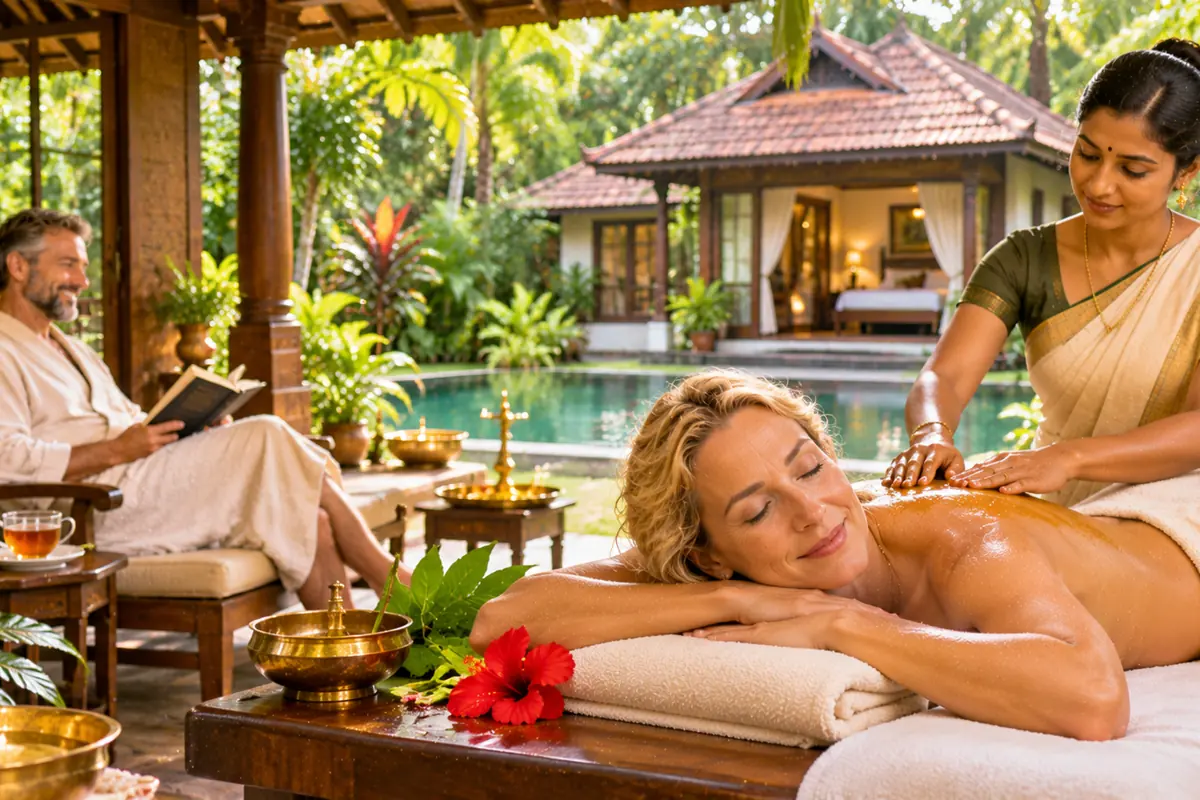
Comfort is part of care. Kerala Tourism's classification checklist expects privacy during examination and treatment, male and female masseurs and separate treatment rooms and bathrooms. Beyond that, you might reasonably look for a quiet room, fresh and well-prepared meals, a calm garden or yoga space and attentive staff.
Individual planning and follow-up
The most valuable feature of a programme is a plan designed for you: a thorough consultation, adjustments as you progress, a clear written summary at the end and a way to stay in touch after you return home. These are the details that turn a pleasant stay into lasting benefit.
Safety comes first
Share your full medical history and all medicines with the doctor, ask what each herbal preparation contains, and keep your own doctor informed. A thoughtful centre welcomes these conversations and treats safety as part of its care.
Questions to ask a centre
- Who is the treating doctor, and what are their qualifications?
- What classification or accreditation does the centre hold?
- How is privacy handled during treatment?
- How is my plan personalised and reviewed?
- What follow-up do you offer after I return?
- What information do you share about the medicines you prescribe?
Looking beyond the brochure
Photographs and descriptions show atmosphere; conversations show substance. A video call with the doctor, a written plan and a thoughtful answer to each of your questions tell you much more than a gallery of images.
Swiss expectations, gently met
Swiss guests often value punctuality, clarity and precision. Ask your centre to confirm your schedule, your plan and your arrangements in writing, and to introduce you to the team. A well-run centre is happy to do this.
The role of the setting
A peaceful garden, quiet rooms and thoughtful design help the body and mind settle. Ask what a centre's grounds and rooms are like, and whether you can have a quiet room.
Meals prepared with care
Freshly cooked meals are central to the treatment. Ask how meals are planned, whether they are adapted to your constitution and how dietary needs are handled.
Yoga and meditation
Gentle yoga and breathing practices add to the programme. Ask whether classes are included, who teaches them and whether they are adapted to your level.
Staff attentiveness
Attentive, warm staff are part of good care. A video call and the way a centre answers your messages give a good sense of this.
Documenting your plan
Ask for a written plan with your treatments, diet and schedule, and a summary at the end that you can share with your own doctor.
Coming home
The best programmes prepare you for home with simple routines, diet guidance and an agreed follow-up schedule.
A few words on pacing
Many guests are surprised by how much the unhurried pace helps. Treat the first few days as a time to settle in rather than to achieve anything, and let the routine of meals, rest and treatment do its quiet work.
Staying connected with home
A local SIM or an international plan makes it easy to message family and share photos. A short daily call home is often enough to keep loved ones reassured and lets you enjoy the rest of your time fully present.
Keeping a simple journal
A few lines each evening about your sleep, digestion, energy and mood help you notice changes, and they give your physician useful detail at your next review. They also make a lovely record of your stay.
Dressing for comfort
Light cotton clothing in soft colours, comfortable sandals and a thin shawl or jacket for air-conditioned rooms suit most programmes. Your centre can tell you whether treatment robes are provided.
Asking questions freely
Good care is a conversation. Ask your physician to explain each treatment, the reason for each medicine and what to expect. A caring doctor will welcome your curiosity and adjust the explanation to what is most helpful for you.
Rest is part of the treatment
Early nights, a quiet afternoon and time outdoors are not extras; they are part of the plan. Give yourself permission to rest without guilt, and let your body settle into the rhythm of the programme.
Choosing a comfortable room
When you discuss accommodation with your centre, mention any needs such as a quiet room, ground-floor access or a bathroom with a shower stool. Small details make a big difference to comfort during your stay.
Looking forward to home
Think ahead to how you will carry your routine home. Even two or three habits, such as warm morning water, a regular dinner time and a short evening walk, can keep the benefits going long after the trip.
Take your time
There is no prize for rushing. Good decisions about travel and treatment are made calmly, with the facts in front of you and your questions answered. If something feels unclear, pause and ask.
Small habits that help
Keep one folder for every document, write down your questions as they arise, and set reminders for key dates. These tiny habits turn a long to-do list into an easy routine.
Asking for things in writing
Whenever a detail matters, such as dates, inclusions or arrangements, ask for it in a short written message. It protects everyone, avoids misunderstandings and gives you a record to refer back to.
Involving your family
Share your plans with someone at home, including your itinerary and your centre's contact details. Many people find that talking the plan through with family brings both reassurance and useful questions.
How MyVaidyam can support you
MyVaidyam is happy to help you find a centre whose care matches the standards you value.
- An online consultation with an Ayurvedic physician.
- Guidance on classification, accreditation and questions to ask.
- Help comparing written plans.
- Visa, travel and arrival support, and follow-up at home.
You are welcome to reach out at any stage with questions.