This short guide covers the practical side of currency, cards and payments for visitors: what to carry, how to pay, where to exchange money safely and how to think about everyday spending beyond your programme. And throughout, it shows how MyVaidyam can walk beside you as your friend and guide.
Ayurveda is offered here as a complementary, supportive approach that works alongside your own doctor's care, never as a replacement for it.
Quick Facts - Currency, Cards and Payments During an Ayurveda Trip to India
| Topic | Summary |
|---|---|
| Currency | Indian rupee |
| Cards | Widely accepted in larger places; less in small shops |
| Cash | Useful for taxis, markets and small purchases |
| Exchange | Authorised counters and banks only |
| Tell your bank | Before you travel |
| Keep | Receipts and a note of everyday spending |
| Visa | e-Medical visa: 60 days from first arrival, triple entry, non-extendable |
| Your companion | MyVaidyam: planning, coordination and support before, during and after |
A calm approach to money
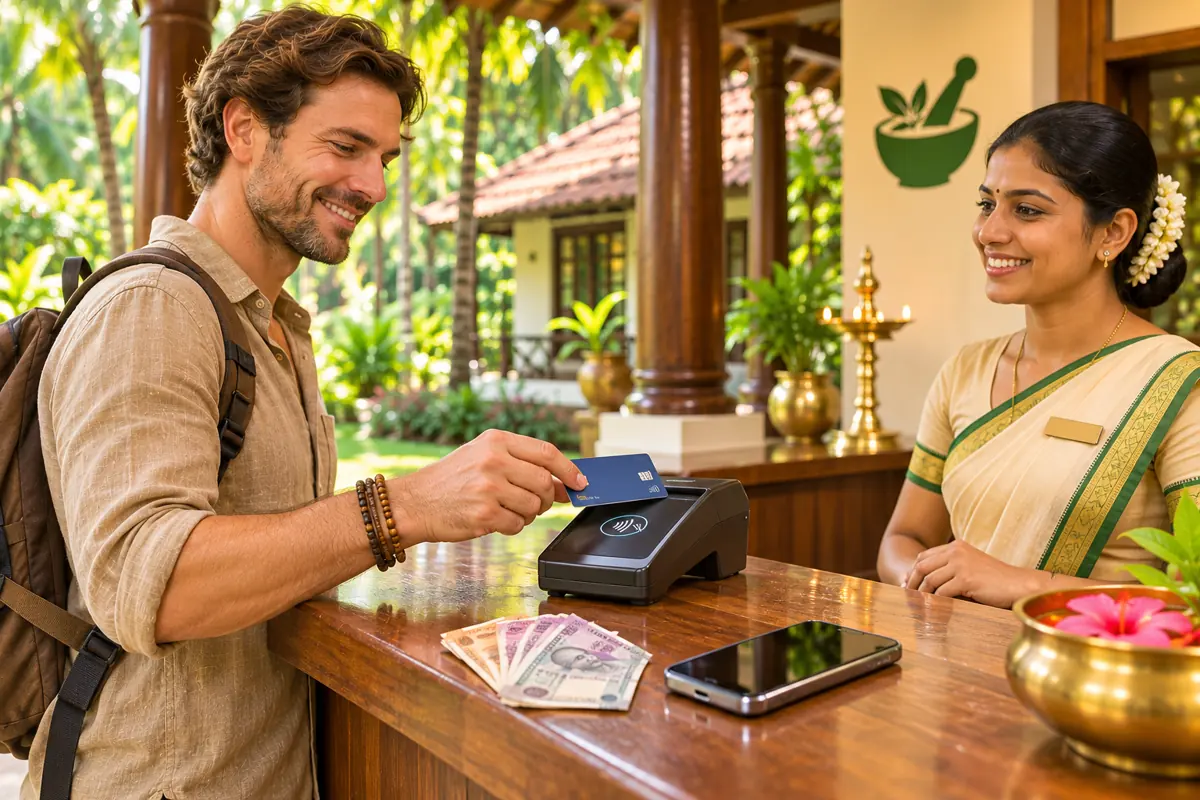
Most visitors find that a simple mix of a card and a little cash is all they need. Your centre will explain how your programme arrangements work, and your day-to-day money is for the small things: transport, snacks, books, a few gifts and the occasional outing.
Ways to pay during your stay
International card
Hotels, shops, larger payments
Local cash
Small purchases, taxis, tips
Digital payments
Where available to visitors
Cash machines
Withdraw in daylight, at banks
Authorised exchange
Licensed counters and banks
Keep a record
Receipts for everything
You will rarely need all of these, but it is good to know the choices.
Cards and your bank
Before you leave, tell your bank that you will be travelling, check that your card works internationally and note the number to call if it is lost. Carry more than one card, kept in different places. Larger hotels, restaurants and shops usually accept international cards, while small stalls and local transport often prefer cash.
Cash and exchanging money
It is helpful to have some local currency on arrival for the first taxi or snack. Airports have authorised exchange counters, and banks and licensed money changers are also reliable. Avoid street offers, however generous they sound, and count notes carefully. Keep your exchange receipts, as they may be asked for if you convert money back.
Cash machines and digital payments
Cash machines are common in cities and towns. Use ones inside banks or well-lit public places, and shield your PIN. Digital payment apps are widespread in India, though some work best with local bank accounts. Ask your host or coordinator which options are easiest for visitors.
Everyday spending beyond your programme
Think of everyday spending in categories rather than amounts: local transport, meals outside the centre, small shopping, tips for service, phone data and any outings. Keeping a little extra in hand gives comfort and flexibility. Ask your centre what is included in your programme arrangements, so that you know exactly what you will pay for separately.
Staying safe with money
- Keep cards and cash in separate places.
- Use a money belt or inner pocket in crowds.
- Keep a photo of your cards' emergency numbers, not the cards themselves.
- Check receipts and change.
- Ask your centre before accepting offers from strangers.
Tipping and small courtesies
Tipping is appreciated but never obligatory, and the custom varies. Small gestures for drivers, helpers and restaurant staff are common, and it helps to keep some small notes handy. Ask your host about local etiquette, and about whether the centre has a way of recognising its staff together.
Before you fly
A week before travel, check your card limits, note your bank's helpline and keep a small amount of rupees ready for your arrival. A short checklist saves time at the airport.
Working alongside your own doctors
Please keep your own doctors informed. Share your medical summary, bring your reports and keep taking whatever you have been prescribed. If you need to stay longer for medical reasons, tell your coordinator early. Please do not change medicines without medical advice.
Planning the journey
Apply for your e-Medical visa on India's official portal, usually with a hospital letter, a few weeks before travel. It is valid for 60 days from first arrival, allows three entries and cannot be extended. Book flights after approval, arrange travel insurance and choose an arrival time that gives you a rested first day. Check the portal for current rules before you apply.
Your friend and hand-holder with everyday arrangements: MyVaidyam
Having a friend who knows the practicalities makes everything easier, and that is where MyVaidyam comes in. We walk with you from your very first question to the day you return home, answering every question patiently and making sure that nothing is left to chance.
- Guidance on what to carry and how to pay.
- Help preparing for your arrival, including a first taxi.
- Advice on what everyday items you may want.
- Support with your e-Medical visa documents and flights.
- Airport pickup and accommodation support.
- A warm point of contact during your stay, and follow-up after you return home.
You are welcome to reach out at any stage. We would be delighted to help you begin.