Goa has many properties that market themselves as detox retreats, but far fewer make it easy to see what a real Panchakarma programme costs, how patients are assessed, which procedures may be prescribed and whether the price includes a room. For an international visitor choosing between a seven-day introduction, a fourteen-day treatment plan and a twenty-one-day residential course, those are the first questions, not whether the retreat has a photo of an oil massage or a beach nearby. This guide compares identifiable Goa centres and their published programmes, and shows why a $545 outpatient quote cannot be set beside a $1,580 residential one.
Quick facts: Best Panchakarma Treatment Centres in Goa
Planning consideration
What an overseas visitor needs to know
Location
Goa. North Goa options include Assagao, Nerul/Candolim, Mandrem and Morjim; South Goa options include Orlim and Colva.
Advertised durations
7, 14, 15, 21 or 28 days depending on the centre; the labels are not interchangeable.
Best comparison
Doctor-led treatment content, accommodation basis, meal and medicine inclusions, procedure oversight and a written total price.
Direct-price examples
Sree Shanti 7-day residential single $820; SWAN 14-day budget cottage double-sharing $1,050 per person; Lotus 15-day peak-season private single $1,010.
Outpatient option
Sree Shanti publishes separate non-residential 7, 14 and 21-day tariffs; you arrange your own room.
Other published packages
YogaGoa 14/21-day packages in GBP; KARE at Soul Vacation 14-night "from" price.
Medical supervision
Ask for the named Ayurveda physician, qualification and registration, pre-arrival history review, on-site availability, monitoring and referral plan.
Evidence
Traditional theory and individual reports do not show that every proposed therapy is effective or safe.
Airports
Goa International, Dabolim (GOI) and Manohar International (GOX); choose by location. A booking is not a visa approval.
Series role
Topic 26 is the broad Goa retreat selector; this guide concentrates on treatment content, cost comparison and safety.
Prices on this page are shown in US dollars, converted from the providers' rupee prices at about 95 rupees per US$1, euro prices at about US$1.10 per euro and pound prices at about US$1.32 per pound. Bank rates and fees differ, and your final quote may be in the provider's own currency.
Key takeaways: Best Panchakarma Treatment Centres in Goa
Compare like with like: residential single, per-person sharing, private double, outpatient and supplement-only prices are different products. Sree Shanti lists a seven-day residential rate of $820 single or $665 per head double, and a separate seven-day outpatient tariff of $285 that does not cover your accommodation and travel. You cannot fairly compare a per-person sharing price at SWAN with a private-room quote elsewhere. Compare single-occupancy prices, not a sharing rate that depends on a second guest. When travelling with a friend or spouse, a double room may be sold as a package for two treated guests, a per-person sharing treatment fee or a hotel-only companion rate. A private double price covers the room or package for two, not necessarily a per-person figure, so do not divide or multiply without the provider's confirmation.
Goa has a Wellness, Ayurveda and Yoga Policy (notified 20 March 2026) with a voluntary quality label; ask for a certificate and verify it. Accreditation under the policy is described as voluntary unless otherwise notified, and some official tourism recognition carries extra compliance conditions. It describes a tiered Goa Wellness Quality Label with one, two and three leaves, assessing staff qualifications, hygiene, treatment standards, transparency, comfort and sustainability. Ask for evidence of any accreditation and check its validity; Goa's March 2026 wellness policy offers a local quality-labelling framework but does not accredit every resort. Why it is not a verified equivalent: Oceanic describes a personalised Ayurveda wellness retreat with a doctor consultation, individual treatments, vegetarian meals, yoga and meditation. It covers standalone centres and wellness services inside hotels and retreats, and distinguishes Ayurveda facilities, yoga centres and non-clinical wellness or resort models, the same distinction this guide uses.
A shorter, gentler, non-invasive stay may suit you better than a full Panchakarma course, and a good centre will say so. Why it belongs: SWAN publishes full price matrices for 14, 21 and 28 days across three cottage categories, and presents fourteen days as its shortest formal Panchakarma course. A credible centre welcomes questions and can explain why non-invasive care might serve you better. A healthy visitor who wants rest may be better matched to a gentle, non-invasive wellness stay than a purgation or emesis protocol. The homestay is described as roughly five to ten minutes from the clinic, so ask who provides daily transport and whether the room is private for the full stay. If you mainly have fatigue or stress, gentle non-invasive therapy may fit better than an intensive regimen, and if you have a chronic disease, ask your usual clinician.
Intensive procedures (purgation, induced vomiting, enemas) need pre-travel screening, not only a first-day form. Never attempt purgation, induced vomiting, enemas or nasal treatment on yourself because of a web page. These differ from procedures that induce vomiting or diarrhoea, give enemas or introduce substances through the nose. If you are considering purgation, induced emesis or enemas, get a careful medical screen before you arrive. If you want induced purgation, prescribed enemas or similar, ask whether they are offered at all and with what safeguards; otherwise shortlist a purpose-built provider. In the traditional framework, Panchakarma refers to specific procedures: Vamana (induced emesis), Virechana (purgation), Basti (medicated enema), Nasya (nasal procedures) and, in some schools, Raktamokshana.
"14 days", "14 nights" and "15 days" are not interchangeable. Lotus sells a 15-day course. Where one provider says "days" and another "nights", the figures are not exactly equivalent; check arrival and departure boundaries. SWAN calls fourteen days its shortest Panchakarma course, while Sree Shanti advertises a fourteen-day "classical cleanse" pathway; both are provider descriptions, not independent recommendations.
Outpatient is not automatically cheaper: you still pay for a hotel, meals and transfers. Lotus Nature Cure in Orlim publishes a specific fifteen-day Panchakarma stay with cheaper short wellness alternatives; KARE shows a higher-priced fourteen-night package in a hotel retreat. It would be wrong to call Lotus universally cheaper from those numbers, since duration and inclusions differ, and Sree Shanti and SWAN may differ in transfers, tests, medicines and treatment plans. June to September (monsoon): a retreat can still suit indoor routines and quiet surroundings, but paths can be slippery and transfers harder. It can work if you already have a comfortable hotel or family accommodation nearby and can attend reliably, but you must add lodging, meals, taxis and any extra medicines or tests. If you separately book a hypothetical hotel at $42 a night for fourteen nights, that adds $590, giving an illustrative subtotal of $1,140 before meals, transport, extra medicines and tests.
How MyVaidyam can help you
Planning Panchakarma in Goa? Send your goals, reports, dates and budget, and MyVaidyam will help you compare centres and itemised quotations.
What qualifies as a Panchakarma treatment programme
In the traditional framework, Panchakarma refers to specific procedures: Vamana (induced emesis), Virechana (purgation), Basti (medicated enema), Nasya (nasal procedures) and, in some schools, Raktamokshana. Facilities may add preparatory oil application, massage and heat treatment, and a post-procedure diet phase. A resort's five-massage offer is not automatically a Panchakarma course; equally, leaving out dramatic elimination procedures may be the right decision after assessment.
The process is usually described in three phases: Purvakarma (assessment and preparation, sometimes diet change, external oleation or physician-directed internal preparations), Pradhanakarma (the main intervention, if appropriate) and Paschatkarma (recovery and dietary transition). A credible clinician explains the indication for each element, alternatives, likely discomfort, possible adverse effects, stopping criteria and escalation. Calling something "natural" does not make it risk-free.
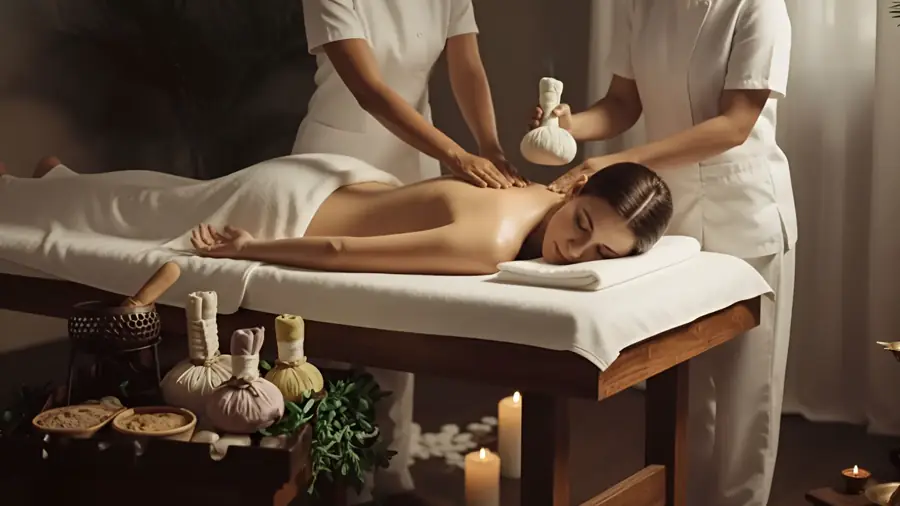
Massage versus prescribed procedures. Abhyanga uses oils and manual technique, Shirodhara is a relaxation-oriented oil stream, Swedana is warming or steam, and Kizhi uses heated poultices. These differ from procedures that induce vomiting or diarrhoea, give enemas or introduce substances through the nose. You should be able to consent to each separately, and therapists should not change an invasive procedure's dose or timing without physician oversight.
The limits of "detox". The liver and kidneys already process and remove substances. A claim that a programme removes a particular toxin, normalises lab results or reverses a chronic disease needs reliable evidence for that specific claim. Terms such as ama and dosha are traditional concepts, not validated laboratory diagnoses. A centre can offer a culturally meaningful wellness experience without claiming to replace diagnosis or proven treatment.
Seven, fourteen or twenty-one days
Seven days: introductory and individually limited. A week can allow an initial consultation, selected relaxation therapies, supportive meals and sleep, and an introduction to Ayurveda. Some providers also advertise a seven-day mild Panchakarma or Virechana programme, but whether you can safely complete preparation, an indicated intervention and recovery in that time is a clinical question that the brochure number does not settle. Sree Shanti advertises seven-day residential and outpatient options; Ashiyana's seven-day Virechana fee is a supplement to a Yoga Holiday, or a separate non-residential price. These are distinct products.
For first-timers, a short stay is often best seen as a structured wellbeing break, not comprehensive treatment of complex disease. Ask whether the day count includes arrival, whether assessment happens on the first morning, and whether there is time to monitor problems. If you want to tour Goa for half the week, do not pay for a residential course whose schedule makes sightseeing impractical.
Fourteen days: a common treatment-and-stay format. SWAN, Sree Shanti, YogaGoa and KARE all advertise it. Accommodation and food are often fairly standard while treatment remains individual. What matters is what the physician can assess and monitor before and after any procedure. SWAN calls fourteen days its shortest Panchakarma course, while Sree Shanti advertises a fourteen-day "classical cleanse" pathway; both are provider descriptions, not independent recommendations. Ask whether the package allows a switch to a gentle, non-invasive schedule if a procedure becomes unsuitable, who decides, whether the price changes, and whether blood tests are indicated. The clinic should record your conventional medicines and not assume that "detox" means stopping them.
Twenty-one days: more time, not automatically more benefit. SWAN, Sree Shanti and YogaGoa offer it. Longer stays give time for an unhurried routine, follow-up consultations and gradual diet transitions, but they also raise cost, travel budget, exposure to herbal products and the chance of a medical or logistical problem. Without strong comparative outcome evidence for your condition, no centre should promise that 21 days is curative or that an extension buys proportionate benefit. Ask about mid-course reviews, therapist continuity, medicine supply, days without procedures, accessible accommodation and what happens if you stop early.
Is this a true prescribed Panchakarma course or mainly a wellness week?
Sree Shanti; Ashiyana supplement
14 days
More structured sequence and recovery time if medically appropriate
Are therapy, medicines, room, meals and transfers all in the price?
SWAN; Sree Shanti; YogaGoa; KARE
15 days
Provider-specific duration, close to but not the same as 14 days
Does the budget need 15 nights and different flights?
Lotus Nature Cure
21 days
Extended residential schedule and follow-up
Is there meaningful physician review and an individual reason for 21 days?
SWAN; Sree Shanti; YogaGoa
28 days
Extended schedule at selected facilities
What happens in week four, and is it necessary?
SWAN; Sree Shanti
Treatment centres and published packages compared
This table separates service models rather than ranking by unverified outcomes. A lower price may exclude accommodation, and a higher one may buy a better room rather than stronger treatment. All prices depend on dates, personal eligibility and final written confirmation.
Centre
Goa location
Treatment and stay model
Published benchmark
Essential verification
Sree Shanti Wellness
Nerul / Candolim area, North Goa
Ayurveda clinic plus partner homestay; also outpatient
Add full stay cost; screen for invasive-treatment risk
The Postcard Ayurveda
Velha Goa
Premium physician-led residential, with Sitaram Ayurveda
14-night single $9,210, shown only until 31 Aug 2026
Obtain a new tariff; do not present the expired offer as current
Oceanic Yoga
Morjim, North Goa
Doctor-consultation wellness retreat; Panchakarma not automatic
Scheduled 10- night $1,100 shared / $1,430 private shown; ask for the current model
Is medically supervised Panchakarma offered for your dates?
Goa government Ayurveda OPDs
State facilities
Physician consultation; not a residential package
No comparable residential tariff
Useful for local orientation; not a resort substitute
This is not nine clinically equivalent Panchakarma centres: the last two are explicitly different alternatives. Inclusion is based on publicly identifiable services and decision-useful information, not payment, verified outcomes or inspection, and we do not certify or rank the facilities.
Top 9 Panchakarma Treatment Centres in Goa: what each centre offers
Discover the list of Panchakarma treatment centres in Goa, offering authentic Ayurveda treatment, Panchakarma, doctor-led therapies and supervised healing programs.
Illustrative image
Sree Shanti Wellness, Nerul / Candolim area
Why it belongs in a treatment-first shortlist: its public material separates residential and non-residential care clearly, with 7, 14, 21 and 28-day durations.
Goa location: Nerul / Candolim area, North Goa
Treatment and stay model: Ayurveda clinic plus partner homestay; also outpatient
Essential verification: Included interventions, room-to-clinic transfers, doctor coverage
Booking tips:
Is the exact legal entity, physical address and treatment location confirmed?
Is the current responsible Ayurveda physician named, qualified and professionally registered?
Has the centre reviewed your health history before you commit to non-refundable travel?
What duration is recommended, and why is it suitable for you?
Is this classical Panchakarma, a personalised wellness retreat, or mainly massage and yoga?
Which procedures may be involved, and which are optional or potentially inappropriate?
Ask for: seven-day and fourteen-day single-room quotes, a sample schedule, the physician's name and registration, excluded tests and medicines …
Read moreShow less
how the homestay links to clinical monitoring, the nearest emergency facility, whether non-invasive therapy only is accepted, and how the price changes if the doctor decides against an intensive procedure.
The operator describes a physician-supervised programme and a nearby partner homestay rather than a self-contained hotel, which can suit a guest who wants to know exactly what is being bought, provided the daily movement between room and clinic is acceptable.
Residential pricing is stated as $820 single or $665 per head double for seven days; $1,580 single or $1,260 per head double for fourteen days; and $2,320 single or $1,830 per head double for twenty-one days. The 28-day single amount is $3,050. Residential prices are described as including partner accommodation, three vegetarian meals, daily physician-directed therapies, prescribed internal medicines during the course and airport transfers. The homestay is described as roughly five to ten minutes from the clinic, so ask who provides daily transport and whether the room is private for the full stay.
The outpatient page shows $285 (7 days), $545 (14) and $790 (21). These are not accommodation packages: you book a room, add meals and local transfers, and confirm what supervision exists outside therapy hours. Another Sree Shanti page rounds the seven-day figure differently, so ask for a dated quote, and note that outpatient tests may cost extra.
The key question is how the clinician decides that you may receive any procedure, not how many are listed. Internal oleation, purgation, nasal therapy and enemas can matter greatly with dehydration risk, frailty, kidney disease, diabetes, gastrointestinal disease or relevant medicines. "Deep healing" is marketing wording, not a measured outcome.
SWAN Ayurveda, Assagao
A two-week stay in a budget cottage is $1,050 per person double sharing or $1,580 single; standard and deluxe cost more. A three-week budget cottage is $1,530 per person sharing or $2,290 single.
Goa location: Assagao, North Goa
Treatment and stay model: Residential Panchakarma, yoga and cottages
Published benchmark: 14d $1,050 per person double sharing (budget cottage); 21d $1,530 on the same basis
Essential verification: Per-person occupancy, deposit, extras, medical assessment
Booking tips:
What duration is recommended, and why is it suitable for you?
Is this classical Panchakarma, a personalised wellness retreat, or mainly massage and yoga?
Which procedures may be involved, and which are optional or potentially inappropriate?
How is informed consent obtained separately for more intensive interventions?
What monitoring and doctor access will you have, including weekends and nights?
What current, verifiable registration or quality certificate exists, and when does it expire?
Why it belongs: SWAN publishes full price matrices for 14, 21 and 28 days across three cottage categories, and presents fourteen days as its shortest formal Panchakarma course.
Read moreShow less
Its material says programmes are prescribed and supervised by resident physician Dr Siddhesh Bandekar; that is provider-reported, not credential-checked here.
Read "per person" carefully: two people sharing each pay their rate, and a solo traveller cannot assume the shared rate without an agreed roommate. Twenty-eight-day plans are also published.
Booking terms deserve as much attention as clinical descriptions: a non-refundable 30% deposit, a card-processing surcharge and separately charged airport transfers were shown, and other treatments may cost extra. Confirm the latest terms on your invoice. An extended retreat is a big commitment, and refund terms may matter more than a small price gap. If you take anticoagulants, steroids, insulin, thyroid medicine or several prescriptions, the clinician must know, and you may need independent advice before any diet or medicine change.
Ask for: a fourteen versus twenty-one-day comparison in the same cottage category, itemised procedures and excluded medicines, deposit and refund terms, the medical team schedule, transfer cost, the intake and consent forms, weekend treatment days, and unexpected-illness handling.
Illustrative image
Lotus Nature Cure, Orlim (South Goa)
The tariff page observed lists fifteen days at $1,010 for a private single room in peak season (16 October to 15 April) and $1,520 for a private double room covering two people. Off-season it lists $865 private single and $1,310 private double.
Treatment and stay model: Residential Ayurveda, naturopathy and yoga with a dedicated Panchakarma plan
Published benchmark: 15d peak-season private single $1,010; off-season $865
Essential verification: Current tariff page; whether procedures are extra
Booking tips:
How is informed consent obtained separately for more intensive interventions?
What monitoring and doctor access will you have, including weekends and nights?
What current, verifiable registration or quality certificate exists, and when does it expire?
Which exact room is offered, and what are its accessibility, noise, bathroom and privacy features?
Are prices per person, per room, per couple or treatment supplements only?
Is the amount based on days or nights, and what are check-in and departure times?
Why it belongs: Lotus displays an identifiable fifteen-day Ayurveda-Panchakarma programme and separates it from shorter wellness offerings.
Read moreShow less
It also shows why programme length must be named accurately rather than rewriting a 15-day tariff as a two-week offer.
These are programme prices; still ask which treatments, medicines and investigations are included. Shorter, cheaper wellness plans on the same site must not be substituted into a Panchakarma comparison.
The operator describes vegetarian food, yoga, accommodation and doctor and therapist services, while airport pickup, laundry, sightseeing, extra therapies and activities may cost extra. The current page describes a 25% advance and refund conditions tied to cancelling at least thirty days before arrival. An older page with a different season structure is also online, so cite the exact current tariff page and confirm the applicable dates.
A private double price covers the room or package for two, not necessarily a per-person figure, so do not divide or multiply without the provider's confirmation. If only one partner wants Panchakarma, the price may differ entirely. Ask about access to conventional care and how someone with limited mobility reaches the therapy area.
Ask for: a fifteen-day estimate for your exact dates, whether it means 14 or 15 nights, consultation and treatment day counts, whether oils, herbs and tests cost extra, and written refund and medical-cancellation terms.
Illustrative image
YogaGoa / Purple Valley
Prices are in pounds. Winter (October to April): $2,190 for fourteen days and $3,100 for twenty-one in a standard room, with dearer garden-view options. July to August standard-room figures are $1,760 and $2,480.
Goa location: North Goa
Treatment and stay model: Ayurveda-plus-yoga residential, 14/21 days
Published benchmark: Winter 14d standard $2,190; 21d standard $3,100
Which exact room is offered, and what are its accessibility, noise, bathroom and privacy features?
Are prices per person, per room, per couple or treatment supplements only?
Is the amount based on days or nights, and what are check-in and departure times?
Are consultations, standard therapies, medicines, meals and specified tests included?
Is there an allowance for additional treatment, or would it cost more?
Are airport transfer, daily clinic transfer, laundry, taxes and payment fees included?
Why it belongs: YogaGoa markets a dedicated fourteen and twenty-one-day Ayurveda and Panchakarma programme rather than only a spa menu.
Read moreShow less
The model mixes treatment and wellbeing (standard or garden-view rooms, vegetarian meals, individualised therapies, yoga or meditation), so verify the doctor's precise role, the procedures available and whether the course is mainly gentle therapy or a more intensive protocol.
These are seasonal package listings, not rupee quotes or availability confirmations; do not apply an arbitrary exchange rate or assume flights and optional extras are included.
Clarify whether yoga is optional on days of fatigue, diet change or a prescribed procedure, since vigorous exercise may be unsuitable after some interventions. Ask whether all guests follow the same meal plan, whether prescribed medicines are standard, and whether a physician sees you more than once. The site describes a general wellness team without establishing each clinical qualification.
Ask for: a written 14 and 21-day quote in the same room category, a precise list of consultations and therapies, the physician's registration and availability, bathroom and air-conditioning specifications, and a refund policy covering medical non-admission.
KARE Ayurveda at Soul Vacation, Colva
The fourteen-night Classical Panchakarma is advertised from $2,580, with daily physician review, preparation and main interventions as appropriate, and individually directed diet, therapies, yoga and restorative activity.
Goa location: Colva, South Goa
Treatment and stay model: Small doctor-led unit inside a retreat hotel
Published benchmark: 14-night Classical Panchakarma from $2,580
Essential verification: Meaning of "from", tax, room and therapy exclusions
Booking tips:
Are consultations, standard therapies, medicines, meals and specified tests included?
Is there an allowance for additional treatment, or would it cost more?
Are airport transfer, daily clinic transfer, laundry, taxes and payment fees included?
What meals are provided, and how are allergies and special medical diets managed?
What are the cancellation and rescheduling terms for visa refusal or medical unfitness?
Where would you be evaluated if an urgent conventional medical problem arose?
Why it belongs: KARE is presented as a small doctor-led service at Soul Vacation rather than a hotel that merely lists oil massages.
Read moreShow less
The site names resident physician Dr Niranjan Bhide with BAMS and MD (Ayurveda) qualifications and describes consultation-led plans; registration and staff presence still need verification.
"From" is an entry-level marketing rate, not necessarily what you will pay for a given month or room. The centre also markets a seven-night lighter Reset from $1,000, which is not a substitute for the fourteen-night classical course.
The setup may suit visitors who want a small treatment environment with hotel amenities and easy South Goa access. Still ask about post-procedure observation, who is on call at night, whether the physician visits daily including weekends, and what happens if a problem exceeds the centre's scope. Make an accompanying relative's meal and therapy costs explicit.
Ask for: final pricing for your dates with taxes, room and occupancy, exactly which medicines, tests and interventions are included, current credentials and emergency plan, extra pre-departure nights, and whether the fourteen nights include a departure-day review.
Ashiyana Goa, Mandrem
Avoid turning $550 into a "seven-day all-inclusive Panchakarma retreat". A residential guest must add the Yoga Holiday package and check whether food, medicines, taxes and transfers are included.
Goa location: Mandrem, North Goa
Treatment and stay model: Yoga Holiday plus separately charged treatment module
Published benchmark: 7d Virechana $550 supplement; $660 non-residential
Essential verification: Add full stay cost; screen for invasive-treatment risk
Booking tips:
What meals are provided, and how are allergies and special medical diets managed?
What are the cancellation and rescheduling terms for visa refusal or medical unfitness?
Where would you be evaluated if an urgent conventional medical problem arose?
Can the provider issue the documents for your intended visa category, if required?
What written summary, medicine details and follow-up contact will you receive?
Is the exact legal entity, physical address and treatment location confirmed?
Why it belongs: Ashiyana openly prices treatment modules rather than calling every short detox a bundled room-and-treatment package.
Read moreShow less
Seven-day Virechana is $550 on top of the Yoga Holiday accommodation rate, or $660 non-residential; it also advertises a seven-day Basti programme, a ten-day Vamana programme and a twelve-day combined Virechana and Basti programme. These are different interventions with different risks and preparation.
The euro amount may also attract exchange and bank costs, so ask for one invoice in one currency with the supplement itemised.
The Virechana page lists an initial consultation with the Ayurveda doctor, massages and other treatments, then further care on clinical advice. If you are considering purgation, induced emesis or enemas, get a careful medical screen before you arrive. Informed consent should cover dehydration, blood-pressure disturbance, medicine interruption, adverse reactions and what symptoms need escalation. "Traditional detox" alone is not an adequate justification.
Ask for: whether you need an intensive procedure at all; the full Yoga Holiday plus supplement cost with dates and room; the supervising physician's name and registration; criteria for declining the procedure; and what substitution or refund applies if it proves unsuitable. A non-invasive programme may suit some short-stay guests better.
Illustrative image
The Postcard Ayurveda, Velha Goa
The site shows 7, 14 and 21-night packages, including a 14-night single of $9,210 and double of $12,100, but states the tariffs were valid only until 31 August 2026. They are historical benchmarks, not current prices.
Treatment and stay model: Premium physician-led residential, with Sitaram Ayurveda
Published benchmark: 14-night single $9,210, shown only until 31 Aug 2026
Essential verification: Obtain a new tariff; do not present the expired offer as current
Booking tips:
Can the provider issue the documents for your intended visa category, if required?
What written summary, medicine details and follow-up contact will you receive?
Is the exact legal entity, physical address and treatment location confirmed?
Is the current responsible Ayurveda physician named, qualified and professionally registered?
Has the centre reviewed your health history before you commit to non-refundable travel?
What duration is recommended, and why is it suitable for you?
Why it belongs: The Postcard runs a premium Ayurveda model with Sitaram Ayurveda, describing residential physician consultations, personalised therapies, restorative yoga, diet and medicines in a small retreat.
Read moreShow less
Its staffing and partnership details help an enquiry but are not an independent assessment of outcomes, credentials or emergency readiness.
The earlier description included accommodation, meals, physician visits, therapies, medicines during the stay and airport transfers, with laundry excluded and a discretionary service charge; each element needs fresh written confirmation.
This is a case study of a high-budget, treatment-integrated stay. Higher spending does not buy stronger evidence for Panchakarma or better emergency capability. People with serious disease should get appropriate medical care first. Ask whether an independent conventional specialist can be consulted and how transport is arranged.
Ask for: a newly dated quotation, the scope of clinical supervision, per-person versus couple pricing, service charges, daily treatment hours, current specialist roster, emergency referral site and a refund agreement. Do not claim the old price is still available.
Illustrative image
Oceanic Yoga, Morjim (conditional alternative)
Why it is not a verified equivalent: Oceanic describes a personalised Ayurveda wellness retreat with a doctor consultation, individual treatments, vegetarian meals, yoga and meditation.
Goa location: Morjim, North Goa
Treatment and stay model: Doctor-consultation wellness retreat; Panchakarma not automatic
Published benchmark: Scheduled 10- night $1,100 shared / $1,430 private shown; ask for the current model
Essential verification: Is medically supervised Panchakarma offered for your dates?
Booking tips:
Is the current responsible Ayurveda physician named, qualified and professionally registered?
Has the centre reviewed your health history before you commit to non-refundable travel?
What duration is recommended, and why is it suitable for you?
Is this classical Panchakarma, a personalised wellness retreat, or mainly massage and yoga?
Which procedures may be involved, and which are optional or potentially inappropriate?
How is informed consent obtained separately for more intensive interventions?
Ask for: the exact programme specification, dates, accommodation, the registered clinician's scope, therapy hours, health screening requirements and whether the quote is current.
Read moreShow less
If you want induced purgation, prescribed enemas or similar, ask whether they are offered at all and with what safeguards; otherwise shortlist a purpose-built provider.
It also advertises scheduled ten-night programmes at $1,100 shared and $1,430 private, but its current site emphasises shorter flexible wellness stays and states that it is not a medical programme for diagnosis or cure. Anyone seeking Panchakarma should ask what, if any, physician-supervised protocol is available on their dates.
The public schedule and flexible-arrival text appear together, so do not infer that a listed ten-night batch is bookable now. The approach may suit a traveller wanting consultation and gentle therapies such as Abhyanga or Shirodhara, but it is not shown to offer the same procedures as a dedicated Panchakarma clinic.
Illustrative image
Public Ayurveda outpatient services, Goa Department of AYUSH
Goa's government AYUSH network lists Ayurveda outpatient consultation sites in district hospitals, community health centres and primary health facilities.
Booking tips:
Is this classical Panchakarma, a personalised wellness retreat, or mainly massage and yoga?
Which procedures may be involved, and which are optional or potentially inappropriate?
How is informed consent obtained separately for more intensive interventions?
What monitoring and doctor access will you have, including weekends and nights?
What current, verifiable registration or quality certificate exists, and when does it expire?
Which exact room is offered, and what are its accessibility, noise, bathroom and privacy features?
Before booking: Confirm which services are running at a given facility and whether visitors from abroad are accepted.
Read moreShow less
This is an alternative for a professional local consultation rather than a residential booking. A government outpatient service does not by itself offer the room, meals and daily therapies of a private 14-day package, and the listing is not an endorsement of any private retreat. If you are unwell or need specialist care, identify the appropriate conventional hospital independently.
Cost comparison: like-for-like pricing
A correct Panchakarma quote can contain five layers: professional consultation; prescribed treatment sessions and medicines; residence and meals; transport and incidentals; and tax and payment conditions. Centres bundle these differently, so ask for a written total-stay estimate for exactly the same number of travellers, room privacy, season and duration before ranking anything on affordability.
Six examples on each provider's own published basis
Example
Advertised amount
Simple daily reference*
Key caveat
Sree Shanti 7 days, residential single
$820
$115 per day
Room and meals included per provider; verify days versus nights
Sree Shanti 14 days, residential single
$1,580
$115 per day
Provider description, not a confirmed quote
Sree Shanti 14 days, outpatient
$545
$39 per treatment day
No lodging; add your own hotel, meals and transfers
SWAN 14 days, budget cottage, double sharing
$1,050 per person
$75 per person per day
A solo guest needs the higher single quote
Lotus 15 days, peak-season private single
$1,010
$67 per day
Fifteen days, not fourteen; confirm inclusions
KARE 14-night Classical Panchakarma
From $2,580
From $185 per night
"From" price only; confirm taxes and room
*Daily figures are simple division for comparison, not provider-announced rates, and they do not justify a proportional price for a shorter stay. Where one provider says "days" and another "nights", the figures are not exactly equivalent; check arrival and departure boundaries.
Why outpatient is not automatically cheaper. Take Sree Shanti's fourteen-day outpatient benchmark of $545. If you separately book a hypothetical hotel at $42 a night for fourteen nights, that adds $590, giving an illustrative subtotal of $1,140 before meals, transport, extra medicines and tests. That is not a quote from any hotel, and real accommodation may cost far more or less. The $1,580 residential single includes different services and a specific partner arrangement, so setting $545 beside it without adjustment would mislead.
Outpatient care can work if you are staying with family or already have suitable accommodation close to the clinic. It is less convenient if you need monitoring, enforced rest or several daily transfers. Discuss the risk of a missed appointment, or a long taxi ride after a tiring procedure, before choosing it.
Price factors in a 14 or 21-day booking
Occupancy: double-sharing is per person at SWAN and Sree Shanti, while Lotus's private double covers two people. Get an explicit total for your exact group.
Room class: an upgrade may not change treatment intensity.
Season: the same provider may publish different monsoon and winter rates.
Currency: convert euro and pound prices only with a dated rate and stated bank charges; the bill may still be payable in the original currency.
Medical extras: tests, take-home medicines, additional therapies and specialist reviews may sit outside the base price.
Transfers: airport, pickup time, flight-delay waiting charges and room-to-clinic travel need clarifying.
Deposits and cancellation: a large non-refundable deposit is risky where a visa, medical screening or a family emergency may postpone travel. Ask what happens if the physician declines a planned procedure on arrival, whether you can switch to a lighter programme and what part of the quote is retained. Check that travel insurance covers the relevant events; a wellness retreat is not necessarily insured as medical treatment.
Medical screening before you travel
A retreat may hand you a health form on arrival, but international travel is costly and tiring. For an intensive treatment, a responsible process starts before non-refundable flights and deposits. A pre-travel screen is not an endorsement of Panchakarma; it helps avoid exposing an unsuitable traveller to a hazardous regimen far from their usual team. A qualified professional should do it, and in complex cases your own treating clinician should be involved.
Disclose through a secure channel: existing diagnoses, recent hospital stays or surgery, allergies, prescriptions and supplements, pregnancy or possible pregnancy, major diet restrictions, history of fainting or dehydration, blood pressure issues, kidney, liver or gastrointestinal problems, bleeding disorders and past reactions to treatment. Say whether you travel alone, can manage stairs and can access your records. The reviewer should document which procedures are proposed and why, not rely on a generic constitution questionnaire alone.
Extra caution applies with diabetes, unstable heart disease, kidney impairment, significant liver disease, anaemia, frailty, malnutrition, active infection, inflammatory bowel disease, gastrointestinal ulcers or bleeding, complex psychiatric illness, chemotherapy, and anticoagulant or immunosuppressant use. This is not an exhaustive contraindication list or an eligibility ruling. A procedure that causes fluid shifts, diarrhoea or vomiting is especially risky if you already have a fluid or electrolyte problem, and a physician may advise avoiding it altogether.
Medication reconciliation is essential. Insulin or other glucose-lowering drugs may need consistent food intake and close monitoring; diuretics add dehydration risk; anticoagulants and antiplatelets need care around invasive treatments; psychiatric medicines must not be stopped because a brochure suggests "cleansing". Herbal preparations can alter drug effects or add allergens, so ingredients, manufacturer, batch and intended use should be available. Only an appropriate prescriber should change your prescriptions.
Before any intensive course, agree the pre-treatment assessment, informed consent for each intervention, expected and concerning symptoms, review frequency, vital-sign checks where warranted, the policy for suspending therapy, access to fluids and conventional assessment, and a reasonable referral and transport arrangement. If a centre refuses to discuss risks, insists that all regular medicines be stopped, or promises to cure cancer, infertility or kidney disease, do not proceed on the strength of its marketing.
Procedure safety: questions that prices do not answer
If you want only relaxation, you do not need purgation or enemas to "complete" a package. A traditional name does not prove a procedure will help a particular patient; the risk depends on the substance, route, your health, technique, preparation and supervision.
Therapy
What the term generally describes
Practical risk questions
Abhyanga
Massage with oils
Any allergy, skin infection, open wound, pressure or mobility limitation?
Shirodhara
A stream of warmed liquid or oil over the forehead
Are temperature, skin sensitivity, eye protection and cleanliness controlled?
Swedana
Steam or other heating
Could heat cause dizziness, burns or worse dehydration?
Virechana
Physician-prescribed purgation
What are the hydration plan, drug interactions, electrolyte concerns and escalation triggers?
Vamana
Induced vomiting
Why is it considered, and how are aspiration and electrolyte change managed?
Basti
Medicated enema
What hygiene protocol, consent process, formulation and bowel screening apply?
Nasya
Substances given through the nose
What formulation and dose are used, and what infection or airway precautions apply?
This table is a patient-safety question list, not a procedure manual. Never attempt purgation, induced vomiting, enemas or nasal treatment on yourself because of a web page. A clinician should explain benefits and harms for your history, obtain consent and let you refuse without pressure.
Red flags during a stay: persistent vomiting or diarrhoea, being unable to keep fluids down, fainting, severe weakness, confusion, markedly reduced urination, blood in stool or vomit, worsening breathlessness, chest pain, fever or severe allergic symptoms. These are not signs that detoxification is "working". Ask for urgent conventional assessment, and know the local emergency number and your insurer's emergency procedure before you start.
Evidence and wording. Many guests report rest, routine, lower stress or better sleep during a structured retreat. Those experiences are real to them but cannot show that a specific Panchakarma intervention cured a diagnosed condition. The US NCCIH notes limited and often weak evidence for many Ayurvedic uses and warns that some preparations may contain hazardous levels of heavy metals. Product safety, dose and interactions matter even when a medicine is marketed as ancient or plant-based.
Goa's 2026 wellness policy and checking credentials
The Goa Wellness, Ayurveda and Yoga Policy, 2026, notified in the Goa Official Gazette on 20 March 2026, sets a framework for regulation, quality labelling, professional standards and monitoring of facilities offering wellness, Ayurveda and yoga services. It covers standalone centres and wellness services inside hotels and retreats, and distinguishes Ayurveda facilities, yoga centres and non-clinical wellness or resort models, the same distinction this guide uses.
It describes a tiered Goa Wellness Quality Label with one, two and three leaves, assessing staff qualifications, hygiene, treatment standards, transparency, comfort and sustainability. Accreditation under the policy is described as voluntary unless otherwise notified, and some official tourism recognition carries extra compliance conditions. The policy does not mean every operating centre holds a label, or that any named provider has been awarded one.
For each shortlisted facility, ask whether it holds a currently valid Goa Wellness Quality Label or another named, verifiable credential, and request the certificate number, issuing authority, category, expiry date and an official verification link. If it claims NABH or another accreditation, verify the exact legal entity and scope; a hospital's accreditation does not pass by implication to an unrelated resort. Keep separate: business registration, a clinician's professional registration, tourism classification and healthcare accreditation.
The Department of AYUSH publishes a separate list of state outpatient services, useful as a public reference but not a private-retreat certificate. Do not apply Kerala's Ayur Gold or Ayur Diamond classifications to Goa; they belong to Kerala's separate tourism framework. Date-stamp every certificate check, and drop an unverified claim rather than decorating a profile with a badge.
North Goa or South Goa
North Goa: Assagao, Nerul, Mandrem, Morjim. The shortlisted facilities differ in atmosphere. SWAN in Assagao offers cottages and a yoga-led residential rhythm. Sree Shanti's Nerul-area arrangement links a clinic with a nearby homestay. Ashiyana in Mandrem is built around a yoga holiday plus a treatment supplement. Oceanic in Morjim is better described as personalised Ayurveda wellness unless it confirms a specific medical Panchakarma service. Choosing "North Goa" alone does not narrow the clinical decision.
Some northern beach zones have busy cafes, events and seasonal traffic. For an intensive residential schedule, ask whether your room is away from late-night music, whether a physician and therapists are on site daily and whether you need a taxi to attend treatment. For outpatient packages, proximity matters even more, because repeated long journeys after a tiring procedure are not comfortable. The closest airport for the actual route may be Manohar International (GOX), but check current flights and driving conditions rather than assuming.
South Goa: Orlim and Colva. Lotus Nature Cure in Orlim publishes a specific fifteen-day Panchakarma stay with cheaper short wellness alternatives; KARE shows a higher-priced fourteen-night package in a hotel retreat. Both may suit someone who prefers the south, but a quiet room, treatment access and clinical policy matter more than the label. Dabolim (GOI) may suit some southern destinations, though real travel time depends on flights, roads and location. Ask for a transfer quote naming the airport, baggage, late arrival and waiting charges, and consider a recovery night before your first assessment rather than starting an intensive procedure straight after international travel.
Old Goa / Velha Goa: a premium alternative. The Postcard sits in a different hospitality and price category. Judge it on its current clinical team, treatment plan and a newly issued quote, not an expired rate. Privacy, staff-to-guest ratio, transfers and room design may matter, but they are not evidence of better medical outcomes.
Season, climate and comfort during treatment
Goa's main tourist season concentrates in the cooler months, and some providers charge more then. Lotus distinguishes a peak period from 16 October to 15 April, and YogaGoa publishes different monsoon and winter prices. These are provider pricing periods, not guarantees about weather, availability or staffing on any date.
October to March: appealing for travel and outdoor rest, but some beach districts are busy and tariffs may rise over holidays. Ask about night noise and the property's quiet hours. A 21-day guest may value reliable sleep and accessible treatment areas over a sea view.
April to May: hot and humid. Ask how treatment rooms are cooled, whether your room's air-conditioning is reliable, and how food, hydration and any heat treatment are handled. If you are prone to fainting, dehydration or blood-pressure changes, discuss climate exposure with a clinician. A long steam session is not safe simply because a brochure calls it traditional.
June to September (monsoon): a retreat can still suit indoor routines and quiet surroundings, but paths can be slippery and transfers harder. If mobility is limited, ask for photos of sheltered paths, bathrooms, stairs and the route from room to treatment. Sea swimming and coastal outings may be restricted. Lower prices do not replace a suitable plan.
Accommodation, diet, privacy and companions
A 21-day course is partly a clinical decision and partly a long residential stay. Check the exact room, not the gallery: mattress, air-conditioning, fans, bathroom safety, hot water, ventilation, insect protection, laundry, Wi-Fi, power backup and noise. If you need a ground floor or no stairs, document it before paying. A photo captioned "deluxe cottage" does not prove that category is available on your dates.
Food is not incidental. Providers often include vegetarian meals and may prescribe a diet sequence around procedures. If you have diabetes, allergies, kidney disease, pregnancy-related needs or a history of disordered eating, discuss restrictive plans with a qualified professional. Ask about alternatives for intolerances, whether meals are fixed or flexible, and who monitors nutrition on a longer stay. "Sattvic" is not allergen information or a balanced diet.
When travelling with a friend or spouse, a double room may be sold as a package for two treated guests, a per-person sharing treatment fee or a hotel-only companion rate. Ask for those totals separately. A partner who only wants to stay, eat and do yoga should not pay for an intensive course. Ask about guest access to treatment areas, privacy during consultations, therapist gender preferences and attendant arrangements after a procedure.
A centre should explain privacy and consent in practical terms: where records are stored, who can see them, whether images are taken, whether you can change therapist and how you can withdraw consent without pressure. Upload medical reports only to a verified provider or a secure MyVaidyam workflow after you agree, never to an unverified number advertised in comments.
Travel and visa guide: Best Panchakarma Treatment Centres in Goa
Airports. Goa has Goa International at Dabolim (GOI) and Manohar International (GOX) in North Goa. The right one is the airport with the most workable route to your facility, given connections, arrival hours and transfer. A provider may include one transfer, both or neither. Ask for the airport code, driver instructions, an emergency number and the plan for delayed flights.
Visa category. India runs official e-visa and regular visa processes. The government portal lists e-tourist and medical-related categories and gives information on e-Ayush and e-Ayush attendant documentation. The right category depends on nationality, intended activities, treatment documentation and current rules. Do not assume a tourist visa is the correct basis for a physician-supervised treatment programme, or that any wellness resort can issue a qualifying hospital invitation. Ask whether the centre can provide any required letter, then check the official portal or Indian mission rather than relying on a sales representative.
Check passport validity, permitted entries, arrival rules, visa processing time, payment limitations, insurance and airline documentation. A visa does not guarantee a facility will accept you medically, and a facility's acceptance does not guarantee a visa. Allow time for both decisions before paying non-refundable charges.
Medicines and records. Bring an up-to-date medicine list and prescriptions, keep medicines in original packaging, and check carriage rules for controlled products and liquids. Do not add a new herbal product on arrival without reviewing interactions with your existing treatment. At discharge, ask for written names and doses of everything supplied, any tests or adverse events, the clinician's contact, and a plan for communicating with your doctor at home.
Medical escalation. Know which conventional facility can assess acute symptoms and how you would be transported from the retreat. Confirm whether you can call emergency services directly and whether staff can help at night. A peaceful villa can still lack suitable medical access for a high-risk patient.
Two illustrative decisions
Scenario A: a solo visitor with two weeks who wants a physician-led programme. The traveller compares Sree Shanti's fourteen-day residential single quote, SWAN's fourteen-day budget-cottage single quote and Lotus's fifteen-day package. The first two list $1,580 for their entry-level single formats; Lotus lists $1,010 for a fifteen-day peak-season single. It would be wrong to call Lotus universally cheaper from those numbers, since duration and inclusions differ, and Sree Shanti and SWAN may differ in transfers, tests, medicines and treatment plans.
A sound decision first checks that the proposed therapies are medically suitable, then compares a common date window, privacy and room standard. Request a 14 or 15-day quote specifying nights, exact room, consultations, principal therapies, included medicines, travel to treatment, taxes and deposit. One provider may prove more flexible or have a clearer refund policy. A cheap stay loses its advantage if you cannot safely undertake the proposed care.
Scenario B: a traveller with seven days who mainly wants rest. This person is drawn to Ashiyana's $550 Virechana supplement and Sree Shanti's $820 residential seven-day plan. The first excludes the base Yoga Holiday; the second is a different service and accommodation model. More importantly, a week of leave does not establish a need for induced purgation. The traveller can ask both operators for a gentle, medically screened programme with relaxation therapies, suitable meals, yoga if appropriate and plenty of rest. If an invasive procedure is proposed, a qualified clinician should explain why and what the alternative is.
The right question is not "Which retreat promises the strongest detox in a week?" but "Which provider can offer a safe, transparent programme matching my aims and health within the time I have?" The answer may be a wellness holiday rather than Panchakarma, which protects you from unnecessary treatment.
A sample fourteen-day timetable
No fixed medical schedule should be prescribed over the internet. This is an organisational illustration, not an individual protocol, and not evidence that every centre follows it.
Phase
Possible logistics
Decisions and safety checks
Before flights
Secure intake, suitability review, medicine reconciliation, provisional proposal
Have medical issues been screened before non-refundable payment?
Arrival and first consultation
Orientation, room check, clinician assessment, food and medicine review
Who can change or decline the proposed plan?
Early stay
Gentle routine, any individually chosen preparatory care, monitoring
Are allergies, tolerance and current medicines recorded?
Middle programme
Individually appropriate therapies, rest and review
Is each significant procedure consented to and supervised?
Later stay
Recovery, food transition, any follow-up consultation
Are adverse symptoms reviewed and unnecessary procedures stopped?
Departure
Clinical summary, invoices, medicine list, international follow-up
Do you know when to seek medical attention at home?
Many retreats keep a quiet rhythm of early meals, treatment blocks and rest. Outings may be allowed on days without intensive treatment, but do not plan demanding sightseeing on the assumption that every afternoon is free. Ask which dates count as arrival and departure, how missed sessions are handled and whether a day off changes the price.
Twenty-point checklist before you pay a deposit
Use the same questions for every provider so prices and safety arrangements can be compared.
Is the exact legal entity, physical address and treatment location confirmed?
Is the current responsible Ayurveda physician named, qualified and professionally registered?
Has the centre reviewed your health history before you commit to non-refundable travel?
What duration is recommended, and why is it suitable for you?
Is this classical Panchakarma, a personalised wellness retreat, or mainly massage and yoga?
Which procedures may be involved, and which are optional or potentially inappropriate?
How is informed consent obtained separately for more intensive interventions?
What monitoring and doctor access will you have, including weekends and nights?
What current, verifiable registration or quality certificate exists, and when does it expire?
Which exact room is offered, and what are its accessibility, noise, bathroom and privacy features?
Are prices per person, per room, per couple or treatment supplements only?
Is the amount based on days or nights, and what are check-in and departure times?
Are consultations, standard therapies, medicines, meals and specified tests included?
Is there an allowance for additional treatment, or would it cost more?
Are airport transfer, daily clinic transfer, laundry, taxes and payment fees included?
What meals are provided, and how are allergies and special medical diets managed?
What are the cancellation and rescheduling terms for visa refusal or medical unfitness?
Where would you be evaluated if an urgent conventional medical problem arose?
Can the provider issue the documents for your intended visa category, if required?
What written summary, medicine details and follow-up contact will you receive?
Consumer principle. Base your decision on a written plan from the treating professional and a separate complete commercial quotation. An online booking button or a WhatsApp "special offer" is not a substitute for either.
How MyVaidyam helps
MyVaidyam acts as an independent facilitator and adviser, not the treating institution. For a general price comparison we ask only for your preferred month and duration, nationality (for visa guidance), preferred part of Goa, room privacy and access needs, number of travellers, budget, and whether you want stress-focused wellness or assessment for physician-led Panchakarma.
Read moreShow less
We do not need medical reports for general prices. For a clinical suitability enquiry we share only the history the receiving clinician needs, with your permission. We do not diagnose or promise outcomes, and we show unverified items as "not verified" rather than treating silence as a yes.
A fair quote starts from one structured request sent to every centre:
We then give you a side-by-side sheet: verified direct provider price, inclusions and exclusions, and unresolved questions.
Method and limits. Prices and provider details were checked against publicly visible pages on or before 2 November 2026. A displayed price does not prove a programme can be booked for any future date. Where two pages on one site differ (Sree Shanti's seven-day figure; Lotus's old and current tariff pages; Oceanic's scheduled and flexible models), we flag the difference and ask for written clarification. No clinical credentials, accreditation or availability have been independently verified.
Frequently asked questions: Best Panchakarma Treatment Centres in Goa
What is the best Panchakarma treatment centre in Goa for fourteen days?
There is no independently verified, universal best centre. SWAN, Sree Shanti, YogaGoa and KARE currently publish identifiable fourteen-day or fourteen-night options, but they differ in room types, price bases, medical staffing and how they combine treatment with yoga or hotel services. The right choice depends on your health, the actual medical plan, the responsible practitioner's registration and availability, and the total written cost. You cannot fairly compare a per-person sharing price at SWAN with a private-room quote elsewhere. Ask each centre for the same dates, room preference, consultations and medicines, and a plan for unexpected illness. A high-end package need not be medically best, and a low price is not proof of safety.
How much does a seven-day Panchakarma package cost in Goa?
Sree Shanti lists a seven-day residential rate of $820 single or $665 per head double, and a separate seven-day outpatient tariff of $285 that does not cover your accommodation and travel. Ashiyana markets a seven-day Virechana module at $550 as a supplement to its Yoga Holiday, or $660 non-residential; $550 is not a complete stay. These examples differ in medical content, conditions and currency, so they are not a standard market price. Final totals depend on dates, the doctor's plan, medicines or tests and space. A week may be too short for some intensive protocols or unsuitable for certain visitors.
What is the typical price of a fourteen-day Panchakarma package in Goa?
Published examples span a wide range. SWAN lists $1,050 per person double sharing in a budget cottage, or $1,580 single. Sree Shanti lists $1,580 for a residential single, while its fourteen-day outpatient service is a separate $545 that excludes accommodation. KARE advertises its fourteen-night Classical Panchakarma from $2,580, and YogaGoa publishes seasonal rates in pounds. No single amount is "the Goa price". The final quotation should name the room, occupancy, nights, consultations, medicines, taxes and transfer terms.
Should I book fourteen or twenty-one days?
Do not choose the longer stay because an operator calls it deeper or more complete. Base it on the proposed procedures, suitability, recovery needs, existing conditions, travel constraints and your ability to rest. Twenty-one days gives more time for monitoring and a gradual routine, but there is no basis for promising better results for every goal. If you mainly have fatigue or stress, gentle non-invasive therapy may fit better than an intensive regimen, and if you have a chronic disease, ask your usual clinician. Ask centres offering both to justify the sequence and itemise what changes in week three, and agree extension policies and extra medical costs before travelling.
Are Panchakarma medicines and massages included in the rate?
Sometimes, not consistently. Sree Shanti's residential description includes physician-directed daily therapies, meals and specified internal medicines. SWAN presents accommodation, food and treatment but reserves the possibility of extra treatment charges. YogaGoa describes daily therapies and meals, whereas Ashiyana sells specific modules as supplements. A provider may also distinguish medicine during the stay from take-home products. Ask for a treatment schedule, standard inclusions, the policy on additional medicines, blood-test charges and the cost of anything not covered, and do not accept a herbal product without knowing its ingredients and interactions.
Can I do Panchakarma in Goa without staying at the centre?
Yes, some facilities offer outpatient services. Sree Shanti has non-residential prices for seven, fourteen and twenty-one days, and Ashiyana publishes non-residential prices for some modules on a different basis. It can work if you already have a comfortable hotel or family accommodation nearby and can attend reliably, but you must add lodging, meals, taxis and any extra medicines or tests. Ask whether you can be reviewed outside treatment hours, how much daily travel is involved and what happens if a therapy leaves you weak, and discuss outpatient participation with your clinician first.
Is Panchakarma safe with diabetes, hypertension or another chronic illness?
There is no blanket assurance. Suitability depends on the procedure, your condition, medicines, nutrition, fluid balance and access to monitoring. Purgative or emetic interventions can affect hydration and electrolytes, which can be serious with diabetes, kidney disease, cardiovascular disease or frailty. Restrictive diets can complicate glucose control, and herbs can interact with prescriptions. Share your history through a secure channel and consult the doctor managing your condition before booking. A provider should be able to say when it would decline a procedure or use a gentler approach. Never stop prescribed medicine because a page promises natural healing.
What accommodation is best for a solo international visitor?
For a multi-week course, comfort and access to treatment often matter more than sea views. Compare single-occupancy prices, not a sharing rate that depends on a second guest. Ask for photos of the exact room and details on air-conditioning, mattress, bathroom, stairs, mosquito protection, Wi-Fi and distance to the treatment room. SWAN has several cottage categories with separate single rates, Sree Shanti uses a partner stay near the clinic and Lotus lists a private single category; these are materially different. With dizziness, mobility difficulty or a likely intensive procedure, a long daily commute or steep paths may be unsuitable. Confirm meals, laundry, emergency support and medical privacy.
Do I need an Ayush visa for Panchakarma treatment in Goa?
India has e-Ayush-related visa provisions as well as other routes, and the right category depends on your nationality, provider and purpose. A short wellness holiday and an admission for medical Ayurveda treatment may need different documents. The official e-visa portal refers to supporting documents for e-Ayush purposes and medical-related categories. Ask the facility whether it can issue an appropriate formal letter and is eligible to support the application, then confirm with the Indian visa system or mission before making non-refundable bookings. An accommodation voucher alone does not give permission to enter for treatment.
How do I tell a trustworthy Panchakarma centre from an ordinary spa?
Ask whether a named, registered Ayurveda physician is responsible for assessment and monitoring, rather than only massage therapists. Confirm the procedures proposed, what the doctor does on each treatment day, and how contraindications, consent, hygiene and emergencies are handled. Ask for evidence of any accreditation and check its validity; Goa's March 2026 wellness policy offers a local quality-labelling framework but does not accredit every resort. Compare written quotes that name the room class, nights, consultations, medicines and excluded costs. Promises to cure serious disease or remove unspecified toxins should lower your confidence. A credible centre welcomes questions and can explain why non-invasive care might serve you better.
Patient stories
What International Patients Say
Real stories from patients who travelled to India for Ayurveda.


 Illustrative image