This guide is your invitation into that world. It explains what a Kerala retreat is, how it differs from a hospital, which programmes guests most often choose, what a residential stay feels like from morning to night, how to choose the right retreat for you, and how to plan your journey. And along the way, it introduces the friend who can guide you through every step: MyVaidyam.
Ayurveda is offered here as a complementary, supportive approach that sits alongside your own doctor's care, never as a replacement for it.
Quick Facts - Ayurveda Retreat in Kerala for International Patients
| Topic | Summary |
|---|---|
| What it is | A residential Ayurveda stay in a peaceful Kerala setting |
| Feels like | Unhurried days, warm oil therapies, simple food, yoga and deep rest |
| Retreat vs hospital | Retreats emphasise rest and renewal; hospitals are doctor-led with inpatient care |
| Popular programmes | Stress and sleep, detox, rejuvenation, joints and back |
| Typical lengths | 7, 14, 21 and 28 days |
| Visa | e-Medical visa: 60 days from first arrival, triple entry, non-extendable |
| Choose for | A qualified physician, a written plan, honest communication, medical backup |
| Your companion | MyVaidyam: planning, coordination and support before, during and after |
What is an Ayurveda retreat in Kerala?
An Ayurveda retreat is a residential stay in which your days are organised around rest, renewal and gentle treatment. You stay on site, eat the food that is prepared for you, receive therapies planned by a physician and follow a quiet daily rhythm. There are no tickets to book, no schedules to juggle, and no one expecting an answer to an email.
Kerala is, for many, the natural home of such a retreat. The state has a long Ayurvedic tradition, with physician families known as the Ashtavaidyas who helped build a scholarly culture of Ayurveda, notably between the 13th and 17th centuries. The landscape, with its coconut groves, backwaters, beaches and green hills, supports the rhythm of rest that the treatments are designed to deepen.
Retreat or hospital? Understanding the difference
It helps to know that Kerala offers several styles of centre. An Ayurveda hospital is led by doctors, with consultations, records and structured, often inpatient, care, and it suits those who have a medical concern or take regular medicines. A retreat emphasises relaxation, yoga, food and atmosphere, and the level of medical input varies from place to place. Many centres blend the two, offering the calm of a retreat with the reassurance of a doctor's care.
| Area | Ayurveda hospital | Retreat |
|---|---|---|
| Main focus | Medical care | Rest and renewal |
| Doctor involvement | High and regular | Varies, so ask |
| Setting | Clinical or homely | Garden, resort-style or rural |
| Best for | Long-standing concerns | Stress, tiredness and wellbeing |
| Daily rhythm | Structured | Flexible and gentle |
There is no single best style. If you are mainly seeking rest and renewal, a retreat with a physician who will see you personally can be ideal. If you have a medical concern, a doctor-led or hybrid centre may be wiser. MyVaidyam can help you decide which suits you.
A day on a retreat
| 6:30 am | Gentle waking | Warm water, a quiet walk or light stretching as the day begins. |
|---|---|---|
| 7:30 am | Doctor's visit | A short check-in with your physician and a light breakfast. |
| 9:00 am | Therapies | Warm oil massage, herbal steam or the therapy chosen for you. |
| 12:30 pm | Nourishing lunch | Freshly cooked, simple food planned for your constitution. |
| 2:00 pm | Rest and quiet | A nap, a book, the garden or the sound of rain on the roof. |
| 5:00 pm | Yoga and breath | Gentle movement, breathing and meditation suited to your strength. |
| 7:00 pm | Early light supper | A warm, easy meal, then an unhurried evening. |
| 9:00 pm | Early to bed | Sleep is part of the treatment, and many guests sleep more deeply. |
Most guests are delighted by how quickly the rhythm becomes comforting. The days are simple and gently full, and the stillness is the point. Between treatments there is nothing you must do, which is exactly the gift.
The therapies you may meet
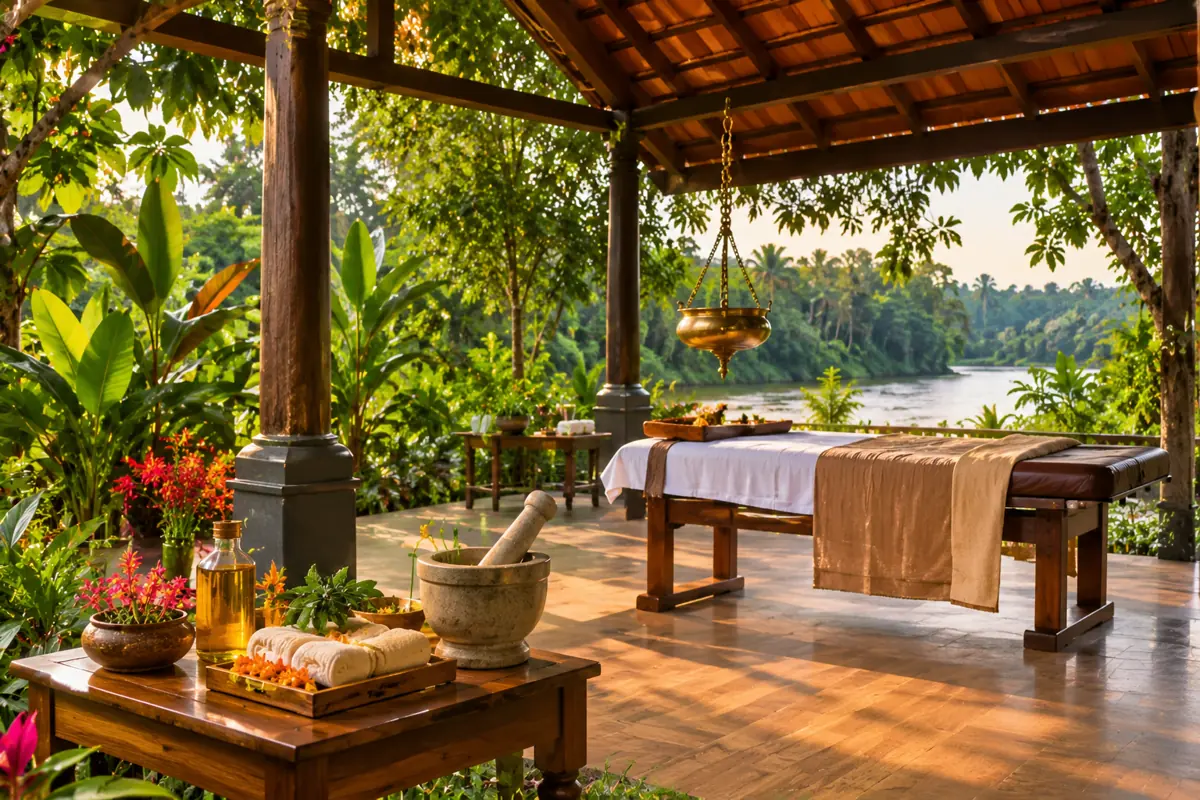
Your physician chooses therapies for you, so no two programmes are identical. These are the ones guests most often describe:
- Abhyanga: a warm herbal oil massage, often by two therapists working in rhythm.
- Swedana: gentle herbal steam that helps the body relax after massage.
- Shirodhara: a slow stream of warm oil over the forehead, often chosen for calm and sleep.
- Pizhichil and njavarakizhi: flowing oil treatments and warm herbal poultice massages, often chosen for the joints and muscles.
- Nasya and other therapies: gentle practices sometimes included for the head and sinuses, chosen only if suitable.
A longer list does not mean a better programme. The best plan is the one that fits you.
Retreat programmes guests love
Many guests come to a Kerala retreat for one of a few familiar reasons, and centres shape their programmes accordingly.
| Programme | What it usually emphasises |
|---|---|
| Stress, sleep and burnout | Calming oil therapies, meditation, quiet days and nourishing food to help you settle and recover your energy |
| Detox and renewal | A gentle, physician-supervised cleansing programme, with careful preparation and recovery |
| Rejuvenation | Restorative therapies, light food and rest, often chosen by guests in later life or those wanting a fresh start |
| Joints and back | Warm oil therapies, supportive movement and diet, used alongside your own doctor's care |
| Yoga and wellbeing | Daily practice, breathing and meditation, combined with therapies and a gentle routine |
Whatever your reason, a good retreat begins with a consultation, so that the programme is shaped for you rather than taken off a shelf.
Residential stays: what to expect
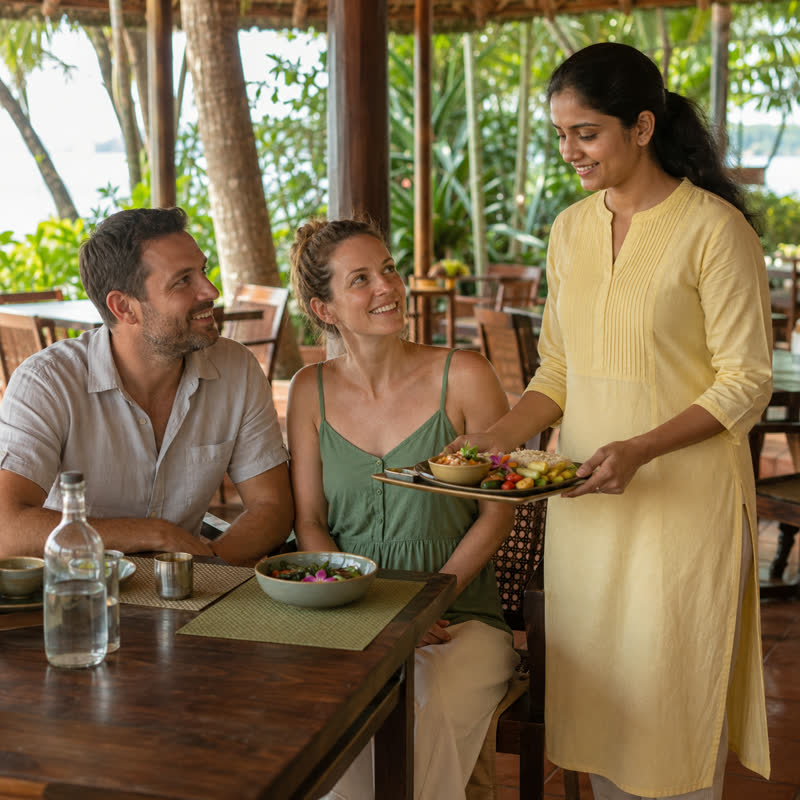
A residential retreat means you live where you are treated, which makes the experience seamless. Rooms range from simple and peaceful to resort-style, and most include meals designed for your plan. Many centres arrange airport pickup, and most can adapt food for dietary needs, so mention allergies, religious or cultural requirements at the start.
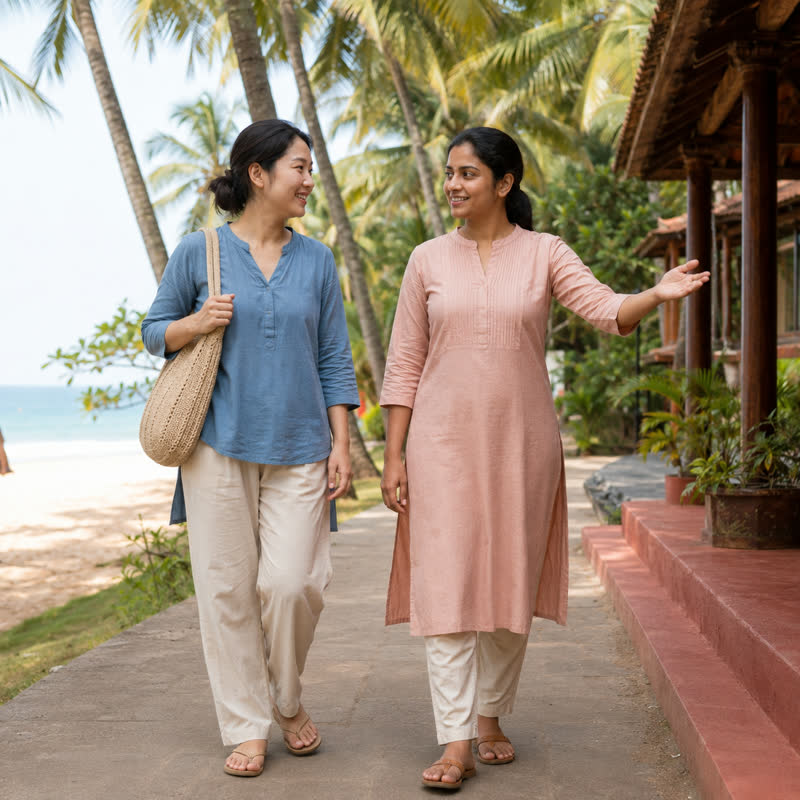
You will usually find a quiet garden, a yoga hall, treatment rooms and a dining area, along with wifi that lets you keep in touch with family at set times. The pace is slow by design. Many guests describe the first two days as settling, the middle days as the deepest and the last day as bittersweet.
How to choose the right retreat for you
Kerala has many lovely retreats, and a calm, structured approach helps you choose. Look at these, roughly in order of importance:
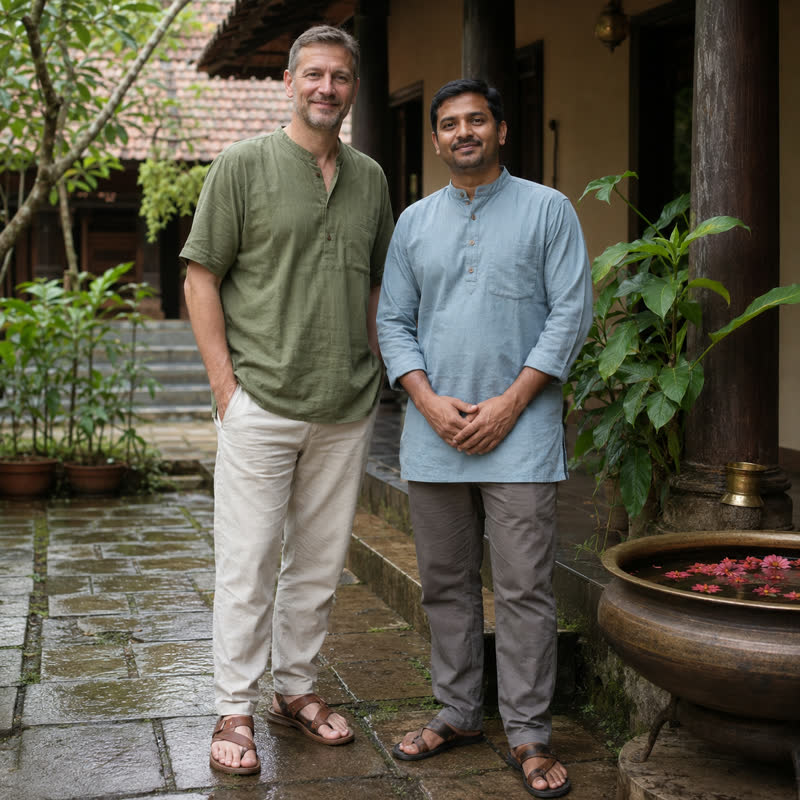
- The physician. A qualified Ayurvedic doctor (BAMS or MD Ayurveda), registered with the appropriate board, who will see you personally and speak in a language you share.
- The written plan. A good retreat offers an online consultation and a written plan describing the doctor, therapies, daily rhythm, inclusions and follow-up.
- Classification or accreditation. Kerala classifies its centres (Ayur Silver, Gold and Diamond, among other categories), and NABH accredits AYUSH hospitals and Panchakarma clinics. These are useful signs of standards, though not guarantees of any result.
- Medical backup. Ask who is on duty at night and which hospital is nearby.
- Setting and food. Quiet surroundings, clean rooms and fresh, suitable meals.
- Honesty. Be wary of promises of cure for serious illness, advice to stop prescribed medicines or pressure to decide quickly.
Where in Kerala? Finding your setting
Kerala's landscape is varied, and each region has its own feel. In the south, coastal areas such as Kovalam (about 13 km from Trivandrum airport) and Varkala (about 41 km) offer sea air and quiet lanes. Around Kochi you find a larger city with heritage districts, and inland the backwaters and hills offer a rural calm. Think about whether you prefer the sea, greenery or a village atmosphere, and ask each retreat about its distance from the airport and the journey to reach it.
The best time for a retreat
A Kerala retreat is possible throughout the year. Many guests favour the cooler, drier months for comfortable walks and outings. Others choose the monsoon, from around June, enjoying the rain-washed air and slower pace, which suit a restful programme. Ask your physician which season they recommend for your plan, and make sure your dates sit comfortably within your visa window.
Food on a retreat
Meals are a quiet highlight of a Kerala retreat. Food is typically simple, freshly cooked, warm and planned around your constitution and your programme, with plenty of rice, vegetables, lentils and gentle spices. Many guests are surprised to find how satisfying it is. Tell the kitchen about allergies and dietary needs at the start, and ask how meals are adapted to your plan.
Travelling solo or with a loved one
Retreats welcome both. Solo travellers often tell us that the gentle community, the staff and the daily rhythm make them feel looked after rather than alone. If you are bringing a spouse, friend or family member, ask about shared rooms, meals and which parts of the programme a companion may join, such as yoga, cooking demonstrations or quiet walks. Some companions enjoy a gentle programme of their own.
Questions to ask a retreat before you book
A short, friendly message with your questions, and a request for written replies, works beautifully. A few to begin with:
- Who will be my treating doctor, and can I speak with them before I decide?
- How often will I see the doctor during my stay?
- What does a typical day look like?
- What is included, and what is arranged separately?
- What happens if I feel unwell, and which hospital is nearby?
Making the most of your retreat
A retreat rewards those who let go. Rise early, eat what you are served, rest when invited and leave the to-do list at home. Keep a small journal of how you feel, and tell your physician about anything unusual so the plan can be adjusted. Plan a gentle arrival and departure, and enjoy a little sightseeing before or after your programme rather than during the most active treatment days.
When it is time to go, ask for a written summary, a simple daily routine and a follow-up plan, and share them with your own doctor. Even two or three habits, such as a regular dinner time and warm morning water, can carry the retreat home with you.
Planning your journey
The practical side is simpler than it sounds. Choose your length (a week for a restful reset, two weeks for a balanced programme, three or four for a deeper one), apply for your e-Medical visa on India's official portal with the hospital letter, arrange travel insurance and book flights after approval. The e-Medical visa is valid for 60 days from first arrival, allows three entries and cannot be extended, so leave a comfortable margin. Check the portal for current rules before you apply.
Your friend and hand-holder on the way to your Kerala retreat: MyVaidyam
Choosing a retreat far from home can feel like a leap of faith. MyVaidyam is here to turn that leap into a gentle, well-lit step. We walk with you from your first question until the day you return home, answering your questions patiently and making sure nothing is left to chance.
- An online consultation with an Ayurvedic physician to discuss your goals.
- Help preparing your health summary and a written plan after your consultation.
- Guidance on choosing an accredited Kerala retreat that suits your needs and temperament.
- Support with your e-Medical visa documents and the hospital letter.
- Advice on flights, airport pickup and accommodation, and a friendly welcome on arrival.
- A warm point of contact during your stay, and follow-up after you return home.
You are welcome to reach out at any stage, even if you are only beginning to dream of Kerala. We would be delighted to help you plan a wonderful retreat.