This guide is for anyone who is thinking about a Panchakarma retreat in Kerala. It explains what makes a retreat a true Panchakarma retreat, how programmes are structured, which residential options exist, how to prepare, how to choose and how to plan the journey. And throughout, it shows how MyVaidyam can be your friend and guide.
Ayurveda is offered here as a complementary, supportive approach that sits alongside your own doctor's care, never as a replacement for it.
Quick Facts - Panchakarma Retreat in Kerala for International Patients
| Topic | Summary |
|---|---|
| What it is | A residential retreat built around Panchakarma, under a physician's care |
| What makes it genuine | Physician's assessment, written plan, structured stages, daily review |
| Typical lengths | 7, 14, 21 or 28 days, as your physician recommends |
| Residential options | Doctor-led hospitals, retreats, small family-run centres |
| Not for everyone | A physician decides whether and how Panchakarma suits you |
| Visa | e-Medical visa: 60 days from first arrival, triple entry, non-extendable |
| Choose for | Qualified physician, written plan, medical backup, honest communication |
| Your companion | MyVaidyam: planning, coordination and support before, during and after |
What makes a retreat a Panchakarma retreat?
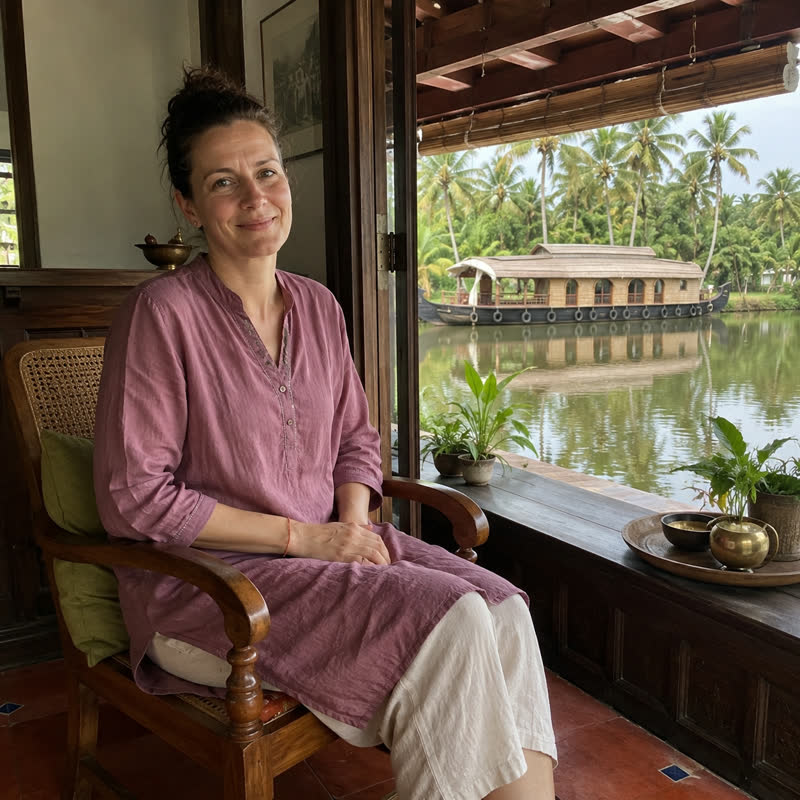
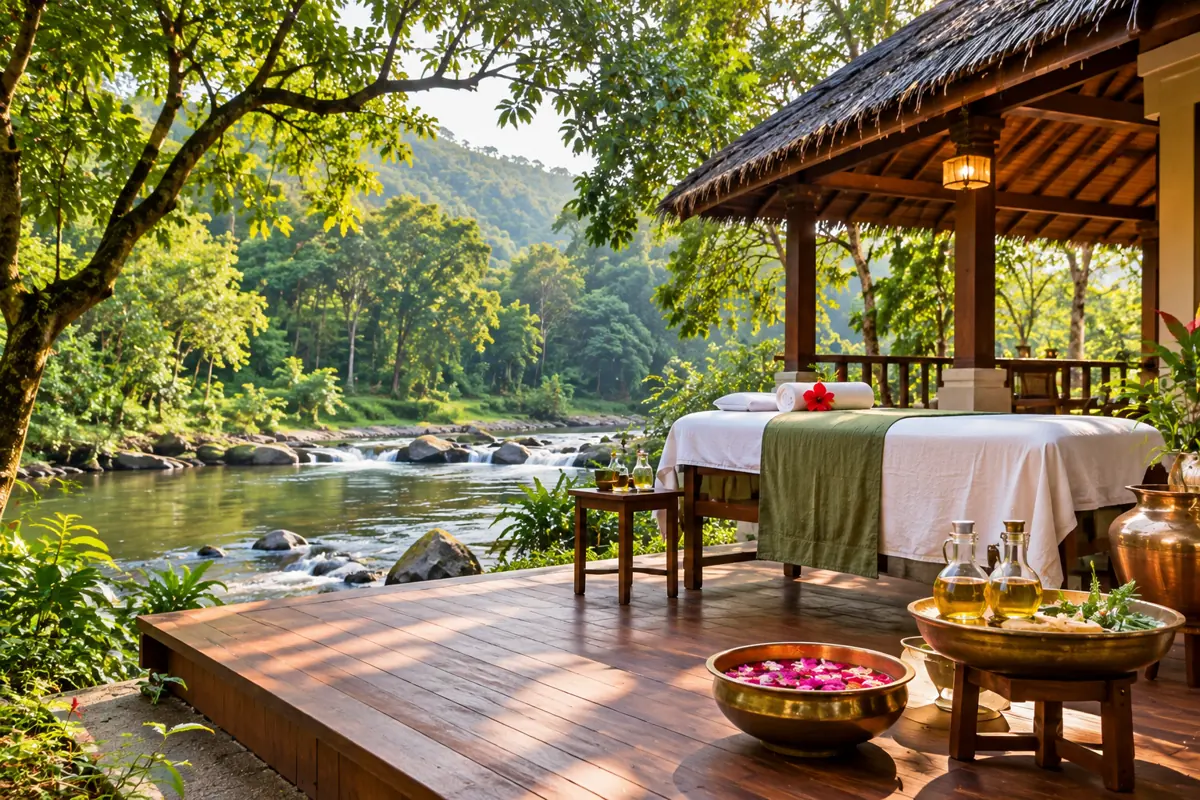
Panchakarma is Ayurveda's classical programme of cleansing and renewal, and in a Kerala retreat it is delivered as a stay rather than a single treatment. The word retreat suggests peace, and the word Panchakarma suggests a structured, physician-led process. A true Panchakarma retreat is both: calm in atmosphere, careful in method.
The easiest way to recognise one is to look at how it begins. A genuine retreat starts with a consultation in which the physician learns about your health, digestion, sleep, energy and goals, and designs a plan for you. It does not start with a menu of treatments to pick from.
A true Panchakarma retreat and a relaxing spa break
A Panchakarma retreat
- Begins with a physician's consultation
- A written plan shaped around you
- Preparation, main therapies and recovery
- Daily review by the doctor
- Diet and routine planned with care
- A written plan for home
A relaxing spa break
- Treatments booked from a menu
- Little or no medical assessment
- Focus on comfort and pampering
- No planned preparation or recovery
- Food as the resort provides
- Lovely, but a different thing
MyVaidyam helps you find the retreat that matches what you are seeking.
Spas and Panchakarma retreats can both be wonderful, and the right choice depends on what you want. A spa break offers pampering and comfort. A Panchakarma retreat offers a structured programme with a physician's guidance. The tricky part is that the words on a website can sound alike, so it helps to ask a few simple questions about the doctor, the plan and the stages of the programme.
How a Panchakarma retreat is structured
Most retreats follow a three-stage rhythm, whatever the length of stay.
- Preparation. The first days are for settling in, consultation and gentle oil massage and steam, with light, simple food. This prepares the body for the main therapies.
- Main therapies. In the middle of the programme, your physician carries out the therapies chosen for you, with daily review and plenty of rest between treatments.
- Recovery. The final days bring a gradual return to normal food and activity, gentle strengthening and a written plan for home.
In traditional descriptions, the main therapies include therapeutic emesis, purgation, medicated enemas, nasal therapy and, in some texts, bloodletting. Modern programmes adapt these to the individual, and many guests receive a gentler selection. Your physician will explain what is planned and why.
Programmes by goal
Retreats shape their programmes around what guests are seeking. These are the most common aims in Kerala:
| Goal | What a retreat usually emphasises |
|---|---|
| Detox and renewal | A physician-supervised cleansing programme, with careful preparation and recovery |
| Stress, sleep and burnout | Calming oil therapies, meditation, quiet days and nourishing food |
| Joints and back | Warm oil therapies, supportive movement and diet, alongside your own doctor's care |
| Skin and digestion | Dietary guidance, herbal medicines and gentle therapies, with patience |
| Rejuvenation | Restorative therapies, light food and rest, often chosen in later life |
Whatever the goal, the physician's assessment shapes the plan, so two guests with the same aim may be offered slightly different programmes.
Choosing the length
A week offers a restful introduction with gentler therapies. Two weeks is a popular, balanced programme. Twenty-one days allows fuller preparation, main therapies and recovery. Twenty-eight days is the most thorough option. Your physician will recommend what suits your health and goals, and your calendar and visa also matter. The e-Medical visa is valid for 60 days from first arrival and cannot be extended, so it is wise to leave a comfortable margin.
Residential options in Kerala
Kerala offers a lovely range of places to stay, and each has its own character.
| Option | What to expect |
|---|---|
| Doctor-led Ayurveda hospital | Clinical care with inpatient rooms, regular doctor review and nursing support; suits medical concerns |
| Retreat or resort | Garden settings, yoga halls and quiet grounds; medical input varies, so ask |
| Small family-run centre | Personal care, a homely feel and often a close bond with the physician |
| Hybrid centre | The calm of a retreat with the reassurance of doctor-led care |
There is no single best option. If you take regular medicines or have a long-standing concern, a doctor-led or hybrid centre is usually the wise choice. If you are mainly seeking rest and renewal, a quiet retreat with a physician who sees you personally may be ideal.
Food, diet and daily rhythm
Food is part of the treatment. Meals are typically warm, simple and freshly cooked, planned around your constitution and the stage of your programme, with gentle spices and plenty of rice, lentils and vegetables. During the main phase, food is especially light. Most retreats ask guests to avoid alcohol, tobacco and heavy or late meals, and to follow the daily rhythm of early nights and early mornings. Tell the kitchen about allergies and dietary needs at the start.
Settling in during the first days
Give yourself permission to arrive slowly. The first two days are for resting, meeting your physician and finding your bearings. Walk the grounds, learn where the dining hall and treatment rooms are, and let the quiet work on you. Many guests find that by the third day the rhythm has become familiar and comforting.
Who a Panchakarma retreat suits, and who it does not
A Panchakarma retreat can suit adults who are generally well enough to travel and who are seeking a thorough reset, support for a long-standing concern or a restorative break. It is chosen by guests of many ages and backgrounds.
It is not suitable for everyone. Pregnancy, some serious medical conditions, recent surgery, significant weakness and certain medicines may call for caution or a gentler plan. That is why it is so important to share your complete history with the physician before you travel. A thoughtful retreat will sometimes recommend a gentler programme, and that is a sign of good care.
How to choose a Panchakarma retreat you can trust
A calm, structured approach helps. Look at these, roughly in order of importance:
- The physician. A qualified Ayurvedic doctor (BAMS or MD Ayurveda), registered with the appropriate board, who will see you personally every day of the main phase.
- The written plan. A clear plan with stages, therapies, inclusions and follow-up.
- Medical backup. Who is on duty at night, and which hospital is nearby.
- Classification or accreditation. Kerala classifies its centres (Ayur Silver, Gold and Diamond, among other categories) and NABH accredits AYUSH hospitals and Panchakarma clinics. These are useful signs of standards, though not guarantees.
- Honesty. Be wary of promises of cure for serious illness, advice to stop prescribed medicines or pressure to decide quickly.
Our guides on verifying a doctor, understanding accreditation and spotting red flags go into each of these in more depth.
Preparing for your retreat
Share your medical history, current medicines and recent reports with the physician beforehand, and tell your own doctor about your plans. In the days before arrival, many guests ease into the programme by eating lighter, reducing caffeine and sleeping earlier. Arrange cover at home, pack light cotton clothes and keep your regular medicines in your hand luggage, with a letter from your doctor. Plan a day of rest on either side of the journey.
Planning the journey
Apply for your e-Medical visa on India's official portal, usually with a hospital letter, a few weeks before travel. Book flights after approval, arrange travel insurance and choose an arrival time that suits your centre's pickup. Many guests fly into Thiruvananthapuram or Kochi. Kerala welcomes guests all year, and many favour the cooler, drier months, while others enjoy the monsoon from about June. Ask your physician which season suits your plan, and check the portal for current rules before applying.
After the retreat
The days after a retreat matter as much as the days within it. Before you leave, ask for a written summary, a simple daily routine, diet notes and a follow-up plan, and share them with your own doctor. Return to normal food and activity gradually. Even two or three habits, such as a regular dinner time, warm morning water and a short evening walk, can carry the benefits of your stay into everyday life.
Your friend and hand-holder on the way to your retreat: MyVaidyam
Choosing a Panchakarma retreat far from home deserves a little extra care, and that is where MyVaidyam comes in. We walk with you from your very first question to the day you return home, answering your questions patiently and making sure that nothing is left to chance.
- An online consultation with an Ayurvedic physician to discuss whether Panchakarma suits you.
- Help preparing your health summary and reports, and a written plan after your consultation.
- Guidance on choosing an accredited Kerala retreat that matches what you are seeking.
- Support with your e-Medical visa documents and the hospital letter.
- Advice on flights, airport pickup and accommodation, including arrangements for a companion.
- A warm point of contact during your stay, and follow-up after you return home.
You are welcome to reach out at any stage, even if you are only beginning to consider it. We would be delighted to help you plan a wonderful retreat.