For many first-time visitors to India, it is also the therapy they are most curious, and a little nervous, about.
This guide explains in plain language what to expect from abhyanga: why your doctor is consulted first, what the therapy is and how it is done, the oils and techniques, how it is adapted to different people, who may need care, how it fits into stress-management programmes, what to do before and after, what a residential day looks like and how to bring a simple version home. And throughout, it shows how MyVaidyam can walk beside you as your friend and guide.
Ayurveda is offered here as a complementary, supportive approach that works alongside your own doctor's care, never as a replacement for it. It does not promise to treat any condition, and it also covers abhyanga within stress-management programmes.
Quick Facts - Abhyanga in India
| Topic | Summary |
|---|---|
| What it is | Warm herbal oil massage of the whole body |
| Session length | About 45 to 60 minutes |
| Therapists | One or two, usually of the same sex as the guest |
| Oils | Chosen by the physician for your constitution and needs |
| Afterwards | Rest, then a warm bath |
| Not | A treatment for any condition |
| Visa | e-Medical visa: 60 days from first arrival, triple entry, non-extendable |
| Your companion | MyVaidyam: planning, coordination and support before, during and after |
An old kindness
Abhyanga is described in Ayurveda's classical texts as part of the daily routine for healthy people, and not only for the unwell. The texts praise it for nourishing the skin, calming the nerves, supporting sleep and giving a sense of steadiness. In India today, it appears in nearly every Ayurvedic centre, from simple clinics to quiet retreats, and it remains one of the most accessible ways to experience the tradition.
An abhyanga session, step by step
| 1 | Welcome | — a brief check, a quiet room, warmth |
|---|---|---|
| 2 | Oil | — warm herbal oil chosen for you |
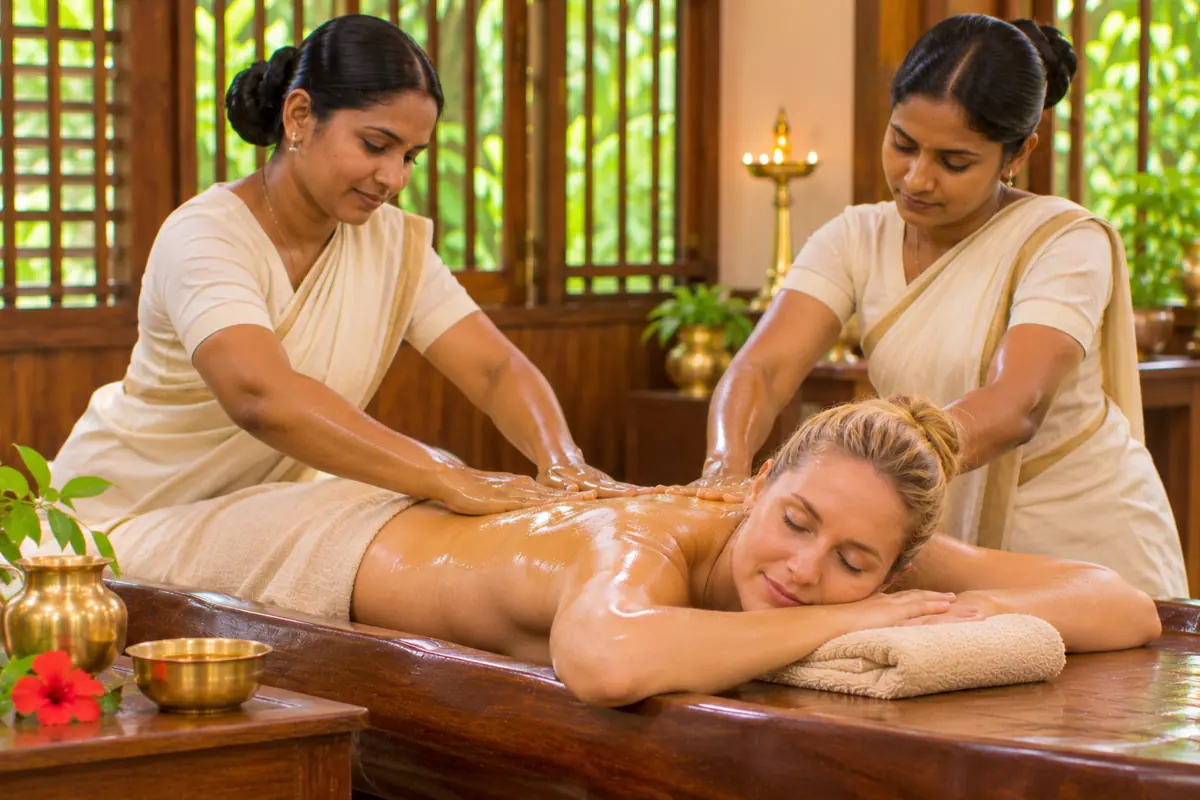
| 3 | Massage | — long, rhythmic strokes, head to toe |
| 4 | Rest | — time to let the oil settle, wrapped warm |
| 5 | Bath | — a warm wash, and a quiet cool-down |
The experience is calm, private and led at your pace.
Start with your doctor
Please tell your own doctor if you have a skin condition, heart or blood pressure concerns, a recent surgery, a fever, a bleeding disorder, pregnancy or any medical condition, and ask whether massage is suitable. Tell the Ayurvedic physician about your conditions and medicines before the session. Continue every prescribed medicine, and let your doctors decide on any change.
What abhyanga is, and what it is for
Abhyanga means applying oil to the whole body with rhythmic strokes. Ayurveda describes the oil as nourishing the tissues and calming the nervous system, much as oiling leather keeps it supple. Guests commonly describe feeling deeply relaxed, with softer skin and easier sleep. It is a supportive, comforting therapy, and not a treatment for any condition.
How the session is done
You will usually be given a small cloth to wear, and lie on a wooden or padded table in a private, warm room. One or two therapists apply warm oil with long, flowing strokes on the limbs and circular motions on the joints, with gentle attention to the back, head and feet. Pressure is adjusted to your comfort, and you can always ask for it to be lighter, firmer or stopped.
Oils and herbs
Many oils are used, most commonly sesame oil, sometimes medicated with herbs, and others such as coconut oil in hot climates. The physician chooses according to your constitution, season and needs. If you have nut, sesame or other allergies, or sensitive skin, tell the team beforehand so that a suitable oil can be chosen and patch-tested.
What a supportive programme may include
- A short consultation before the first session.
- A suitable warm herbal oil, chosen for you.
- Rhythmic full-body massage by trained therapists.
- Rest afterwards, wrapped warm.
- A warm bath or shower to finish.
- Light food, quiet time and plenty of water.
Who may need care
Abhyanga is generally gentle, but the physician may adapt or postpone it for people with fever, an acute illness, a skin infection or open wounds, after recent meals, during pregnancy or heavy menstrual bleeding, or after recent surgery. People with heart, blood pressure or circulation conditions, or on blood-thinning medicines, should discuss it with their doctor first. Honest communication makes the therapy comfortable for everyone.
Abhyanga in stress-management programmes
In stress and sleep programmes, abhyanga is often the cornerstone. Combined with head massage, foot massage, breathing, meditation and a quiet evening, it can help the body let go of tension and prepare for deep sleep. Many guests schedule it for the late afternoon or early evening, so that rest follows naturally. No therapy can promise to treat stress or insomnia, but many guests describe it as the most calming part of their stay.
Before and after the session
- Eat lightly beforehand, and avoid a full stomach.
- Tell the therapist about pain, ticklishness or discomfort.
- Wear old or dark clothes you do not mind oiling.
- Rest for a while afterwards, and drink water.
- Avoid cold drinks and cold air straight afterwards.
A day at a residential centre
| Time | Typical activity |
|---|---|
| Early morning | Warm water, breathing, gentle stretches |
| Morning | Abhyanga, rest, warm bath |
| Late morning | Yoga or a walk |
| Midday | Light, warm main meal and rest |
| Afternoon | Relaxation, meditation, quiet time |
| Evening | Light early supper, calm, early sleep |
A simple version at home
Many guests learn a short self-massage to continue at home: warm a little plain sesame or coconut oil, and massage with long strokes on the limbs and circles on the joints before a warm bath. Five to ten minutes is plenty. Patch-test the oil first, keep towels you do not mind oiling, and take care in the bathroom, since oil can make floors slippery.
Taking it home
- Keep a short self-massage routine, if it suits you.
- Keep warm food, regular meals and early sleep.
- Add a daily walk and short breathing practice.
- Keep your regular doctor follow-up.
- Share the centre's summary with your doctor.
Setting honest expectations
The experience of abhyanga is individual, and no therapy can promise to treat any condition. A residential stay can offer skilled hands, a calm setting and the time to rest, and many guests value it as the part of their stay that taught them how to slow down.
Privacy, comfort and communication
You will be given a towel or garment and covered throughout, with only the area being massaged uncovered. Therapists are trained to maintain your modesty, and you may ask for a same-sex therapist at any time. Speak up about temperature, pressure or discomfort: good therapists welcome feedback and adjust at once.
Working alongside your own doctors
Please keep your own doctors informed. Share your medical summary, bring your reports and keep taking whatever you have been prescribed. Please keep taking prescribed medicines, and discuss any therapy with your own doctors before you begin. Please do not change medicines without medical advice.
Choosing a centre
Look for a qualified Ayurvedic doctor (BAMS or MD Ayurveda), registered with the appropriate board, trained and respectful therapists, same-sex therapists if you prefer, clean treatment rooms and a clear written plan. Be cautious of anyone who promises cures through massage, or who sells oils with strong claims.
Planning the journey
Apply for your e-Medical visa on India's official portal, usually with a hospital letter, a few weeks before travel. It is valid for 60 days from first arrival, allows three entries and cannot be extended. Book flights after approval, arrange travel insurance and choose an arrival time that gives you a rested first day. Check the portal for current rules before you apply.
Your friend and hand-holder in preparing for your stay: MyVaidyam
A good plan starts with a good conversation, and that is where MyVaidyam comes in. We walk with you from your very first question to the day you return home, answering every question patiently and making sure that nothing is left to chance.
- An online consultation with an Ayurvedic physician to discuss your health and goals.
- Help preparing your health summary.
- Guidance on choosing a reputable centre with trained therapists and the option of same-sex therapists.
- Help understanding your written plan.
- Support with your e-Medical visa documents, flights, airport pickup and accommodation.
- A warm point of contact during your stay, and follow-up after you return home.
You are welcome to reach out at any stage. We would be delighted to help you begin.