This guide explains the Ayurvedic view, what a stay typically includes and how to plan with confidence. Ayurveda is offered as a complementary, supportive approach alongside your own doctor's care, never a replacement for it.
Quick Facts - Ayurveda Supportive Programmes for Ulcerative Colitis for International Patients in India
| Topic | Summary |
|---|---|
| What it is (NIDDK) | Inflammatory condition of the large intestine; symptoms come and go |
| Usual care | Medicines prescribed and monitored by your specialist |
| Ayurvedic view | Discussed as a digestive (grahani) imbalance, supported through diet and routine |
| What a stay offers | Gentle meals, relaxation, sleep, supportive therapies |
| Aim | Comfort and wellbeing |
| Cost | Compare itemised, dated quotes |
Understanding ulcerative colitis
NIDDK describes ulcerative colitis as an inflammatory condition of the large intestine, with symptoms that come and go, such as diarrhoea, cramping and urgency. It is managed by a specialist with medicines tailored to the person, often long term, and many people live full lives with good care. NIDDK also advises talking with your doctor before using any complementary approach.
Calm routines, regular meals and good sleep are valued by many people with the condition, and a residential Ayurveda stay can offer these in one supportive setting. Your specialist's treatment continues unchanged.
How Ayurveda looks at the gut
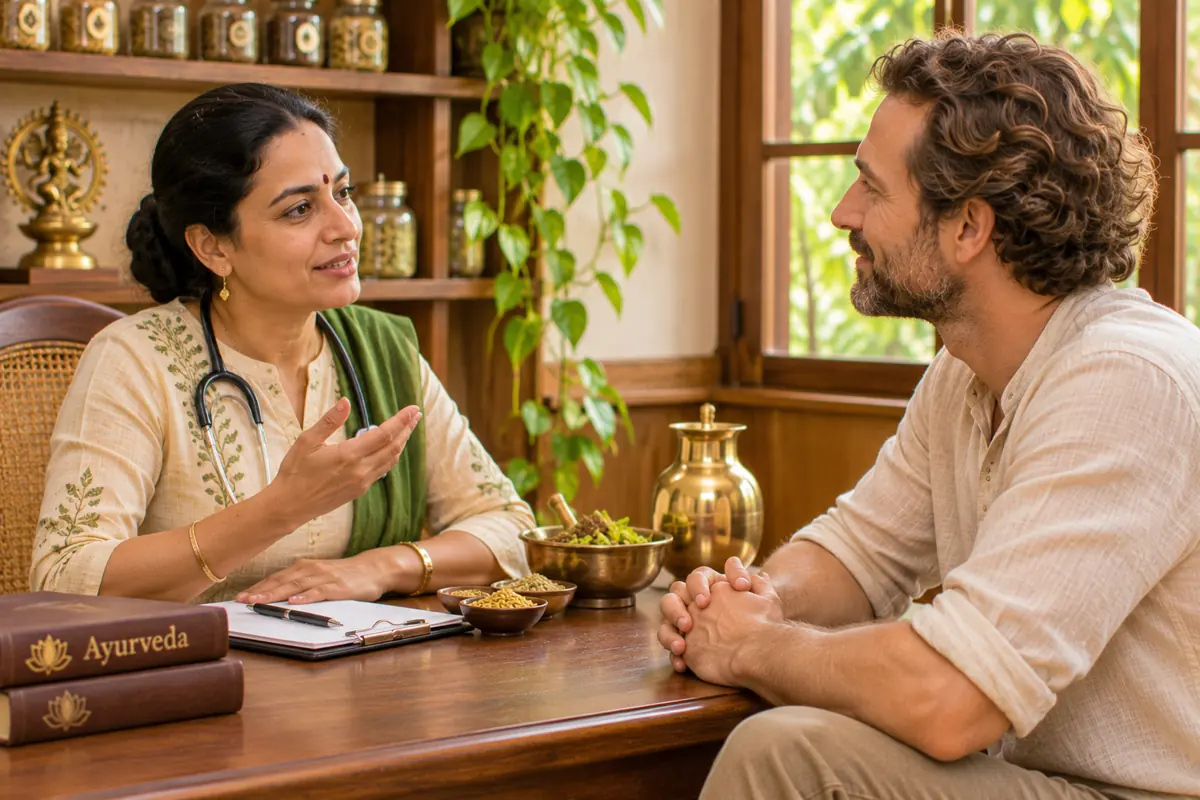
Ayurveda places digestion at the centre of health, and discusses long-standing bowel conditions in terms of the digestive fire (agni) and the lining of the gut. After a detailed history, the physician plans gentle, easily digested meals, calming routines and supportive herbal care that respects your specialist's treatment.
Working alongside your specialist
NIDDK describes ulcerative colitis as an inflammatory condition of the large intestine that comes and goes, managed with medicines prescribed by a specialist and, for most people, long-term. NIDDK also advises talking with your doctor before any complementary approach. A residential stay is planned around that advice, with your medicines continuing as prescribed.
What the research shows
Controlled research on Ayurvedic care for ulcerative colitis is limited, and NCCIH notes the same for Ayurvedic medicine overall. A stay is best seen as supportive care, valued for its calm routine and relaxation.
What a residential programme may include
| Element | What it generally involves |
|---|---|
| Assessment | History, review of reports and a medicine check |
| Diet | Gentle, freshly cooked meals at regular times |
| Relaxation | Breathing practice, meditation and soothing massage |
| Herbal care | Preparations chosen by the doctor and checked against your medicines |
| Sleep | A regular, early evening routine |
| Home plan | Meal and stress routines to continue |
A typical day on a digestive-care programme
- Early morning: gentle yoga or a walk, then a warm, simple breakfast.
- Mid-morning: a physician review and a relaxing therapy.
- Midday: the main meal at a regular time, then rest.
- Evening: breathing practice, a light dinner and an early night.
Why a calm setting helps
Calm routines and regular meals suit a sensitive gut. At a residential centre the pace is unhurried and meals are prepared for you, which many guests find restful. Keep a short food and mood diary during the stay, so you can share it with your own specialist afterwards.
The Ayurvedic view of the gut
Ayurveda places digestion at the centre of health and describes long-standing bowel conditions in terms of Grahani and Pravahika, linked with the digestive fire (agni), pitta and the lining of the gut. The tradition emphasises regular, simple meals, warm food, calm eating, rest and stress reduction.
A careful physician reads your reports and your specialist's letter alongside the traditional picture and plans a gentle, supportive programme.
The therapies you may meet
Here is what the most common programme elements involve. Your physician chooses which are suited to you.
- Consultation: a long conversation about your symptoms, foods and stress.
- Diet: gentle, freshly cooked meals at regular times.
- Abhyanga: a gentle herbal-oil massage.
- Shirodhara: a calming stream of warm oil over the forehead.
- Herbal medicines: preparations only after discussion with your specialist.
- Yoga and breathing: gentle practices that calm the nervous system.
A sample programme rhythm
Every programme is individual, and this outline is only an illustration of how a stay can unfold.
- Days 1 to 3, settling in: arrival rest, a full consultation and a gentle start with simple meals and mild massage.
- Days 4 to 10, the main programme: a daily rhythm of regular meals, relaxation therapies, yoga and breathing and rest, with the physician reviewing you each day.
- Days 11 to 14, consolidating: a lighter schedule, a review of your food diary and a written plan for meals and routines at home.
Many guests extend their stay, and the physician will advise after the first review. Ask the centre for its own day-by-day plan.
Gentle meals
Meals are warm, simple and freshly cooked: rice, lentil soups, lightly cooked vegetables, a little ghee and plenty of warm water, at the same times each day. Your physician explains the reasoning, and you can compare the pattern with advice from your own specialist or dietitian. Share your usual food tolerances in advance so that menus can be planned, and ask for a written copy of the menus.
Stress, sleep and calm
Many people with bowel conditions notice that stress and poor sleep affect how they feel. A residential stay supports calm with early evenings, a regular sleep schedule, gentle yoga, breathing practice and meditation. Short breathing exercises are easy to learn and easy to continue at home. Ask the team to teach a routine you can use on busy days.
Working with your specialist
A good centre welcomes your specialist's involvement. Share a recent letter and medicine list, keep your medicines at the usual times, and ask the physician to coordinate any herbal preparation with your specialist first. Many guests ask their specialist for a short summary letter before they travel and a follow-up appointment on their return.
Kerala, climate and the best season
Many Ayurveda centres are in Kerala, where the warm, humid climate is traditionally considered kind to the body and the monsoon months are popular for oil therapies. The drier months from October to March are comfortable for travel and sightseeing. For ulcerative colitis, ask each centre which season it recommends, and whether rooms are air-conditioned or well ventilated. Ask about menus that are mild on the stomach and about drinking water. Our guide to the best time to travel compares the seasons.
Keeping a simple diary
A small notebook is one of the most useful things to bring. Each evening, jot down what you ate and drank, your bowel habits, your comfort, your sleep and your stress. After a week or two the pattern often becomes clear, and you and the physician can fine-tune the plan. A simple one-to-ten comfort score each evening makes patterns easy to see. The same notes give your own doctor a helpful picture when you return.
Travelling comfortably
A little planning makes the journey smoother. Book an aisle seat so you can stand and stretch, keep your medicines and reports in your hand luggage, and choose a flight that arrives at a comfortable hour. Pack familiar snacks, drink plenty of water and plan lighter meals around the flight. Ask the centre to arrange the transfer and a restful first day. Our guide to the attendant visa explains how a family member can travel with you.
Conversations to have before you travel
A short chat with your own doctor makes the stay smoother. Many guests ask:
- Are my tests and medicines up to date for travel?
- Which foods would you like me to keep an eye on?
- Is there anything you would like the Ayurveda team to know?
- When would you like to see me after I return?
Sharing the answers with the Ayurveda physician helps the two teams work in step, and leaves you feeling confident and well supported.
Who tends to enjoy a stay
Guests who enjoy these programmes are often people who would like a calm place to establish regular meals and rest, those who notice that stress and travel upset their gut, and anyone who would like practical routines to take home. If you are unsure whether a stay suits you, a free online consultation is a good first step, before you book anything.
Your first day
Most centres keep the first day deliberately quiet. After a warm welcome and a light meal, you rest, meet your physician for a full consultation and receive a written plan for the days ahead. Bring your reports and medicine list to that conversation, ask any questions and tell the team how you are feeling after the journey. Share your specialist's letter and food notes at this first meeting. Our guide to your first day at an Ayurveda centre explains what to expect.
Choosing a centre
Rather than looking for a ranking, compare what matters to you: a qualified Ayurveda physician, a clear assessment, a written day-by-day plan, hygiene standards, accessible rooms and good access to a hospital. Ask each centre the same questions:
- Who will be my physician, and what are their qualifications?
- How are menus planned for a sensitive gut?
- How do you coordinate with my specialist?
- How are herbal medicines sourced, and can I see the ingredient list?
- What does the quote include, and what is extra?
Preparing for your stay
Bring your latest specialist letter, recent test results and your medicines in their original packaging. Tell the centre about foods you already know suit you, so menus can be planned in advance, and keep a short diary of meals and comfort during the stay.
Planning your budget
Cost depends on room, length, therapies, physician time and medicines. Ask each centre for an itemised, dated quote for the same dates and inclusions, and add visa, flights, insurance and transfers. See the cost guide and verifying a doctor.
Travelling with confidence, and how MyVaidyam can help
- Share your reports and current medicines with the Ayurveda physician before you travel.
- Continue your prescribed medicines, and let your own doctor know your plans.
- Ask for ingredient lists for any herbal medicine, and choose labelled preparations.
- Plan rest after the flight so you can begin your stay comfortably.
- Bring your latest specialist letter and test results, and keep taking your medicines as prescribed.
MyVaidyam can arrange a free online pre-consultation, have your reports reviewed by an Ayurvedic physician and request day-by-day plans and itemised quotes from centres so you can compare them calmly. Contact MyVaidyam to book your free online consultation.