For others, gentler care is wiser.
This guide explains in plain language how to think about the question: why your doctor reviews digestive symptoms first, how the Ayurvedic physician decides, what Panchakarma involves, when gentler care is preferable, how preparation and rebuilding matter, what a residential day looks like and how to look after your digestion at home. And throughout, it shows how MyVaidyam can walk beside you as your friend and guide.
Ayurveda is offered here as a complementary, supportive approach that works alongside your own doctor's care, never as a replacement for it. It does not promise to resolve digestive complaints.
Quick Facts - Can Panchakarma Be Appropriate for Digestive Complaints?
| Topic | Summary |
|---|---|
| Question | Is Panchakarma appropriate for digestive complaints? |
| First step | Review by your doctor, with tests if advised |
| Decided by | The Ayurvedic physician, after full assessment |
| Stages | Review, preparation, cleansing if suited, rebuilding |
| Gentler options | Diet, routine, oil therapy, calm |
| Not | A promise of resolving digestive complaints |
| Visa | e-Medical visa: 60 days from first arrival, triple entry, non-extendable |
| Your companion | MyVaidyam: planning, coordination and support before, during and after |
An honest starting point
Panchakarma is among the best-known Ayurvedic programmes, and it is often described very enthusiastically. But the traditional texts themselves are clear that cleansing is not for everyone, and not for every condition. A responsible practitioner begins not with the question of which procedure to offer, but whether any strong procedure is appropriate at all.
When Panchakarma is considered for digestion
Review
Doctor and physician
Prepare
Light food, oil, rest
Decide
Cleansing only if suited
Rebuild
Gentle diet, routine
Each step depends on the one before, and the plan can stop or soften at any stage.
Start with your doctor
Please have digestive symptoms reviewed by your doctor, particularly if they are new, persistent or accompanied by weight loss, blood in the stool, anaemia, difficulty swallowing, ongoing vomiting or night-time symptoms. Tests may check for infection, coeliac disease, inflammatory conditions and other causes. Share the results with the centre, and continue every prescribed medicine.
How the physician decides
The Ayurvedic physician considers the nature of the complaint, how long you have had it, your strength, appetite, bowel habit, sleep, age, other conditions and medicines. For many digestive complaints, the first step is simply to restore regular, warm, light food and routine. Strong cleansing is considered only when the person is strong and stable, and the doctors agree.
What Panchakarma involves
The programme has stages. Preparation uses light food, oil taken or applied, and gentle sweating. Cleansing procedures, such as therapeutic purgation, follow only if suited, with careful monitoring. Rebuilding then restores digestion with a gradual diet and rest. The whole sequence is tailored, and none of the stages is rushed.
When gentler care is the wiser path
For inflammatory bowel conditions, ulcers, recent infections, low strength, weight loss, pregnancy or other medical concerns, strong cleansing is usually avoided. For functional complaints such as bloating or irregular bowels, many people do very well with diet, oil therapy, yoga and calm alone. A good physician will say plainly which path is best for you.
What a supportive programme may include
- A consultation on digestion, bowels, appetite, sleep and stress.
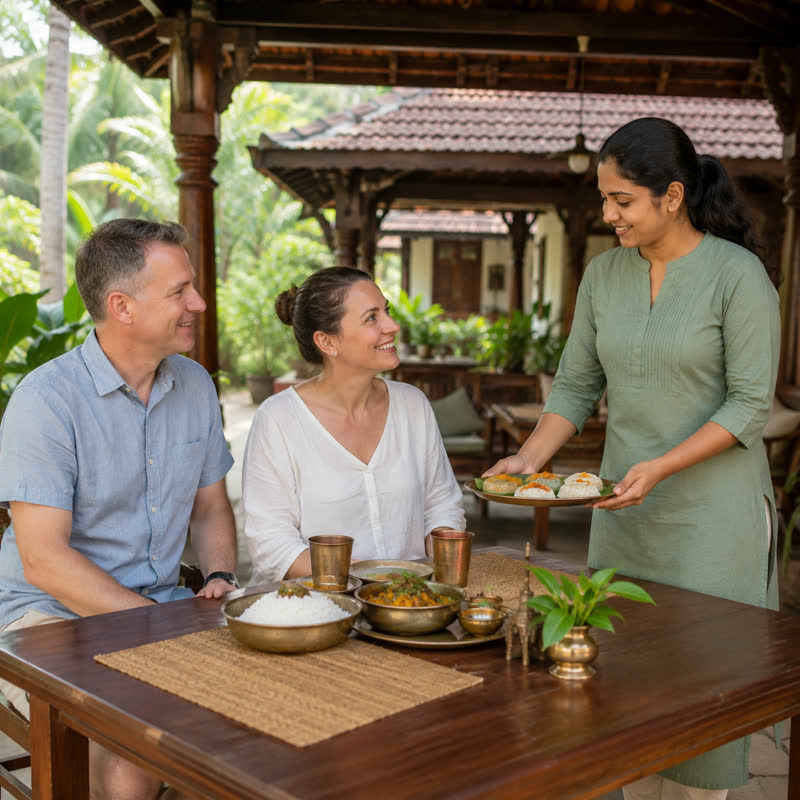
- Light, warm, freshly cooked food, planned for you.
- Gentle spices and warm herbal infusions, as suited.
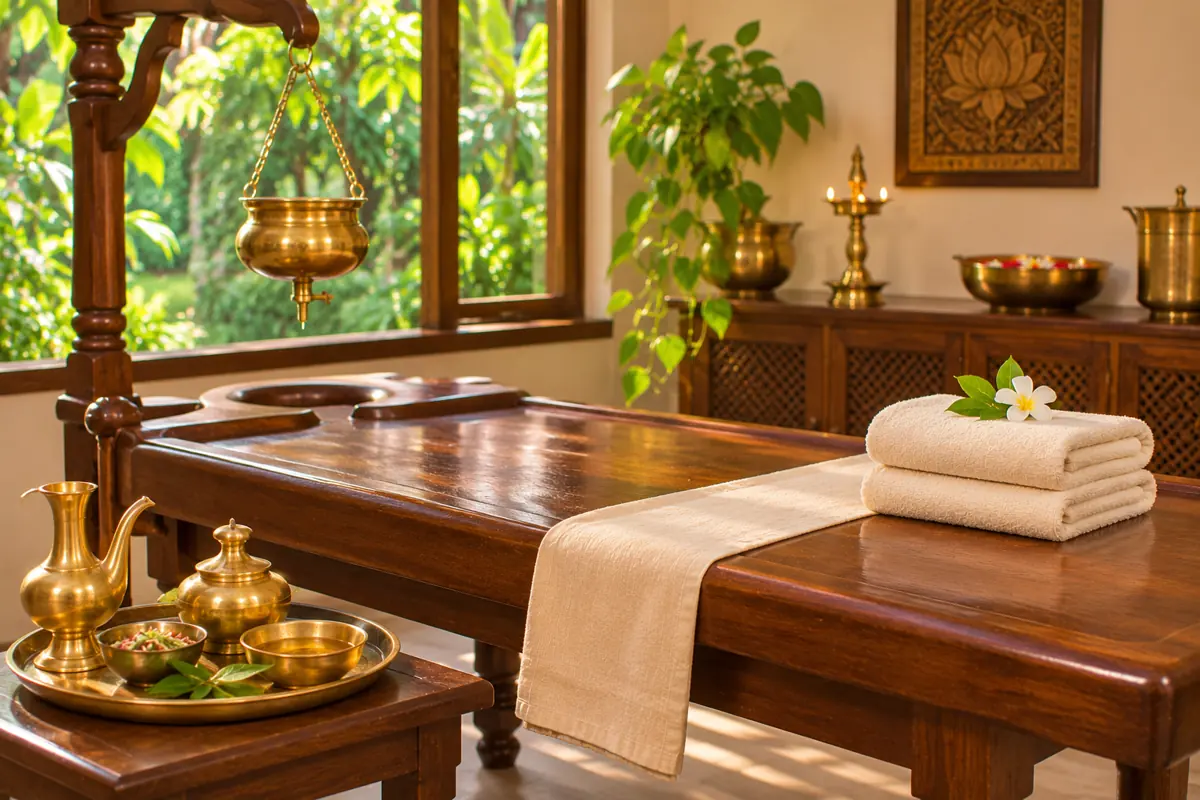
- Warm herbal oil therapies and gentle abdominal care, as appropriate.
- Gentle yoga, walking and breathing.
- Cleansing procedures, only if suitable and agreed with your doctors.
Preparation and rebuilding
Many people think of the cleansing as the heart of Panchakarma, but traditional practitioners say the preparation and the rebuilding matter just as much. Without proper preparation, cleansing can be tiring, and without careful rebuilding, the digestion can remain unsettled. This is why a rushed or shortened programme is not a good idea.
A day at a residential centre
| Time | Typical activity |
|---|---|
| Early morning | Warm water, breathing, gentle stretches |
| Morning | Oil therapy or agreed procedure |
| Late morning | Rest, gentle yoga |
| Midday | Light, tailored main meal and rest |
| Afternoon | Relaxation, quiet time |
| Evening | Light early supper, calm, early sleep |
Looking after digestion at home
Whatever path you choose, the daily habits matter most: regular meal times, warm freshly cooked food, a light early supper, enough water, a daily walk, early sleep and calm. Introduce foods one at a time, and keep a short diary of meals and symptoms. These habits are the long-term basis of comfortable digestion.
Taking it home
- Keep meals warm, light and regular.
- Reintroduce foods gradually.
- Walk daily, and manage stress.
- Protect your sleep.
- Follow up with your doctor and share the centre's summary.
Setting honest expectations
Digestive complaints vary, and no programme can promise to resolve them. A residential stay can offer careful assessment, suitable food, calm and the time to learn what helps your digestion, and many guests value the clarity as much as any procedure.
Working alongside your own doctors
Please keep your own doctors informed. Share your medical summary, bring your reports and keep taking whatever you have been prescribed. Please keep taking prescribed medicines, and discuss any cleansing procedure with your own doctors before you begin. Please do not change medicines without medical advice.
Choosing a centre
Look for a qualified Ayurvedic doctor (BAMS or MD Ayurveda), registered with the appropriate board, a kitchen that cooks to your plan, trained therapists, nearby medical support and a clear written plan. Be cautious of anyone who offers the same Panchakarma package to everyone or promises to cure digestive conditions.
Planning the journey
Apply for your e-Medical visa on India's official portal, usually with a hospital letter, a few weeks before travel. It is valid for 60 days from first arrival, allows three entries and cannot be extended. Book flights after approval, arrange travel insurance and choose an arrival time that gives you a rested first day. Check the portal for current rules before you apply.
Your friend and hand-holder in finding the right programme: MyVaidyam
A good plan starts with a good conversation, and that is where MyVaidyam comes in. We walk with you from your very first question to the day you return home, answering every question patiently and making sure that nothing is left to chance.
- An online consultation with an Ayurvedic physician to discuss your digestion and goals.
- Help preparing your health summary and test results.
- Guidance on choosing a reputable centre with a suitable kitchen and programme.
- Help understanding your written plan and each proposed procedure.
- Support with your e-Medical visa documents, flights, airport pickup and accommodation.
- A warm point of contact during your stay, and follow-up after you return home.
You are welcome to reach out at any stage. We would be delighted to help you begin.