This guide explains what patients can expect from Ayurvedic scalp-care therapies, including how hair and scalp are assessed before a programme, how herbal oils are chosen and applied, what each common therapy involves, how to prepare, how to care for your hair afterwards and when to see a doctor first. And throughout, it shows how MyVaidyam can walk beside you as your friend and guide.
Ayurveda is offered here as a complementary, supportive approach that works alongside your own doctor's care, never as a replacement for it. It does not promise hair growth or cure of any scalp condition.
Quick Facts - Ayurveda Scalp-Care Therapies
| Topic | Summary |
|---|---|
| Begins with | Hair and scalp assessment |
| Common therapies | Head oil massage, shirodhara, shirobasti, herbal paste |
| Oils | Chosen to suit you, and patch-tested |
| Duration | Typically 30 to 60 minutes |
| See a doctor first | For patchy hair loss, painful or inflamed scalp |
| Not | A promise of hair growth or cure |
| Visa | e-Medical visa: 60 days from first arrival, triple entry, non-extendable |
| Your companion | MyVaidyam: planning, coordination and support before, during and after |
More than a head massage
In Ayurveda, the head is regarded as a seat of the senses and of the mind, and scalp therapies are used for relaxation and sleep as much as for hair and scalp care. Done well, they are slow, warm, quiet and deeply calming, and many guests say they remember them long after the stay.
Common scalp and hair therapies
Shiro abhyanga
Warm oil head massage
Soothing, relaxing
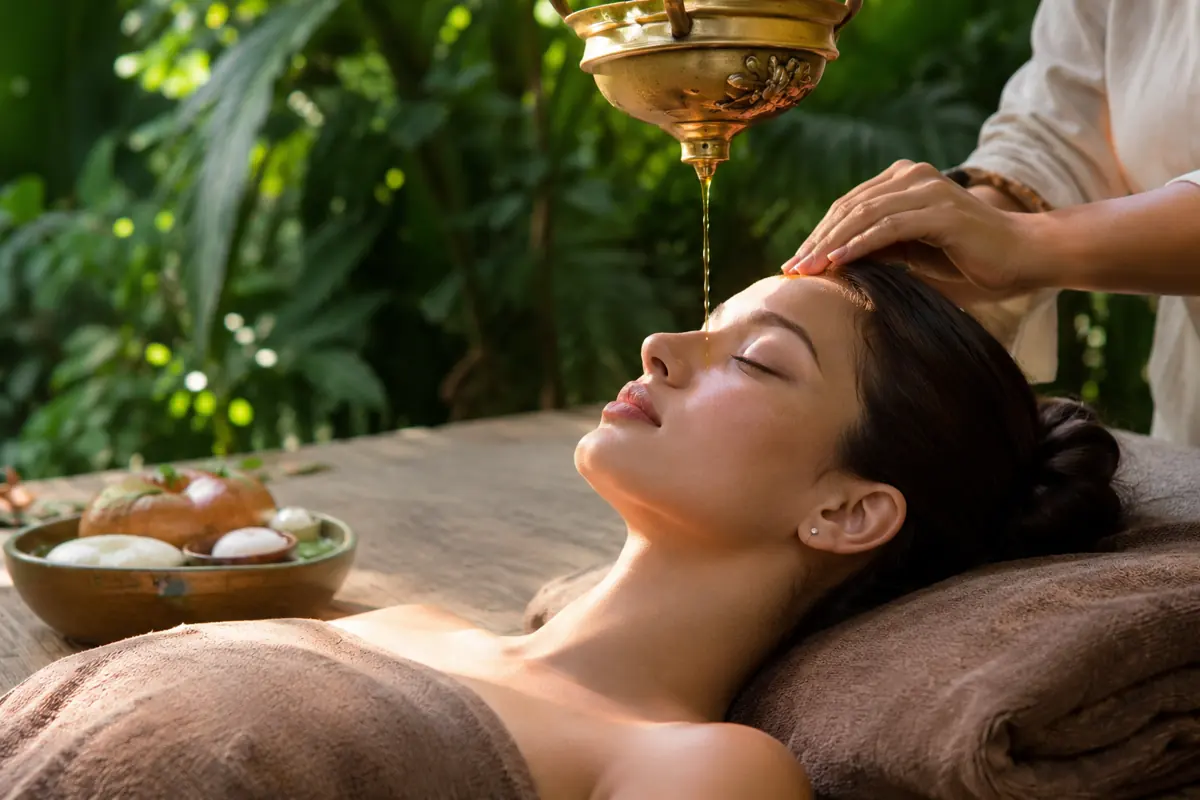
Shirodhara
Slow stream of warm oil on the forehead
Deeply calming
Shirobasti
Warm oil held on the scalp in a cap
Warm, quiet, still
Lepa
Herbal paste applied and rinsed
Cool, mild
Not every guest has every therapy; your physician chooses according to your needs.
The assessment first
A careful centre begins with a hair and scalp assessment. The physician asks about hair fall, thinning, dandruff, itching, previous treatments, products, diet, stress, sleep and health conditions, and examines your scalp and hair. They may suggest blood tests, such as thyroid, iron and vitamin D, or advise a dermatologist visit. This assessment decides which therapies and oils are suitable.
See a doctor first when
Please see a doctor or dermatologist before any programme if you have patchy or sudden hair loss, a painful, inflamed, scaly or weeping scalp, scarring, signs of infection, or hair loss after illness, medicines or childbirth. Share the findings with the centre, and continue any prescribed treatment.
Herbal oils in hair-care programmes
Ayurvedic hair oils are prepared by simmering herbs in a base oil such as sesame or coconut, and are chosen to suit your scalp: lighter, cooling oils for oily or flaky scalps and warming, heavier oils for dry ones. Ask what is in the oil, where it was made and whether it has been tested. A small patch test on the forearm or behind the ear is done first, and anyone with allergies should say so.
What each therapy involves
- Head oil massage: warm oil is massaged into the scalp, neck and shoulders for about 30 minutes.
- Shirodhara: a fine stream of warm oil flows over the forehead for 30 to 45 minutes, while you lie still.
- Shirobasti: a leather or cloth cap is fixed on the head and filled with warm oil for a short period.
- Herbal paste (lepa) or herbal wash: applied to the scalp and rinsed after a time.
- Each is followed by rest, and a gentle wash later.
What it feels like
Most guests describe a deep sense of calm. The oil is warm, never hot, and the therapist should check comfort constantly. Some people feel sleepy, and some feel heavy-headed afterwards. Tell the therapist about any discomfort, and the temperature, pressure or position will be adjusted.
Preparing and aftercare
Wear comfortable clothes, and expect oil in your hair. After therapy, oil is usually left for a while and then washed out with a mild shampoo, lukewarm water and, sometimes, a herbal powder. Avoid cold air on a wet or oiled head, and do not skip meals. Rest afterwards, and avoid very hot showers and strong styling products.
Caring for hair at home
- Oil lightly, once or twice a week, if it suits your scalp.
- Wash with a mild shampoo and lukewarm water.
- Avoid tight hairstyles and excessive heat.
- Eat regular, nourishing meals, with enough protein and iron.
- Follow up with your doctor and share the centre's summary.
Setting honest expectations
Scalp therapies can bring relaxation, comfort and better sleep, and may help dryness and flaking. No programme can promise hair growth or cure a scalp or hair condition. A thoughtful physician will be honest about this, and about what you can reasonably expect.
Working alongside your own doctors
Please keep your own doctors informed. Share your medical summary, bring your reports and keep taking whatever you have been prescribed. Please keep using any prescribed treatments, and discuss any new therapy with your own doctors first. Please do not change medicines without medical advice.
Choosing a centre
Look for a qualified Ayurvedic doctor (BAMS or MD Ayurveda), registered with the appropriate board, trained therapists, patch-testing, clean equipment and a clear written plan. Be cautious of anyone who promises to regrow hair or sells products as part of the treatment.
Planning the journey
Apply for your e-Medical visa on India's official portal, usually with a hospital letter, a few weeks before travel. It is valid for 60 days from first arrival, allows three entries and cannot be extended. Book flights after approval, arrange travel insurance and choose an arrival time that gives you a rested first day. Check the portal for current rules before you apply.
Your friend and hand-holder in finding the right programme: MyVaidyam
A good plan starts with a good conversation, and that is where MyVaidyam comes in. We walk with you from your very first question to the day you return home, answering every question patiently and making sure that nothing is left to chance.
- An online consultation with an Ayurvedic physician to discuss your hair, scalp and goals.
- Help preparing your health summary and any test reports.
- Guidance on choosing a reputable centre with experience in hair and scalp care.
- Help understanding your written plan.
- Support with your e-Medical visa documents, flights, airport pickup and accommodation.
- A warm point of contact during your stay, and follow-up after you return home.
You are welcome to reach out at any stage. We would be delighted to help you begin.