This guide explains in plain language whether and how Panchakarma can fit within a skin-wellness programme: why your doctor or dermatologist comes first, how the Ayurvedic physician decides what is suitable, what the preparation and cleansing stages involve, which gentler therapies are commonly used, how diet and routine help, what a residential day looks like and how to keep up the benefits at home. And throughout, it shows how MyVaidyam can walk beside you as your friend and guide.
Ayurveda is offered here as a complementary, supportive approach that works alongside your own doctor's care, never as a replacement for it. It does not promise to cure any skin condition.
Quick Facts - Can Panchakarma Be Part of a Skin-Wellness Program?
| Topic | Summary |
|---|---|
| Question | Whether Panchakarma fits a skin-wellness programme |
| First step | Assessment by your doctor or dermatologist |
| Stages | Assessment, preparation, cleansing, rebuilding |
| Gentler options | Oil therapies, herbal applications, diet, calm |
| Decided by | The Ayurvedic physician, after full review |
| Not | A promise of curing a skin condition |
| Visa | e-Medical visa: 60 days from first arrival, triple entry, non-extendable |
| Your companion | MyVaidyam: planning, coordination and support before, during and after |
Skin and the whole person
Ayurveda does not treat skin as separate from the rest of the person. It looks at digestion, bowels, sleep, stress, climate and habits, because these shape how skin behaves. Panchakarma, meaning five actions, is a traditional programme of preparation and cleansing intended to restore balance. Whether it belongs in a skin programme depends on the person, and a careful physician makes that choice individually.
A skin-wellness programme, in four steps
Assess
Doctor and Ayurvedic review
Prepare
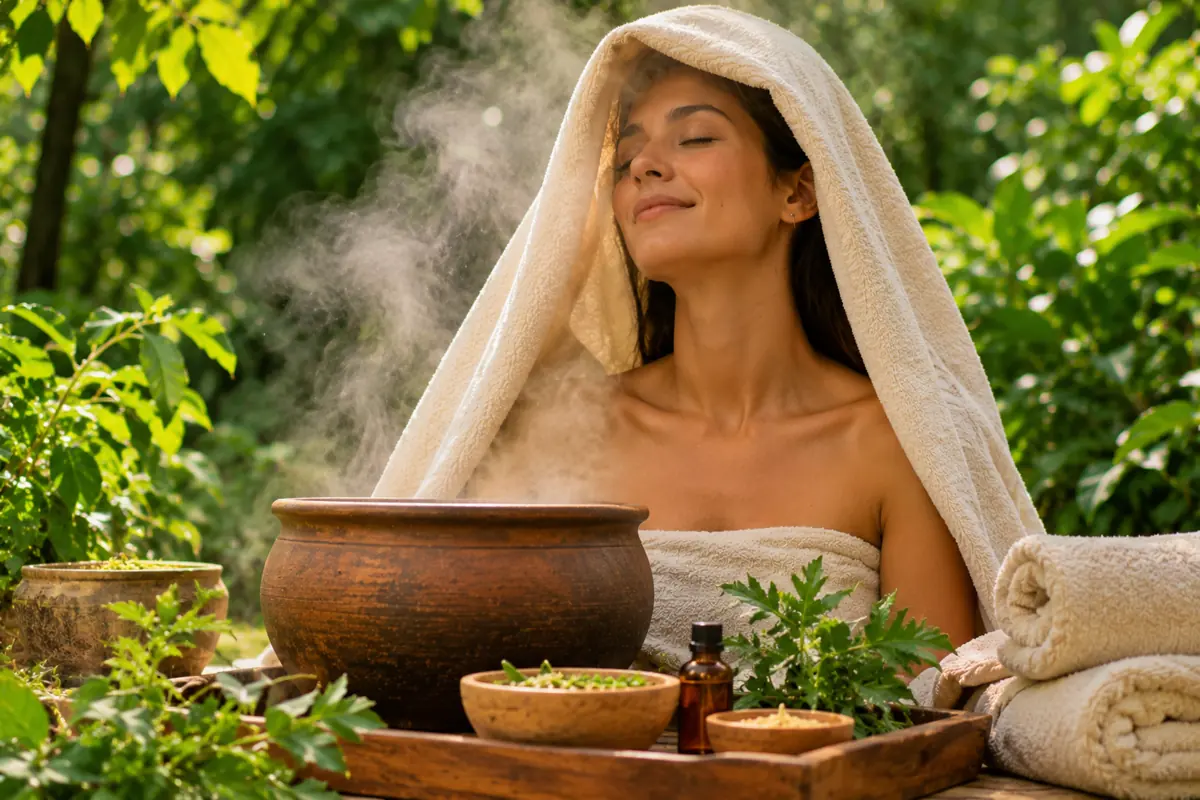
Oil, diet, gentle sweating
Cleanse
Only if suited and agreed
Rebuild
Food, routine, calm
Each stage depends on the one before, and cleansing is not always part of the plan.
Assess first
Please have persistent, painful, spreading or severe skin problems assessed by your doctor or dermatologist, and share the diagnosis, tests and treatments with the centre. Continue prescribed skin treatments as advised. Panchakarma and other Ayurvedic care work alongside medical treatment and never in place of it, and your doctors should know of your plans.
How the physician decides
The Ayurvedic physician considers the nature of the skin problem, its pattern over the seasons, your strength, digestion, age, sleep, stress and other health conditions and medicines. Some people suit a full Panchakarma, others a gentler version, and others only the supportive therapies. An honest physician will tell you plainly which applies to you, and why.
What a supportive programme may include
- A consultation covering skin, digestion, sleep, stress and diet.
- Tailored, freshly cooked food at regular times.
- Warm herbal oil therapies and gentle herbal applications, as suited.
- Preparation with medicated ghee or oils, where advised.
- Cleansing procedures, only if suitable and agreed with your doctors.
- Yoga, breathing, meditation and a calm routine.
Preparation and cleansing
Panchakarma begins with preparation: a few days of light food, oil taken internally or applied externally, and gentle sweating, intended to loosen and ready the body. Cleansing procedures follow, if suitable, and are followed by a period of careful rebuilding with light food and rest. Preparation and rebuilding are as important as the cleansing itself, which is why the programme should never be rushed.
When gentler care is the wiser path
For sensitive, inflamed or very dry skin, or when strength is low, a gentler programme is often wiser. This may include oil therapies, soothing herbal applications, diet, calm and routine, without the strong cleansing procedures.
Diet, digestion and sleep
In Ayurveda, skin follows digestion, sleep and stress. Warm, fresh, regular meals, fewer very spicy, sour, fried and sugary foods, enough water, a light early supper and early nights are common advice. Breathing, meditation and relaxation help calm the nervous system, which can quieten itching and scratching in some people.
A day at a residential centre
| Time | Typical activity |
|---|---|
| Early morning | Warm water, breathing, gentle stretches |
| Morning | Gentle skin therapy |
| Late morning | Yoga or a walk |
| Midday | Light, tailored main meal and rest |
| Afternoon | Relaxation, quiet time |
| Evening | Light early supper, calm, early sleep |
How long does it take?
Programmes vary widely. A short stay can offer rest, diet and gentle therapies, while a fuller Panchakarma is usually longer, with time for preparation and rebuilding. Skin responds slowly, so your physician will discuss realistic timeframes and what to continue at home.
Taking it home
- Keep a regular routine and a light early supper.
- Drink enough water, and keep food fresh and warm.
- Keep skin care gentle and simple.
- Manage stress and protect your sleep.
- Follow up with your dermatologist and share the centre's summary.
Setting honest expectations
Skin conditions often come and go, and no programme can promise to cure them. A residential stay can offer rest, regular routine, tailored food and gentle therapies, and a chance to learn what calms your skin. Many guests value the habits and understanding they take home as much as anything.
Working alongside your own doctors
Please keep your own doctors informed. Share your medical summary, bring your reports and keep taking whatever you have been prescribed. Please keep using any prescribed skin treatments, and discuss any new therapy with your own doctors first. Please do not change medicines without medical advice.
Choosing a centre
Look for a qualified Ayurvedic doctor (BAMS or MD Ayurveda), registered with the appropriate board, experienced in skin care, trained therapists, a kitchen that cooks to your plan and a clear written plan. Be cautious of anyone who offers the same Panchakarma package to everyone or promises to cure skin conditions.
Planning the journey
Apply for your e-Medical visa on India's official portal, usually with a hospital letter, a few weeks before travel. It is valid for 60 days from first arrival, allows three entries and cannot be extended. Book flights after approval, arrange travel insurance and choose an arrival time that gives you a rested first day. Check the portal for current rules before you apply.
Your friend and hand-holder in finding the right programme: MyVaidyam
A good plan starts with a good conversation, and that is where MyVaidyam comes in. We walk with you from your very first question to the day you return home, answering every question patiently and making sure that nothing is left to chance.
- An online consultation with an Ayurvedic physician to discuss your skin and goals.
- Help preparing your health summary and any skin reports.
- Guidance on choosing a reputable centre with experience in skin care.
- Help understanding your written plan.
- Support with your e-Medical visa documents, flights, airport pickup and accommodation.
- A warm point of contact during your stay, and follow-up after you return home.
You are welcome to reach out at any stage. We would be delighted to help you begin.