This guide explains the Ayurvedic view, what a stay typically includes and how to plan with confidence. Ayurveda is offered as a complementary, supportive approach alongside your own doctor's care, never a replacement for it.
Quick Facts - A Typical Day in a 21-Day Panchakarma Programme
| Topic | Summary |
|---|---|
| Wake time | Early morning, often before sunrise |
| Main therapy | Usually in the morning, lasting roughly one to two hours |
| Meals | Simple, treatment-appropriate food, two to three times a day |
| Rest | Built into the day, especially after therapy |
| Doctor review | Periodic check-ins, more frequent around changes |
| Flexibility | The plan is adjusted to your response |
Understanding the rhythm
The rhythm of a Panchakarma day is part of the treatment. Waking, eating and resting at regular times gives the body a predictable pattern, and many guests find that this alone is deeply restful. The structure frees you from decisions so that you can simply be looked after.
An illustrative daily schedule
| Time of day | What usually happens |
|---|---|
| Early morning | Wake, light routine, gentle movement or breathing |
| Morning | Main therapy session, such as oil treatment or another prescribed procedure |
| Mid-morning | Rest after therapy, before the first meal |
| Midday | Main meal, prepared for your plan |
| Afternoon | Rest, a lighter second therapy or a doctor review |
| Evening | Light meal, quiet time, early rest |
Treat this as an illustration. Your doctor sets your own schedule, meals and sessions.
How the day changes across the three phases
Preparation, roughly the first few days, is gentle, with assessment, dietary adjustment and oil therapies. The main procedures, the middle stretch, are built around the procedures chosen for you with more structured rest. Recovery, the final days, eases the pace, with a gradual return to normal food, supportive therapies and planning for home. Our complete Panchakarma guide explains each stage.
What is expected of you each day
- Follow the diet and meal timings.
- Attend sessions on schedule.
- Rest when advised.
- Tell the doctor about anything unusual early.
Why the schedule can change
Your doctor adjusts the plan to how you respond, so a day may be lighter, a session may move or an extra review may be added. Flexibility is a sign of attentive care.
Week one: preparation
The first days are gentle. After arrival and a thorough consultation, you begin with light meals, oil massage and mild steam. The doctor checks your response each day and adjusts the plan. Evenings are quiet, and you will probably sleep early.
Week two: the main procedures
The middle stretch is built around the procedures chosen for you. Days have more structure, with therapy in the morning and long rests afterwards, and meals become very simple on procedure days. The doctor reviews you often, and your companion can help with small tasks.
Week three: recovery
In the final days the pace eases. Meals broaden gradually, supportive therapies continue, you may start gentle yoga or walks and the doctor writes your plan for home. Many guests describe this week as lively and light.
Daily-life questions: work, outings and visitors
Most centres welcome short, quiet calls and emails, but advise leaving work behind for the main stretch. Outings are usually kept for before or after the programme, and visitors are best received in the lighter final days. Ask the centre about its policies.
What to pack for daily life
- Loose cotton clothing and a light wrap.
- Sandals that are easy to slip on.
- A notebook, a book and a water bottle.
- Your medicines and reports.
- A hat and sun protection for garden walks.
Your first day and your last day
Your first day is for arrival, settling and a full consultation. Your last day brings a review, a written plan for home, any medicines and a farewell meal. Ask the centre for a copy of your plan and discharge summary.
Staying on track through the middle days
The middle days can feel slow, and that is when a notebook, a book and a short walk help most. Keep to the timetable, rest as advised and chat with the staff about anything on your mind. The routine carries you through.
A sample of a procedure day
On a procedure day you might wake early, take a light breakfast or fast as advised, have the procedure in the morning with the doctor nearby, rest through the afternoon with sips of warm water and enjoy a simple evening meal. The doctor checks in several times.
Keeping a simple diary
A small notebook is one of the most useful things to bring. Each evening, jot down how you feel, your sleep, your energy and anything you would like to ask. After a week or two the pattern often becomes clear, and you and the physician can fine-tune the plan. A few notes each evening help both your doctors. The same notes give your own doctor a helpful picture when you return.
Travelling comfortably
A little planning makes the journey smoother. Book an aisle seat so you can stand and stretch, keep your medicines and reports in your hand luggage, and choose a flight that arrives at a comfortable hour. Carry your medicines and a doctor's letter in your hand luggage, and keep your documents together. Ask the centre to arrange the transfer and a restful first day. Our guide to the attendant visa explains how a family member can travel with you.
Conversations to have before you travel
A short chat with your own doctor makes the stay smoother. Many guests ask:
- Are my medicines and plans up to date for the trip?
- How should I continue in the weeks after I return?
- Is there anything you would like the Ayurveda team to know?
- When would you like to see me after I return?
Sharing the answers with the Ayurveda physician helps the two teams work in step, and leaves you feeling confident and well supported.
Travelling with family or a companion
Many guests travel with a spouse, a friend or an adult child, and a companion can make the whole experience easier. Ask each centre whether companions can share your room or stay nearby, whether they can join meals, yoga and walks, and whether there is a pleasant place for them to relax while you have therapies. A companion can help with logistics, share the quiet days and keep your family informed. Our guide to the attendant visa explains the paperwork.
After you return
Many guests keep up a simple diet, an earlier bedtime and gentle daily movement for several weeks, and review their health with their own doctor. Ask the centre for a written summary of your programme, your diet and your exercises, and share it with your own doctor at your next visit. A follow-up video call with the physician a few weeks later is a good way to review how you are feeling. Our guide to continuing Ayurveda at home explains how to keep the benefits going.
Common questions
Do I keep my medicines? Yes, unless your own doctor advises otherwise. Can I ask for a written plan? Yes, and you should. Can a companion join me? Many centres allow it. How long should I stay? Your physician advises after a consultation.
Choosing a centre
Rather than looking for a ranking, compare what matters to you: a qualified Ayurveda physician, a clear assessment, a written day-by-day plan, hygiene standards, accessible rooms and good access to a hospital. Ask each centre the same questions:
- Who will be my physician, and what are their qualifications?
- Which parts of my plan have I discussed with my own doctor?
- How will you coordinate with my home doctor?
- How are herbal medicines sourced, and can I see the ingredient list?
- What does the quote include, and what is extra?
Meals in a Panchakarma programme
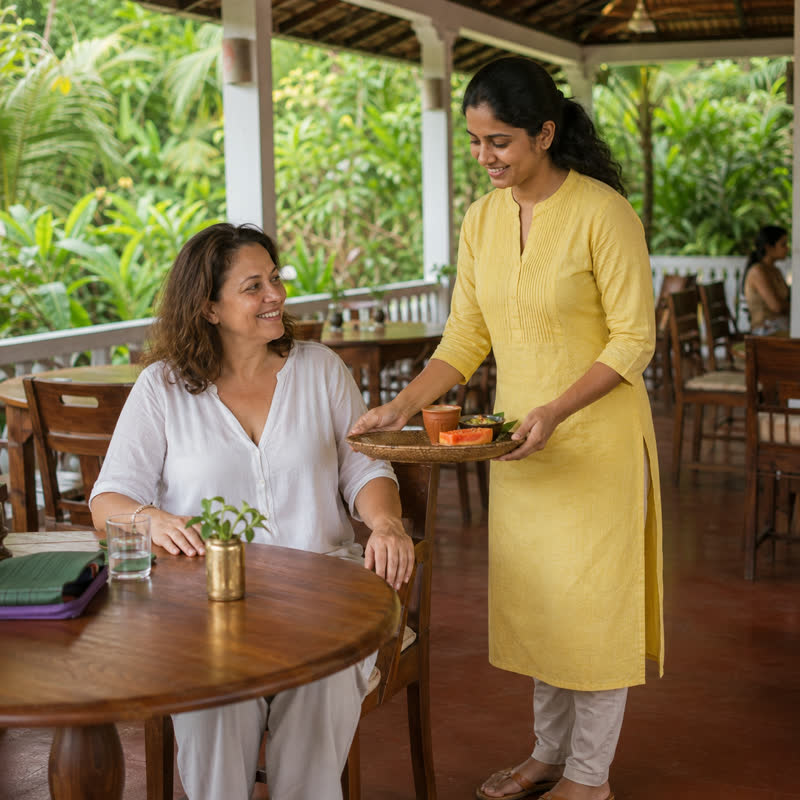
Meals are warm, simple and freshly cooked, usually taken at regular times. Early in the programme they are light, often rice-based with gentle spices, and on procedure days they may be very simple, such as thin rice gruel. As recovery begins the kitchen reintroduces vegetables, lentils and a wider range of flavours. Tell the kitchen about allergies and preferences before you arrive, and ask the doctor why each change is made.
Rest and quiet time
Rest is a treatment in itself. After morning therapy you may spend an hour or two lying quietly, and afternoons usually include a nap or reading. Plan a few easy books, a journal and perhaps some music with headphones. Many guests are surprised by how much they enjoy the slower pace once the first few days have passed.
Doctor reviews and how often they happen
Reviews are typically daily or on alternate days, and more frequent around changes of therapy. The doctor feels your pulse, asks about sleep, digestion, energy and mood and adjusts the plan accordingly. Use these meetings to ask questions, and keep a short list in your notebook.
Mornings and evenings in detail
Mornings begin with a warm drink and a short consultation before therapy, often followed by oil massage, steam and the prescribed procedure. Evenings are for a light meal, perhaps a short garden walk, gentle breathing practice and an early bedtime. Lights are usually low and voices soft, which supports good sleep.
Staying connected with home
Most centres have wifi and phone signal, and many guests share a short daily message with family. Plan a quiet routine for it, perhaps once a day in the afternoon, and let your family know that replies may be brief. A relaxed boundary with devices is part of the benefit.
A companion's day
A companion has a flexible day. They may share meals, take garden walks, join gentle yoga, explore nearby sights or simply rest. Ask the centre about companion rooms, meals and activities, and whether any therapies are available for companions at an additional cost.
How to make the most of each phase
In preparation, settle in and ask questions. In the main stretch, follow the plan, rest and note how you feel. In recovery, eat as advised, begin gentle movement and write down the routines you wish to keep. This simple approach carries you through three weeks with confidence.
Gentle movement, yoga and breathing
Many programmes include gentle movement at the start or end of the day: a few stretches, slow walking, simple yoga postures adapted to your energy and breathing exercises. They are optional and unhurried, and your doctor may pause them on procedure days. Ask the teacher to write down a short routine you can continue at home.
Sleep and the evening routine
Evenings are dim and quiet, and bedtime is early. A warm foot massage, a light supper, a few minutes of breathing practice and a book are a typical wind-down. Many guests find that sleep deepens by the end of the first week, and they leave with a bedtime routine they wish to keep.
Weather, clothing and comfort
Kerala is warm and humid for much of the year, so loose cotton clothing, a light wrap for cool evenings and sandals are enough. Treatment rooms are comfortable, and oil can stain, so bring clothes you do not mind marking. Ask the centre about laundry, rain gear in the monsoon and fans or air-conditioning in your room.
Questions to ask the centre about daily life
- What does a typical day look like at your centre?
- How many therapy sessions will I have each day?
- How are meals timed and adapted for me?
- What are your policies on visitors, outings and phones?
- How do you handle changes to the schedule?
What guests commonly tell us
Guests often say that the first three days feel unfamiliar and the last week passes quickly. They mention the kindness of therapists, the simplicity of the food and the pleasure of long rests. Many leave with a plan for early evenings, lighter suppers and a few minutes of breathing each day.
Questions guests ask on arrival
Can I change my meal times? Your doctor decides, and small adjustments are usually possible. Can I walk in the garden? Yes, unless your doctor asks you to rest. Can I take calls? Short calls are usually fine. Can I take a day off from therapy? Speak to the doctor, who may adjust the plan.
Preparing for your stay
Pack loose cotton clothing, a light wrap, sandals, a notebook and any personal comforts. Bring your medicines and reports.
Planning your budget
Cost depends on room, length, therapies, physician time and medicines. Ask each centre for an itemised, dated quote for the same dates and inclusions, and add visa, flights, insurance and transfers. See the cost guide and verifying a doctor.
Travelling with confidence, and how MyVaidyam can help
- Share your reports and current medicines with the Ayurveda physician before you travel.
- Continue your prescribed medicines, and let your own doctor know your plans.
- Ask for ingredient lists for any herbal medicine, and choose labelled preparations.
- Plan rest after the flight so you can begin your stay comfortably.
- Your doctor sets your own schedule and adjusts it to your response.
MyVaidyam can arrange a free online pre-consultation, have your reports reviewed by an Ayurvedic physician and request day-by-day plans and itemised quotes from centres so you can compare them calmly. Contact MyVaidyam to book your free online consultation.