This guide explains the Ayurvedic view, what a stay typically includes and how to plan with confidence. Ayurveda is offered as a complementary, supportive approach alongside your own doctor's care, never a replacement for it.
Quick Facts - Ayurvedic Meals During Treatment for International Patients
| Topic | Summary |
|---|---|
| Typical pattern | Simple, freshly cooked, regular meals, often vegetarian; varies by centre |
| Real plan | Set by the treating doctor for your condition, medicines and therapies |
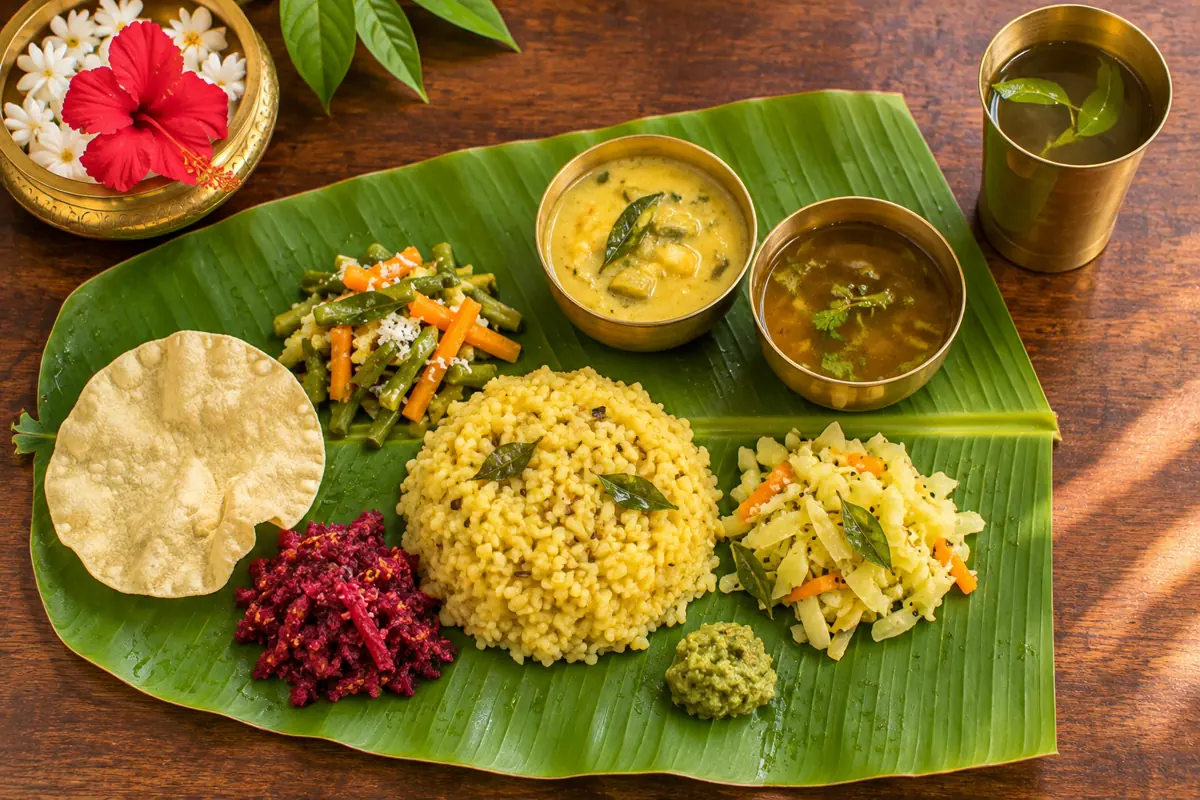
| Sample menu | Our example for discussion, not a prescription |
| Gout and fatty liver | Crash diets are discouraged (NHS 111 Wales, NIDDK) |
| Thyroid | People with Hashimoto's may be sensitive to excess iodine, such as seaweed (NIDDK) |
| Ask before arriving | Allergies, diabetes plan, medicine timing, portions |
Understanding the idea behind the meals
In Ayurveda, food is considered part of the treatment, chosen for its warmth, ease of digestion and balance, and eaten at regular times. The aim is to ease digestion and give the body a calm, nourishing routine during the programme.
What meals are usually like
Meals are warm, lightly spiced and freshly cooked, with rice, lentils, vegetables and herbal drinks. Breakfast is light, lunch the main meal and dinner small. Many centres are vegetarian and avoid alcohol and heavy fried food.
Why the real plan comes from your doctor
Your doctor sets meals according to your condition, medicines and therapies, so the plan may change as the programme moves through its stages. Share your allergies, diabetes plan and cultural needs before you arrive.
How diet may change with therapies
On procedure days meals may be very simple, such as thin rice gruel. During recovery the kitchen reintroduces vegetables, lentils and more varied flavours. Your doctor explains each change.
Medicines and food
Some foods interact with medicines: grapefruit can affect some statins (NHLBI), seaweed and iodine-rich foods may matter in Hashimoto's disease (NIDDK), and crash diets are discouraged in gout and fatty liver. Share your medicines with the kitchen and the doctor.
Allergies, religious and cultural needs
Tell the kitchen about allergies, vegetarian, vegan, halal or other needs, and ask whether utensils are kept separate. Most kitchens are happy to adapt, and many centres are already vegetarian.
Weight and energy
Portions are planned to suit your energy rather than to reduce weight, and crash diets are not part of a supervised programme. Tell the doctor if you feel hungry or weak so that meals can be adjusted.
After you return
Keep a few simple habits: regular meal times, warm freshly cooked food, the biggest meal at midday, a light supper and warm water through the day. Ask the centre for a one-page guide and share it with your dietitian or doctor.
Questions to ask the centre before you arrive
- Can I see a sample menu?
- How are meals adapted for diabetes, thyroid or cholesterol?
- Are snacks available between meals?
- How are food allergies managed?
- What drinks are served?
Keeping a simple diary
A small notebook is one of the most useful things to bring. Each evening, jot down how you feel, your sleep, your energy and anything you would like to ask. After a week or two the pattern often becomes clear, and you and the physician can fine-tune the plan. A few notes each evening help both your doctors. The same notes give your own doctor a helpful picture when you return.
Travelling comfortably
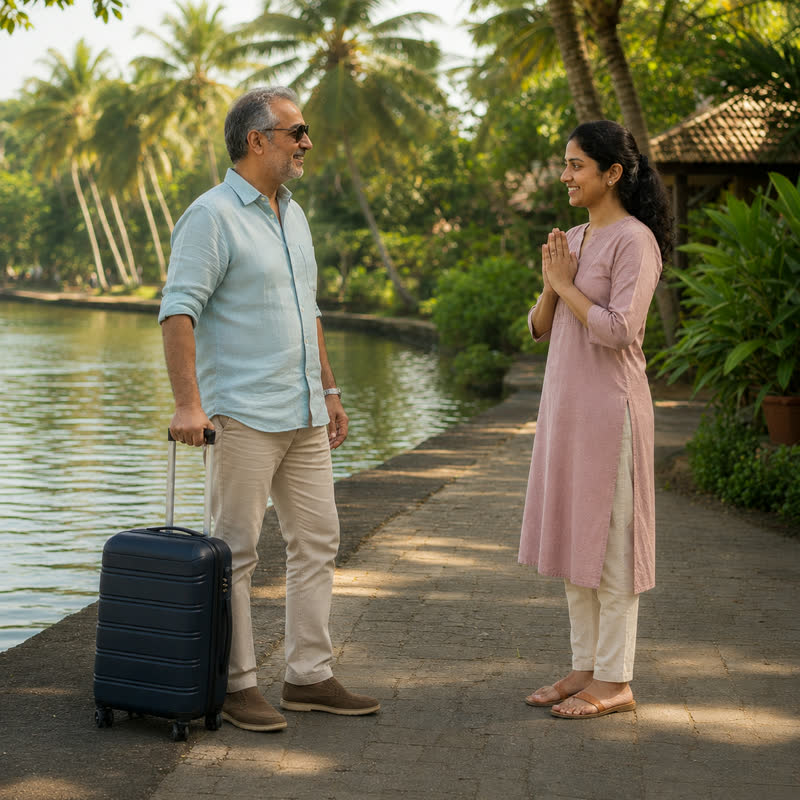
A little planning makes the journey smoother. Book an aisle seat so you can stand and stretch, keep your medicines and reports in your hand luggage, and choose a flight that arrives at a comfortable hour. Carry your medicines and a doctor's letter in your hand luggage, and keep your documents together. Ask the centre to arrange the transfer and a restful first day. Our guide to the attendant visa explains how a family member can travel with you.
Conversations to have before you travel
A short chat with your own doctor makes the stay smoother. Many guests ask:
- Are my medicines and plans up to date for the trip?
- How should I continue in the weeks after I return?
- Is there anything you would like the Ayurveda team to know?
- When would you like to see me after I return?
Sharing the answers with the Ayurveda physician helps the two teams work in step, and leaves you feeling confident and well supported.
Travelling with family or a companion
Many guests travel with a spouse, a friend or an adult child, and a companion can make the whole experience easier. Ask each centre whether companions can share your room or stay nearby, whether they can join meals, yoga and walks, and whether there is a pleasant place for them to relax while you have therapies. A companion can help with logistics, share the quiet days and keep your family informed. Our guide to the attendant visa explains the paperwork.
After you return
Many guests keep up a simple diet, an earlier bedtime and gentle daily movement for several weeks, and review their health with their own doctor. Ask the centre for a written summary of your programme, your diet and your exercises, and share it with your own doctor at your next visit. A follow-up video call with the physician a few weeks later is a good way to review how you are feeling. Our guide to continuing Ayurveda at home explains how to keep the benefits going.
Questions to ask before you book
These questions help you compare centres and plan with confidence.
- Who will be my physician, and what are their qualifications?
- Can the plan work around my usual medicines and appointments?
- Can the kitchen adapt meals to my allergies and medicines?
- What does the quote include, and what is extra?
Preparing for your stay
Tell the centre about allergies, diabetes, religious and cultural needs and medicine timings, and ask for a menu in advance.
Planning your budget
Cost depends on room, length, therapies, physician time and medicines. Ask each centre for an itemised, dated quote for the same dates and inclusions, and add visa, flights, insurance and transfers. See the cost guide and verifying a doctor.
Travelling with confidence, and how MyVaidyam can help
- Share your reports and current medicines with the Ayurveda physician before you travel.
- Continue your prescribed medicines, and let your own doctor know your plans.
- Ask for ingredient lists for any herbal medicine, and choose labelled preparations.
- Plan rest after the flight so you can begin your stay comfortably.
- Never change prescribed medicines because of a diet; ask your doctor.
MyVaidyam can arrange a free online pre-consultation, have your reports reviewed by an Ayurvedic physician and request day-by-day plans and itemised quotes from centres so you can compare them calmly. Contact MyVaidyam to book your free online consultation.