This guide explains in plain language how to maintain an Ayurvedic daily routine while travelling: why your own doctor comes first, which elements are most portable, how to handle time zones, meals and sleep, what to pack, how to manage medicines on the road and how to settle back at home. And throughout, it shows how MyVaidyam can walk beside you as your friend and guide.
Ayurveda is offered here as a complementary, supportive approach that works alongside your own doctor's care, never as a replacement for it. It does not replace the care of your own doctors.
Quick Facts - How to Maintain an Ayurvedic Daily Routine While Travelling
| Topic | Summary |
|---|---|
| Most portable | Warm water, breathing, a short walk, regular meals, bedtime wind-down |
| Pack | Medicines, written plan, a flask, a light shawl |
| Time zones | Adjust meals, light and sleep gradually |
| Medicines | Carried in labelled containers, in hand luggage |
| Your own doctors | Informed, and prescribed medicines continue |
| Not | A replacement for medical advice |
| Visa | e-Medical visa: 60 days from first arrival, triple entry, non-extendable |
| Your companion | MyVaidyam: planning, coordination and support before, during and after |
A routine that travels
The daily routine in Ayurveda is less a rulebook than a rhythm: wake gently, drink warm water, move the body, eat at regular times, wind down in the evening and sleep on time. Because it asks for no special equipment, it can follow you through airports, hotels and family visits.
A portable daily routine
Wake and warm water
Move and breathe
Regular meals
Wind down and sleep
Keep the shape, and let the details flex.
Start with your doctor
Please carry your medicines and written plan in your hand luggage, and continue every prescribed medicine, adjusting timing across time zones only as your doctor advises. If you have a long-term condition, discuss the trip with your own doctor beforehand.
The portable essentials
- Warm water on waking and through the day, from a flask.
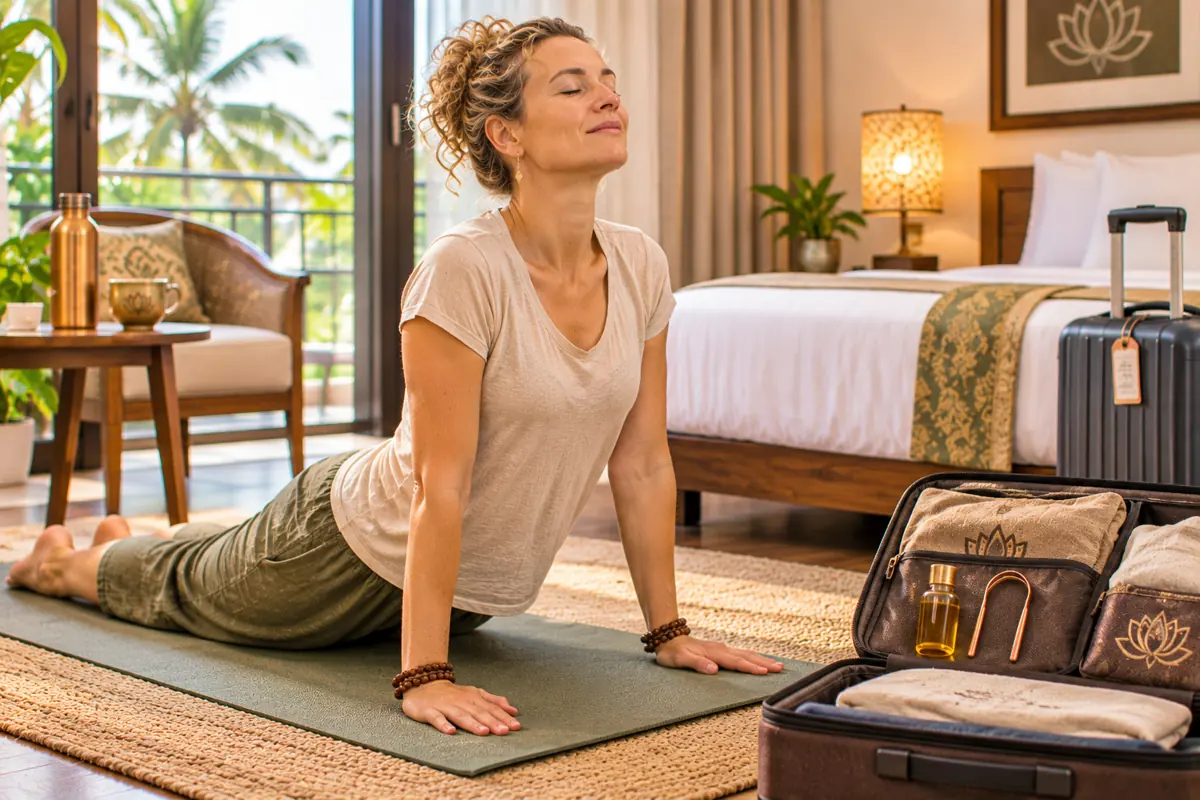
- A few minutes of breathing or stretching, even in a hotel room.
- A short walk after meals.
- Regular meal times, as far as travel allows.
- A calming evening: dim light, no screens, a regular bedtime.
Time zones and sleep
On arrival, step into daylight, eat at local meal times, and go to bed at a local, reasonable hour, even if you feel tired earlier or later. Avoid heavy meals, caffeine and alcohol late in the day, and keep screens away before bed. Most people adjust within a few days.
Meals on the road
Choose warm, freshly cooked foods when possible, such as soups, rice, lentils and cooked vegetables, and eat modest portions. Drink safe water, and be careful with raw or unfamiliar foods when your digestion is tired.
What to pack
- Your medicines and written plan, in hand luggage.
- A flask for warm water, and herbal tea bags if you like.
- A light shawl or layer for cold planes and rooms.
- Comfortable walking shoes.
- A small notebook for your daily notes.
A day at a residential centre
| Time | Typical activity |
|---|---|
| Morning | Warm water, stretches, medicines as advised |
| Late morning | Sightseeing at a gentle pace |
| Midday | Regular, simple meal and a short rest |
| Afternoon | Walk or light activity |
| Evening | Light early supper, screen-free wind-down |
| Night | Regular bedtime |
Taking it home
- Return to your usual routine gradually.
- Rest after long journeys.
- Share any concerns with your doctors.
- Keep in touch with the centre for follow-up.
Working alongside your own doctors
Please keep your own doctors informed. Share your medical summary, bring your reports and keep taking whatever you have been prescribed. Please keep taking prescribed medicines, and discuss any changes with your own doctors first. Please do not change medicines without medical advice.
Choosing a centre
Look for a qualified Ayurvedic doctor (BAMS or MD Ayurveda), registered with the appropriate board, who gives a clear written routine that you can follow at home and while travelling.
Planning the journey
Apply for your e-Medical visa on India's official portal, usually with a hospital letter, a few weeks before travel. It is valid for 60 days from first arrival, allows three entries and cannot be extended. Book flights after approval, arrange travel insurance and choose an arrival time that gives you a rested first day. Check the portal for current rules before you apply.
Your friend and hand-holder in staying on track: MyVaidyam
A good plan starts with a good conversation, and that is where MyVaidyam comes in. We walk with you from your very first question to the day you return home, answering every question patiently and making sure that nothing is left to chance.
- An online consultation with an Ayurvedic physician to discuss your goals.
- Help preparing your health summary and medicine list.
- Guidance on choosing a reputable centre.
- Help understanding your written plan.
- Support with your e-Medical visa documents, flights, airport pickup and accommodation.
- A warm point of contact during your stay, and follow-up after you return home.
You are welcome to reach out at any stage. We would be delighted to help you begin.