This guide explains how to prepare, what happens during the call and what a good consultation leaves you with.
Quick Facts - Video Consultation with an Ayurvedic Doctor
| Topic | Summary |
|---|---|
| Purpose | To understand your history and goals and to give an honest view of whether a programme may suit you |
| Before the call | Send reports and a medicine list, write down your questions, test your connection and agree the time zone |
| During the call | The doctor asks about symptoms, history, medicines, routine and goals; you ask about the plan and what to expect |
| What it cannot do | It is not an emergency service and cannot replace an in-person examination, tests or your own doctor |
| Afterwards | Ask for a written summary of advice and a suggested plan |
| Privacy | Ask how your records are stored and who sees them |
What a video consultation is for
The call lets an Ayurvedic doctor meet you, listen to your story and understand how you feel day to day. It helps you judge whether the doctor explains clearly, listens patiently and sets realistic expectations.
How to prepare
- Send your recent reports and a list of your medicines and supplements.
- Write down your top three goals and any questions.
- Choose a quiet, private place with a steady connection.
- Agree the time with the doctor, remembering the time difference.
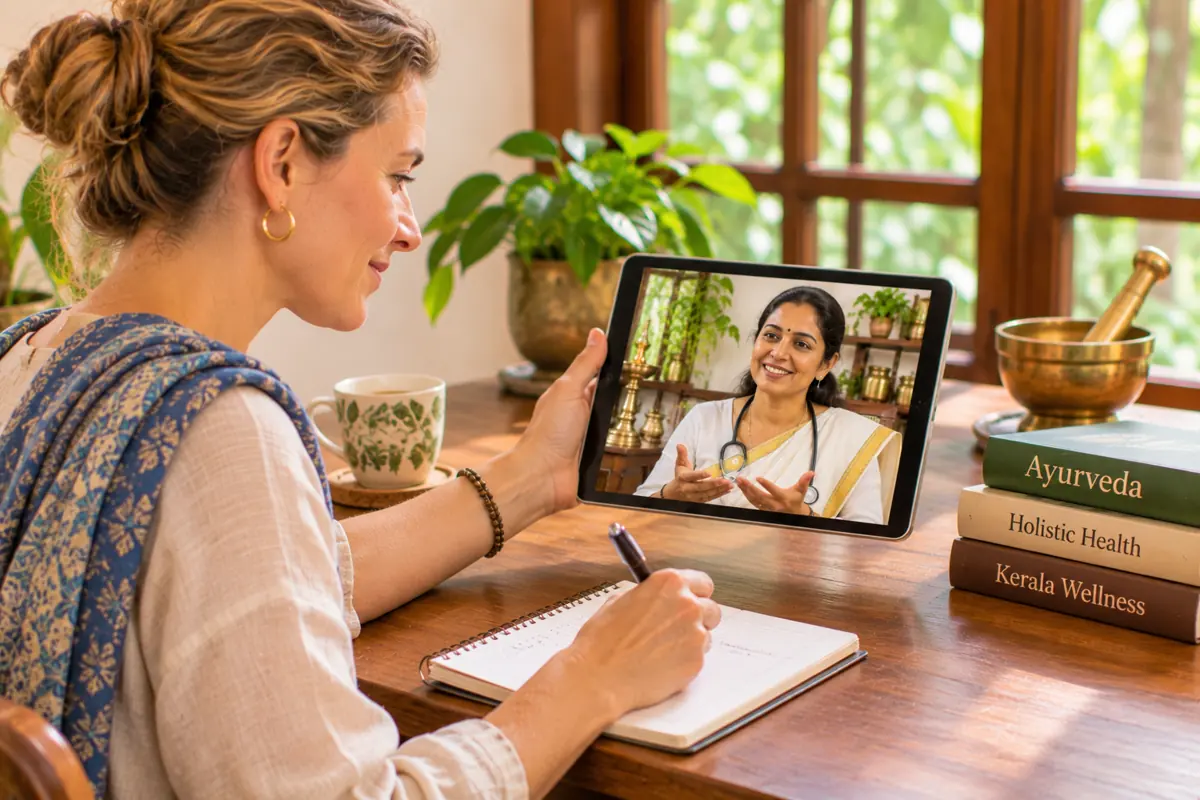
- Keep a pen and paper ready for notes.
What happens during the call
The doctor will usually begin by asking about your main concerns, then about your history, digestion, sleep, energy and routine, and about the medicines you take. They may look at your tongue, skin or posture on camera. Then they share their view of how Ayurveda may help and what a programme might involve, and you ask your questions.
Questions worth asking
- What do you think Ayurveda can realistically help with in my case?
- How would my programme be personalised?
- What would a day look like?
- How should I coordinate with my own doctor?
- What follow-up support is available?
What it cannot do
A video consultation is wonderful for conversation and planning, but it is not an emergency service and cannot replace an in-person examination, tests or the advice of your own doctor. Your Indian physician will usually examine you in person on arrival before finalising your plan.
Afterwards
A good consultation ends with clarity. Ask for a short written summary of the advice and a suggested plan, take time to think, and feel free to ask follow-up questions. There is never any need to decide on the call.
Privacy and records
Ask how your information is stored and who can see it. Use a private space for the call, and share your reports through a secure method recommended by the doctor's team.
Technology tips
- Test your camera, microphone and internet a few minutes early.
- Use headphones for clear sound.
- Keep a phone number as backup if the call drops.
- Sit facing a window or a lamp so your face is well lit.
Choosing the time
Pick a time when you are rested and unhurried. Because India is ahead of most Western countries, mornings and evenings in your time zone often work best, and the doctor's team will help find a slot.
Bringing a family member
You are welcome to have a family member join. They can help recall details, listen for advice and ask questions you might forget.
If English is not your first language
Tell the team in advance if you would like extra time or a translator. Clear understanding matters more than speed.
Being honest about your history
Share everything relevant, including conditions, surgeries, medicines and supplements. The more open you are, the more thoughtful and safe the plan will be.
Keeping notes
Jot down the doctor's key points and your own questions as you go. A few lines make the next step much easier.
A few words on pacing
Many guests are surprised by how much the unhurried pace helps. Treat the first few days as a time to settle in rather than to achieve anything, and let the routine of meals, rest and treatment do its quiet work.
Staying connected with home
A local SIM or an international plan makes it easy to message family and share photos. A short daily call home is often enough to keep loved ones reassured and lets you enjoy the rest of your time fully present.
Keeping a simple journal
A few lines each evening about your sleep, digestion, energy and mood help you notice changes, and they give your physician useful detail at your next review. They also make a lovely record of your stay.
Dressing for comfort
Light cotton clothing in soft colours, comfortable sandals and a thin shawl or jacket for air-conditioned rooms suit most programmes. Your centre can tell you whether treatment robes are provided.
How MyVaidyam can support you
MyVaidyam can help you arrange your video consultation and prepare for it with confidence.
- Scheduling a video consultation with an Ayurvedic physician at a time that suits your time zone.
- Help gathering and sending your reports.
- A written summary of the advice and suggested plan.
- Answers to your questions about the programme, visa and travel.
You are welcome to reach out at any stage with questions.