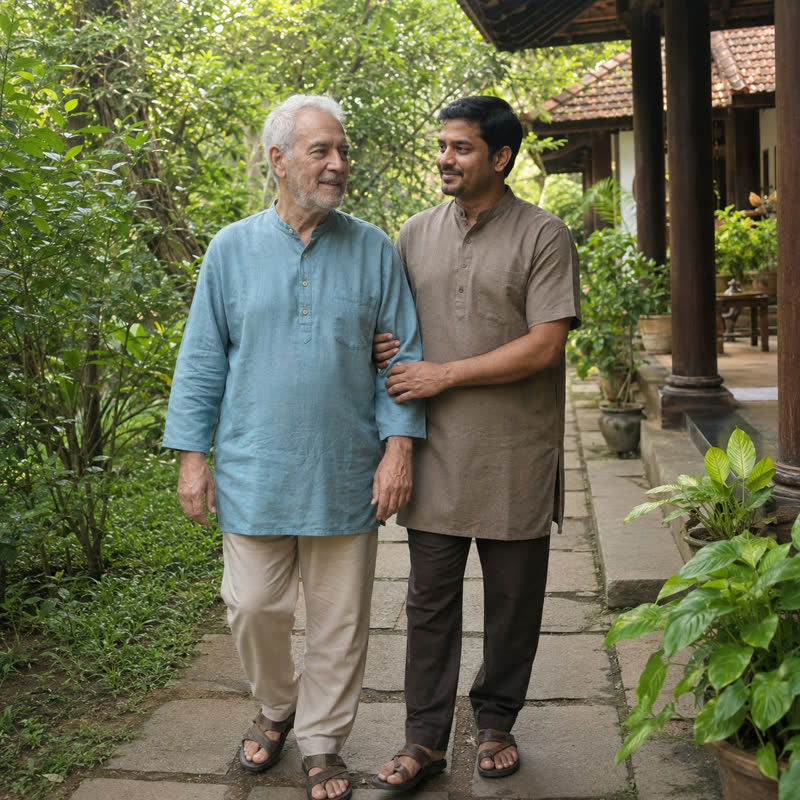
This guide explains why a written plan matters, what it should contain, when to ask for it, how to read it and how it helps you, your family and your own doctors. And throughout, it shows how MyVaidyam can walk beside you as your friend and guide.
Ayurveda is offered here as a complementary, supportive approach that works alongside your own doctor's care, never as a replacement for it.
Quick Facts - Why a Written Treatment Plan Matters Before You Book
| Topic | Summary |
|---|---|
| Ask for it | Before you commit to a centre |
| Contains | Goals, programme, therapies, diet, reviews |
| Written by | The named Ayurvedic physician |
| Language | Plain and easy to understand |
| Shared with | Your own doctors and family |
| Updated | As your plan is adjusted |
| Visa | e-Medical visa: 60 days from first arrival, triple entry, non-extendable |
| Your companion | MyVaidyam: planning, coordination and support before, during and after |
A plan is a promise to understand
When a plan is written down, everyone is looking at the same thing. You know what you have agreed to. The physician has thought through your needs. And if questions arise later, there is something clear to return to. It is a simple courtesy, and good centres are glad to provide it.
What a good written plan contains
Your treatment plan
Your goals
What you and the physician agreed
Programme
Stages and approximate timing
Therapies
Main treatments, described simply
Diet and routine
Meals and daily rhythm
Reviews
How and when progress is checked
Physician
Name, qualification, registration
After the stay
Home plan and follow-up
It need not be long. A clear page or two is often enough.
Why it helps you decide
Comparing centres is much easier when each can describe what it offers for you. A written plan shows how much thought has gone into your case. It reveals whether a programme has been shaped around you or simply offered to everyone, and it lets you ask sensible questions before you travel, rather than after you arrive.
Why it helps your own doctors
Your own doctors can only advise you well if they know what you plan to do. A written plan describes the therapies, diet and medicines proposed, so they can comment on whether anything raises a question. Sharing it also keeps everyone working together, which is the heart of complementary care.
How to read a plan
Take your time, and look for these things:
- Are your goals stated in your own words?
- Are therapies described in plain language?
- Is the physician named, with qualifications and registration?
- Are reviews and adjustments mentioned?
- Is there a plan for recovery and for after you return home?
- Does it avoid promises of cure or guaranteed results?
When to ask
Ask after your first consultation, when the physician has heard your story, and before you commit to dates. If a centre cannot provide a plan until you arrive, that is worth a gentle question. Reasonable centres understand that you are making a significant journey and want to know what to expect.
Plans change, and that is fine
A written plan is a starting point, not a contract that cannot move. As your physician reviews you during the stay, therapies may be adjusted. Good centres update the plan and tell you why. What matters is that changes are explained and agreed, not hidden.
A plan and your visa and flights
A written plan also helps with practical arrangements. Knowing the length of the programme and the recovery stage helps you choose flight dates, and a letter from the centre or physician can support your e-Medical visa application. Because the visa is valid for 60 days from first arrival, with no extension, it is wise to plan the programme within that window, leaving some spare days at the end.
What if there is no plan?
Not every enquiry produces a plan straight away, and that is understandable when the centre has not yet heard your story. If you receive only general brochures, a gentle request for a personalised written plan is entirely reasonable. How a centre responds is itself helpful information about how it will care for you.
Keeping your plan safe
Keep a copy of your written plan on your phone and on paper, together with your reports, medicine list and insurance details. Share it with a family member who can help if questions arise. After your stay, keep the final summary with your health records, so that you can return to it whenever you like.
Questions you might ask when you receive it
- Who prepared this plan, and what are their qualifications?
- What are the main therapies, and why were they chosen?
- How will my progress be reviewed?
- What happens if a therapy does not suit me?
- What is the plan for my recovery and for after I go home?
Working alongside your own doctors
Please keep your own doctors informed. Share your medical summary, bring your reports and keep taking whatever you have been prescribed. Please share your written plan with your own doctors before you travel. Please do not change medicines without medical advice.
Choosing a centre that writes things down
Look for a qualified Ayurvedic doctor (BAMS or MD Ayurveda), registered with the appropriate board, who offers a written plan after consultation, answers questions openly and is comfortable being asked. Be cautious of vague, verbal-only arrangements or any pressure to decide quickly.
Planning the journey
Apply for your e-Medical visa on India's official portal, usually with a hospital letter, a few weeks before travel. It is valid for 60 days from first arrival, allows three entries and cannot be extended. Book flights after approval, arrange travel insurance and choose an arrival time that gives you a rested first day. Check the portal for current rules before you apply.
Your friend and hand-holder in reviewing your plan: MyVaidyam
Reading a plan is easier with a friend beside you, and that is where MyVaidyam comes in. We walk with you from your very first question to the day you return home, answering every question patiently and making sure that nothing is left to chance.
- An online consultation with an Ayurvedic physician to prepare your plan.
- Help preparing your health summary and reports.
- Guidance on comparing centres and their written plans.
- Help reading and understanding your plan.
- Support with your e-Medical visa documents, flights, airport pickup and accommodation.
- A warm point of contact during your stay, and follow-up after you return home.
You are welcome to reach out at any stage. We would be delighted to help you begin.