This guide explains what a 28-day programme is, how the four weeks unfold, which therapies you may meet, what a month of residential life is like, who chooses a longer stay, how to prepare at home and how to plan the journey. And throughout, it shows how MyVaidyam can walk beside you as your friend and guide.
Ayurveda is offered here as a complementary, supportive approach that works alongside your own doctor's care, never as a replacement for it. Panchakarma is not suitable for everyone, which is why a physician's assessment comes first.
Quick Facts - 28-Day Panchakarma in Kerala for International Patients
| Topic | Summary |
|---|---|
| What it is | A 28-day residential Panchakarma programme in Kerala, planned around you |
| Shape | Preparation, main therapies, continued review and adjustment, recovery |
| Who chooses it | Guests wishing to go deeper, with long-standing concerns, or returning after an earlier stay |
| Therapies you may meet | Oil massage, herbal steam, and, when suitable, medicated purgation, enema, nasal therapy and supportive treatments |
| Not for everyone | A physician's assessment decides whether and how Panchakarma suits you |
| Residential stay | Room and meals planned for your programme, with regular physician review |
| Visa | e-Medical visa: 60 days from first arrival, triple entry, non-extendable |
| Your companion | MyVaidyam: planning, coordination and support before, during and after |
What is a 28-day Panchakarma programme?
Panchakarma means five actions, and it is the name given to Ayurveda's classical programme of cleansing and renewal. In traditional descriptions the actions are therapeutic emesis, purgation, medicated enemas, nasal therapy and, in some texts, bloodletting. In a Kerala centre, what you experience is a carefully planned sequence of preparation, treatment and recovery, shaped to the individual.
A 28-day programme is the most thorough form of that sequence. It offers more time for each stage, more time for your physician to review and refine the plan, and a longer, gentler recovery. It is not about doing more for its own sake. It is about giving the body the time it needs.
Who chooses four weeks?
Guests come to a month-long programme for many reasons. Some have a long-standing concern and want to give the programme time. Some are returning after an earlier shorter stay and wish to go further. Some have the freedom of a sabbatical, a career break or retirement and want to use it well. Others simply value the depth of rest that only a longer stay allows.
Your physician will recommend the length that suits you, and sometimes will suggest a shorter stay first, with a longer one later. A good centre will be honest about this, which is a sign of good care.
Four weeks, four chapters
- WEEK 1
Settle
Arrive and prepare
- Consultation and plan
- Light, simple food
- Gentle oil massage and steam
- WEEK 2
Cleanse
Main therapies begin
- Therapies chosen for you
- Daily physician review
- Rest between treatments
- WEEK 3
Deepen
Continue and adjust
- Plan refined as you respond
- Supportive therapies
- Gentle movement and breath
- WEEK 4
Renew
Recover and plan
- Gradual return to normal food
- Strengthening and rest
- Written plan for home
MyVaidyam helps you match the programme to your health, calendar and 60-day e-Medical visa window.
Every centre arranges the details a little differently, so please treat the outline as illustrative. What stays consistent is the sequence: prepare, carry out the main therapies, refine the plan as you respond, and rebuild gently.
Week one: settling in
The first week is about arriving slowly. You meet your physician, share your history and goals, and confirm your plan. Food is simple and light. Gentle oil massage and herbal steam begin, helping the body relax. Many guests describe this as the moment their shoulders drop for the first time in months. There is no hurry, and that is precisely the point.
Weeks two and three: the main work
In the middle weeks, your physician carries out the therapies chosen for you, which may include medicated purgation, medicated enemas, nasal therapy or other treatments, together with continued massage and steam. You are seen by the doctor every day, and the plan is refined according to how you respond. The extra time in a 28-day programme allows gentler pacing, with more rest between treatments and the chance to adjust if you feel tired or unsettled.
There will be quiet days. Many guests experience tiredness, vivid dreams or a wish to sleep during this phase. The staff expect this and will look after you with warm, simple food and plenty of rest. Tell your physician how you feel each day, since your honest report guides the plan.
Week four: renewal
The last week is a gentle return. Food gradually becomes more varied, activity increases slowly and strengthening or restorative practices may be added. Your physician reviews your progress and prepares a written plan for home, with diet, daily routine and any herbal preparations they advise. Many guests describe a clear, light, rested feeling, and a quiet confidence about carrying the routine home.
The therapies you may meet
Not everyone receives all of these. Your physician chooses what suits you.
| Therapy | What it involves |
|---|---|
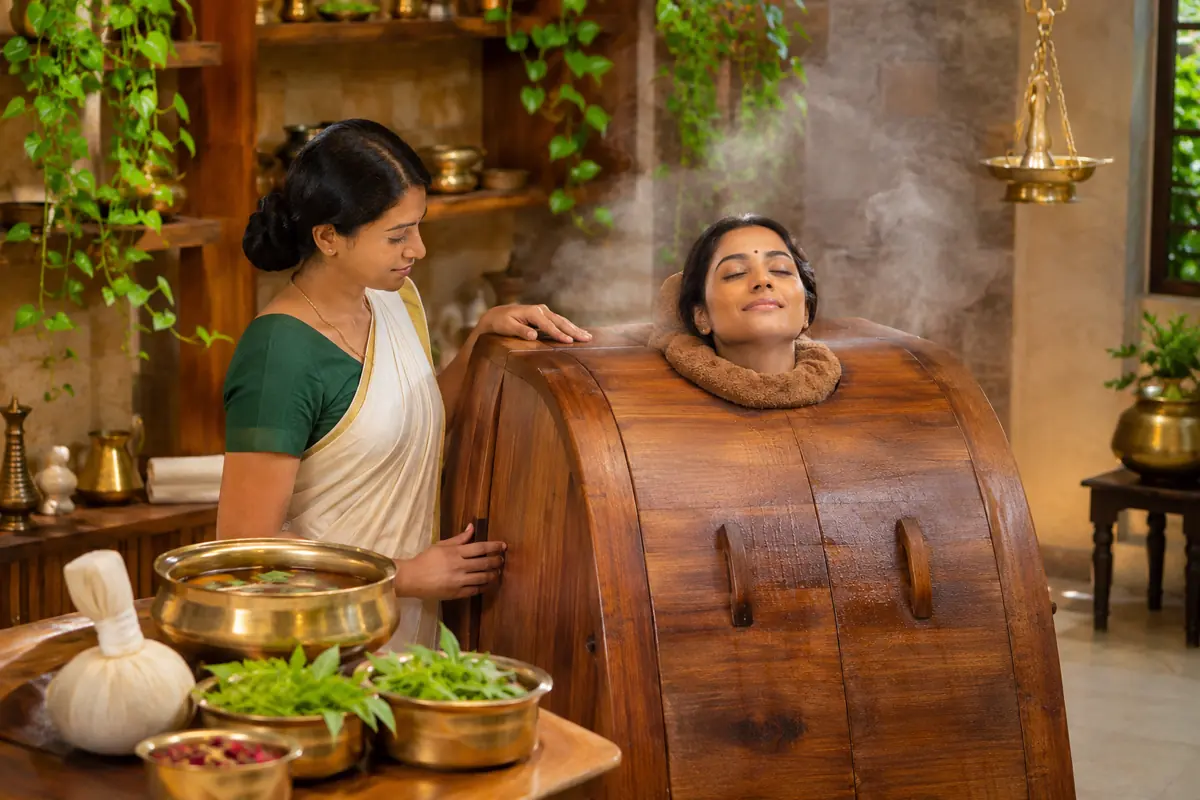
| Abhyanga and swedana | Warm herbal oil massage followed by herbal steam, used throughout |
| Shirodhara | A slow stream of warm oil over the forehead, often chosen for calm and sleep |
| Virechana | A medicated purgation therapy, when suitable and under supervision |
| Basti | Medicated enema therapies, when suitable and under supervision |
| Nasya | Nasal therapy using medicated oils, when suitable |
| Supportive therapies | Poultice massages, oil pouring and other treatments chosen for your plan |
A longer stay does not mean more therapies every day. The right plan is the one that fits you, and a good physician will vary the pace.
A month of residential life
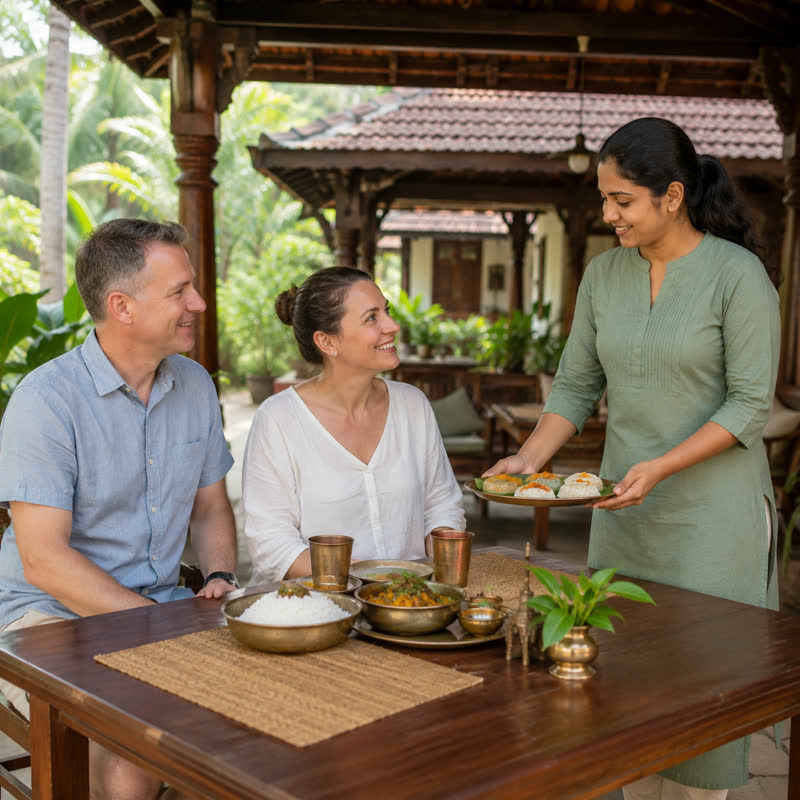
Living at a centre for four weeks means that comfort matters. Rooms in Kerala range from simple and peaceful to resort-style, usually with meals included, and many centres sit in quiet gardens. Meals are typically warm, simple and freshly cooked, with rice, lentils, vegetables and gentle spices, and they change as your programme moves through its stages. Tell the kitchen about allergies and dietary needs at the start.
Most centres offer wifi, and a local SIM or international plan makes it easy to message family. Laundry is usually easy to arrange. Many guests find that after the first week the daily rhythm of early mornings, treatments, rest and early nights becomes deeply comforting, and some are surprised to find themselves sad to leave.
Looking after mind and mood on a longer stay
A month is a long time to be away from home, and it is natural to have quiet days. Plan regular calls with family, keep a small journal of how you feel, walk in the garden and use quiet afternoons for reading or gentle hobbies. Tell your physician if you feel low, restless or tired, since the pace may need adjusting. Many guests find that conversation with other guests and staff becomes a lovely part of the stay. If you are travelling with a companion, share the rhythm together.
Who a 28-day programme suits, and who it does not
A 28-day programme can suit adults who are well enough to travel and who are seeking a thorough programme, support for a long-standing concern or a deep restorative break, as recommended by their physician.
Panchakarma is not suitable for everyone. Pregnancy, some serious medical conditions, recent surgery, significant weakness and certain medicines may call for caution or a gentler plan, and a longer stay is not right for everyone. That is why it is essential to share your complete history with the physician before you travel. If you are unsure, MyVaidyam can help you arrange a consultation.
Choosing a centre for four weeks
For a longer stay, the details matter more. Look at these, roughly in order of importance:
- The physician. A qualified Ayurvedic doctor (BAMS or MD Ayurveda), registered with the appropriate board, who will see you personally and review the plan regularly.
- The written plan. A clear plan with the stages, therapies, inclusions and follow-up.
- Medical backup. Who is on duty at night, and which hospital is nearby.
- Standards. Kerala's classification (Ayur Silver, Gold and Diamond, among others) and NABH accreditation are useful signs of standards, though not guarantees.
- Comfort for a long stay. Quiet, cleanliness, food, wifi and a room where you can rest.
- Honesty. Be wary of promises of cure for serious illness, advice to stop prescribed medicines or pressure to decide quickly.
Questions to ask before you decide
A short, friendly message with your questions, and a request for written replies, works beautifully. A few to begin with:
- Is a 28-day programme right for my health, or would a shorter stay come first?
- How will the plan be reviewed and adjusted over the four weeks?
- What arrangements are there for a companion?
- Who is on duty at night, and which hospital is nearby?
- What follow-up will I have after I return home?
Preparing at home
A month away calls for a little organisation. Arrange cover for post, bills, pets and plants, and let family know how you will keep in touch. Share your medical history, current medicines and recent reports with the physician beforehand, and tell your own doctor about your plans. Pack light cotton clothes, comfortable sandals, a thin layer for air-conditioned rooms, and a few things that make you feel at home. Keep your regular medicines in your hand luggage, with a letter from your doctor, and arrange travel insurance for the journey.
Planning the journey
Apply for your e-Medical visa on India's official portal, usually with a hospital letter, a few weeks before travel. It is valid for 60 days from first arrival, allows three entries and cannot be extended, so a 28-day stay fits comfortably with a good margin for travel and rest. Book flights after approval and choose an arrival time that suits your centre's pickup. Many guests fly into Thiruvananthapuram or Kochi. Kerala welcomes guests all year, and many favour the cooler, drier months while others enjoy the monsoon from about June. Check the portal for current rules before you apply.
Coming home after a month
The days after a long programme matter as much as the days within it. Before you leave, ask for a written summary, a simple daily routine, diet notes and a follow-up plan, and share them with your own doctor. Return to normal food and activity gradually, and plan a quiet few days before returning to work. Even two or three habits, such as a regular dinner time, warm morning water and a short evening walk, can carry the benefits of your stay into everyday life.
Your friend and hand-holder for a month in Kerala: MyVaidyam
A month far from home deserves a little extra care in the planning, and that is where MyVaidyam comes in. We walk with you from your very first question to the day you return home, answering your questions patiently and making sure that nothing is left to chance.
- An online consultation with an Ayurvedic physician to discuss whether a 28-day programme suits you.
- Help preparing your health summary and reports, and a written plan after your consultation.
- Guidance on choosing an accredited Kerala centre that is comfortable for a long stay.
- Support with your e-Medical visa documents and the hospital letter.
- Advice on flights, airport pickup and accommodation, including arrangements for a companion.
- A warm point of contact throughout your stay, and follow-up after you return home.
You are welcome to reach out at any stage. We would be delighted to help you plan a wonderful month in Kerala.