This guide explains how Ayurveda views diabetes, what an integrative lifestyle programme may include, and how to plan with confidence. Ayurveda is offered as a complementary, supportive approach alongside your own doctor's care, never a replacement for it.
Quick Facts - Ayurveda Lifestyle Programmes for Type 2 Diabetes for International Patients in India
| Topic | Summary |
|---|---|
| Ayurvedic view | Prameha / Madhumeha, linked to diet, digestion and routine |
| What a stay offers | Planned meals, walking, yoga, sleep and stress guidance |
| Foundation (NIDDK / WHO) | Regular monitoring and your doctor's treatment plan |
| Well-established helpers | Diet quality, activity, healthy weight, good sleep |
| Best for | Guests who want a structured start to lifestyle change |
| Cost | Compare itemised, dated quotes for the same dates |
Understanding Type 2 diabetes
Type 2 diabetes is a long-term condition in which the body does not use insulin as well as it should, so glucose builds up in the blood. It is common, it often develops gradually, and it is managed with healthy eating, regular physical activity, medicines where needed and regular monitoring with your own doctor. Many people find that a steady daily rhythm of meals, movement and sleep makes day-to-day management feel easier.
That is where a residential Ayurveda stay can help. It places regular meals, daily walking, relaxation and good sleep in one calm schedule, with people who prepare the food and organise the day. It does not replace your medicines, glucose checks or your doctor's advice, which continue throughout.
How Ayurveda looks at diabetes
Ayurvedic texts describe a group of metabolic conditions called Prameha, with Madhumeha often compared with diabetes mellitus. They are linked to diet, digestion, body weight and a sedentary routine, and described in terms of the doshas, especially Kapha. A good Ayurvedic doctor will work from your laboratory results and your physician's findings alongside the traditional picture.
The practical emphasis is lifestyle: meal timing and content, regular movement, sleep, stress management and, for suitable guests, selected herbal medicines and therapies. This is the part that combines most naturally with modern diabetes advice.
Building on your existing plan
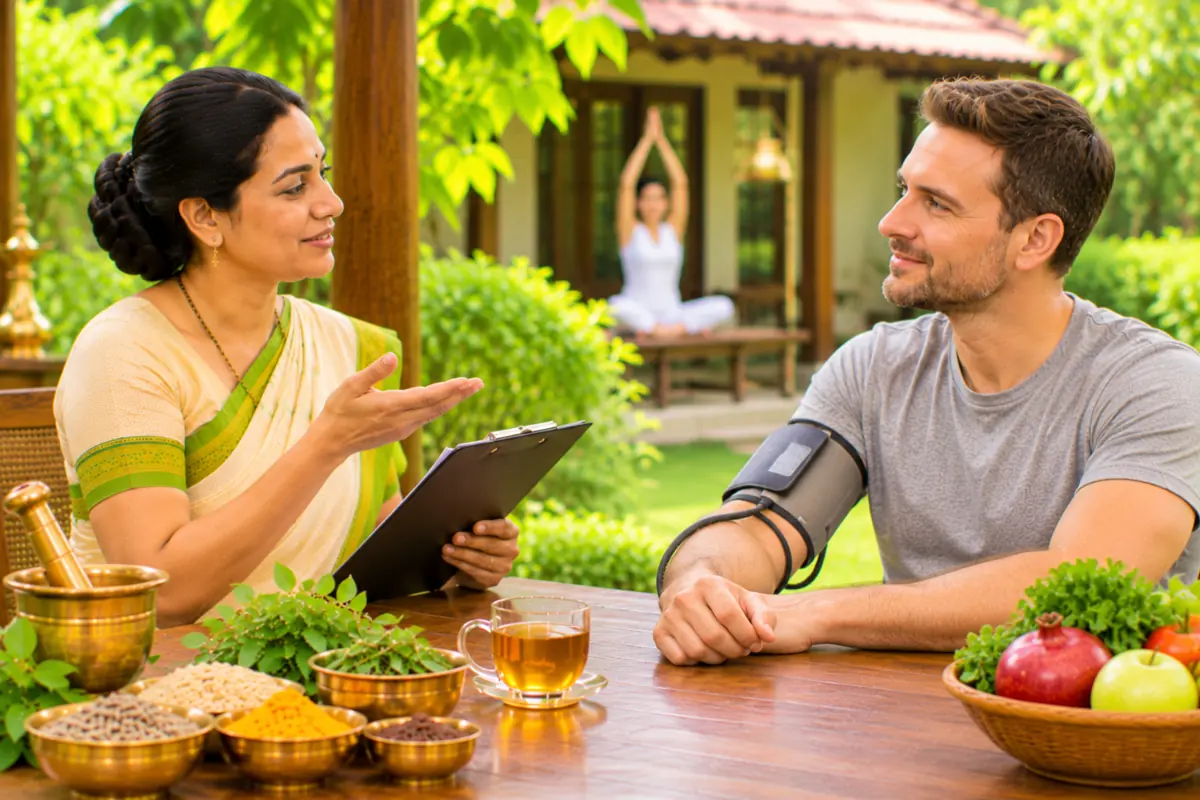
NIDDK and the WHO describe type 2 diabetes as a condition managed through regular monitoring and an individual treatment plan from your doctor. A residential stay complements that plan by giving you a calm, structured setting in which to practise healthy habits. The Ayurveda physician reviews your HbA1c, glucose logs and medicines on arrival, then plans around them.
What the research shows
Research on Ayurvedic herbs and programmes in type 2 diabetes is limited and mixed, with many small studies using different preparations. What is well established is that diet quality, regular physical activity, a healthy weight and good sleep support blood sugar control. That lifestyle side is exactly what a residential stay makes easy to practise, which is why many guests find it so worthwhile.
What an integrative programme may include
| Element | What it generally involves |
|---|---|
| Assessment | History, examination, review of HbA1c, glucose logs, kidney function and medicines |
| Diet | Planned meals rich in vegetables, pulses and whole grains, adapted to your needs |
| Movement | Regular walking, gentle yoga and breathing practices at your own pace |
| Herbal medicines | Preparations chosen by the doctor and checked against your diabetes medicines |
| Body therapies | Massage and related therapies, where suitable |
| Stress and sleep | Meditation, routine and sleep guidance |
| Education | A written plan you can continue at home |
The Ayurvedic idea of Madhumeha
Ayurveda describes a condition marked by excessive urine and sweetness as Madhumeha, a form of Prameha, and links it with digestion, metabolism, diet, inactivity and heaviness. The tradition emphasises regular, moderate meals, daily exercise, bitter and astringent flavours, light evening meals and a steady routine. Physicians compare the classical picture with the modern diagnosis of Type 2 diabetes while recognising that the two frameworks are not identical.
A thoughtful physician therefore begins with your reports: HbA1c, kidney function, medicines and glucose readings. The traditional lens guides food, routine and gentle therapies, and your own doctor remains in charge of your diabetes treatment.
The therapies you may meet
Here is what the most common programme elements involve. Your physician chooses which are suited to you.
- Consultation and review: history, reports, medicines and glucose records.
- Diet: warm, freshly cooked meals with balanced portions and regular timings.
- Abhyanga: a relaxing herbal-oil massage, adapted to your comfort.
- Udvartana: a dry herbal-powder massage that many guests find invigorating.
- Herbal medicines: preparations chosen by the doctor and checked against your diabetes medicines.
- Yoga and walking: daily gentle activity paced to your energy.
A sample two-week rhythm
Every programme is individual, and this outline is only an illustration of how a stay can unfold.
- Days 1 to 3, settling in: arrival rest, a full consultation, review of HbA1c and medicines, and a gentle start with regular meals.
- Days 4 to 10, the main programme: a daily rhythm of walking, yoga, massage, balanced meals and rest, with glucose readings shared with the team.
- Days 11 to 14, consolidating: a lighter schedule, a review of your readings and a written plan for meals and activity at home.
Many guests extend their stay, and the physician will advise after the first review.
Meals and portions
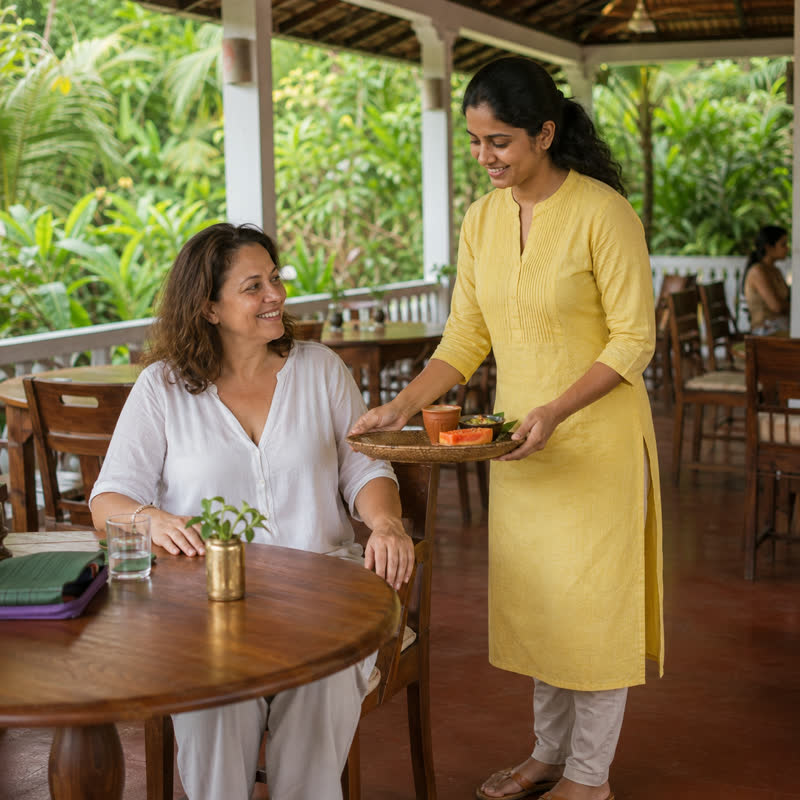
Meals in an Ayurvedic programme are simple and freshly cooked, with regular timings. Typical plates feature vegetables, pulses, whole grains in measured portions, light soups and plenty of water. Your physician explains the reasoning behind the menu, and you can compare the pattern with the advice from your own dietitian. Many centres offer a short cooking session so you can repeat the recipes at home, and a written menu to take with you.
Activity that is easy to keep
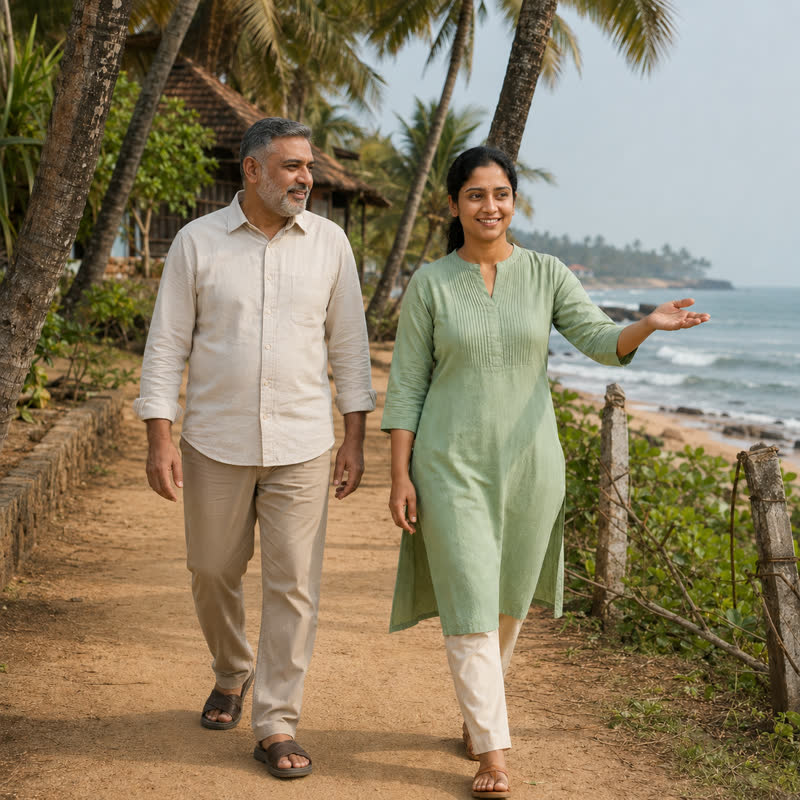
Regular activity helps the body use glucose. A residential stay makes it natural: a morning walk, gentle yoga, an afternoon stroll and an evening wind-down. Programmes typically build up slowly, and everything is paced to your energy. Bring comfortable shoes, drink water and tell the team how you feel at each step. Many guests find that the habit of a daily walk is the most useful thing they take home.
Sleep, stress and glucose
Rest and calm are part of everyday glucose care. A regular sleep time, quiet evenings and relaxation practice help many guests feel more settled. Short breathing exercises, a few minutes of meditation and time away from screens are easy to learn and easy to keep. Ask the team to teach a short routine you can use at home.
Kerala, climate and the best season
Many Ayurveda centres are in Kerala, where the warm, humid climate is traditionally considered kind to the body and the monsoon months are popular for oil therapies. The drier months from October to March are comfortable for travel and sightseeing. For diabetes, ask each centre which season it recommends, and whether rooms are air-conditioned or well ventilated. Ask how the centre can support your glucose checks and meal timings. Our guide to the best time to travel compares the seasons.
Keeping a simple diary
A small notebook is one of the most useful things to bring. Each evening, jot down your glucose readings if you check them, your meals, your walks and how your energy felt. After a week or two the pattern often becomes clear, and you and the physician can fine-tune the plan. Sharing the diary with your own doctor afterwards is helpful. The same notes give your own doctor a helpful picture when you return.
Travelling comfortably
A little planning makes the journey smoother. Book an aisle seat so you can stand and stretch, keep your medicines and reports in your hand luggage, and choose a flight that arrives at a comfortable hour. Carry your medicines, testing supplies and a snack in your hand luggage, and keep a copy of your prescriptions. Ask the centre to arrange the transfer and a restful first day. Our guide to the attendant visa explains how a family member can travel with you.
Conversations to have before you travel
A short chat with your own doctor makes the stay smoother. Many guests ask:
- Are my medicines and monitoring up to date for travel?
- Which readings would you like me to keep during the stay?
- Is there anything you would like the Ayurveda team to know?
- When would you like to see me after I return?
Sharing the answers with the Ayurveda physician helps the two teams work in step, and leaves you feeling confident and well supported.
Who tends to enjoy a stay
Guests who enjoy diabetes programmes are often people who would like a calm place to build healthy routines, those who find daily life makes regular meals and walks hard, and anyone who would like practical food and activity habits to take home. If you are unsure whether a stay suits you, a free online consultation is a good first step, before you book anything.
Your first day
Most centres keep the first day deliberately quiet. After a warm welcome and a light meal, you rest, meet your physician for a full consultation and receive a written plan for the days ahead. Bring your reports and medicine list to that conversation, ask any questions and tell the team how you are feeling after the journey. Share your glucose readings and medicine times at this first meeting. Our guide to your first day at an Ayurveda centre explains what to expect.
Travelling with family or a companion
Many guests travel with a spouse, a friend or an adult child, and a companion can make the whole experience easier. Ask each centre whether companions can share your room or stay nearby, whether they can join meals, yoga and walks, and whether there is a pleasant place for them to relax while you have therapies. A companion can share the meals and walks, which makes the new habits easier to keep. Our guide to the attendant visa explains the paperwork.
After you return
Many guests keep up a daily walk, simple balanced meals, regular timings and an earlier bedtime, and track how their readings change with their own doctor over the following weeks. Ask the centre for a written summary of your programme, your diet and your exercises, and share it with your own doctor at your next visit. A follow-up video call with the physician a few weeks later is a good way to review how you are feeling. Our guide to continuing Ayurveda at home explains how to keep the benefits going.
Questions guests often ask
Can I check my glucose during the stay? Yes, bring your meter and share readings with the team. Will I keep my medicines? Yes, your doctor's plan continues unchanged. Can I eat what I like? Meals are planned to suit you, and the team explains the reasoning. Is there a dietitian? Ask each centre. Can I exercise? Yes, gentle daily activity is part of the stay.
Choosing a centre
Rather than looking for a ranking, compare what matters to you: a qualified Ayurveda physician, a clear assessment, a written day-by-day plan, hygiene standards, accessible rooms and good access to a hospital. Ask each centre the same questions:
- Who will be my physician, and what are their qualifications?
- How do you support glucose monitoring and meal timings?
- Can you tailor menus to my dietary preferences?
- How are herbal medicines sourced, and can I see the ingredient list?
- What does the quote include, and what is extra?
Yoga and breathing
Gentle yoga in an Ayurvedic setting is slow and adapted. Teachers often start with breathing, then move through simple stretches, standing postures and relaxation, always within comfort. Short breathing practices and meditations are popular with guests who find that stress affects their routine, and they are easy to continue at home.
Foot care and comfort
Daily foot care is a good habit for everyone with diabetes. At a residential centre it is easy to practise: wash and dry the feet gently, check between the toes, moisturise and wear comfortable shoes and cotton socks. Ask the team to include a short foot massage in your programme, and bring your usual footwear and your podiatrist's advice.
Planning your budget
Ask each centre for an itemised, dated quote for the same dates and inclusions, covering consultations, meals, therapies, medicines and follow-up, then add visa, flights, insurance and transfers. See the cost guide and verifying a doctor.
Travelling with confidence, and how MyVaidyam can help
- Bring recent HbA1c, glucose logs and a full medicine list, and share them with the physician on arrival.
- Continue your prescribed diabetes medicines, and tell your own doctor about your plans.
- Check your blood sugar as usual during the stay, and keep your supplies with you.
- Ask for ingredient lists for any herbal medicine, and look after your feet and eyes as you normally do.
MyVaidyam can arrange a free online pre-consultation, have your reports reviewed by an Ayurvedic physician and request day-by-day plans, home-plan arrangements and itemised quotes from centres. Contact MyVaidyam to book your free online consultation.