This guide explains the Ayurvedic view, what a stay typically includes and how to plan with confidence. Ayurveda is offered as a complementary, supportive approach alongside your own doctor's care, never a replacement for it.
Quick Facts - Ayurvedic Lifestyle Programmes for Blood Pressure and Cholesterol for International Patients in India
| Topic | Summary |
|---|---|
| What they are | Common conditions that influence heart and circulation health |
| Lifestyle (NHLBI) | Heart-healthy eating, activity, weight, stress, sleep and limiting alcohol |
| Medicines | Prescribed by your doctor and continued as advised |
| Ayurvedic view | Digestion, stress and daily routine shape heart health |
| Aim | Healthy habits and calm |
| Cost | Compare itemised, dated quotes |
Understanding blood pressure and cholesterol
NHLBI describes high blood pressure and high cholesterol as common conditions that often cause no symptoms but influence the long-term health of the heart and blood vessels. Care combines lifestyle and, where needed, medicines chosen by your doctor. Lifestyle suggestions include heart-healthy eating, regular physical activity, a healthy weight, stress management, good sleep, limiting alcohol and not smoking, and NHLBI notes that cholesterol tests are repeated at intervals after treatment begins.
A residential Ayurveda stay can place many of these habits in one calm schedule, and your own doctor continues to guide your care.
How Ayurveda looks at heart-friendly living
Ayurveda stresses regular meals, activity, restful sleep and a calm mind as foundations of health. The physician reviews your blood pressure and cholesterol records, medicines and daily routine, then plans a stay of balanced meals, yoga, breathing practice and gentle herbal support.
Building on your usual care
NHLBI highlights lifestyle as central to managing blood pressure and cholesterol: heart-healthy eating, regular activity, a healthy weight, stress management, good sleep and limited alcohol, together with prescribed medicines. A residential stay puts these habits into one rhythm of days.
What the research shows
Controlled research on Ayurvedic programmes for blood pressure and cholesterol is limited, and NCCIH notes the same for Ayurvedic medicine overall. Lifestyle change itself is well recognised as helpful, and your own doctor can repeat your readings before and after the stay.
What a residential programme may include
| Element | What it generally involves |
|---|---|
| Assessment | History, review of readings and current medicines |
| Diet | Balanced, freshly cooked, lightly spiced meals |
| Activity | Daily walking and gentle yoga |
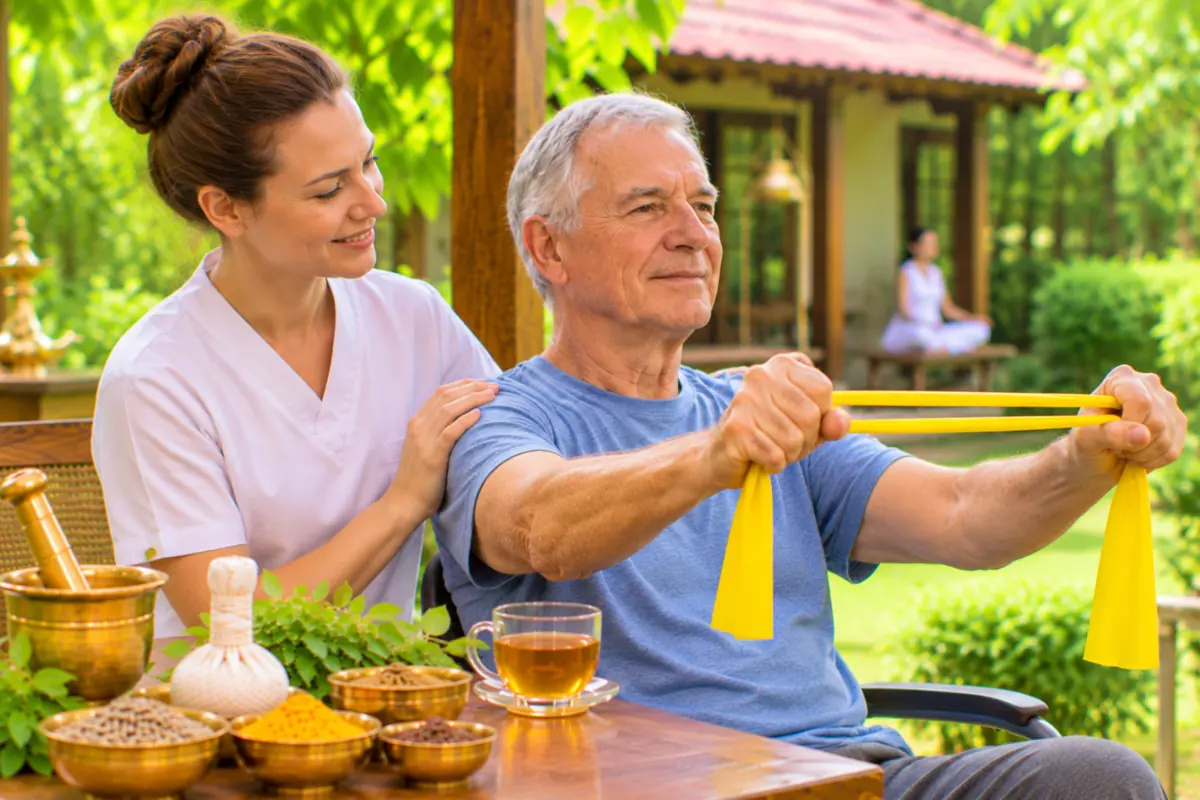
| Relaxation | Breathing practice, meditation and massage chosen by the doctor |
| Herbal care | Preparations checked against your medicines |
| Home plan | Meal, activity and sleep routines to continue |
A typical day on a heart-health programme
- Early morning: a walk or yoga, then a light breakfast.
- Mid-morning: a physician review and relaxing therapy.
- Afternoon: a balanced lunch and rest.
- Evening: breathing practice, an early dinner and sleep.
Why a calm setting helps
Heart-friendly habits are easier to build when meals, activity and sleep are organised for you. Many guests leave with new recipes, a walking routine and a calmer evening habit that they can continue at home. A home blood pressure diary kept during the stay is a useful record to share with your own doctor.
The Ayurvedic view of heart-friendly living
Ayurveda regards the heart (Hridaya) as a seat of vitality and mind, and describes the pattern of high pressure and fatty accumulation in relation to diet, inactivity, stress and sleep. The tradition emphasises regular meals, light evening food, daily exercise, bitter and astringent flavours, a calm mind and restful sleep. Physicians compare these descriptions with modern diagnoses while recognising that the frameworks are not identical.
A careful physician therefore reads your readings and results alongside the traditional picture and plans a gentle programme.
The therapies you may meet
Here is what the most common programme elements involve. Your physician chooses which are suited to you.
- Consultation: history, readings and review of medicines.
- Diet: balanced, lightly spiced, freshly cooked meals.
- Abhyanga: a relaxing herbal-oil massage.
- Shirodhara: a calming stream of warm oil over the forehead.
- Yoga and breathing: daily gentle practices.
- Herbal medicines: only after discussion with your doctor.
A sample programme rhythm
Every programme is individual, and this outline is only an illustration of how a stay can unfold.
- Days 1 to 3, settling in: arrival rest, a full consultation, review of readings and a gentle start with balanced meals.
- Days 4 to 10, the main programme: a daily rhythm of walking, yoga, relaxation, balanced meals and rest, with home readings shared with the team.
- Days 11 to 14, consolidating: a lighter schedule, a review of your readings and a written plan for meals and activity at home.
Many guests extend their stay, and the physician will advise after the first review. Ask the centre for its own day-by-day plan.
Heart-friendly meals
Meals are simple and freshly cooked, with regular timings, plenty of vegetables, pulses and whole grains, moderate salt and healthy oils. Your physician explains the reasoning, and many centres offer a short cooking session so that you can repeat the recipes at home. Ask for a written menu and a list of simple swaps for your own kitchen, and share them with your dietitian.
Walking and gentle activity
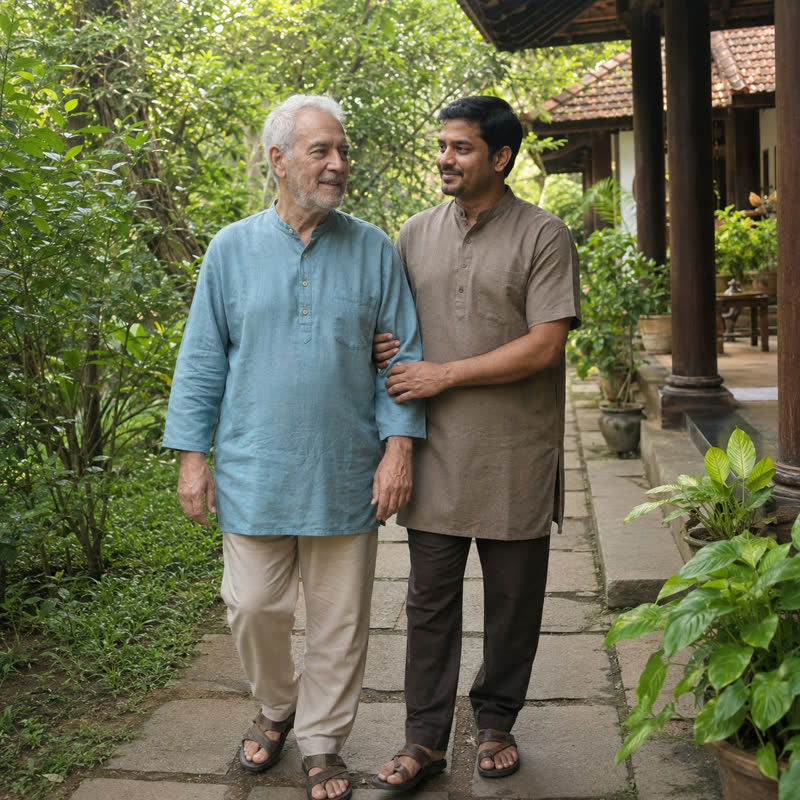
Regular activity is one of the best habits for the heart. A stay makes it natural: a morning walk, yoga, an afternoon stroll and an evening wind-down. Programmes build up slowly, and everything is paced to your energy and your doctor's advice. Many guests find that the habit of a daily walk is the most useful thing they take home.
Stress, sleep and the heart
Stress and poor sleep affect blood pressure for many people. A residential stay supports calm with early evenings, a regular sleep schedule, yoga, breathing practice and meditation. Short breathing exercises are easy to learn and easy to continue at home. Ask the team to teach a routine you can use on busy days.
Kerala, climate and the best season
Many Ayurveda centres are in Kerala, where the warm, humid climate is traditionally considered kind to the body and the monsoon months are popular for oil therapies. The drier months from October to March are comfortable for travel and sightseeing. For blood pressure and cholesterol, ask each centre which season it recommends, and whether rooms are air-conditioned or well ventilated. Ask about cooler hours for walks and about how salt and oils are used in the kitchen. Our guide to the best time to travel compares the seasons.
Keeping a simple diary
A small notebook is one of the most useful things to bring. Each evening, jot down your blood pressure readings, your meals, your walks, your sleep and your mood. After a week or two the pattern often becomes clear, and you and the physician can fine-tune the plan. Sharing the diary with your own doctor afterwards is helpful. The same notes give your own doctor a helpful picture when you return.
Travelling comfortably
A little planning makes the journey smoother. Book an aisle seat so you can stand and stretch, keep your medicines and reports in your hand luggage, and choose a flight that arrives at a comfortable hour. Carry your medicines and home monitor in your hand luggage, drink water and walk every hour. Ask the centre to arrange the transfer and a restful first day. Our guide to the attendant visa explains how a family member can travel with you.
Who tends to enjoy a stay
Guests who enjoy these programmes are often people who would like a calm place to build heart-friendly routines, those whose daily lives leave little time for walks and anyone who would like practical habits to take home. If you are unsure whether a stay suits you, a free online consultation is a good first step, before you book anything.
Questions to ask before you book
These questions help you compare centres and plan with confidence.
- Who will be my physician, and what are their qualifications?
- Can the plan work around my usual medicines and appointments?
- How are meals planned for low salt and heart health?
- What does the quote include, and what is extra?
Preparing for your stay
Bring a recent list of your blood pressure readings, your cholesterol results and your medicines in their original packaging. A home blood pressure monitor is useful, so you can share readings with the team during the stay. Plan a few easy walks before you fly, so the daily activity feels familiar.
Planning your budget
Cost depends on room, length, therapies, physician time and medicines. Ask each centre for an itemised, dated quote for the same dates and inclusions, and add visa, flights, insurance and transfers. See the cost guide and verifying a doctor.
Travelling with confidence, and how MyVaidyam can help
- Share your reports and current medicines with the Ayurveda physician before you travel.
- Continue your prescribed medicines, and let your own doctor know your plans.
- Ask for ingredient lists for any herbal medicine, and choose labelled preparations.
- Plan rest after the flight so you can begin your stay comfortably.
- Bring your recent blood pressure and cholesterol results, and keep taking your medicines as prescribed.
MyVaidyam can arrange a free online pre-consultation, have your reports reviewed by an Ayurvedic physician and request day-by-day plans and itemised quotes from centres so you can compare them calmly. Contact MyVaidyam to book your free online consultation.