This guide explains the Ayurvedic view, what a stay typically includes and how to plan with confidence. Ayurveda is offered as a complementary, supportive approach alongside your own doctor's care, never a replacement for it.
Quick Facts - Hypothyroidism and Hashimoto's
| Topic | Summary |
|---|---|
| What it is (NIDDK) | The thyroid makes too few hormones for the body's needs |
| Common cause | Hashimoto's disease, an autoimmune condition |
| Usual care | Levothyroxine and regular blood tests |
| Ayurvedic view | Digestion, metabolism and energy are supported through diet and routine |
| Aim | Energy and wellbeing |
| Cost | Compare itemised, dated quotes |
Understanding hypothyroidism
NIDDK describes hypothyroidism as a condition in which the thyroid gland does not make enough thyroid hormone for the body's needs. Common features include tiredness, feeling cold, weight changes, dry skin, constipation, low mood and slowed thinking. The most common cause is Hashimoto's disease, an autoimmune condition, and treatment is usually levothyroxine, with blood tests about six to eight weeks after starting or changing a dose and then roughly every six months, moving to yearly once stable.
A residential Ayurveda stay can support energy and wellbeing beside your treatment, and your own doctor continues to guide your thyroid care.
How Ayurveda looks at energy and metabolism
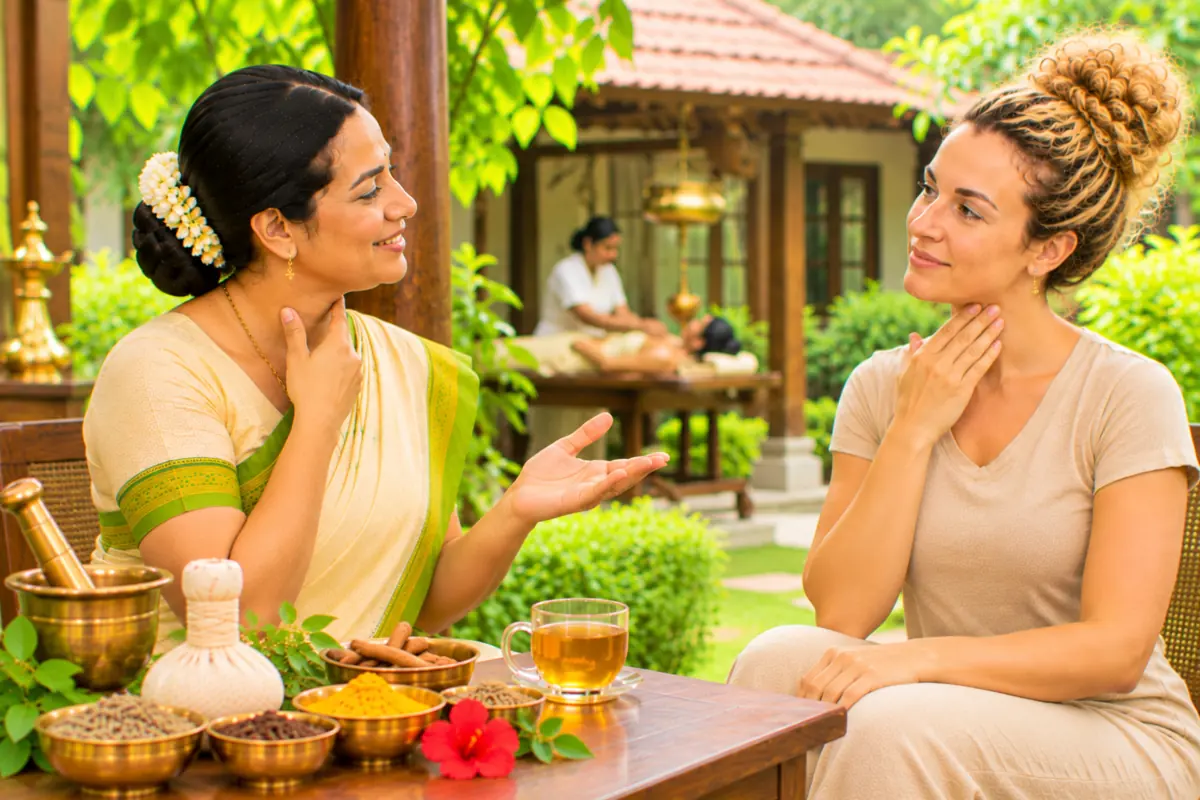
Ayurveda places digestion and metabolism (agni) at the centre of vitality, and discusses tiredness, heaviness and cold intolerance in that light. The physician reviews your thyroid results and history, then plans nourishing meals, gentle herbal support, yoga and rest that sit alongside your treatment.
Building on your usual care
NIDDK explains that hypothyroidism is commonly treated with levothyroxine, with blood tests about 6 to 8 weeks after starting or changing a dose, then roughly every six months and yearly once stable. Your doctor continues to guide this. A residential stay is a restful setting to support sleep, meals and gentle exercise.
What the research shows
Controlled research on Ayurvedic care for thyroid conditions is limited, and NCCIH notes the same for Ayurvedic medicine overall. Because thyroid levels can be measured, your own doctor can check them on their usual schedule.
What a residential programme may include
| Element | What it generally involves |
|---|---|
| Assessment | History, review of thyroid results and current medicines |
| Diet | Warm, freshly cooked meals, with your doctor's advice on iodine in mind |
| Herbal care | Preparations chosen by the doctor and checked against your thyroid medicine |
| Relaxation | Massage, breathing practice and meditation |
| Movement | Walking and gentle yoga |
| Sleep | A regular, early evening routine |
A typical day on an energy and wellbeing programme
- Early morning: a walk or yoga, then your usual thyroid tablet and a warm breakfast.
- Mid-morning: a physician review and relaxing therapies.
- Afternoon: a nourishing lunch and rest.
- Evening: breathing practice, an early dinner and sleep.
Why a calm setting helps
Energy often improves when sleep, meals and activity settle into a rhythm. A residential centre makes this simple, with regular timings and a calm setting. Many guests return with steadier routines and a list of questions for their own doctor.
The Ayurvedic view of energy and metabolism
Ayurveda regards the digestive fire (agni) and metabolism as the foundation of energy and describes a pattern of heaviness, sluggishness, cold intolerance and weight gain in terms of kapha and a weakened agni. The tradition emphasises warm, light, freshly cooked food, daily exercise, early rising and a lively routine. Physicians compare these descriptions with modern diagnoses while recognising that the frameworks are not identical.
A careful physician therefore reads your thyroid results alongside the traditional picture and plans a gentle programme.
The therapies you may meet
Here is what the most common programme elements involve. Your physician chooses which are suited to you.
- Consultation: history and review of thyroid results.
- Diet: warm, light, freshly cooked meals.
- Udvartana: a dry herbal-powder massage that many guests find invigorating.
- Abhyanga: a relaxing herbal-oil massage.
- Yoga and breathing: daily gentle practices.
- Herbal medicines: only after discussion with your doctor.
A sample programme rhythm
Every programme is individual, and this outline is only an illustration of how a stay can unfold.
- Days 1 to 3, settling in: arrival rest, a full consultation and a gentle start with warm meals and mild massage.
- Days 4 to 10, the main programme: a daily rhythm of walking, yoga, massage, nourishing meals and rest, with your thyroid tablet at the usual time.
- Days 11 to 14, consolidating: a lighter schedule, a review of how you feel and a written plan for routines at home.
Many guests extend their stay, and the physician will advise after the first review. Ask the centre for its own day-by-day plan.
Daily rhythm and energy
Energy tends to follow rhythm. Rising with the morning light, eating at regular times, walking daily and settling for the night early all support steady energy. A residential stay builds this rhythm into every day and teaches you how to repeat it at home. Ask the team for a one-page daily rhythm, with times for meals, activity and rest.
Food and your doctor's advice
Meals are warm and freshly cooked. Some foods and supplements, such as seaweed and iodine-rich products, can affect the thyroid, and NIDDK advises people with Hashimoto's to check with their doctor about iodine. Share your doctor's advice with the kitchen and the physician, and keep your thyroid tablet at its usual time, away from certain foods and supplements as your doctor advises.
Mood, sleep and gentle motivation
Low energy and low mood can feed each other. A stay supports both with morning light, gentle movement, social meals, relaxation and a regular bedtime. Short breathing exercises and meditation are easy to learn and easy to continue at home. Many guests say that the warmth of the staff and the structure of the day lifted their spirits.
Kerala, climate and the best season
Many Ayurveda centres are in Kerala, where the warm, humid climate is traditionally considered kind to the body and the monsoon months are popular for oil therapies. The drier months from October to March are comfortable for travel and sightseeing. For hypothyroidism, ask each centre which season it recommends, and whether rooms are air-conditioned or well ventilated. Ask about daylight walks and the pace of the day. Our guide to the best time to travel compares the seasons.
Keeping a simple diary
A small notebook is one of the most useful things to bring. Each evening, jot down your energy, mood, sleep, weight if you like and the time you took your tablet. After a week or two the pattern often becomes clear, and you and the physician can fine-tune the plan. A one-to-ten score for energy each evening makes patterns easy to see. The same notes give your own doctor a helpful picture when you return.
Travelling comfortably
A little planning makes the journey smoother. Book an aisle seat so you can stand and stretch, keep your medicines and reports in your hand luggage, and choose a flight that arrives at a comfortable hour. Keep your thyroid tablet in your hand luggage, and keep your usual time as closely as possible across time zones. Ask the centre to arrange the transfer and a restful first day. Our guide to the attendant visa explains how a family member can travel with you.
Choosing a centre
Rather than looking for a ranking, compare what matters to you: a qualified Ayurveda physician, a clear assessment, a written day-by-day plan, hygiene standards, accessible rooms and good access to a hospital. Ask each centre the same questions:
- Who will be my physician, and what are their qualifications?
- How is my thyroid medicine timing kept on schedule?
- How do you plan menus around my doctor's advice?
- How are herbal medicines sourced, and can I see the ingredient list?
- What does the quote include, and what is extra?
Preparing for your stay
Bring your latest thyroid results, your tablet in its original packaging and a note of the time you usually take it. Share the brand of levothyroxine you use, and ask the centre to plan breakfast timing around it. A short note of your energy and sleep each day will help your own doctor see how you feel.
Planning your budget
Cost depends on room, length, therapies, physician time and medicines. Ask each centre for an itemised, dated quote for the same dates and inclusions, and add visa, flights, insurance and transfers. See the cost guide and verifying a doctor.
Travelling with confidence, and how MyVaidyam can help
- Share your reports and current medicines with the Ayurveda physician before you travel.
- Continue your prescribed medicines, and let your own doctor know your plans.
- Ask for ingredient lists for any herbal medicine, and choose labelled preparations.
- Plan rest after the flight so you can begin your stay comfortably.
- Keep taking your thyroid medicine at your usual time, and ask your doctor when your next blood test is due.
MyVaidyam can arrange a free online pre-consultation, have your reports reviewed by an Ayurvedic physician and request day-by-day plans and itemised quotes from centres so you can compare them calmly. Contact MyVaidyam to book your free online consultation.