Families look for every sensible source of support, and many find their way to Kerala, where Ayurveda has a long tradition of gentle, hands-on care and where residential centres offer something rare: unhurried time, daily attention and a calm, green setting in which to recover.
This guide explains how Ayurvedic rehabilitation programmes in Kerala are usually organised, which therapies you may meet, what residential care looks like, how a stay can fit alongside your neurologist's plan, how to choose a centre and how to prepare for the journey, including practical thoughts for patients who need mobility support and for the family who travel with them. And throughout, it shows how MyVaidyam can walk beside you as your friend and guide.
Ayurveda is offered here as a complementary, supportive approach that works alongside your own doctors' care, never as a replacement for it. A programme supports comfort, strength and wellbeing. It does not promise a cure, and your neurologist remains central to your care.
Quick Facts - Ayurveda Neurological Rehabilitation in Kerala for International Patients
| Topic | Summary |
|---|---|
| Setting | Residential Ayurveda centres and Ayurveda hospitals in Kerala |
| Typical elements | Oil therapies, steam, nourishing diet, rest, supervised movement, family guidance |
| Common aims | Comfort, relaxation, strength, sleep and quality of life |
| Not | A cure, or a substitute for neurological care |
| Typical lengths | 14 to 28 days, shaped by the physician |
| Before travel | Your neurologist's agreement that travel is suitable |
| Visa | e-Medical visa: 60 days from first arrival, triple entry, non-extendable |
| Your companion | MyVaidyam: planning, coordination and support before, during and after |
Why families look to Kerala for neurological support
Recovery from a neurological condition is rarely about a single treatment. It is about daily care: gentle handling, good nutrition, restful sleep, patient encouragement and a rhythm of therapies that the body can tolerate. This is exactly what Kerala's residential centres are organised around.
Ayurveda's approach is also well suited to a stay of weeks rather than days. Therapies are repeated, observed and adjusted by a physician, and the patient is cared for in a calm environment, with family welcome. Many families tell us that the greatest gift of a Kerala stay is not any one therapy but the sense of being looked after, patiently and warmly, by people with time to give.
How Ayurveda views these conditions
Ayurveda groups many neurological conditions under the concept of vata imbalance, vata being the principle associated with movement and the nervous system. Classical texts describe conditions in which movement, sensation or tremor are affected, and they emphasise warmth, oil, nourishment and rest as the foundation of supportive care. Your physician will explain how these ideas relate to your own diagnosis in everyday language.
These are traditional ways of understanding the body. They sit alongside, and do not replace, modern neurological diagnosis, which is why your reports and your neurologist's advice remain the starting point.
What a residential programme usually includes
Every centre shapes its programmes differently, so ask for the details in writing. Most residential programmes bring together the following:
- Physician assessment. A careful opening consultation, reading of your reports and regular reviews.
- Oil therapies. Warm herbal oil massage, adapted to your comfort and strength.
- Steam and warm-bundle therapies. Gentle heat that many guests find soothing for stiff or tired muscles.
- Nourishing diet. Warm, easily digested meals, adapted to swallowing, appetite and dietary needs.
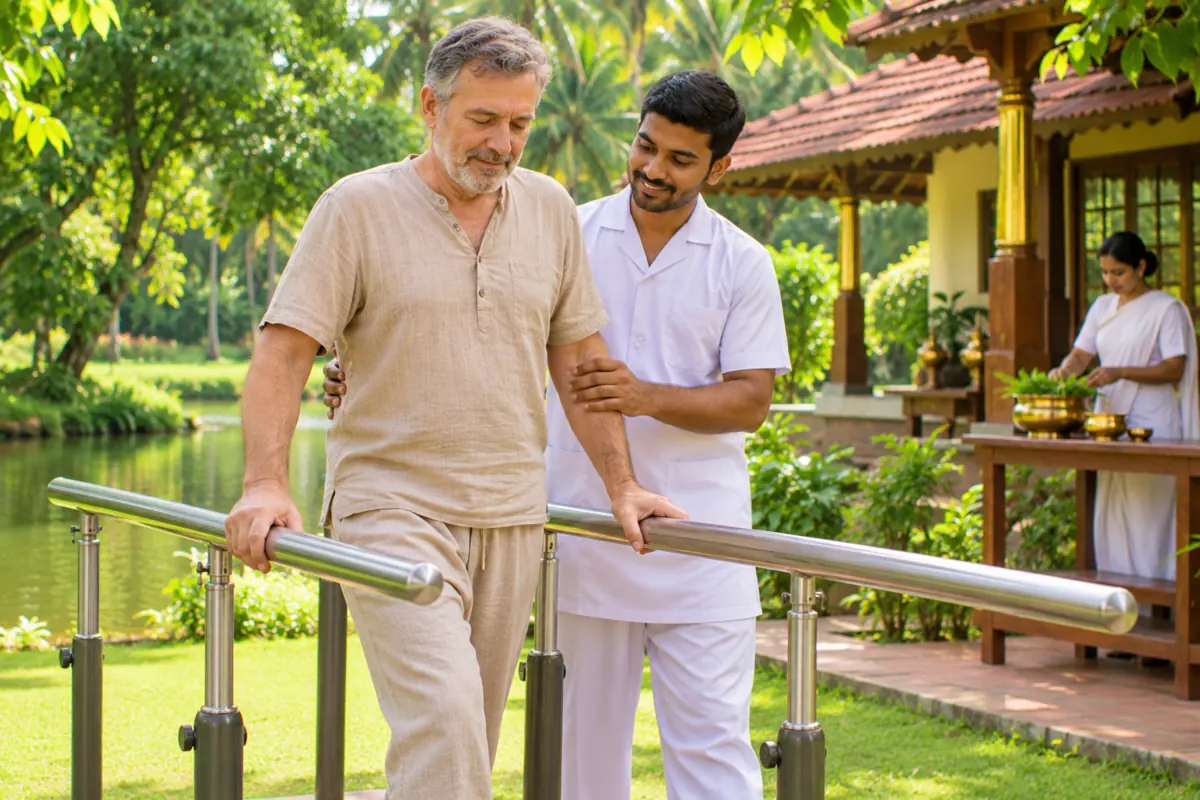
- Supervised movement. Gentle exercises, stretching and breathing, guided by trained staff and tailored to ability.
- Nursing and daily support. Help with moving, bathing, meals and medicines, depending on the centre.
- Family guidance. Simple instruction so that carers can continue some practices at home.
- Aftercare. A written summary and a home routine.
Some items, such as physiotherapy sessions, a carer's accommodation or special equipment, may be arranged separately. Ask the centre to show clearly which is which.
Therapies you may meet
Your physician chooses what is suitable. Not everyone needs every therapy, and a longer list does not mean better care.
| Therapy | What it involves |
|---|---|
| Abhyanga | Warm herbal oil massage, adapted to the person's comfort and strength |
| Swedana | Gentle herbal steam, applied with care for comfort |
| Shirodhara | A slow stream of warm oil over the forehead, often chosen for calm and sleep |
| Pizhichil | Warm medicated oil squeezed over the body in a flowing rhythm, often associated with Kerala |
| Njavarakizhi | Warm bundles of medicated rice used for massage, traditionally described as nourishing |
| Shirovasti | Warm oil held on the head within a gentle cap, selected by the physician |
| Nasya | Medicated oils used through the nose, where suitable |
Residential care and daily support
For many patients, the real value of a residential stay lies in the daily support. Nurses and therapists who are used to caring for people with limited mobility help with transfers, bathing and meals. Rooms are often on the ground floor or served by lifts, and many centres have ramps and handrails. Daily rounds by the physician mean that small changes are noticed early.
If the patient needs help with mobility, swallowing or other daily tasks, tell the centre in advance and ask exactly how they provide it, and what the family is expected to do. A good centre will answer plainly and welcome your questions.
Looking after the family too
A recovery journey affects the whole family, and carers deserve care too. Many centres welcome one or two companions, with a room, meals and a quiet garden in which to rest. Carers are often invited to observe therapies and learn simple techniques, such as gentle massage, positioning and meal routines, which they can use at home. Many families describe the stay as a rare chance for the carer to rest and breathe as well.
How long should a programme be?
Residential programmes for neurological support are usually longer than a simple relaxation stay, because therapies are most helpful when repeated over time and observed closely. Your physician will recommend the length that suits you. Remember that the e-Medical visa is valid for 60 days from first arrival and cannot be extended, so choose your dates with a comfortable margin.
| Length | What it suits |
|---|---|
| 14 days | A first programme, allowing therapies to begin and the body to settle |
| 21 days | A fuller programme with time to adjust and review |
| 28 days | A longer programme for those who can travel comfortably and benefit from sustained care |
Working alongside your own doctors
Before you travel, please talk to your neurologist about your plans, share your medical summary and agree that the journey and the stay are suitable. Bring your reports, scans and a full list of your medicines, and keep taking your prescribed medicines. Ask your Kerala physician to write down any herbal preparations so that you can show them to your own doctors, and let them know of any changes in your condition during the stay. Please do not change medicines without medical advice.
Is travel right for you? Planning with care
Travel suitability is a medical question, and it is best answered by your own neurologist. Some people travel comfortably with a companion and a little preparation. Others need wheelchair assistance, extra rest stops or a longer, gentler schedule. Tell the airline in advance about assistance at the airport, choose flights with comfortable connections where possible and plan a day of rest on arrival. We are always happy to help you think through the details.
Choosing a centre for neurological support
Look at these, roughly in order of importance:
- The physician. A qualified Ayurvedic doctor (BAMS or MD Ayurveda), registered with the appropriate board, with experience of the condition you are living with.
- Nursing and medical backup. Who is on duty at night, and which hospital is nearby.
- Accessibility. Ground-floor rooms or lifts, ramps, handrails and bathrooms suited to the patient.
- The written plan. A clear plan with therapies, diet, supervision, inclusions and follow-up.
- Standards. Kerala's classification (Ayur Silver, Gold and Diamond, among others) and NABH accreditation are useful signs, though not guarantees.
- Honesty. Be cautious of promises of cure or of dramatic recovery, and of pressure to decide quickly or to stop your medicines.
Planning the journey
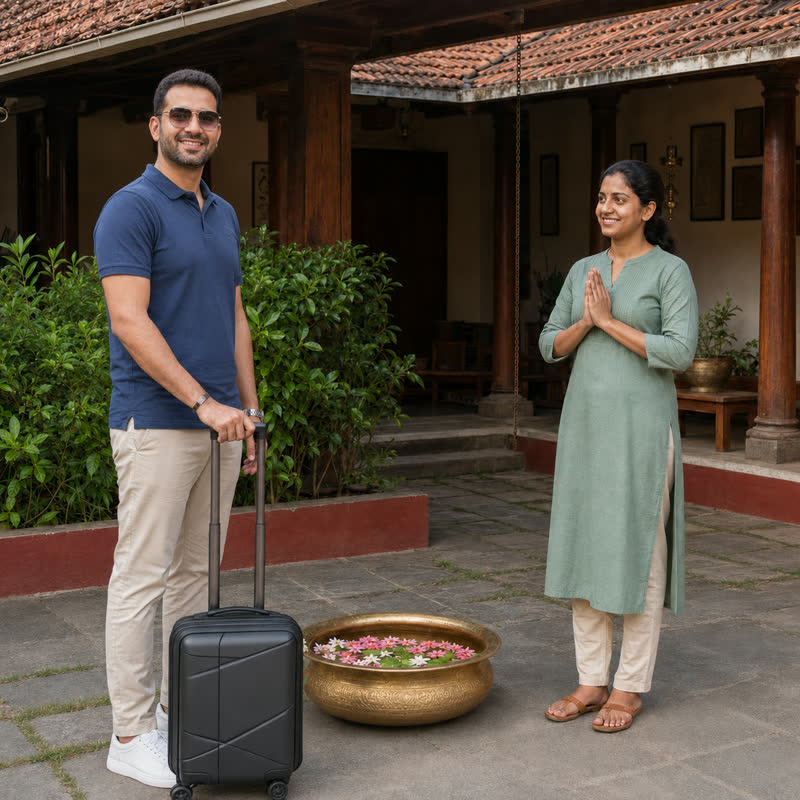
Apply for your e-Medical visa on India's official portal, usually with a hospital letter, a few weeks before travel. It is valid for 60 days from first arrival, allows three entries and cannot be extended. Book flights after approval, arrange travel insurance and request airport assistance in advance. Many guests fly into Kochi or Thiruvananthapuram, and the centre can arrange a comfortable pickup. Check the portal for current rules before you apply.
Taking the benefits home
Before you leave, ask for a written summary, a simple home routine, diet notes and a follow-up plan, and share them with your own doctors. Carers can continue gentle practices that were taught during the stay, and a regular rhythm of rest, meals and movement is often the most lasting benefit. Keep in touch with your neurologist and let them know how you are.
Your friend and hand-holder on the way to Kerala: MyVaidyam
A journey like this deserves patient, warm support, and that is where MyVaidyam comes in. We walk with you and your family from your very first question to the day you return home, answering your questions kindly and making sure that nothing is left to chance.
- An online consultation with an Ayurvedic physician to discuss your situation and how a programme could work alongside your neurologist's care.
- Help preparing your medical summary and sharing it with the centre.
- Guidance on choosing an accredited, accessible Kerala centre and a programme length that suits you.
- Help checking what is included, and what is arranged separately.
- Support with your e-Medical visa documents, flights, airport assistance, pickup and accommodation for patient and carer.
- A warm point of contact during your stay, and follow-up after you return home.
You are welcome to reach out at any stage. We would be honoured to help you and your family plan a supportive stay in Kerala.