This guide explains the Ayurvedic view, what a stay typically includes and how to plan with confidence. Ayurveda is offered as a complementary, supportive approach alongside your own doctor's care, never a replacement for it.
Quick Facts - Ayurveda Support for Stroke Rehabilitation for International Patients in India
| Topic | Summary |
|---|---|
| Ayurvedic view | Pakshaghata, a vata-related pattern of weakness on one side |
| What a stay offers | Oil therapies, warm applications, diet, relaxation, carer support |
| Usual care (NINDS, WHO) | Acute treatment, prevention and structured rehabilitation |
| Aim | Comfort, muscle ease and relaxation |
| Reports to bring | Discharge summary, scans, rehabilitation plan, medicine list |
| Cost | Compare itemised, dated quotes |
Understanding stroke recovery
NINDS and WHO describe stroke as a sudden interruption of blood flow to part of the brain. Care involves acute treatment, steps to prevent another event, and structured rehabilitation, with physiotherapy, occupational therapy and speech therapy tailored to each person. Recovery often continues for months and sometimes years, and steady practice, rest and encouragement are all part of it.
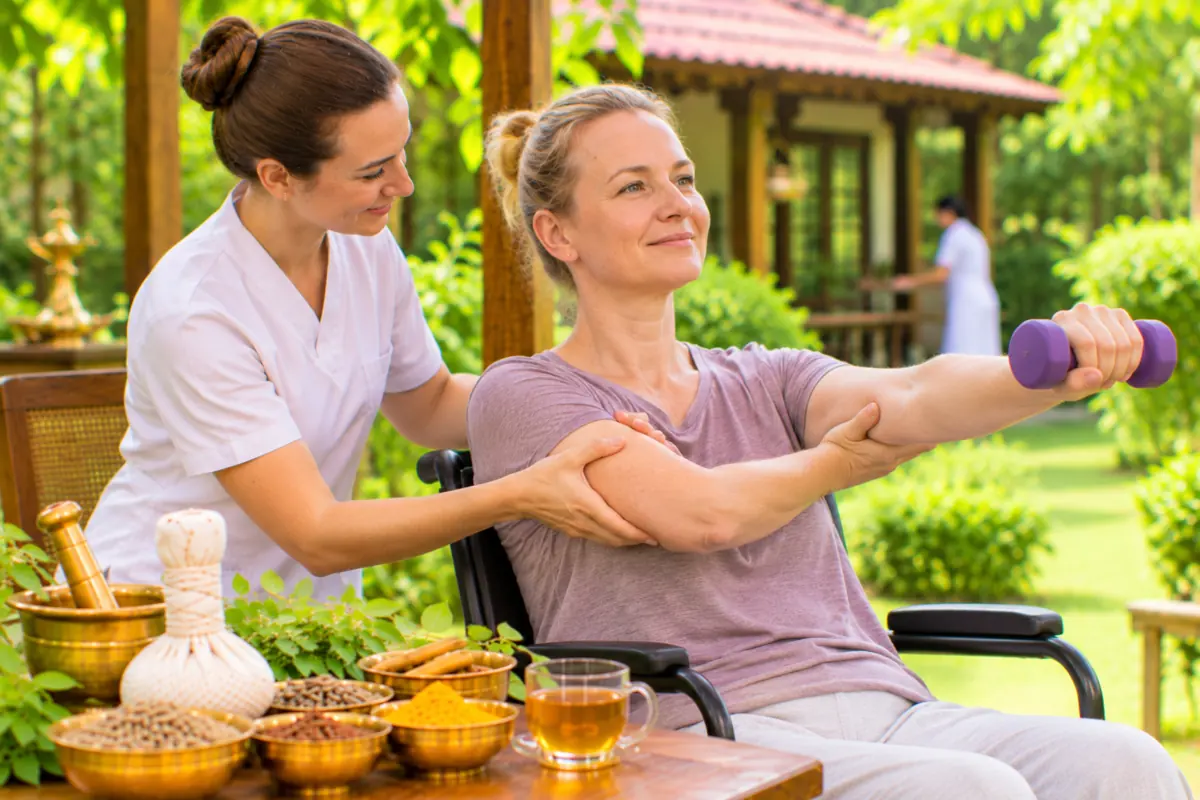
A residential Ayurveda stay does not replace this specialist care. It is a calm, supportive place where carers can rest too, gentle therapies can be enjoyed, and the daily rehabilitation exercises that your team has recommended can continue in a relaxed rhythm.
How Ayurveda describes recovery after stroke
Ayurveda describes weakness on one side of the body as Pakshaghata, associated with vata. The traditional approach uses gentle oil therapies, warm applications, nourishing diet and rest as supportive care, always adapted to the person's condition and abilities.
The physician will want to see your discharge summary, scans, medicine list and rehabilitation plan before suggesting a programme.
Building on your usual care
NINDS and WHO describe stroke care as acute treatment, prevention of further events and structured rehabilitation with physiotherapy, occupational therapy and speech therapy where needed. A residential stay can sit beside this care, offering a calm place for recovery, with rehabilitation exercises continuing as your team advises.
What the research shows
Research on Ayurvedic support after stroke is limited, and NCCIH notes the same for Ayurvedic medicine overall. The supportive aims are comfort, relaxation of muscles and care for the whole family, in an unhurried setting.
What a residential programme may include
| Element | What it generally involves |
|---|---|
| Assessment | History, examination and review of your reports and rehabilitation plan |
| External therapies | Gentle oil massage and warm applications, adapted to your comfort |
| Herbal medicines | Preparations chosen by the doctor and checked against your current medicines |
| Diet | Warm, nourishing meals, adapted to swallowing and dietary needs |
| Movement | Your own rehabilitation exercises, continued with support |
| Carer support | Comfortable rooms and guidance for family |
A typical day of supportive recovery
- Morning: a calm start, a warm breakfast and your usual rehabilitation exercises.
- Mid-morning: a physician review and gentle therapies, where planned.
- Afternoon: a nourishing lunch, then rest in a comfortable room.
- Evening: relaxation, a light dinner and an early night, with family close by.
Why a supportive setting helps
Recovery is helped by rest, routine and encouragement. A residential centre offers all three: regular meals, a quiet environment, attentive staff and time for your own exercises. Families often value the chance to relax together and share the day, with carers supported as well. Ask the centre about accessible rooms, assistance with mobility and the possibility of a companion staying with you. Bring your discharge summary, scans and rehabilitation plan, and share your daily exercise routine in advance so the timetable can include it.
The Ayurvedic idea of Pakshaghata
Ayurveda describes weakness of one side of the body as Pakshaghata, a vata-related pattern in which the tradition sees loss of movement and sensation on one half of the body. The classical approach emphasises warm oil, gentle heat, nourishment and rest to support the tissues, together with herbal medicines and diet. It is always adapted to the person's strength, appetite and condition.
A careful physician therefore reviews your discharge summary, scans and rehabilitation plan, and plans therapies that are gentle, supervised and flexible.
The therapies you may meet
Here is what the most common programme elements involve. Your physician chooses which are suited to you.
- Abhyanga: a gentle warm herbal-oil massage, adapted to your comfort.
- Swedana: gentle warmth to ease muscle tone, used carefully.
- Njavarakizhi: warm boluses of medicated rice pressed over the muscles, in a gentle form.
- Shirodhara: a calming stream of warm oil over the forehead for relaxation.
- Herbal medicines: preparations chosen by the doctor and checked against your medicines.
- Diet: warm, nourishing, easily chewed meals.
A sample two-week rhythm
Every programme is individual, and this outline is only an illustration of how a stay can unfold.
- Days 1 to 3, settling in: arrival rest, a full consultation, review of your reports and a gentle start with massage and light meals.
- Days 4 to 10, the main programme: a daily rhythm of gentle massage, your own rehabilitation exercises, nourishing meals and rest, with the physician reviewing you each day.
- Days 11 to 14, consolidating: a lighter schedule, a review of how you feel and a written plan for exercises and routines at home.
Many guests extend their stay, and the physician will advise after the first review.
Keeping your rehabilitation going
Rehabilitation exercises work best when they are practised regularly. A residential stay gives you a quiet place to continue your physiotherapy and occupational therapy routines, with a companion or staff member who can help set up, encourage and rest between sets. Bring your exercise sheet, and ask the team to fit sessions into the timetable. Some centres have a physiotherapist on site, so ask when requesting quotes.
Food and swallowing
Meals are warm, nourishing and freshly cooked. If you or your loved one needs softer foods or thickened drinks, tell the kitchen in advance and share the speech therapist's advice, so that menus can be prepared accordingly. Eating slowly, sitting upright and having a companion at the table are small habits that make meals pleasant and safe. Ask for a written copy of the menu and the preparation advice.
Rest, sleep and mood
Recovery asks for energy, and rest is part of it. A residential stay offers quiet rooms, regular sleep and plenty of time to nap. Many families also appreciate the relaxed atmosphere, the gentle company of other guests and the unhurried attention of the staff. Ask the team about a short daily relaxation or breathing practice that suits your energy.
Support for carers
Caring for someone after a stroke is a big commitment, and a stay can be restful for carers too. Ask whether a companion can share the room, join meals and take part in yoga, walking or massage sessions, and whether there is a peaceful place to relax while the patient has therapy. Many carers say that a few days of shared calm refreshes the whole family.
Kerala, climate and the best season
Many Ayurveda centres are in Kerala, where the warm, humid climate is traditionally considered kind to the body and the monsoon months are popular for oil therapies. The drier months from October to March are comfortable for travel and sightseeing. For stroke recovery, ask each centre which season it recommends, and whether rooms are air-conditioned or well ventilated. Ask for a ground-floor accessible room, a walker or wheelchair if needed and clear, level paths. Our guide to the best time to travel compares the seasons.
Keeping a simple diary
A small notebook is one of the most useful things to bring. Each evening, jot down daily exercises completed, meals, rest, mood and any progress in movement or speech. After a week or two the pattern often becomes clear, and you and the physician can fine-tune the plan. Share the diary with the rehabilitation team afterwards. The same notes give your own doctor a helpful picture when you return.
Travelling comfortably
A little planning makes the journey smoother. Book an aisle seat so you can stand and stretch, keep your medicines and reports in your hand luggage, and choose a flight that arrives at a comfortable hour. Request airport assistance, pre-board early and keep medicines and the rehabilitation plan in your hand luggage. Ask the centre to arrange the transfer and a restful first day. Our guide to the attendant visa explains how a family member can travel with you.
Conversations to have before you travel
A short chat with your own doctor makes the stay smoother. Many guests ask:
- Am I ready to travel, and for how long?
- Which exercises would you like me to continue?
- Is there anything you would like the Ayurveda team to know?
- When would you like to see me after I return?
Sharing the answers with the Ayurveda physician helps the two teams work in step, and leaves you feeling confident and well supported.
Who tends to enjoy a stay
Families who enjoy these stays are often looking for a calm, supportive place to continue recovery, to rest as carers and to learn comfortable daily routines with attentive staff. If you are unsure whether a stay suits you, a free online consultation is a good first step, before you book anything.
Your first day
Most centres keep the first day deliberately quiet. After a warm welcome and a light meal, you rest, meet your physician for a full consultation and receive a written plan for the days ahead. Bring your reports and medicine list to that conversation, ask any questions and tell the team how you are feeling after the journey. Share the rehabilitation plan and any swallowing advice at this first meeting. Our guide to your first day at an Ayurveda centre explains what to expect.
Making the most of your free time
Between therapies there is time to enjoy the setting: strolls in the garden, reading in the shade, listening to music, gentle conversation with other guests or a visit to a nearby temple or backwater. The team can suggest easy outings that fit your energy. Short, easy outings in a wheelchair-friendly garden can be a pleasant change. Many guests find that this unhurried time is part of what helps them relax and recover.
After you return
Many families keep up the daily exercises, warm simple meals, regular rest and an earlier bedtime, and share the notes with the rehabilitation team over the following weeks. Ask the centre for a written summary of your programme, your diet and your exercises, and share it with your own doctor at your next visit. A follow-up video call with the physician a few weeks later is a good way to review how you are feeling. Our guide to continuing Ayurveda at home explains how to keep the benefits going.
Questions guests often ask
Can the stay include physiotherapy? Ask each centre what is available. Is the room accessible? Request an accessible room in advance. Can a family member stay with me? Many centres welcome companions. Will my medicines continue? Yes, your doctor's plan continues. Can my special diet be followed? Share the advice in advance and the kitchen will adapt.
Choosing a centre
Rather than looking for a ranking, compare what matters to you: a qualified Ayurveda physician, a clear assessment, a written day-by-day plan, hygiene standards, accessible rooms and good access to a hospital. Ask each centre the same questions:
- Who will be my physician, and what are their qualifications?
- Is the centre accessible, with support for mobility needs?
- Is a physiotherapist available, or can I bring my own?
- How are herbal medicines sourced, and can I see the ingredient list?
- What does the quote include, and what is extra?
Communication and speech
Speech and communication can be tiring after a stroke, and a calm environment helps. Share the speech therapist's advice with the team in advance, such as using short sentences, allowing extra time and using gestures or a communication card. Quiet conversation, music and familiar company are all gentle ways to keep communication relaxed and enjoyable.
Choosing the right time to travel
Choose a time when your recovery is steady and your own doctor is happy for you to travel. Many families prefer a stay once the first intensive rehabilitation phase has settled, allowing a calmer environment to continue progress. Talk to your doctor about timing and journey length, and ask the centre to plan a quiet first day.
Planning your budget
Cost depends on room, length, therapies, physician time and medicines. Ask each centre for an itemised, dated quote for the same dates and inclusions, and add visa, flights, insurance and transfers. See the cost guide and verifying a doctor.
Travelling with confidence, and how MyVaidyam can help
- Share your discharge summary, scans, rehabilitation plan and medicine list with the Ayurveda physician before you travel.
- Ask your own doctor to confirm that you are ready to travel, and continue prescribed medicines.
- Request assistance at airports and an accessible room.
- Plan rest, comfortable seating and a companion for the journey.
MyVaidyam can arrange a free online pre-consultation, have your reports reviewed by an Ayurvedic physician and request day-by-day plans and itemised quotes from centres. Contact MyVaidyam to book your free online consultation.