A residential Ayurveda stay offers a calm, restorative setting for skin and spirit alike, with soothing herbal applications, simple nourishing meals, relaxation practices and an Ayurveda physician who looks at the whole picture.
This guide explains how Ayurveda views skin conditions, what a stay typically includes and how to plan with confidence. Ayurveda is offered as a complementary, supportive approach alongside your own doctor's care, never a replacement for it.
Quick Facts - Ayurveda Programmes for Psoriasis and Skin Comfort for International Patients in India
| Topic | Summary |
|---|---|
| Ayurvedic view | Chronic skin conditions grouped under Kushtha |
| What a stay offers | Diet, herbal applications, relaxation, routine |
| Usual care (NIAMS) | Topical treatments, light therapy, oral or biologic medicines via a dermatologist |
| Common trigger | Stress, among others |
| Aim of a supportive stay | Skin comfort, routine and wellbeing |
| Cost | Compare itemised, dated quotes for the same dates |
Understanding psoriasis
NIAMS describes psoriasis as a long-lasting condition in which an overactive immune system makes skin cells multiply too quickly. The most common type, plaque psoriasis, produces raised red patches with silvery scales, often on the scalp, trunk, elbows and knees. The skin can itch, sting or feel dry and cracked, and nails may be affected. Symptoms often cycle between flares and quieter periods, and common triggers include stress, skin injury, infections and some medicines. Smoking and weight can also play a part.
Treatment depends on the type and severity, from creams and ointments for milder skin to light treatments, tablets or injections for more extensive disease, and it is planned with your dermatologist. NIAMS also highlights managing triggers such as stress, which is why a calm residential routine appeals to so many guests.
How Ayurveda looks at skin conditions
Classical Ayurvedic texts group many chronic skin conditions under the heading Kushtha, with descriptions such as Ekakushtha and Kitibha often compared with psoriasis. Skin health is seen as linked to digestion, diet, stress, routine and the balance of the doshas. A good Ayurvedic doctor will also want to see your dermatology history and reports.
Care in this tradition combines internal herbal medicines, external oils and herbal applications, diet and lifestyle guidance and, for some guests, selected cleansing procedures. The aim of a supportive stay is skin comfort, routine and wellbeing.
Working alongside your dermatologist
NIAMS describes psoriasis as a chronic condition in which the immune system speeds up skin cell turnover, producing raised, scaly plaques that tend to come and go in flares. Standard care ranges from topical treatments and light therapy to oral medicines and biologics, chosen by a dermatologist. Your stay fits comfortably beside this: you continue your plan, and the Ayurveda physician builds a programme around what you already use.
What the research shows
Research on Ayurvedic approaches in psoriasis is limited, and published studies are mostly small and hard to compare. NCCIH gives an overview of Ayurvedic medicine and its evidence base. Many guests choose a stay for relaxation, diet and routine, which matters because stress is a commonly reported trigger, and they appreciate a setting where skin care is unhurried.
What a residential programme may include
| Element | What it generally involves |
|---|---|
| Assessment | History, skin examination, review of reports and photographs, and a medicine check |
| Diet | Simple meals planned around digestion and your triggers |
| Internal medicines | Herbal preparations chosen by the doctor and reviewed against your current medicines |
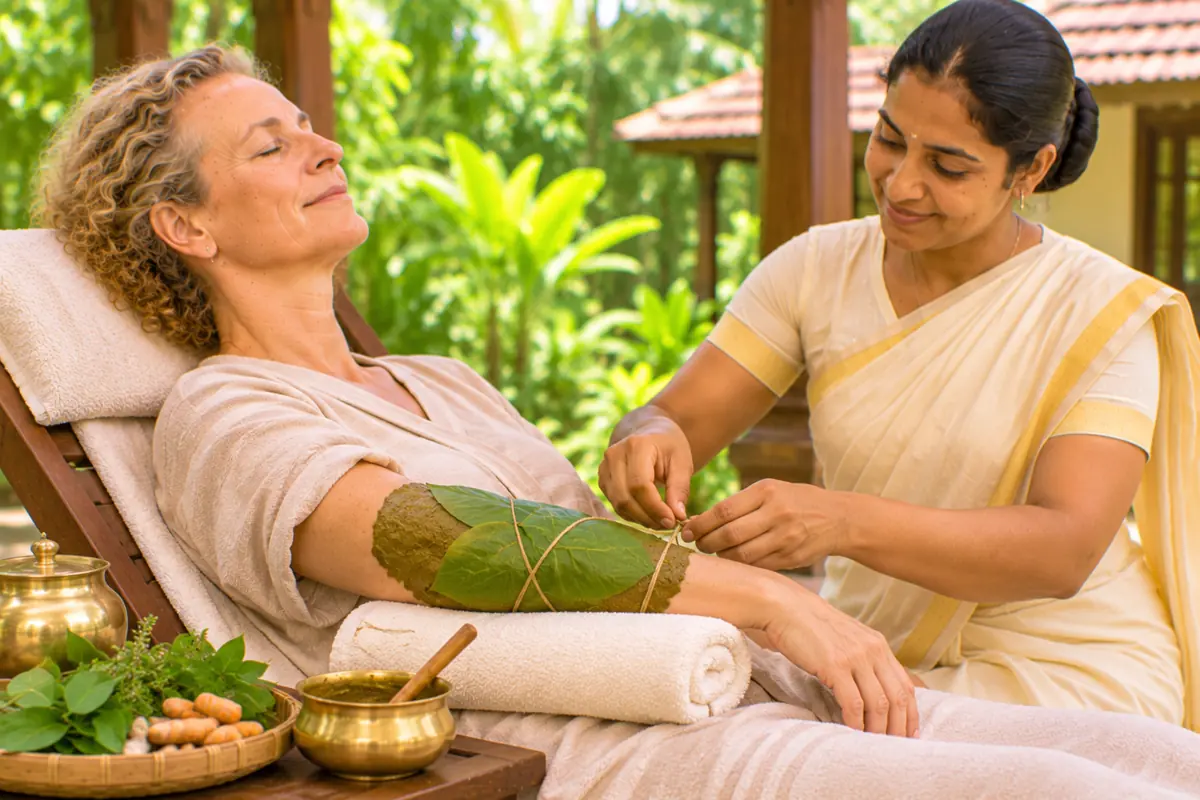
| External applications | Medicated oils, herbal pastes or baths, tested for tolerance first |
| Cleansing therapies | Selected Panchakarma procedures, where your doctor judges you suitable |
| Relaxation | Yoga, breathing and meditation |
The Ayurvedic idea of Kitibha and Ekakushtha
Ayurveda describes chronic scaly skin patterns under the broad heading of Kushtha, and psoriasis is often compared with the descriptions of Kitibha and Ekakushtha, which mention dryness, scaling and itching. The tradition links skin conditions with digestion, diet, stress and the balance of the doshas, and it places great importance on regular meals, sleep and a calm mind.
That is why a skin programme usually looks beyond the skin: your physician asks about your appetite, bowels, sleep, stress and seasonal patterns, and then plans soothing applications, simple food, herbal support and relaxation together.
The therapies you may meet
Here is what common skin-care therapies involve. Your physician chooses which are suited to you.
- Abhyanga: a gentle massage with a herbal oil chosen for your skin, usually after a patch test.
- Takradhara: a soothing stream of medicated buttermilk poured over the forehead, traditionally used for relaxation.
- Shirodhara: a calming stream of warm oil over the forehead, popular with guests who find stress a trigger.
- Herbal pastes and washes: cooling applications for comfortable skin, introduced carefully.
- Herbal medicines: preparations taken by mouth, selected by the doctor and checked against your medicines.
- Diet and routine: simple, freshly cooked food and regular timings.
You can read more in our guide to Shirodhara.
A sample two-week rhythm
Every programme is individual, and this outline is only an illustration of how a stay can unfold.
- Days 1 to 3, settling in: arrival rest, a full consultation, skin photographs and a gentle start with light meals and relaxation.
- Days 4 to 10, the main programme: a daily rhythm of soothing applications, herbal medicines, yoga, relaxation therapies and rest, with the physician reviewing your skin each day.
- Days 11 to 14, consolidating: a lighter schedule, a review of how your skin feels, and a written plan for skin care, diet and routine at home.
Many guests extend their stay, and the physician will advise after the first review.
Stress, sleep and skin
Many people notice that their skin and their stress levels move together. A residential stay is a generous opportunity to rest: early evenings, restful sleep, slow walks, yoga and breathing practice, and none of the usual pressures. Guests often tell us that the best part is simply feeling looked after. Ask the team to teach a short breathing routine and a few yoga postures that you can continue in a few spare minutes at home.
Food and daily routine
Meals in an Ayurvedic programme are simple, warm and freshly cooked, with regular timings. Your physician may suggest foods to favour or reduce, and a good centre explains why in plain language so that you can carry the habits home. Many centres also offer a short cooking session. Ask for a written copy of your menus and a short list of habits that suited you best.
Gentle skin care during your stay
Skin that is easily irritated appreciates a few kind habits. Use lukewarm rather than hot water, pat the skin dry, moisturise as your dermatologist advises, wear soft cotton clothing and ask for a patch test before any new oil or paste. Bring your own gentle cleanser and moisturiser if you prefer, and ask which soaps and linens the centre uses. Sun protection and shade are sensible in a tropical climate.
Kerala, climate and the best season
Many Ayurveda centres are in Kerala, where the warm, humid climate is traditionally considered kind to the body and the monsoon months are popular for oil therapies. The drier months from October to March are comfortable for travel and sightseeing. For psoriasis, ask each centre which season it recommends, and whether rooms are air-conditioned or well ventilated. Many people find that gentle sunshine is pleasant while others find heat irritating, so ask what suits you. Our guide to the best time to travel compares the seasons.
Keeping a simple diary
A small notebook is one of the most useful things to bring. Each evening, jot down how your skin and itch felt, your sleep, your stress and what you ate. After a week or two the pattern often becomes clear, and you and the physician can fine-tune the plan. A simple one-to-ten score each evening for itch and for comfort makes patterns easy to spot. The same notes give your own doctor a helpful picture when you return.
Travelling comfortably
A little planning makes the journey smoother. Book an aisle seat so you can stand and stretch, keep your medicines and reports in your hand luggage, and choose a flight that arrives at a comfortable hour. Pack soft cotton clothing and your usual moisturiser, and keep a small supply in your hand luggage. Ask the centre to arrange the transfer and a restful first day. Our guide to the attendant visa explains how a family member can travel with you.
Conversations to have before you travel
A short chat with your own doctor makes the stay smoother. Many guests ask:
- Are my treatments and plans up to date for travel?
- Which creams should I continue during the stay?
- Is there anything you would like the Ayurveda team to know?
- When would you like to see me after I return?
Sharing the answers with the Ayurveda physician helps the two teams work in step, and leaves you feeling confident and well supported.
Who tends to enjoy a stay
Guests who enjoy these programmes are often people with long-standing skin conditions who would like a calm break; those who notice that stress and poor sleep affect their skin; and anyone who would like to learn practical routines for food, sleep and skin care. If you are unsure whether a stay suits you, a free online consultation is a good first step, before you book anything.
Making the most of your free time
Between therapies there is time to enjoy the setting: strolls in the garden, reading in the shade, gentle conversation with other guests, listening to music or a visit to a nearby temple or backwater. Many guests find that this unhurried time is part of what helps their skin and spirits settle.
After you return
Many guests keep up simple warm meals, a short breathing routine, gentle skin care and an earlier bedtime, and note how their skin feels over the following weeks. Ask the centre for a written summary of your programme, your diet and your exercises, and share it with your own doctor at your next visit. A follow-up video call with the physician a few weeks later is a good way to review how you are feeling. Our guide to continuing Ayurveda at home explains how to keep the benefits going.
Questions guests often ask
Will the oils irritate my skin? A patch test comes first and the team adapts the choice. Can I bring my own creams? Yes, bring your usual products and share the list. Is the sun a concern? Shade and sun protection are sensible. Can I take part in the yoga? Yes, with postures adapted to your comfort. Will I need to change my medicines? Your dermatologist's advice continues and the physician plans around it.
Choosing a centre
Rather than looking for a ranking, compare what matters to you: a qualified Ayurveda physician, a clear assessment, a written day-by-day plan, hygiene standards, accessible rooms and good access to a hospital. Ask each centre the same questions:
- Who will be my physician, and what are their qualifications?
- Which skin therapies do you offer, and are they patch tested?
- How are rooms, linen and soaps chosen for sensitive skin?
- How are herbal medicines sourced, and can I see the ingredient list?
- What does the quote include, and what is extra?
Your first day
Most centres keep the first day deliberately quiet. After a warm welcome and a light meal, you rest, meet your physician for a full consultation and receive a written plan for the days ahead. Bring your reports and medicine list to that conversation, ask any questions and tell the team how you are feeling after the journey. Bring your skin photographs and a list of your creams for this meeting. Our guide to your first day at an Ayurveda centre explains what to expect.
Travelling with family or a companion
Many guests travel with a spouse, a friend or an adult child, and a companion can make the whole experience easier. Ask each centre whether companions can share your room or stay nearby, whether they can join meals, yoga and walks, and whether there is a pleasant place for them to relax while you have therapies. A companion can share the quieter days and help with applications and packing. Our guide to the attendant visa explains the paperwork.
Yoga and breathing
Gentle yoga in an Ayurvedic setting is slow and calming. Teachers often begin with breathing, then move through simple stretches and relaxation postures, always within comfort. Breathing practice and short meditations are popular with guests who find that stress and poor sleep make their skin feel worse, and they are easy to continue at home in a few spare minutes.
Planning your budget
Cost depends on room, length, therapies, physician time and medicines. Ask each centre for an itemised, dated quote for the same dates and inclusions, and add visa, flights, insurance and transfers. See the cost guide and verifying a doctor.
Travelling with confidence, and how MyVaidyam can help
- Share your diagnosis, photographs and current treatments with the Ayurveda physician before you travel.
- Continue your dermatology treatments, and let your dermatologist know your plans.
- Ask for ingredient lists for any oil, paste or tablet, and request a small patch test first.
- Choose labelled preparations, and tell the physician about any skin sensitivities.
MyVaidyam can arrange a free online pre-consultation, have your reports reviewed by an Ayurvedic physician and request day-by-day plans and itemised quotes from centres. Contact MyVaidyam to book your free online consultation.