This guide explains the Ayurvedic view, what a stay typically includes and how to plan with confidence. Ayurveda is offered as a complementary, supportive approach alongside your own doctor's care, never a replacement for it.
Quick Facts - Ayurveda Programmes for Eczema for International Patients in India
| Topic | Summary |
|---|---|
| Ayurvedic view | Skin conditions are linked with digestion, diet, stress and lifestyle |
| What a stay offers | Consultation, herbal oils, diet, yoga, breathing, rest |
| Usual care (NHS 111 Wales) | Regular emollients, creams in flare-ups, specialist care when needed |
| Research | Herbal medicine reviews are promising but low quality; Ayurveda was not covered |
| Aim | Comfort, sleep and a skin-friendly routine |
| Cost | Compare itemised, dated quotes |
Understanding eczema
NHS 111 Wales describes atopic eczema as a long-term condition that makes the skin dry, itchy and inflamed, and that tends to come in flare-ups. It is common in children and can continue or appear in adults. Triggers vary: irritants such as soaps and detergents, heat and sweating, allergens, stress and changes in weather are among those people commonly notice. Standard care centres on regular emollients, creams during flare-ups and specialist advice when needed, and it is planned with your own doctor.
Because stress, sleep and routine all seem to interact with the skin, many guests are drawn to a residential stay, where calm days, simple food and gentle skin care can be enjoyed together.
How Ayurveda looks at the skin
In Ayurvedic thinking, skin health reflects the balance of the whole body, and eczema-type conditions are discussed in relation to digestion, diet, stress and daily habits. A careful physician begins with a long conversation: your skin history, foods, sleep, stress and the creams you use now. The plan that follows is gentle and individual, built around your own routine rather than replacing it.
Building on your usual care
NHS 111 Wales describes eczema as a long-term condition that comes in flare-ups, usually managed with regular emollients, creams during flare-ups and specialist care when needed. A residential stay fits beside this. Keep using your prescribed creams as your doctor advises, and share the list with the Ayurveda physician so the programme can be planned around it.
What the research shows
An overview of nine systematic reviews of herbal medicine for atopic dermatitis described the findings as promising, while noting that the trials were small and of limited quality. Ayurveda was not part of that overview, and NCCIH notes that research on Ayurvedic medicine overall is limited. Many guests value the calm routine, the diet and the relaxation.
What a residential programme may include
| Element | What it generally involves |
|---|---|
| Assessment | History, skin photographs, review of reports and current creams |
| Herbal care | Oils and preparations chosen by the doctor, with a small patch test first |
| Diet | Simple, freshly cooked meals planned around your digestion |
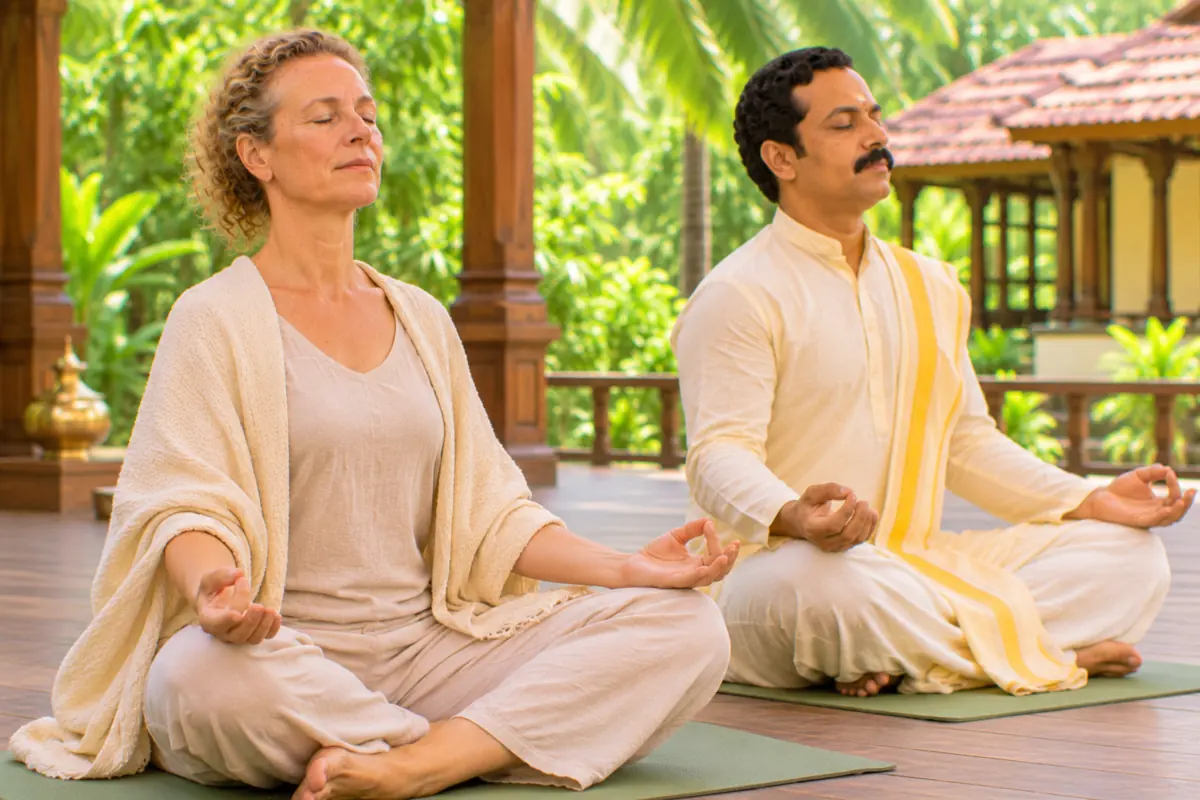
| Relaxation | Yoga, breathing practice and meditation |
| Sleep | A regular, cool and quiet evening routine |
| Home plan | Skin-friendly habits and meals to continue at home |
A typical day on a skin-care programme
- Early morning: gentle yoga or a walk in the cool of the day, then a light breakfast.
- Mid-morning: a physician review and soothing herbal care, where planned.
- Afternoon: a simple lunch, rest and time in the shade.
- Evening: breathing practice, an early dinner and sleep.
Your stay in Kerala
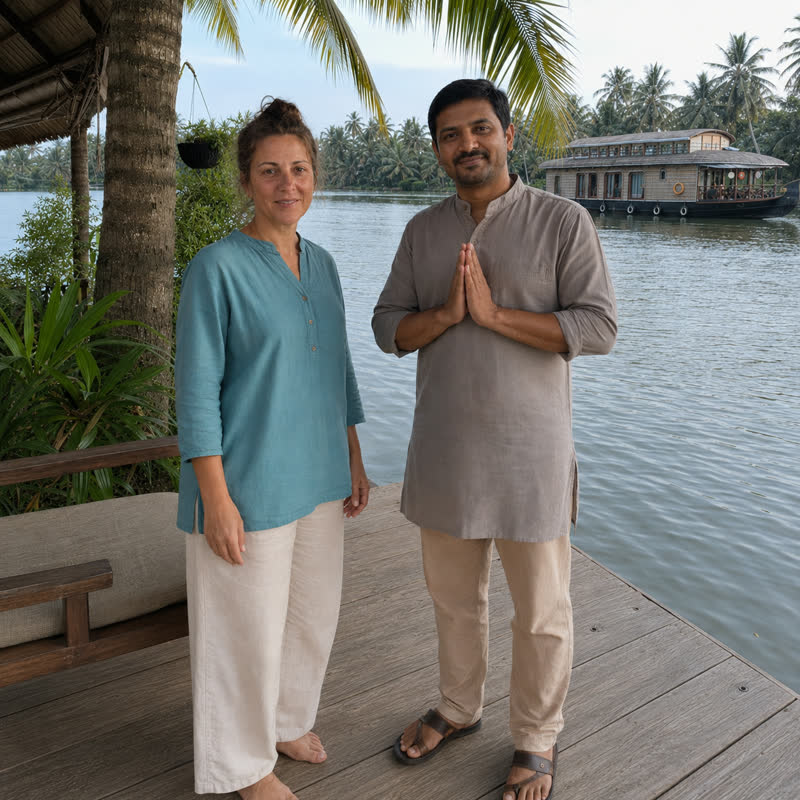
Kerala is warm and humid for much of the year, so ask about an air-conditioned room, cool bathing, clean linen and the soaps and cleansers used. Bring your own gentle cleanser and moisturiser if you prefer, and ask which months suit your skin best.
Why a calm setting helps
Skin often settles when the day becomes simpler. At a residential centre, meals are prepared, the routine is regular and there is time for sleep and relaxation. Many guests return with a calmer evening routine and a clearer idea of which foods and products suit their skin.
The Ayurvedic view of skin
Ayurveda describes chronic itchy, weeping or dry skin conditions under the broad heading of Vicharchika and related patterns of Kushtha. The tradition connects the skin with digestion, diet, blood quality, stress and the season, and it emphasises regular meals, a calm mind, cooling and soothing applications and good sleep.
A careful physician therefore asks about your skin pattern, foods, digestion, sleep and stress, and plans a gentle programme with your dermatologist's advice in mind.
The therapies you may meet
Here is what common skin-care therapies involve. Your physician chooses which are suited to you.
- Abhyanga: a gentle massage with a herbal oil chosen for your skin, after a patch test.
- Takradhara: a soothing stream of medicated buttermilk over the forehead.
- Shirodhara: a calming stream of warm oil over the forehead.
- Herbal pastes and washes: cooling applications introduced carefully.
- Herbal medicines: preparations chosen by the doctor and checked against your medicines.
- Diet and routine: simple, freshly cooked meals and regular timings.
A sample two-week rhythm
Every programme is individual, and this outline is only an illustration of how a stay can unfold.
- Days 1 to 3, settling in: arrival rest, a full consultation, skin photographs and a gentle start with light meals.
- Days 4 to 10, the main programme: soothing applications, herbal medicines, yoga, relaxation and rest, with the physician reviewing your skin each day.
- Days 11 to 14, consolidating: a lighter schedule, a review of your skin and a written plan for skin care and routines at home.
Many guests extend their stay, and the physician will advise after the first review.
Gentle skin care during your stay
Skin that is easily irritated appreciates a few kind habits. Use lukewarm water, pat the skin dry, moisturise as your dermatologist advises, wear soft cotton clothing and ask for a patch test before any new oil or paste. Bring your own gentle cleanser and moisturiser if you prefer, and ask which soaps and linens the centre uses. Cool rooms, short showers and breathable bedding help many guests feel comfortable.
Itch, sleep and calm
Itch is often worst at night, and poor sleep makes the skin feel worse the next day. A residential stay supports sleep with early evenings, a cool quiet room, gentle breathing practice and relaxing therapies. Ask the team to teach a short wind-down routine and tips for keeping nails short and hands busy, so that you can continue at home.
Food and daily routine
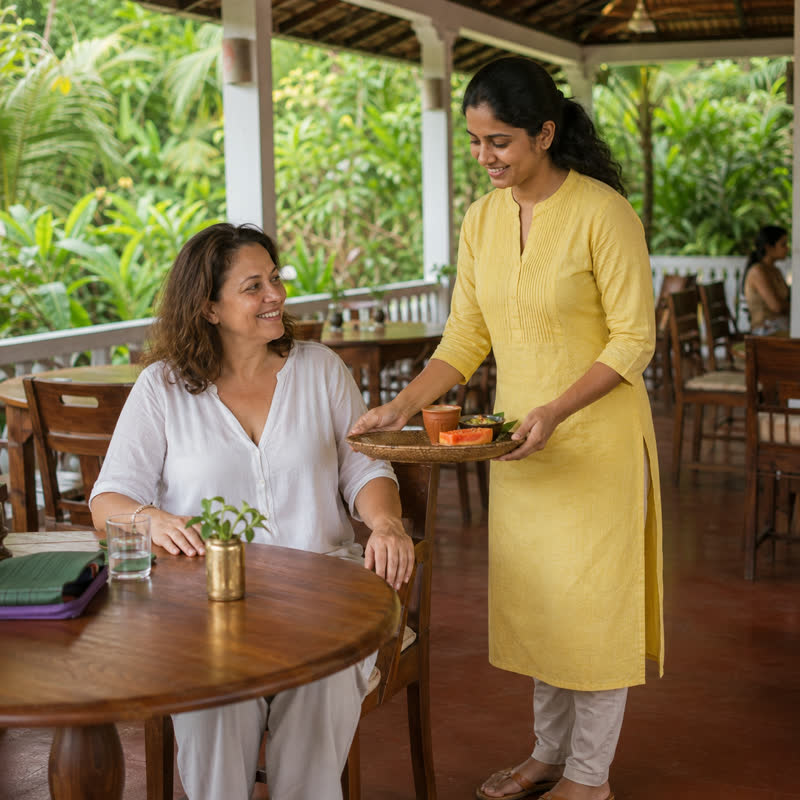
Meals are simple, warm and freshly cooked, with regular timings. Your physician may suggest foods to favour or reduce, and a good centre explains why in plain language. Many centres offer a short cooking session, and a written copy of menus and a list of habits that suited you best is a helpful keepsake. If you have food allergies, tell the kitchen in advance.
Kerala, climate and the best season
Many Ayurveda centres are in Kerala, where the warm, humid climate is traditionally considered kind to the body and the monsoon months are popular for oil therapies. The drier months from October to March are comfortable for travel and sightseeing. For eczema, ask each centre which season it recommends, and whether rooms are air-conditioned or well ventilated. Ask about air-conditioned rooms and cool bathing, and bring your usual moisturiser. Our guide to the best time to travel compares the seasons.
Keeping a simple diary
A small notebook is one of the most useful things to bring. Each evening, jot down how your skin and itch felt, your sleep, your stress and what you ate. After a week or two the pattern often becomes clear, and you and the physician can fine-tune the plan. A simple one-to-ten score each evening for itch and for comfort makes patterns easy to spot. The same notes give your own doctor a helpful picture when you return.
Travelling comfortably
A little planning makes the journey smoother. Book an aisle seat so you can stand and stretch, keep your medicines and reports in your hand luggage, and choose a flight that arrives at a comfortable hour. Pack soft cotton clothing and your usual moisturiser, and keep a small supply in your hand luggage. Ask the centre to arrange the transfer and a restful first day. Our guide to the attendant visa explains how a family member can travel with you.
Conversations to have before you travel
A short chat with your own doctor makes the stay smoother. Many guests ask:
- Are my treatments and plans up to date for travel?
- Which creams should I continue during the stay?
- Is there anything you would like the Ayurveda team to know?
- When would you like to see me after I return?
Sharing the answers with the Ayurveda physician helps the two teams work in step, and leaves you feeling confident and well supported.
Who tends to enjoy a stay
Guests who enjoy these programmes are often people with long-standing skin conditions who would like a calm break, those who notice that stress and poor sleep affect their skin, and anyone who would like practical routines for skin care. If you are unsure whether a stay suits you, a free online consultation is a good first step, before you book anything.
Planning your budget
Cost depends on room, length, therapies, physician time and medicines. Ask each centre for an itemised, dated quote for the same dates and inclusions, and add visa, flights, insurance and transfers. See the cost guide and verifying a doctor.
Travelling with confidence, and how MyVaidyam can help
- Share your reports and current medicines with the Ayurveda physician before you travel.
- Continue your prescribed medicines, and let your own doctor know your plans.
- Ask for ingredient lists for any herbal medicine, and choose labelled preparations.
- Plan rest after the flight so you can begin your stay comfortably.
- Ask for a patch test before any new herbal oil or paste.
MyVaidyam can arrange a free online pre-consultation, have your reports reviewed by an Ayurvedic physician and request day-by-day plans and itemised quotes from centres so you can compare them calmly. Contact MyVaidyam to book your free online consultation.