This guide explains the Ayurvedic view, what a stay typically includes and how to plan with confidence. Ayurveda is offered as a complementary, supportive approach alongside your own doctor's care, never a replacement for it.
Quick Facts - Ayurveda Programmes for Sinus, Asthma and Allergy Comfort for International Patients in India
| Topic | Summary |
|---|---|
| Sinusitis (NHS 111 Wales) | Usually clears within weeks; sprays and saline rinses are common care |
| Asthma (NHLBI) | Quick-relief and long-term controller medicines with an action plan |
| Breathing and yoga (NCCIH) | May improve quality of life alongside usual care |
| Ayurvedic view | Respiratory comfort is linked to kapha and digestion |
| Aim | Easier breathing habits and wellbeing |
| Cost | Compare itemised, dated quotes |
Understanding sinus, asthma and allergy symptoms
NHS 111 Wales describes sinusitis as inflammation of the sinuses that usually clears within weeks, with congestion, facial pressure and a blocked or runny nose, and common care includes saline rinses and nasal sprays. NHLBI describes asthma as a long-term condition of the airways, treated with quick-relief and long-term controller medicines and a written asthma action plan. Allergies often bring sneezing, itchy eyes and a blocked nose in particular seasons or settings.
A residential Ayurveda stay offers clean air, a calm routine and daily breathing practice beside your respiratory care, which continues unchanged.
How Ayurveda looks at breathing
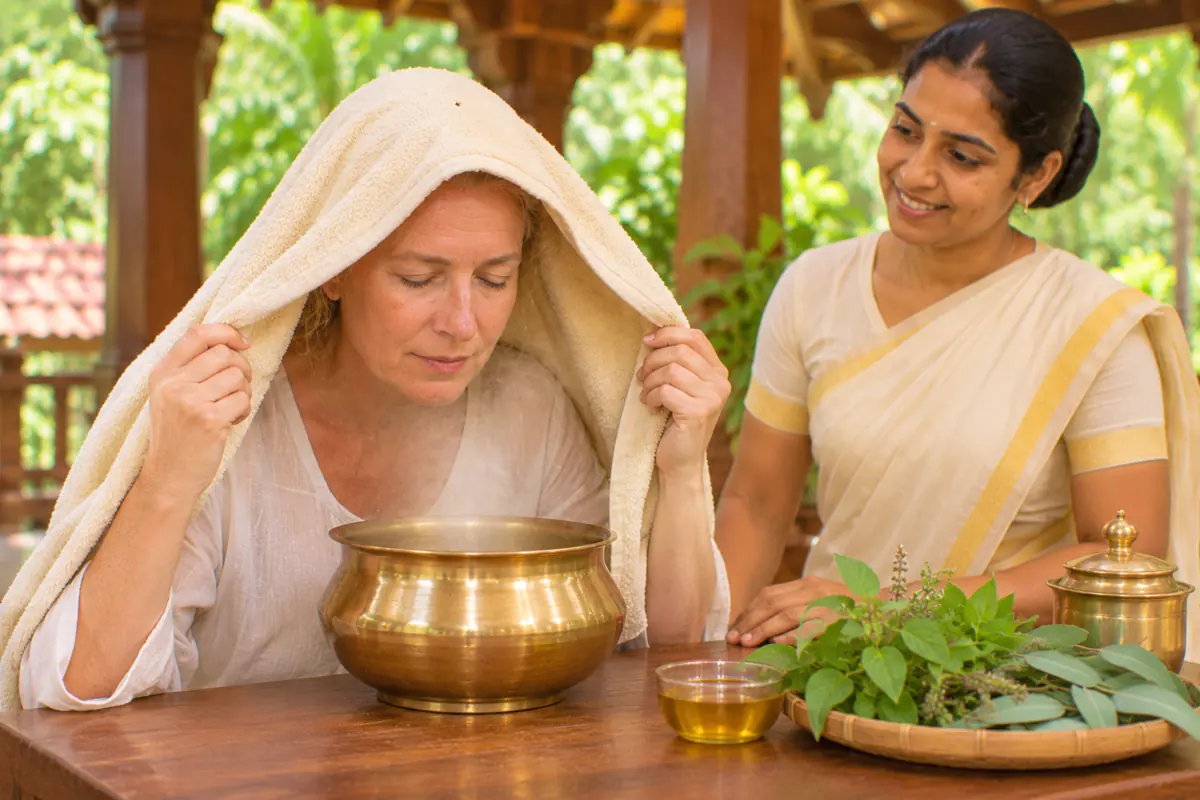
Ayurveda associates congestion and wheeze with kapha and vata, and links them with digestion, diet and seasons. The physician plans warm meals, steam, nasal care, breathing exercises and yoga to suit your pattern, always alongside your respiratory medicines.
Building on your usual care
NHS 111 Wales and NHLBI describe sinusitis care as sprays, saline rinses and time, and asthma care as quick-relief and long-term controller medicines with a written action plan. NCCIH notes that breathing exercises and yoga may improve quality of life alongside usual care. A residential stay builds these into the day.
What the research shows
Controlled research on Ayurvedic programmes for sinus, asthma and allergy comfort is limited, and NCCIH notes the same for Ayurvedic medicine overall. Breathing practice and yoga are the best-studied parts of a stay.
What a residential programme may include
| Element | What it generally involves |
|---|---|
| Assessment | History, review of action plan and medicines |
| Breathing exercises | Daily gentle pranayama |
| Steam and warmth | Mild steam and warm-oil chest and back massage |
| Nasal care | Saline rinses; nasya, only if suited to you |
| Diet | Warm, lightly spiced, freshly cooked meals |
| Yoga | Gentle postures that open the chest |
A typical day on a breathing-comfort programme
- Early morning: breathing exercises and gentle yoga in fresh air.
- Mid-morning: a physician review and a warm-oil or steam therapy.
- Afternoon: a warm lunch and rest.
- Evening: a short walk, a light dinner and early sleep.
Why a calm setting helps
Breathing habits improve with practice, and a residential centre gives you a daily lesson and time to repeat it. Many guests return with a breathing routine they can use at home, and a clearer idea of triggers in their food and surroundings.
The Ayurvedic idea of kapha, vata and the seasons
Ayurveda links congestion and wheeze with kapha, with vata playing a part in dryness and irritability of the airways. The tradition emphasises warm, light, freshly cooked food, a regular routine, steam, breathing practice and attention to season. Physicians compare these descriptions with modern diagnoses while recognising that the frameworks are not identical.
A careful physician therefore asks about your triggers, sleep and digestion and plans a gentle programme around your action plan.
The therapies you may meet
Here is what the most common programme elements involve. Your physician chooses which are suited to you.
- Steam (swedana): a mild, comfortable steam, adapted to your breathing.
- Warm-oil chest and back massage: a soothing massage with warm oil.
- Nasya: nasal oil drops, only if your physician judges them suitable.
- Pranayama: gentle breathing exercises taught step by step.
- Yoga: postures that open the chest and ease the shoulders.
- Herbal medicines: only after discussion with your doctor.
A sample programme rhythm
Every programme is individual, and this outline is only an illustration of how a stay can unfold.
- Days 1 to 3, settling in: arrival rest, a full consultation, review of your action plan and a gentle start with warm meals.
- Days 4 to 10, the main programme: a daily rhythm of breathing practice, yoga, steam and massage, warm meals and rest, with your inhalers always to hand.
- Days 11 to 14, consolidating: a lighter schedule, a review of how you breathe and a written routine for home.
Many guests extend their stay, and the physician will advise after the first review. Ask the centre for its own day-by-day plan.
Learning to breathe well
Breathing exercises are among the best-studied parts of a stay, and NCCIH notes that breathing and yoga may improve quality of life alongside usual care. You will learn slow, relaxed breathing, diaphragmatic breathing and simple pauses that calm the chest. Practise twice a day for a few minutes, never straining, and keep your inhaler within reach. Ask the teacher to write the routine down for home.
Clean air and a comfortable room
Ask for a room with good ventilation, clean bedding and little dust, and tell the team about particular triggers such as pollen, incense, mould or strong smells. Kerala's humidity suits some guests and troubles others, so ask which months suit your pattern. Keep your windows and fans as comfortable for you as your condition requires.
Warm, simple food
Meals are warm, lightly spiced and freshly cooked. Your physician may suggest limiting very cold drinks and heavy, sweet or fried foods, and encourage warm water and spiced broths. Tell the kitchen about any food allergies, and keep a note of anything that seems to affect your breathing. Warm fluids through the day are comforting for many guests.
Kerala, climate and the best season
Many Ayurveda centres are in Kerala, where the warm, humid climate is traditionally considered kind to the body and the monsoon months are popular for oil therapies. The drier months from October to March are comfortable for travel and sightseeing. For sinus, asthma and allergies, ask each centre which season it recommends, and whether rooms are air-conditioned or well ventilated. Ask about the season, humidity and dust-free rooms. Our guide to the best time to travel compares the seasons.
Keeping a simple diary
A small notebook is one of the most useful things to bring. Each evening, jot down your breathing, your triggers, your sleep, your peak flow if you use a meter and your mood. After a week or two the pattern often becomes clear, and you and the physician can fine-tune the plan. A weekly note on what helped is useful for your own doctor. The same notes give your own doctor a helpful picture when you return.
Travelling comfortably
A little planning makes the journey smoother. Book an aisle seat so you can stand and stretch, keep your medicines and reports in your hand luggage, and choose a flight that arrives at a comfortable hour. Carry inhalers, sprays and your action plan in your hand luggage, and travel with a mask if crowded places affect you. Ask the centre to arrange the transfer and a restful first day. Our guide to the attendant visa explains how a family member can travel with you.
Who tends to enjoy a stay
Guests who enjoy these programmes are often people who would like a calm place to practise breathing, those whose daily lives are busy and anyone who would like practical routines to take home. If you are unsure whether a stay suits you, a free online consultation is a good first step, before you book anything.
Preparing for your stay
Bring your inhalers, sprays and written asthma action plan, and carry them in hand luggage. Ask about dust-free rooms, and tell the team about any seasonal triggers. A short daily note of how your breathing feels helps you and your doctor see what suits you.
Questions to ask before you book
These questions help you compare centres and plan with confidence.
- Who will be my physician, and what are their qualifications?
- Can the plan work around my usual medicines and appointments?
- Which rooms and bedding are dust-free?
- What does the quote include, and what is extra?
Planning your budget
Cost depends on room, length, therapies, physician time and medicines. Ask each centre for an itemised, dated quote for the same dates and inclusions, and add visa, flights, insurance and transfers. See the cost guide and verifying a doctor.
Travelling with confidence, and how MyVaidyam can help
- Share your reports and current medicines with the Ayurveda physician before you travel.
- Continue your prescribed medicines, and let your own doctor know your plans.
- Ask for ingredient lists for any herbal medicine, and choose labelled preparations.
- Plan rest after the flight so you can begin your stay comfortably.
- Keep your inhalers and sprays with you at all times.
MyVaidyam can arrange a free online pre-consultation, have your reports reviewed by an Ayurvedic physician and request day-by-day plans and itemised quotes from centres so you can compare them calmly. Contact MyVaidyam to book your free online consultation.