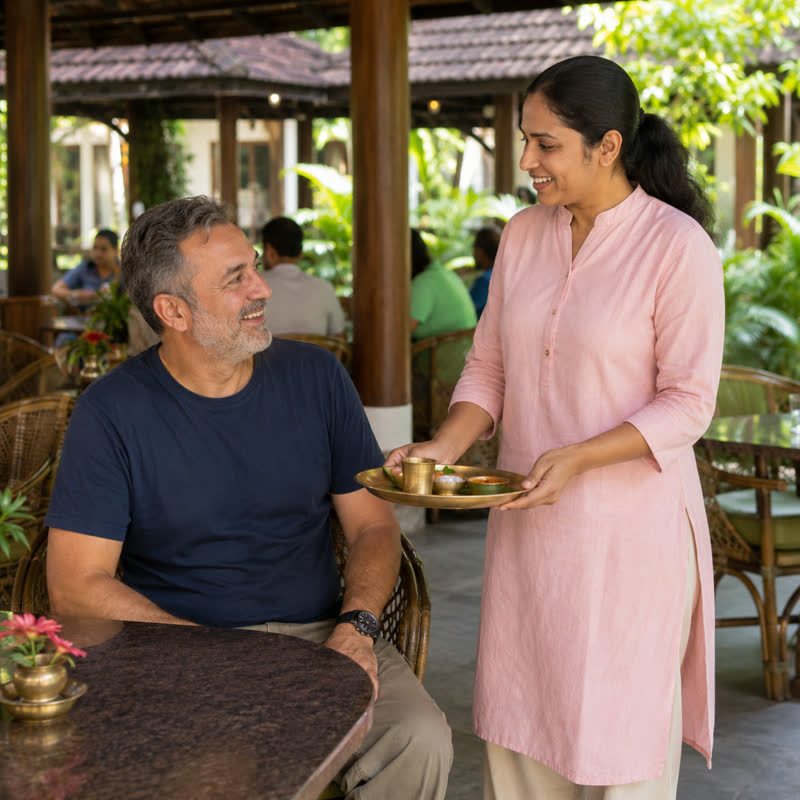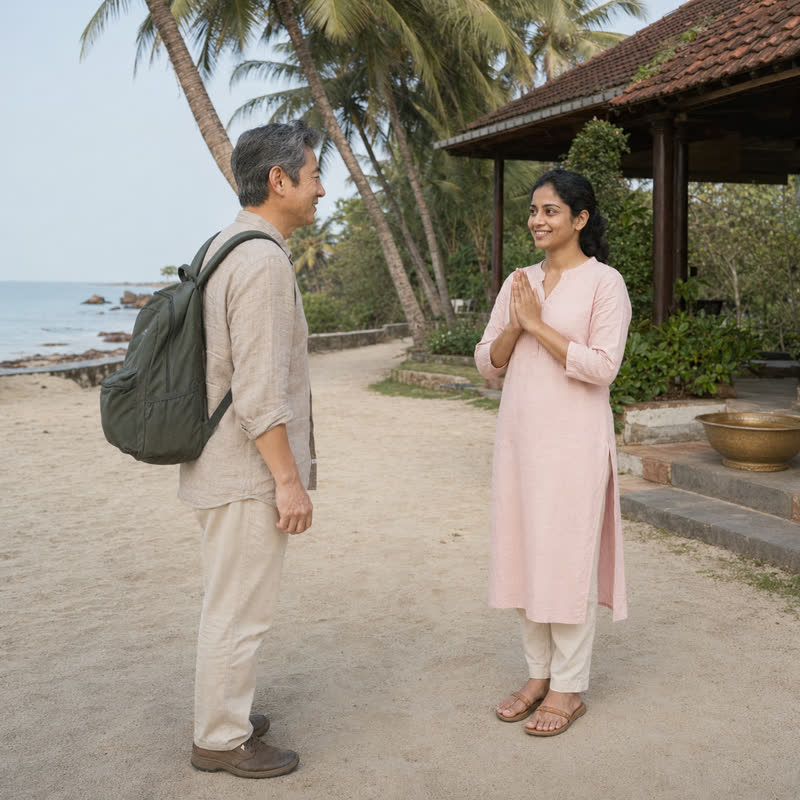
Many people look to a residential Ayurveda programme in Kerala as a way to step off the treadmill and let the nervous system settle, in a place designed for exactly that.
This guide explains how Ayurveda views stress, what a Kerala stress-management programme involves, which therapies and practices you may meet, how sleep, food and nature fit in, how to work alongside your own doctors, how to choose a retreat and how to plan the journey. And throughout, it shows how MyVaidyam can walk beside you as your friend and guide.
Ayurveda is offered here as a complementary, supportive approach that works alongside your own doctor's care, never as a replacement for it.
Quick Facts - Ayurveda Stress Management in Kerala
| Topic | Summary |
|---|---|
| Approach | Complementary and supportive, alongside your own doctor's care |
| Typical elements | Calming oil therapies, breathing, meditation, diet, sleep routine, quiet time |
| Common aims | Rest, better sleep, calm and a sustainable daily rhythm |
| Signature therapy | Shirodhara, a slow stream of warm oil over the forehead |
| Typical lengths | 7, 14 or 21 days; a week is a lovely reset, longer stays go deeper |
| Share beforehand | Your sleep and stress history, current medicines and any specialist advice |
| Visa | e-Medical visa: 60 days from first arrival, triple entry, non-extendable |
| Your companion | MyVaidyam: planning, coordination and support before, during and after |
How Ayurveda looks at stress
Ayurveda does not treat stress as a single problem. A physician considers how your mind, sleep, digestion and daily habits interact. In classical language, a restless, overstretched state is associated with an excess of vata, the principle of movement, and the traditional remedy is the opposite: warmth, oil, routine, nourishing food and quiet. You do not need to learn the terms. What matters is that a plan is shaped around you.
The aim is supportive. It is to help the body and mind settle, to improve rest and to give you a rhythm you can recreate at home. It is a gentle companion to the care you receive from your own doctors, not an alternative to it.
What stress may feel like, and what helps
What stress may feel like
Restless or broken sleep
Tight neck and shoulders
Racing thoughts
Tiredness that rest does not fix
Short temper, low patience
What a programme offers
Early nights and a steady rhythm
Warm oil massage and steam
Shirodhara for calm
Breathing and meditation
Nature, quiet and good food
MyVaidyam helps you choose a quiet, supportive setting and a plan that fits you.
Many guests recognise several of the signals on the left. The good news is that the supports on the right are exactly what a Kerala centre is built around, and the setting does much of the work.
What a Kerala stress-management programme usually involves
Most programmes follow a gentle rhythm of consultation, therapies, practices, food and rest, planned for you.
- Consultation. The physician reviews your sleep, stress history and goals, and confirms your plan.
- Calming therapies. Warm oil massage, herbal steam and shirodhara, chosen for you.
- Breathing and meditation. Gentle practices that quieten the mind, suitable for beginners.
- Yoga. Slow, restorative movement within your comfort.
- Diet. Warm, freshly cooked, simple, nourishing meals at regular times.
- Sleep and rhythm. Early nights, quiet afternoons and a steady daily routine.
The therapies you may meet
Your physician chooses what suits you. Not everyone needs every one of these.
| Therapy | What it involves |
|---|---|
| Abhyanga | Warm herbal oil massage, often by two therapists, that many guests find deeply relaxing |
| Shirodhara | A slow stream of warm oil over the forehead, often chosen for calm and sleep |
| Swedana | Gentle herbal steam that follows massage |
| Shiro abhyanga | A soothing head and scalp massage with warm oil |
| Pranayama and meditation | Breathing and quiet-mind practices taught gently |
| Herbal preparations | Medicines chosen by your physician for your plan |
A longer list does not mean a better programme. The right plan is the one that fits you.
Sleep, food and the setting
Sleep is one of the first things guests notice. Early nights, a quiet room, a warm meal and a day without screens often lead to deeper rest. Meals in Kerala centres are typically warm, simple and freshly cooked, with rice, lentils, vegetables and gentle spices. Tell the kitchen about allergies and dietary needs at the start.
The setting matters too. Green gardens, birdsong, warm air and the sound of rain are not decoration. Many guests tell us that the surroundings are half of the therapy.
Stepping back from screens and demands
A stress retreat works best when you can truly step back. Many centres have wifi, and a short call home each day or every few days keeps loved ones reassured. Beyond that, guests often find that putting the phone away for long stretches is a relief. Agree with your family and workplace on when you will be reachable, and let the rest of the day be yours. If you plan to work during your stay, talk to your physician first, since work can interrupt the rhythm that the programme depends on.
Working alongside your own doctors
The best results come when everyone is on the same page. Share your sleep and stress history, current medicines and any advice from your doctor or therapist with the Ayurvedic physician beforehand, and let your own doctor see the plan. If your stress comes with persistent low mood or anxiety, your own doctor or therapist should stay involved, since Ayurveda is a supportive companion rather than a replacement. Please keep taking your prescribed medicines and talk to your own doctor before any change. After your stay, share your written summary with your doctors.
How long should a programme be?
A week can be a lovely reset, especially for a short burst of stress. For deeper tiredness or a long, demanding period, two to three weeks allow more time to settle, with preparation, therapies and a gentle recovery. Your physician will recommend the length that suits you. Remember that the e-Medical visa is valid for 60 days from first arrival and cannot be extended, so choose your dates with a comfortable margin.
Choosing a retreat for stress
Look at these, roughly in order of importance:
- The physician. A qualified Ayurvedic doctor (BAMS or MD Ayurveda), registered with the appropriate board, who will see you personally.
- Quiet. A peaceful setting away from traffic, with a calm daily rhythm.
- The written plan. A clear plan with the therapies, practices, inclusions and follow-up.
- Medical backup. Who is on duty at night, and which hospital is nearby.
- Standards. Kerala's classification (Ayur Silver, Gold and Diamond, among others) and NABH accreditation are useful signs, though not guarantees.
- Honesty. Be wary of promises of cure, advice to stop prescribed medicines or pressure to decide quickly.
Questions to ask before you decide
A short, friendly message with your questions, and a request for written replies, works beautifully. A few to begin with:
- Who will be my treating doctor, and can I speak with them before I decide?
- What does a typical day look like, and how much quiet time is there?
- How are meals planned, and can they be adapted to my needs?
- What follow-up will I have after I return home?
Planning the journey
Apply for your e-Medical visa on India's official portal, usually with a hospital letter, a few weeks before travel. It is valid for 60 days from first arrival, allows three entries and cannot be extended. Book flights after approval, arrange travel insurance and choose an arrival time that suits your centre's pickup. Many guests fly into Thiruvananthapuram or Kochi. Kerala welcomes guests all year, and many favour the cooler, drier months while others enjoy the monsoon from about June, with its rain-washed air and slower pace. Check the portal for current rules before you apply.
Taking the calm home
Before you leave, ask for a written summary, a simple daily routine, breathing practices and a follow-up plan, and share them with your own doctors. Even two or three habits, such as an early night, a few minutes of slow breathing and a regular dinner time, can carry the calm of your stay into everyday life. Many guests find a short video check-in with their physician a few weeks later helps them keep going.
Your friend and hand-holder on the way to Kerala: MyVaidyam
Taking time for your wellbeing deserves support, and that is where MyVaidyam comes in. We walk with you from your very first question to the day you return home, answering your questions patiently and making sure that nothing is left to chance.
- An online consultation with an Ayurvedic physician to discuss your goals and sleep.
- Help preparing your health summary and a written plan after your consultation.
- Guidance on choosing an accredited, quiet Kerala centre that suits you.
- Support with your e-Medical visa documents and the hospital letter.
- Advice on flights, airport pickup and accommodation, including arrangements for a companion.
- A warm point of contact during your stay, and follow-up after you return home.
You are welcome to reach out at any stage. We would be delighted to help you plan a restful stay in Kerala.