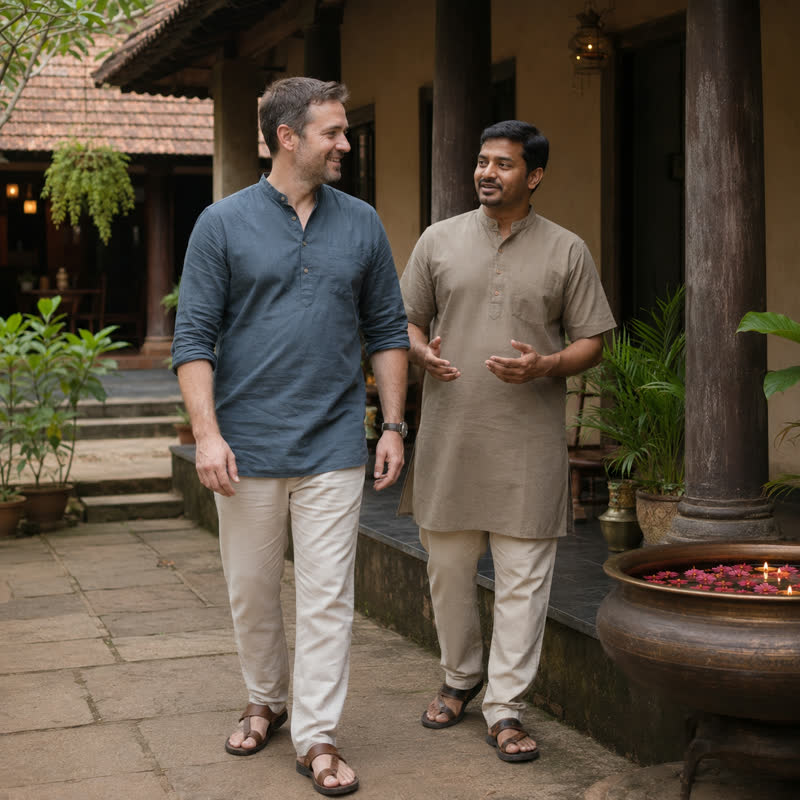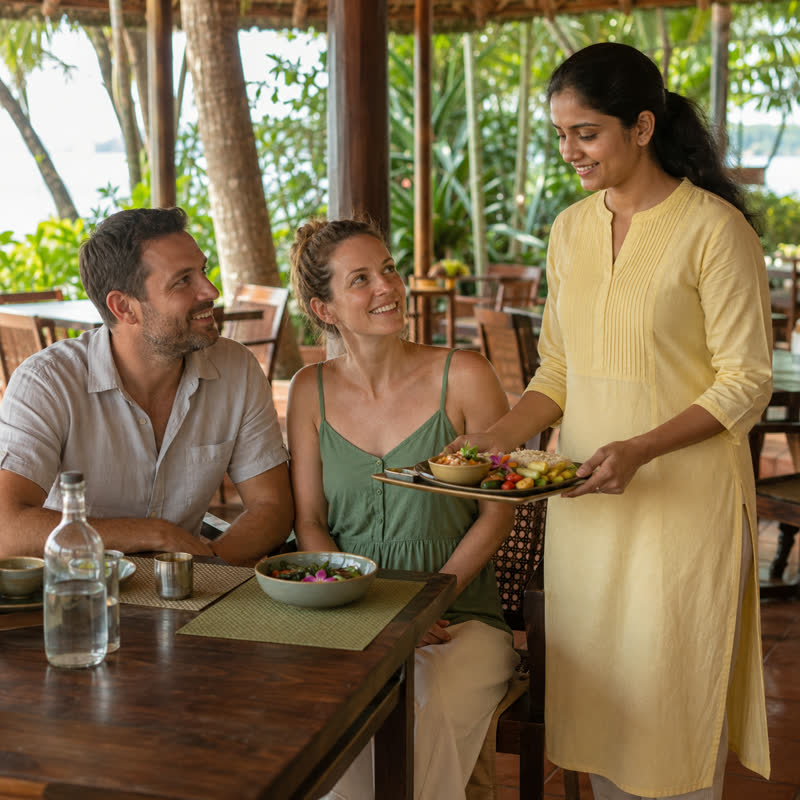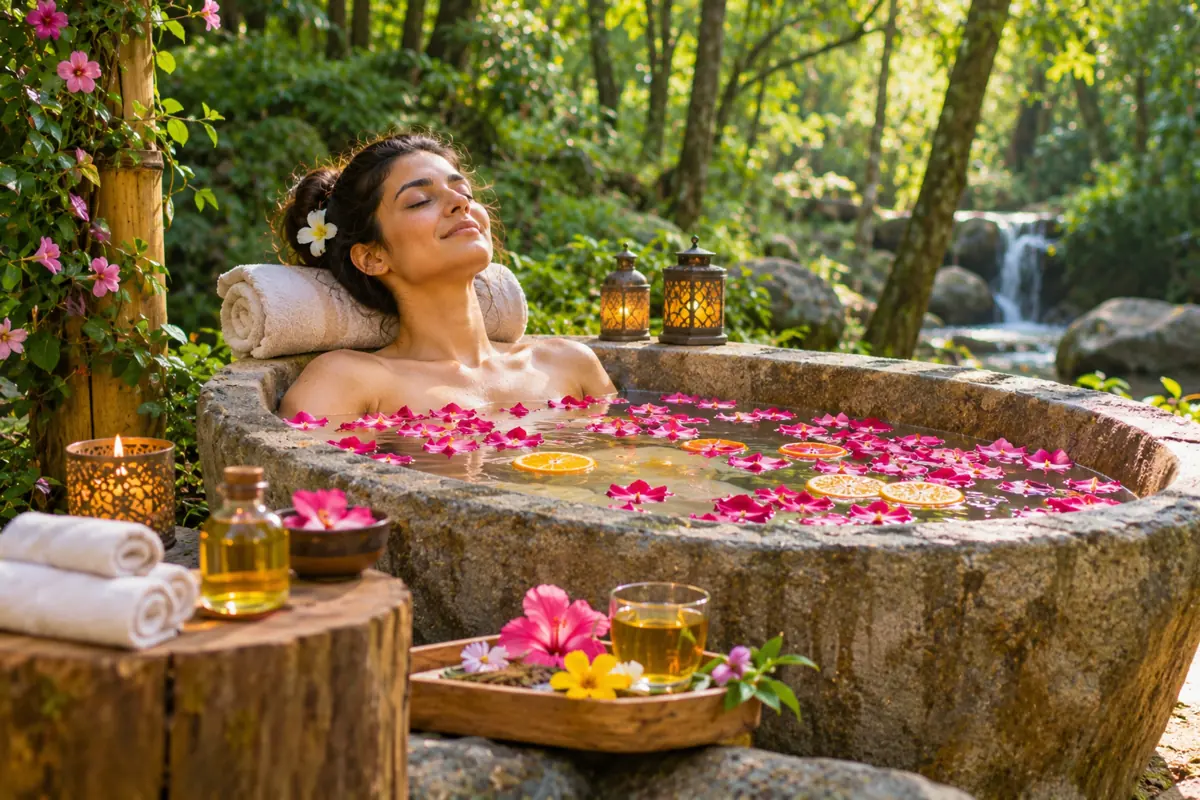
In many cultures, new mothers have been cared for with great devotion during this time, and in Kerala, Ayurveda holds a rich tradition of exactly that: a period of gentle, structured mother-care.
This guide explains what postnatal Ayurvedic programmes in Kerala usually involve, which therapies and foods you may meet, how a stay can fit alongside your obstetrician's advice, when travelling may or may not be the right choice, how to choose a centre and how to plan. And throughout, it shows how MyVaidyam can walk beside you as your friend and guide.
Ayurveda is offered here as a complementary, supportive approach that works alongside your own doctors' care. A postnatal programme supports rest, comfort and recovery. It is not a replacement for your obstetrician's and paediatrician's care.
Quick Facts - Postnatal Ayurveda Treatment in Kerala
| Topic | Summary |
|---|---|
| Traditional basis | Sutika paricharya, Ayurveda's postnatal care |
| Typical elements | Rest, nourishing diet, gentle oil massage, steam, herbal preparations, gentle movement |
| Common aims | Comfort, recovery, rest, strength and emotional ease |
| Not | A replacement for obstetric or paediatric care |
| Typical lengths | From one week to several weeks, shaped by the physician |
| Before travel | Clearance from your obstetrician and agreement on the baby's travel with the paediatrician |
| Visa | e-Medical visa: 60 days from first arrival, triple entry, non-extendable |
| Your companion | MyVaidyam: planning, coordination and support before, during and after |
Mother-care in the Ayurvedic tradition
Ayurveda gives special attention to the weeks following childbirth, a time it regards as one of deep vulnerability and also of great opportunity. The traditional approach, often called sutika paricharya, emphasises warmth, rest, nourishing food and gentle, loving care, with the aim of helping a mother regain strength and ease.
In Kerala, these traditions are alive in families and in centres. Many women say that what they remember most is the feeling of being cared for, fully, so that they could simply rest and bond with their baby.
The traditional six weeks
Weeks 1 to 2
Rest and warmth
Quiet, warm surroundings, light and nourishing meals, and only gentle therapies, if the physician advises.
Weeks 3 to 4
Nourish and soothe
Warm oil massage and steam where suitable, herbal tonics and decoctions chosen for a nursing mother.
Weeks 5 to 6
Rebuild and settle
Gentle movement, breathing, sleep routines and guidance to carry the rhythm home.
Timings vary. Your obstetrician and the centre's physician decide what is right for you.
Tradition often speaks of about six weeks of special care, though every mother and every centre is different. Some women choose a shorter stay, and some begin when they feel ready after the early weeks at home. Your physician and obstetrician help decide what and when.
What a postnatal programme usually includes
Every centre shapes its programme differently, so ask for the details in writing. Most bring together the following:
- Physician consultation. A gentle opening conversation about your delivery, recovery and feeding, with regular reviews.
- Warm oil massage. Soothing herbal oil massage by trained women therapists, adapted to how you are healing.
- Herbal steam and warm bath. Gentle warmth that many mothers find deeply comforting.
- Nourishing diet. Warm, freshly cooked, easily digested meals, chosen to support recovery and nursing.
- Herbal preparations. Decoctions and tonics chosen by your physician, with names you can share with your own doctors.
- Gentle movement and breathing. Light practices suited to your strength.
- Rest. Plenty of it, in quiet surroundings.
- Aftercare. A written summary and a simple routine for home.
Some items, such as a nanny, baby-care support or a companion's accommodation, may be arranged separately. Ask the centre to show clearly which is which.
Therapies you may meet
Your physician chooses what suits you, and after a caesarean delivery in particular the plan is adapted to your recovery.
| Therapy | What it involves |
|---|---|
| Abhyanga | Warm herbal oil massage, often by a female therapist, adapted to your healing |
| Swedana | Gentle herbal steam applied with care for comfort |
| Herbal bath | A warm bath with herbs, used traditionally for comfort and relaxation |
| Abdominal wrap | A soft traditional wrap, used by some centres, to support the tummy |
| Postnatal tonics | Herbal preparations chosen for new mothers by the physician |
Food for a new mother
In Kerala's tradition, a new mother's food is warm, soft and nourishing. Meals may include rice porridge, lentils, vegetables, gentle spices and ghee in modest amounts, chosen for your digestion and your nursing needs. Cold and heavy foods are often kept to a minimum. Tell the kitchen about allergies and dietary needs, and ask how meals are adapted to a nursing mother and to your preferences.
When is the right time to travel?
Timing is a personal and medical decision, and it begins with your obstetrician. Many women wait until they have had their first check-up, feel strong and are comfortable with feeding, and until the baby's paediatrician is happy for the baby to travel. Others choose to travel with their baby and a companion for the whole stay. Whatever you choose, it is wise to plan a comfortable journey, with a companion to help, extra rest stops and a quiet first day on arrival.
Because the baby's health matters as much as yours, ask your paediatrician about travel and vaccinations.
Travelling with a newborn
If your baby comes with you, ask the centre in advance about the room, cot, hot water, baby-care support and the nearest children's hospital. Some centres welcome babies warmly and have staff used to caring for them. Others prefer mothers to bring a trusted family member who can look after the baby during therapies. A calm, unhurried stay is easiest when a loving companion is part of it.
Working alongside your own doctors
Before you travel, talk to your obstetrician about your plans, share your delivery summary and agree that you are ready. Bring your reports and a list of any medicines or supplements, and tell your Kerala physician that you are nursing. Ask them to write down every herbal preparation so that you can show your doctors. Please keep taking your prescribed medicines, and do not change anything without medical advice.
Choosing a centre for mother-care
Look at these, roughly in order of importance:
- The physician. A qualified Ayurvedic doctor (BAMS or MD Ayurveda), registered with the appropriate board, experienced in postnatal care.
- The therapists. Trained women therapists and a clear approach to hygiene and comfort.
- The written plan. A clear plan with therapies, diet, inclusions and follow-up.
- Medical backup. Who is on duty, and which hospital with maternity and children's care is nearby.
- Standards. Kerala's classification (Ayur Silver, Gold and Diamond, among others) and NABH accreditation are useful signs, though not guarantees.
- Honesty. Be cautious of promises of dramatic results and of any pressure to decide quickly or to stop your medicines.
Planning the journey
Apply for your e-Medical visa on India's official portal, usually with a hospital letter, a few weeks before travel. It is valid for 60 days from first arrival, allows three entries and cannot be extended. Book flights after approval, arrange travel insurance and choose comfortable timings. Many guests fly into Kochi or Thiruvananthapuram, and the centre can arrange a calm pickup. Check the portal for current rules before you apply.
Your friend and hand-holder on the way to Kerala: MyVaidyam
A tender time deserves tender planning, and that is where MyVaidyam comes in. We walk with you from your very first question to the day you return home, answering every question kindly and making sure that nothing is left to chance.
- An online consultation with an Ayurvedic physician to discuss your recovery and how a programme could look.
- Help preparing your health summary and sharing it with the centre.
- Guidance on choosing an accredited Kerala centre that welcomes mothers and babies.
- Help checking what is included and what is arranged separately.
- Support with your e-Medical visa documents, flights, airport pickup and accommodation, including for a companion.
- A warm point of contact during your stay, and follow-up after you return home.
You are welcome to reach out at any stage. We would be delighted to help you plan a nurturing stay in Kerala.