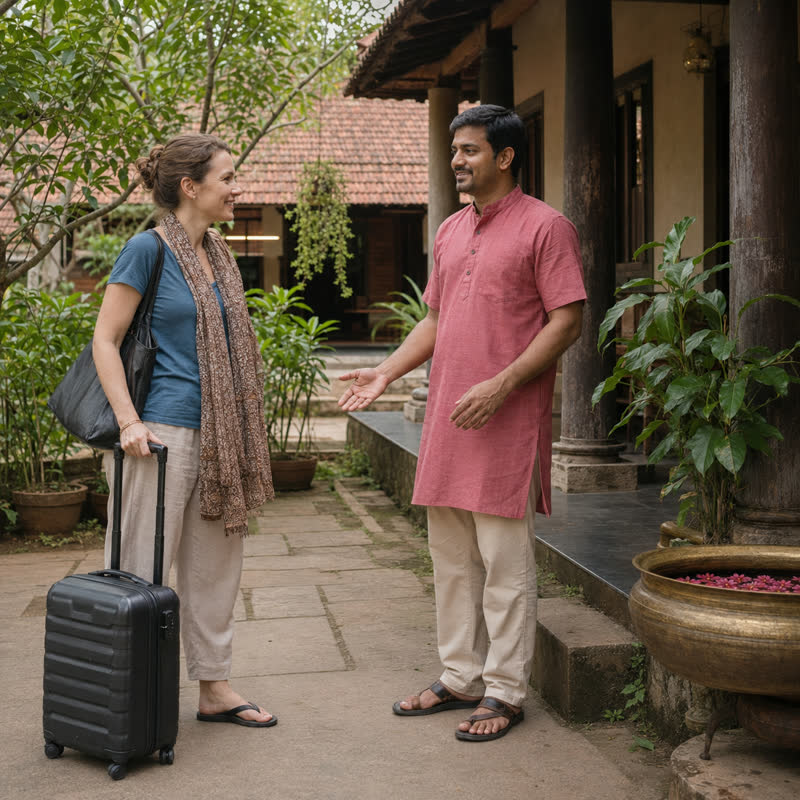
This guide explains in plain language how Ayurveda addresses stress, digestion and sleep together: why your own doctors review persistent symptoms first, how the physician sees the connection, what a combined programme may include, how food, routine and calm work together, what a residential day looks like and how to carry the habits home. And throughout, it shows how MyVaidyam can walk beside you as your friend and guide.
Ayurveda is offered here as a complementary, supportive approach that works alongside your own doctor's care, never as a replacement for it. It does not promise to treat any condition.
Quick Facts - How Stress, Digestion and Sleep Are Addressed Together in Ayurveda
| Topic | Summary |
|---|---|
| Link | Stress, digestion and sleep affect each other |
| First step | Review of persistent symptoms by your doctor |
| Ayurvedic view | Mind and digestion are closely connected |
| Support | Warm regular food, oil therapy, breathing, early sleep |
| Keep | Prescribed medicines and your doctor's advice |
| Not | A promise of treating any condition |
| Visa | e-Medical visa: 60 days from first arrival, triple entry, non-extendable |
| Your companion | MyVaidyam: planning, coordination and support before, during and after |
The knot we all know
A tense day brings a tight stomach. An uneasy stomach makes for a restless night, and a restless night leaves us frayed by morning. Because the three are so closely tied, treating one in isolation often brings only partial relief, and treating them together can feel remarkably natural.
Three threads, one cloth
Stress
Breathing, meditation, calm company
Digestion
Warm, regular, light food and routine
Sleep
Early bedtime, warm oil, screen-light evenings
A single, steady routine pulls all three threads in the right direction.
Start with your doctor
Please have persistent digestive symptoms, ongoing sleeplessness or heavy stress and low mood reviewed by your doctor, particularly if they come with weight loss, blood in the stool, pain, palpitations or a long duration. Tests may look for other causes, and sleep problems such as sleep apnoea are worth ruling out. Share the results with the centre, and continue every prescribed medicine.
How Ayurveda sees the connection
Ayurveda holds that digestion, called agni, and the mind influence one another closely, and that sleep is a pillar of health alongside food. Worry is described as disturbing digestion, and sluggish digestion as clouding the mind and sleep. The remedy is to settle all three together through regularity, warmth and quiet, so that each supports the others.
What a combined programme may include
- A consultation covering stress, digestion, sleep and routine.
- Warm, light, freshly cooked food at regular times.
- Warm herbal oil massage, head and foot therapies.
- Gentle yoga, breathing and meditation.
- A light early supper and early bedtime.
- A screen-light evening and time in nature.
Food that calms
Regular, warm, easily digested meals with a light early supper calm the gut and prepare the body for sleep. Mild spices such as cumin, fennel and ginger support digestion, while heavy, fried, very spicy meals and late caffeine and alcohol disturb it. A residential stay offers this rhythm daily, so that you feel the difference quickly.
Routine that settles the mind
Fixed times for waking, meals and bed give the body a rhythm to rely on, which is deeply calming. Add a morning walk in daylight, a short breathing practice and an evening wind-down, and many people find that digestion, mood and sleep improve together, often within the first week.
Therapies that soothe
Warm oil massage, head therapy and foot massage are traditionally used to calm the nervous system, and many guests drift into deep rest afterwards. Gentle abdominal care may support digestion. These therapies are chosen for you by the physician, and their pace is gentle.
A day at a residential centre
| Time | Typical activity |
|---|---|
| Early morning | Warm water, breathing, gentle stretches |
| Morning | Warm oil therapy |
| Late morning | Yoga or a walk |
| Midday | Light, nourishing main meal and rest |
| Afternoon | Relaxation, meditation, quiet time |
| Evening | Light early supper, screens off, early sleep |
Keeping a simple diary
For two weeks, note your meals, bowel habit, sleep and mood. Patterns often emerge, such as stomach upset after a stressful day or poor sleep after a late meal. The diary helps both your doctor and the physician tailor the plan to you.
Taking it home
- Keep regular meals and a light early supper.
- Keep a fixed bedtime and a screen-light evening.
- Walk daily, and keep a short breathing practice.
- Introduce changes one at a time.
- Follow up with your doctor and share the centre's summary.
Setting honest expectations
These three threads change gradually, and no programme can promise to treat any condition. A residential stay can offer calm, suitable food, restful therapies and a routine to carry home, and many guests are struck by how much better they feel when all three are cared for together.
Starting small
You need not change everything at once. Many people begin with a fixed bedtime and a lighter supper, and add a short breathing practice after a week. Once these feel natural, the rest follows more easily, and the three threads begin to loosen together.
Working alongside your own doctors
Please keep your own doctors informed. Share your medical summary, bring your reports and keep taking whatever you have been prescribed. Please keep taking prescribed medicines, and discuss any new programme with your own doctors first. Please do not change medicines without medical advice.
Choosing a centre
Look for a qualified Ayurvedic doctor (BAMS or MD Ayurveda), registered with the appropriate board, a kitchen that cooks to your plan, a quiet setting, trained therapists and a clear written plan. Be cautious of anyone who promises to cure sleep, digestive or stress disorders, or who sells tonics without assessing you.
Planning the journey
Apply for your e-Medical visa on India's official portal, usually with a hospital letter, a few weeks before travel. It is valid for 60 days from first arrival, allows three entries and cannot be extended. Book flights after approval, arrange travel insurance and choose an arrival time that gives you a rested first day. Check the portal for current rules before you apply.
Your friend and hand-holder in finding the right programme: MyVaidyam
A good plan starts with a good conversation, and that is where MyVaidyam comes in. We walk with you from your very first question to the day you return home, answering every question patiently and making sure that nothing is left to chance.
- An online consultation with an Ayurvedic physician to discuss your stress, digestion and sleep.
- Help preparing your health summary and test results.
- Guidance on choosing a reputable centre with a suitable kitchen and quiet setting.
- Help understanding your written plan.
- Support with your e-Medical visa documents, flights, airport pickup and accommodation.
- A warm point of contact during your stay, and follow-up after you return home.
You are welcome to reach out at any stage. We would be delighted to help you begin.