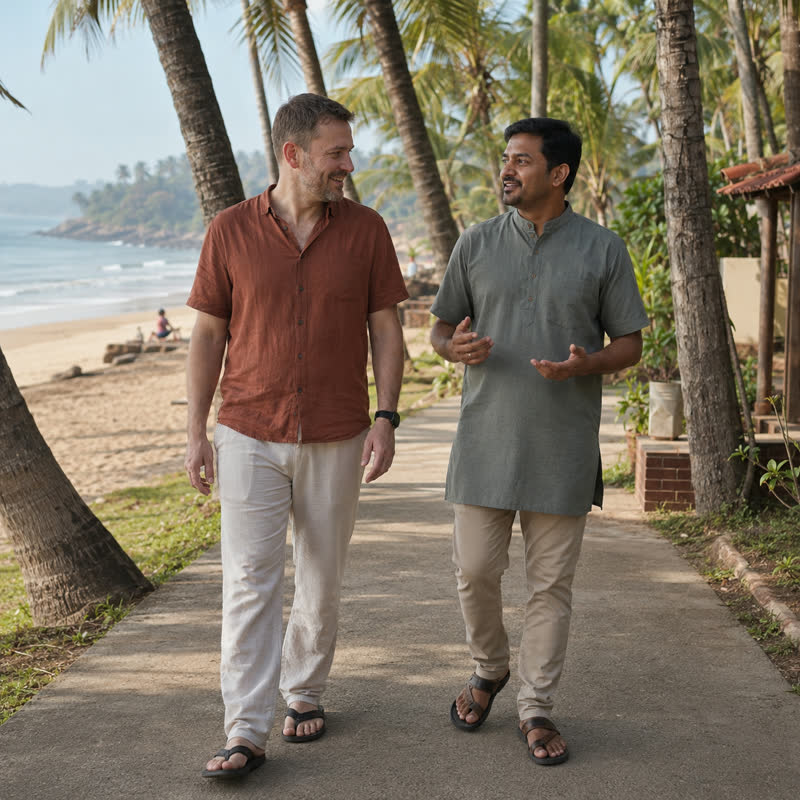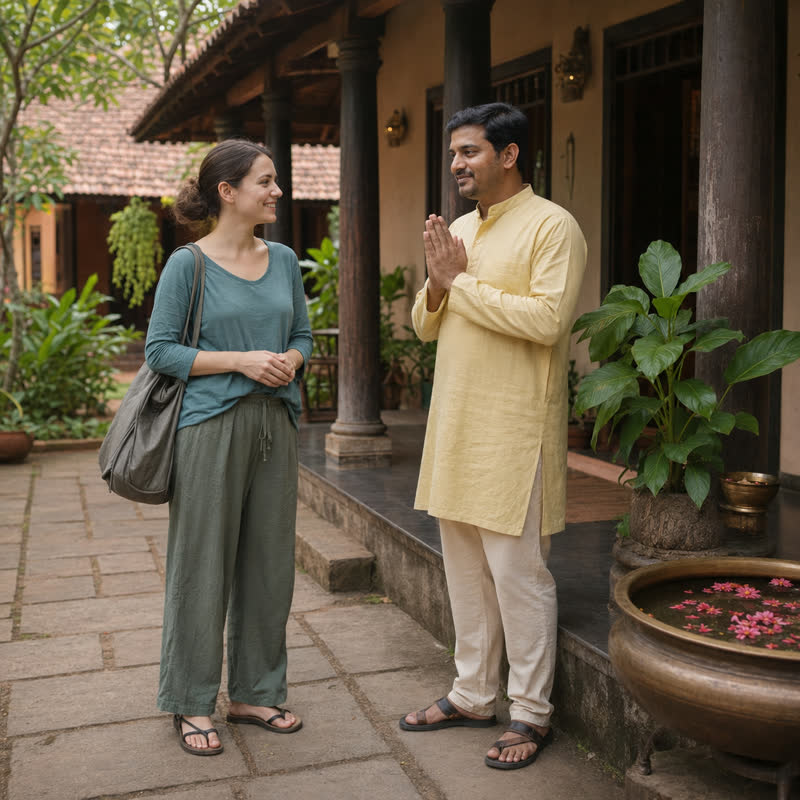
Many travellers come to India for just this: a few quiet weeks to learn how to breathe, slow down and let stress loosen its grip.
This guide explains in plain language how pranayama and Ayurveda can work together for stress: why your doctor comes first, what the main practices are, how a teacher guides you, what a residential programme may include, what to look for in pranayama programmes in India and how to practise at home. And throughout, it shows how MyVaidyam can walk beside you as your friend and guide.
Ayurveda is offered here as a complementary, supportive approach that works alongside your own doctor's care, never as a replacement for it. It does not promise to treat any condition.
Quick Facts - Pranayama With Ayurveda for Stress Management
| Topic | Summary |
|---|---|
| What it is | Conscious breathing practices from yoga |
| Session length | Typically 10 to 30 minutes |
| First step | Check-up if you have heart, lung or other conditions |
| Ayurvedic pairing | Warm therapies, calm food, routine, sleep |
| Needs | A quiet place and a trained teacher |
| Not | A treatment for any condition |
| Visa | e-Medical visa: 60 days from first arrival, triple entry, non-extendable |
| Your companion | MyVaidyam: planning, coordination and support before, during and after |
The breath as a doorway
When we are stressed, breathing becomes quick and shallow, and when we breathe slowly and fully, the body tends to settle. That link between breath and calm is the heart of pranayama. It asks no special fitness, only attention and a little regular practice, which is why it suits so many people, from busy executives to older guests.
Four breathing practices, in brief
Belly
Slow diaphragmatic breathing
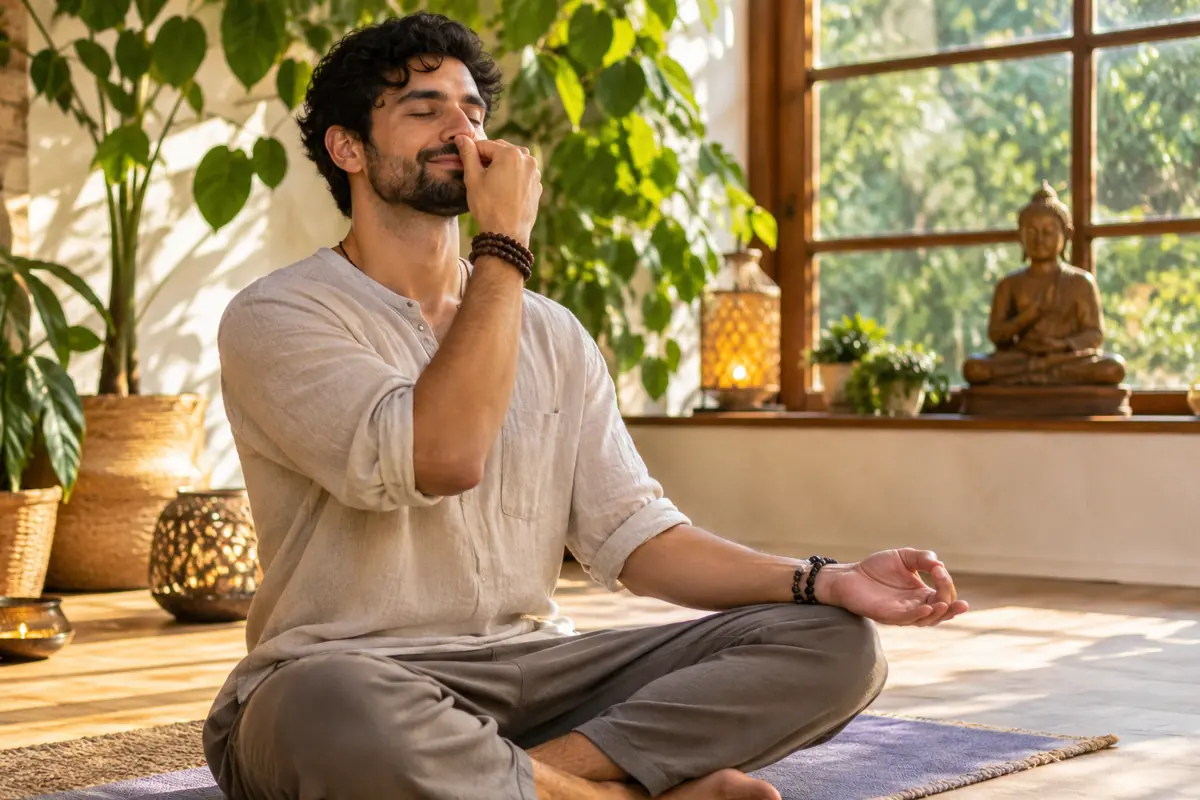
Alternate
Alternate-nostril breathing
Humming
Bee-breath, a soft hum on the exhale
Long
exhale
Breathing out longer than in
A teacher shows each practice in person, and adjusts it to you.
Start with your doctor
Please have a check-up if you have heart, blood pressure, lung, sinus or other medical conditions, or are pregnant, and ask whether breathing practices are suitable. Some stronger practices, such as breath holding or rapid breathing, are not suitable for everyone, and a good teacher offers only gentle versions where needed. Continue all prescribed medicines.
How Ayurveda looks at it
Ayurveda holds that prana, the vital breath, supports mind and body, and that a calm breath makes for a calm mind. Pranayama is therefore woven into the daily routine alongside oil therapies, light food and early sleep. The combination is said to settle the nervous system, and many guests experience it as profoundly restful.
What a supportive programme may include
- A consultation covering stress, sleep, digestion and health.
- Daily pranayama sessions with a trained teacher.
- Gentle yoga postures, relaxation and meditation.
- Warm herbal oil massage and relaxation therapies.
- Light, warm, nourishing food at regular times.
- A screen-free evening and early sleep.
Learning the practices
Teachers usually begin with simple belly breathing, noticing the natural rhythm, then lengthening the exhale. Alternate-nostril breathing and humming breath follow, always at a comfortable pace and never to the point of strain. Practices are short at first, and increased gradually. You should always feel calmer and clearer, and never dizzy, tense or short of breath.
Pranayama programmes in India
India offers many pranayama programmes, from city studios to quiet retreats by rivers and in the hills, some within Ayurvedic centres. Ask about the teachers' training and experience, group size, daily schedule, how practices are adapted to health conditions, and how the programme combines with Ayurvedic care. For international wellness travellers, English-speaking teachers and clear written guidance are especially helpful.
Breath and stress together
Breathing practices work best alongside other supports: regular sleep, good food, movement, nature, and time away from screens. A residential stay lets all of these come together, so that the calm of the breath is reinforced by the calm of the day. Many guests find they sleep better and think more clearly by the end of the first week.
A day at a residential centre
| Time | Typical activity |
|---|---|
| Early morning | Warm water, pranayama and gentle stretches |
| Morning | Warm oil therapy |
| Late morning | Yoga or a walk |
| Midday | Light, nourishing main meal and rest |
| Afternoon | Relaxation, meditation, quiet time |
| Evening | Short breathing session, light supper, early sleep |
Practising at home
Choose a quiet time, perhaps early in the morning or before bed, and begin with five to ten minutes of slow belly breathing. Add other practices as your teacher advises. Little and often beats long and rare. Many people also use a few slow breaths during the day, before a meeting or a difficult conversation, as a way to reset.
Taking it home
- Keep a daily practice, even five minutes.
- Use only the practices your teacher showed you.
- Keep a regular bedtime and a calm evening.
- Combine with a short walk and daylight.
- Follow up with your doctor and share the centre's summary.
Setting honest expectations
Calm builds slowly, and some people feel it within days while others need weeks. No practice can promise to treat any condition. A residential stay can offer teaching, time and a restful setting, and a practice to carry home, working alongside your doctor's care.
Working alongside your own doctors
Please keep your own doctors informed. Share your medical summary, bring your reports and keep taking whatever you have been prescribed. Please keep taking prescribed medicines, and discuss any new practice with your own doctors first. Please do not change medicines without medical advice.
Choosing a centre
Look for a qualified Ayurvedic doctor (BAMS or MD Ayurveda), registered with the appropriate board, a trained and experienced yoga or pranayama teacher, a quiet setting and a clear written plan. Be cautious of anyone who teaches strong breathing techniques to everyone, or who promises to cure anxiety or other conditions.
Planning the journey
Apply for your e-Medical visa on India's official portal, usually with a hospital letter, a few weeks before travel. It is valid for 60 days from first arrival, allows three entries and cannot be extended. Book flights after approval, arrange travel insurance and choose an arrival time that gives you a rested first day. Check the portal for current rules before you apply.
Your friend and hand-holder in finding calm: MyVaidyam
A good plan starts with a good conversation, and that is where MyVaidyam comes in. We walk with you from your very first question to the day you return home, answering every question patiently and making sure that nothing is left to chance.
- An online consultation with an Ayurvedic physician to discuss your goals.
- Help preparing your health summary.
- Guidance on choosing a reputable centre or programme with trained teachers.
- Help understanding your written plan.
- Support with your e-Medical visa documents, flights, airport pickup and accommodation.
- A warm point of contact during your stay, and follow-up after you return home.
You are welcome to reach out at any stage. We would be delighted to help you begin.