Paired with Ayurveda's warm therapies, it offers a deep and restorative kind of rest. This guide also covers retreats that bring the two together.
This guide explains what Yoga Nidra is, how a session unfolds, what it may offer, who may need to take care, how it fits within an Ayurvedic stay, what a Yoga Nidra and Ayurveda retreat may involve and how to practise at home. And throughout, it shows how MyVaidyam can walk beside you as your friend and guide.
Ayurveda is offered here as a complementary, supportive approach that works alongside your own doctor's care, never as a replacement for it. It does not promise to treat any condition.
Quick Facts - Yoga Nidra With Ayurveda for Deep Relaxation
| Topic | Summary |
|---|---|
| What it is | Guided deep relaxation, lying down |
| Session length | Typically 20 to 45 minutes |
| Needs | A quiet space, a mat or bed, a guide |
| Ayurvedic pairing | Warm oil therapy, calm routine, early sleep |
| Take care if | Trauma history, severe low mood, or a condition your doctor has flagged |
| Not | A treatment for any condition |
| Visa | e-Medical visa: 60 days from first arrival, triple entry, non-extendable |
| Your companion | MyVaidyam: planning, coordination and support before, during and after |
Rest that goes deeper
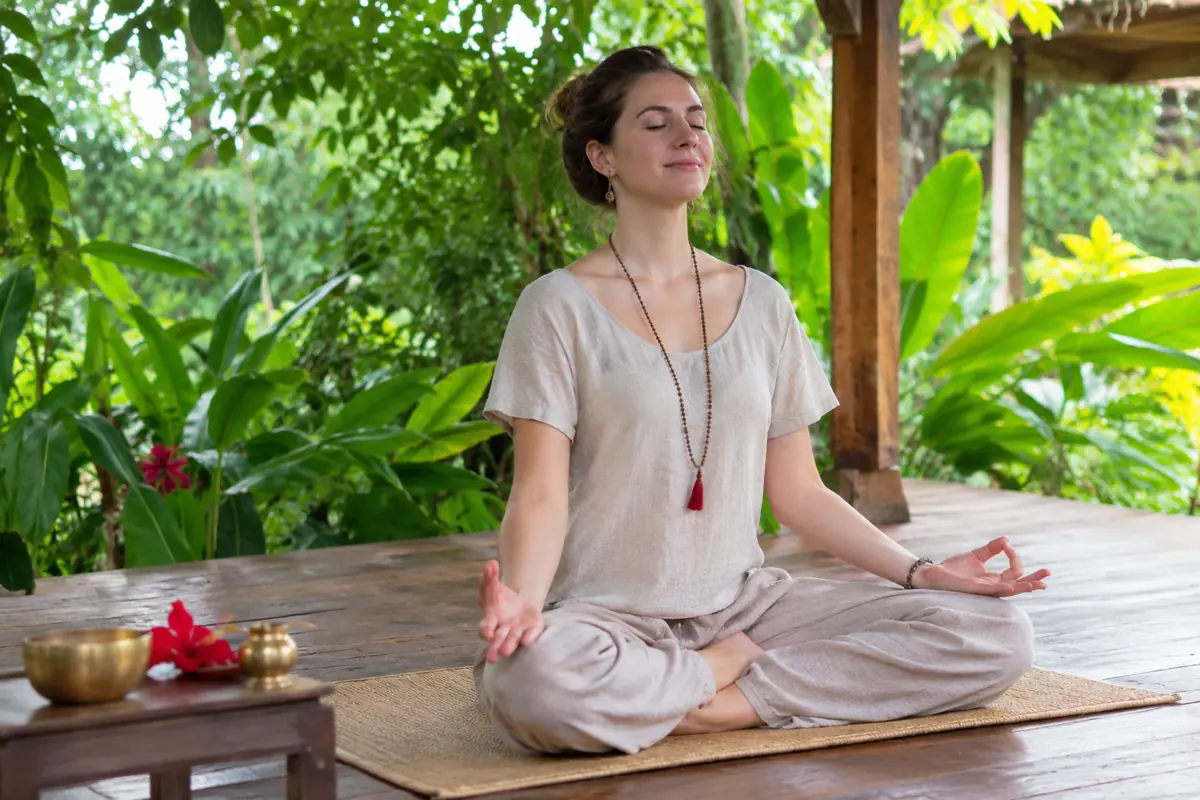
Ordinary rest often falls short, because the mind keeps working. Yoga Nidra uses a structured sequence of attention to coax the body and mind into a state between waking and sleeping, deeply relaxed yet aware. Many people find that twenty or thirty minutes leaves them as refreshed as a much longer nap.
A Yoga Nidra session, in six steps
1. Settle: lie comfortably, stillness
2. Intention: a short, quiet resolve
3. Body scan: attention moves through the body
4. Breath: following its natural rhythm
5. Imagery: calm, simple images
6. Return: slowly back, gently awake
A teacher's voice leads you through each stage, and you need only listen.
What it may offer
People often report feeling calmer, sleeping better, being less tense and having a clearer mind after practice. Research suggests that relaxation practices like this can reduce stress and improve sleep quality for some people. The experience is individual, and it is a supportive practice, not a treatment for any medical condition.
Who should take care
Yoga Nidra is gentle, but not right for everyone at every time. If you have a history of trauma, severe anxiety, low mood, psychosis or a condition that your doctor has advised caution with, please speak to your doctor and tell the teacher beforehand. A good teacher offers choices, such as keeping the eyes open or focusing on the breath, and never forces anything.
How Ayurveda fits
Ayurveda treats sleep and deep rest as pillars of health, and a calm mind as essential to healing. A residential stay offers a natural setting for Yoga Nidra: warm oil massage to relax the body beforehand, a quiet routine, light food and early nights. Many guests find that the combination deepens both the practice and their sleep.
Yoga Nidra and Ayurveda retreats
Retreats that bring the two together typically offer daily Yoga Nidra, oil therapies, gentle yoga, breathing, meditation, nourishing food and quiet time, often in a peaceful setting. Ask about the teachers' training, the daily schedule, group size, what is expected of you and how the retreat supports guests who find it hard to relax.
Preparing for a session
- Wear loose, comfortable clothing.
- Avoid a heavy meal just before.
- Use a mat or bed, with a blanket and a pillow under the knees if helpful.
- Switch off your phone.
- Let go of the idea of doing it well.
A day at a residential centre
| Time | Typical activity |
|---|---|
| Early morning | Warm water, gentle breathing, stretches |
| Morning | Warm oil therapy |
| Late morning | Yoga, walk |
| Midday | Light main meal and rest |
| Afternoon | Yoga Nidra session, quiet time |
| Evening | Light supper, calm, early sleep |
Practising at home
Choose a quiet time, perhaps in the afternoon or before bed, and use a recorded session from a trusted teacher. Start with ten to twenty minutes, and practise several times a week. If you fall asleep, that is fine. Many people find that regular practice becomes a reliable way to unwind at the end of the day.
Taking it home
- Keep a regular practice, even ten minutes.
- Use a recording from a teacher you trust.
- Keep a calm evening routine and an early bedtime.
- Combine with breathing and a short walk.
- Follow up with your doctor and share the centre's summary.
Setting honest expectations
Deep relaxation can be subtle at first, and some people need several sessions to feel its benefit. No practice can promise to treat any condition. A residential stay can offer teaching, time and a restful setting, and a practice to take home.
Making the most of a retreat
Come with an open mind, keep expectations light and allow yourself to rest fully. Many guests find that the third or fourth session is when deep relaxation arrives, so patience is rewarded.
Working alongside your own doctors
Please keep your own doctors informed. Share your medical summary, bring your reports and keep taking whatever you have been prescribed. Please keep taking prescribed medicines, and discuss any new practice with your own doctors first. Please do not change medicines without medical advice.
Choosing a centre
Look for a qualified Ayurvedic doctor (BAMS or MD Ayurveda), registered with the appropriate board, a trained and experienced yoga teacher, a quiet setting and a clear written plan. Be cautious of anyone who promises to cure anxiety, insomnia or other conditions with relaxation alone.
Planning the journey
Apply for your e-Medical visa on India's official portal, usually with a hospital letter, a few weeks before travel. It is valid for 60 days from first arrival, allows three entries and cannot be extended. Book flights after approval, arrange travel insurance and choose an arrival time that gives you a rested first day. Check the portal for current rules before you apply.
Your friend and hand-holder in finding deep rest: MyVaidyam
A good plan starts with a good conversation, and that is where MyVaidyam comes in. We walk with you from your very first question to the day you return home, answering every question patiently and making sure that nothing is left to chance.
- An online consultation with an Ayurvedic physician to discuss your goals.
- Help preparing your health summary.
- Guidance on choosing a reputable centre or retreat with trained teachers.
- Help understanding your written plan.
- Support with your e-Medical visa documents, flights, airport pickup and accommodation.
- A warm point of contact during your stay, and follow-up after you return home.
You are welcome to reach out at any stage. We would be delighted to help you begin.