Even people who have never sat still for five minutes often find that meditation here, in a calm setting and alongside the body's relaxation, comes more easily than they expected.
This guide explains in plain language how meditation is woven into a residential Ayurveda programme: why your doctor is consulted if you have mental or physical health concerns, how meditation and Ayurveda fit together, the styles you may meet, including mindfulness, what a session feels like, programmes that integrate meditation with Ayurvedic treatment, what a residential day looks like and how to continue at home. And throughout, it shows how MyVaidyam can walk beside you as your friend and guide.
Ayurveda is offered here as a complementary, supportive approach that works alongside your own doctor's care, never as a replacement for it. It does not promise to treat any condition.
Quick Facts - Meditation During a Residential Ayurveda Program
| Topic | Summary |
|---|---|
| What it is | Training attention and calm through quiet practice |
| Session length | Typically 10 to 30 minutes, built gradually |
| Experience needed | None |
| Ayurvedic pairing | Warm therapies, light food, routine, sleep |
| Take care if | Trauma history, severe anxiety or low mood: tell your doctor and teacher |
| Not | A treatment for any condition |
| Visa | e-Medical visa: 60 days from first arrival, triple entry, non-extendable |
| Your companion | MyVaidyam: planning, coordination and support before, during and after |
Why the mind needs a retreat too
Most of us spend our days responding: to messages, to deadlines, to other people's needs. The mind rarely gets a chance to rest, and the body feels it as tension, poor sleep and fatigue. A residential programme offers the rare luxury of structured quiet, and meditation is the practice that makes the most of it.
Meditation styles you may meet
Breath focus
Follow the natural breath
Mindfulness
Notice, without judging
Mantra
Quietly repeat a sound
Guided
A voice leads the way
A good teacher explains each, and helps you find the one that suits you.
Start with your doctor
Meditation is gentle, but if you live with anxiety, depression, trauma, psychosis or other mental health conditions, please speak to your doctor first, and tell the teacher. Good teachers offer choices, such as keeping the eyes open or focusing on the body, and never force anything. Continue all prescribed medicines, and keep your own doctor informed.
How Ayurveda and meditation fit
Ayurveda treats the mind and body as one, and sees a calm mind as essential to healing. Oil therapies, regular meals, early sleep and breathing prepare the body for stillness, and meditation deepens the rest. Many guests say that the massage in the morning and the meditation in the afternoon make each other better.
What a supportive programme may include
- A consultation covering stress, sleep, mood and routine.
- Daily meditation with a trained teacher, in short sessions.
- Breathing practices and gentle yoga.
- Warm herbal oil massage and relaxation therapies.
- Light, warm, nourishing food at regular times.
- A screen-free evening and early sleep.
What a session feels like
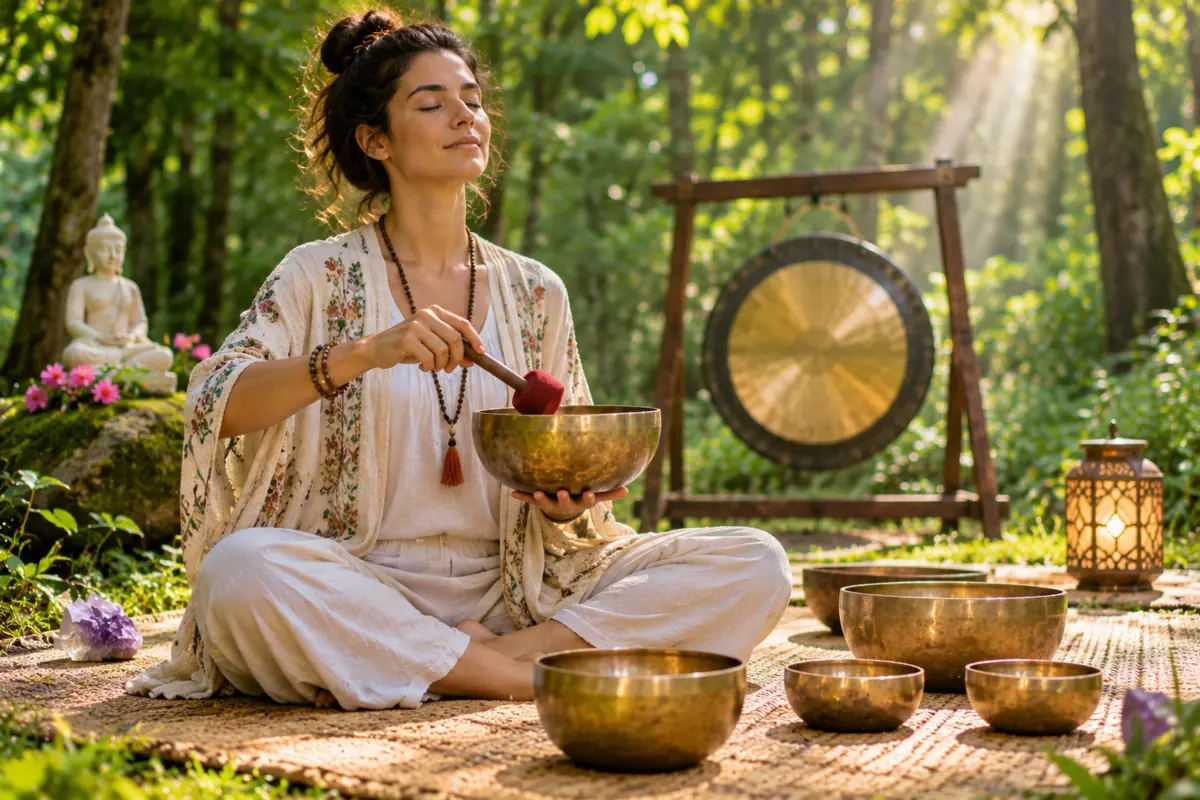
You sit comfortably, on a chair or cushion, or lie down, and the teacher guides you to settle and follow the breath. Thoughts will come, and that is entirely normal. The practice is to notice them kindly and return to the breath. Early sessions may be only ten minutes, and many guests describe a pleasant sense of heaviness, quiet and clarity afterwards.
Mindfulness programmes with Ayurveda
Some centres offer mindfulness, which is the practice of paying attention to the present moment, such as in eating, walking, breathing and listening. Combined with Ayurveda's attention to routine and food, it can turn ordinary activities into gentle practice. Mindful meals, slow walks and attentive massage are common features, and many guests carry them home easily.
Meditation programmes integrated with treatment
When choosing a programme that combines meditation and Ayurvedic treatment, ask how the two are scheduled, who teaches, what training they have, how large the groups are, what happens if you find it difficult and whether the physician and teacher communicate. A well-integrated programme feels like a single, coherent day, not two programmes side by side.
Practising at home
Choose a regular time, perhaps early morning or before bed, and sit for ten minutes with a recording or on your own. Little and often matters more than long and rare. A quiet corner, a cushion and a phone on silent are enough. If your mind wanders constantly, that is not failure; noticing and returning is the practice itself, and each return strengthens it.
A day at a residential centre
| Time | Typical activity |
|---|---|
| Early morning | Warm water, breathing, short meditation |
| Morning | Warm oil therapy |
| Late morning | Yoga or a walk |
| Midday | Light, nourishing main meal and rest |
| Afternoon | Guided meditation or mindfulness |
| Evening | Light supper, quiet, early sleep |
Taking it home
- Keep a daily practice, even five minutes.
- Keep a regular bedtime and a screen-free hour.
- Combine with a short walk in daylight.
- Eat one meal a day mindfully.
- Follow up with your doctor and share the centre's summary.
Setting honest expectations
Calm builds slowly, and some guests find meditation easy within days while others need weeks. No practice can promise to treat any condition. A residential stay can offer teaching, time and a restful setting, and a practice to carry home, working alongside your doctor's care.
Working alongside your own doctors
Please keep your own doctors informed. Share your medical summary, bring your reports and keep taking whatever you have been prescribed. Please keep taking prescribed medicines, and discuss any new practice with your own doctors first. Please do not change medicines without medical advice.
Choosing a centre
Look for a qualified Ayurvedic doctor (BAMS or MD Ayurveda), registered with the appropriate board, a trained and experienced meditation teacher, a quiet setting and a clear written plan. Be cautious of anyone who promises to cure anxiety, depression or other conditions through meditation alone.
Planning the journey
Apply for your e-Medical visa on India's official portal, usually with a hospital letter, a few weeks before travel. It is valid for 60 days from first arrival, allows three entries and cannot be extended. Book flights after approval, arrange travel insurance and choose an arrival time that gives you a rested first day. Check the portal for current rules before you apply.
Your friend and hand-holder in finding calm: MyVaidyam
A good plan starts with a good conversation, and that is where MyVaidyam comes in. We walk with you from your very first question to the day you return home, answering every question patiently and making sure that nothing is left to chance.
- An online consultation with an Ayurvedic physician to discuss your goals.
- Help preparing your health summary.
- Guidance on choosing a reputable centre with trained meditation teachers.
- Help understanding your written plan.
- Support with your e-Medical visa documents, flights, airport pickup and accommodation.
- A warm point of contact during your stay, and follow-up after you return home.
You are welcome to reach out at any stage. We would be delighted to help you begin.