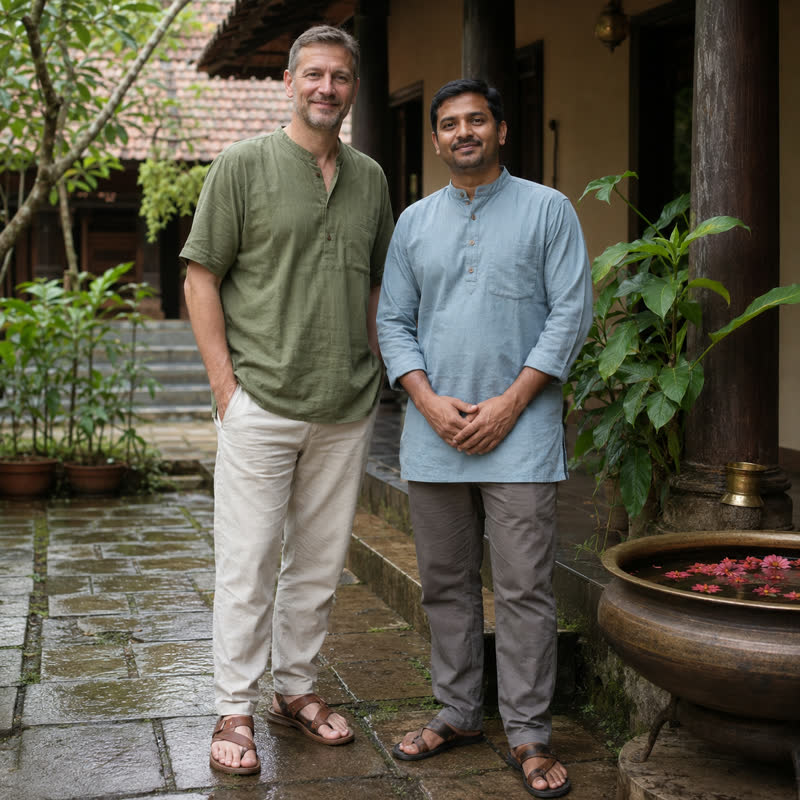
This guide explains the Ayurvedic view, what a stay typically includes and how to plan with confidence. Ayurveda is offered as a complementary, supportive approach alongside your own doctor's care, never a replacement for it.
Quick Facts - Ayurveda for Older Guests
| Topic | Summary |
|---|---|
| Short answer | Gentle supportive care may be possible; suitability depends on the person |
| Why age matters | More medicines and long-term conditions and less physical reserve call for tailored plans |
| Before anything else | Review by your own doctor, with a full medicines list and recent test results |
| Procedures needing care | Purgation, enemas, heavy sweating treatments and prolonged fasting, only after medical clearance |
| Companion | Strongly advisable; check visa arrangements for attendants |
| Medicines | Never stop prescribed medicines without your doctor |
Understanding the pace of an older guest's day
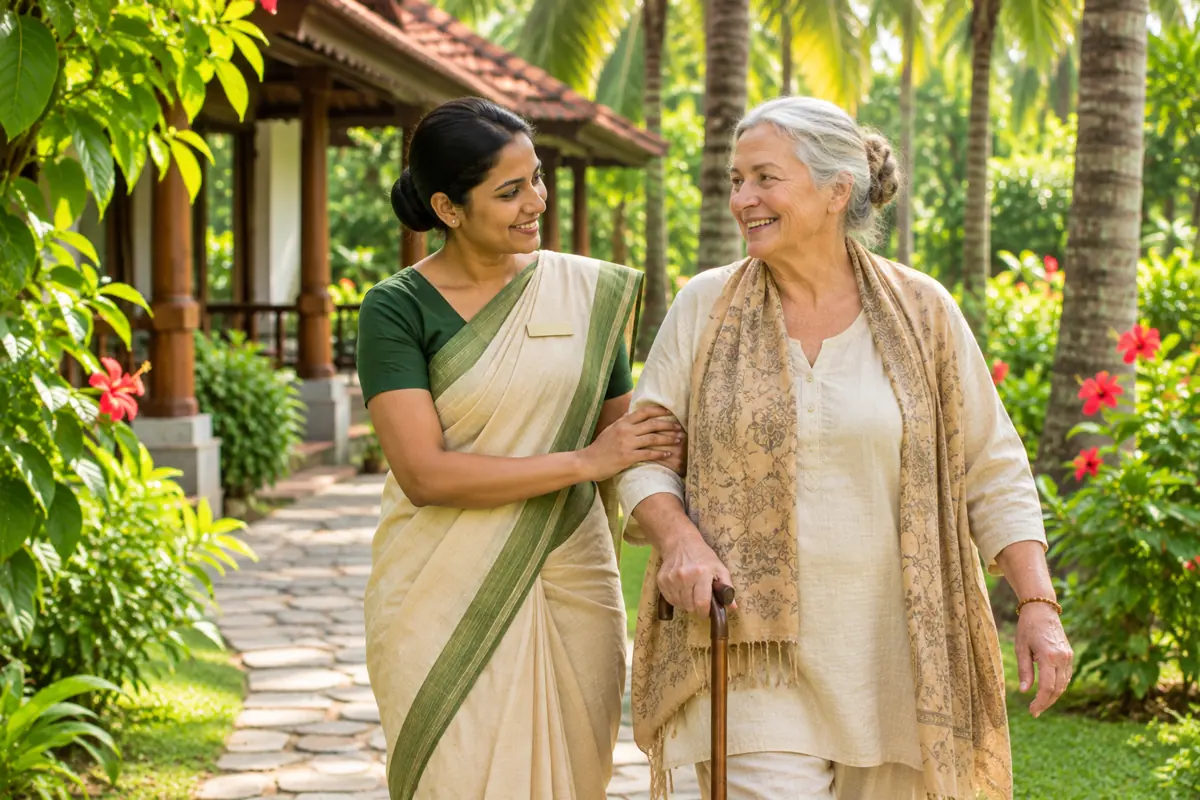
Older guests often prefer a slower rhythm with plenty of rest, shorter sessions and warm, light meals. A good centre adapts the day to you, adds breaks and allows time for conversation and reading.
Why age shapes the plan
Older guests often take several medicines, have long-term conditions and have less physical reserve, so programmes are designed to be gentler and better monitored. This is good practice rather than a limitation, and many older guests enjoy the slower pace.
The medical review that comes first
Before booking, see your own doctor with a full medicines list and recent test results, and ask whether the trip and the programme suit you. Bring their written comments to the Ayurvedic doctor, who will design the plan around them.
Gentle programmes that suit many guests
- Warm-oil massage with a light touch.
- Gentle steam adapted to comfort.
- Shirodhara for relaxation.
- Nourishing, easily digested meals.
- Gentle yoga, breathing and short walks.
Procedures that call for medical clearance
Purgation, enemas, heavy sweating treatments and prolonged fasting are considered only after medical clearance. Many older guests choose a gentler programme without them, and a good centre explains the options clearly.
Comfort, hydration and safe movement
Ask for a ground-floor room, grab rails, non-slip floors and help getting on and off therapy tables. Drink warm water as advised, rest after therapies and have someone nearby when you walk. These small arrangements make a large difference.
The journey itself
A long journey is itself a physical load, so plan a restful itinerary, request airport assistance, break the trip with a stopover if helpful and allow a quiet first day. Carry your medicines and doctor's letter in hand luggage.
A companion or attendant
A companion is strongly advisable, helping with logistics, medicines and communication. Check attendant visa arrangements and whether the centre offers shared rooms and companion meals.
Medicines and interactions
Older guests often take several medicines, so bring a complete, current list and share it with the Ayurvedic doctor. Ask for ingredient lists of any herbal medicines, and review them with your own doctor. Never stop a prescribed medicine on your own.
Questions to ask the centre
- Is there a doctor or nurse on site?
- Are rooms on the ground floor with grab rails?
- Can therapies be shortened or adapted?
- How are meals adapted for dentures, diabetes or digestion?
- Who can help with mobility and medicines?
When to postpone or stop
If you are unwell, unsteady or your doctor advises against travelling, it is wise to postpone. During a stay, tell the team if you feel unusually tired or unwell, and they will adapt the plan or pause therapies.
For family members
Help your relative prepare, travel with them if you can, share contacts and the itinerary, agree check-in times and keep the centre informed about medicines. Your involvement makes the stay calmer for everyone.
Keeping a simple diary
A small notebook is one of the most useful things to bring. Each evening, jot down how you feel, your sleep, your energy and anything you would like to ask. After a week or two the pattern often becomes clear, and you and the physician can fine-tune the plan. A few notes each evening help both your doctors. The same notes give your own doctor a helpful picture when you return.
Travelling comfortably
A little planning makes the journey smoother. Book an aisle seat so you can stand and stretch, keep your medicines and reports in your hand luggage, and choose a flight that arrives at a comfortable hour. Carry your medicines and a doctor's letter in your hand luggage, and keep your documents together. Ask the centre to arrange the transfer and a restful first day. Our guide to the attendant visa explains how a family member can travel with you.
Conversations to have before you travel
A short chat with your own doctor makes the stay smoother. Many guests ask:
- Are my medicines and plans up to date for the trip?
- How should I continue in the weeks after I return?
- Is there anything you would like the Ayurveda team to know?
- When would you like to see me after I return?
Sharing the answers with the Ayurveda physician helps the two teams work in step, and leaves you feeling confident and well supported.
Travelling with family or a companion
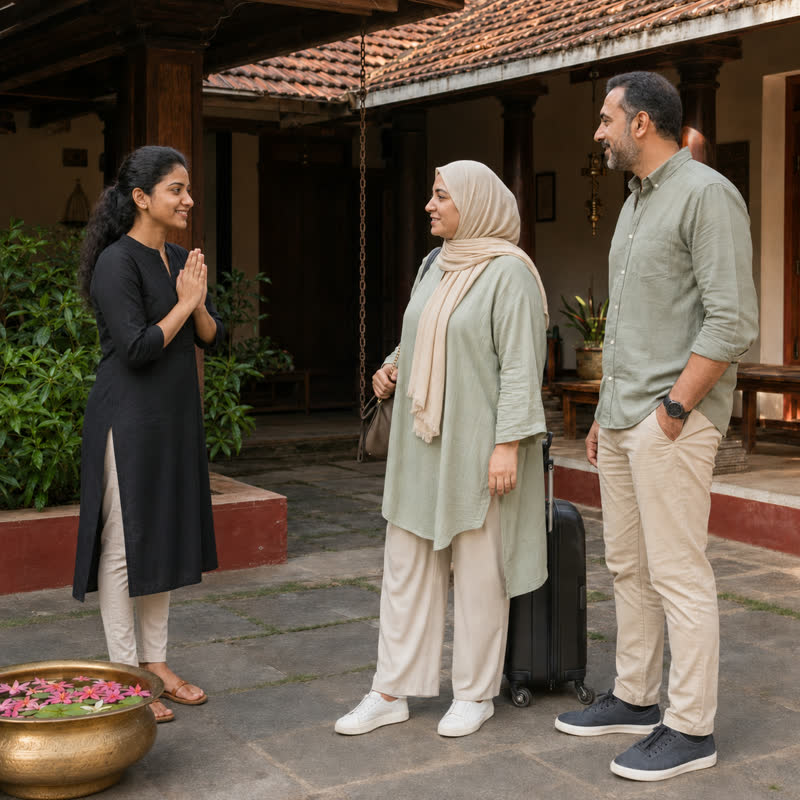
Many guests travel with a spouse, a friend or an adult child, and a companion can make the whole experience easier. Ask each centre whether companions can share your room or stay nearby, whether they can join meals, yoga and walks, and whether there is a pleasant place for them to relax while you have therapies. A companion can help with logistics, share the quiet days and keep your family informed. Our guide to the attendant visa explains the paperwork.
After you return
Many guests keep up a simple diet, an earlier bedtime and gentle daily movement for several weeks, and review their health with their own doctor. Ask the centre for a written summary of your programme, your diet and your exercises, and share it with your own doctor at your next visit. A follow-up video call with the physician a few weeks later is a good way to review how you are feeling. Our guide to continuing Ayurveda at home explains how to keep the benefits going.
Common questions
Do I keep my medicines? Yes, unless your own doctor advises otherwise. Can I ask for a written plan? Yes, and you should. Can a companion join me? Many centres allow it. How long should I stay? Your physician advises after a consultation.
Choosing a centre
Rather than looking for a ranking, compare what matters to you: a qualified Ayurveda physician, a clear assessment, a written day-by-day plan, hygiene standards, accessible rooms and good access to a hospital. Ask each centre the same questions:
- Who will be my physician, and what are their qualifications?
- Which parts of my plan have I discussed with my own doctor?
- How will you coordinate with my home doctor?
- How are herbal medicines sourced, and can I see the ingredient list?
- What does the quote include, and what is extra?
Keeping active safely
Gentle activity such as short walks, seated stretches and breathing practice keeps muscles and spirits lively. Ask the team for a routine suited to your mobility, use handrails, wear supportive footwear and rest when you need to.
Food, teeth and digestion
Tell the kitchen about dentures, swallowing difficulty, reflux or diabetes, and ask for softer, warm, easily digested meals. Small, regular portions often suit older guests well, with warm water through the day.
Mood, memory and company
New places can be tiring or disorienting for some older guests. A familiar companion, a written daily plan, regular routines and calm surroundings help, and a good centre makes time for conversation and gentle activity. Share any concerns about memory or mood with the team on arrival.
Packing for comfort
Bring supportive shoes, loose clothing, a walking aid if you use one, spare glasses, hearing aid batteries, a pill organiser, a small cushion and your own favourite tea. These small comforts help a new place feel familiar.
Preparing for your stay
Bring your medicines, doctor's letter and a companion, and tell the team about any difficulty with walking, hearing, vision or memory.
Planning your budget
Cost depends on room, length, therapies, physician time and medicines. Ask each centre for an itemised, dated quote for the same dates and inclusions, and add visa, flights, insurance and transfers. See the cost guide and verifying a doctor.
Travelling with confidence, and how MyVaidyam can help
- Share your reports and current medicines with the Ayurveda physician before you travel.
- Continue your prescribed medicines, and let your own doctor know your plans.
- Ask for ingredient lists for any herbal medicine, and choose labelled preparations.
- Plan rest after the flight so you can begin your stay comfortably.
- Your own doctor's review comes first, and a companion makes the stay easier.
MyVaidyam can arrange a free online pre-consultation, have your reports reviewed by an Ayurvedic physician and request day-by-day plans and itemised quotes from centres so you can compare them calmly. Contact MyVaidyam to book your free online consultation.
Frequently Asked Questions on Ayurveda for Older Guests
References
- NCCIH, US National Institutes of Health. Are you considering a complementary health approach?
- NCCIH, US National Institutes of Health. Ayurvedic medicine: in depth
- CDC Stacks (JAMA 2004;292(23):2868-2873). Heavy metal content of Ayurvedic herbal medicine products
- Ministry of Ayush, Government of India. Official website