Your own doctor or a travel clinic is the best source of personal advice, so use this guide to prepare your questions.
Quick Facts - Vaccinations, Health Precautions and Packing List for Ayurveda Patients
| Topic | Summary |
|---|---|
| Routine vaccines | Be up to date, per travel health agencies |
| Hepatitis A and typhoid | Commonly recommended; ask a travel clinic |
| Yellow fever | No risk in India; a certificate is required if arriving within 6 days of leaving a risk area |
| Dengue | Risk throughout; peaks in monsoon; avoid mosquito bites, including by day |
| Malaria | Risk is concentrated in specific areas; ask a travel clinic about your itinerary |
| Water and food | Boiled, bottled or filtered water; avoid ice and food washed in tap water |
| Air quality | Check local air quality if you have lung or heart conditions |
| Insurance | Travel health insurance with medical evacuation is strongly encouraged |
Visit your doctor or a travel clinic
Book an appointment four to eight weeks before you leave. Share your itinerary and health history, and ask which vaccines and precautions suit you. Some vaccines need more than one dose, which is why early planning helps.
Vaccinations to discuss
- Routine vaccines, such as tetanus, diphtheria, measles and your seasonal vaccines.
- Hepatitis A, commonly recommended for travel to India.
- Typhoid, recommended for most travellers, even on short trips.
- Hepatitis B, rabies and others depending on your plans.
A yellow fever certificate is required only if you arrive within six days of leaving a country with yellow fever risk.
Water and food
Drink boiled, bottled or filtered water, avoid ice unless you know the source and choose freshly cooked food served hot. Your centre prepares meals with care; outside the centre, eat where the food is fresh and busy.
Mosquitoes
Dengue occurs throughout India and peaks during the monsoon. Use repellent, wear light long sleeves in the evening and sleep under a net or in an air-conditioned room. Malaria risk is concentrated in particular regions, so ask your clinic about your itinerary.
Air quality and climate
Air quality varies by location and season. If you have a lung or heart condition, ask your doctor about local conditions. Kerala's coastal climate is warm and humid, so hydration and light clothing are a comfort.
Medicines and documents
Carry your usual medicines in original packaging with a doctor's note and a list of names and doses. Keep a copy of your health insurance and emergency contacts with your documents.
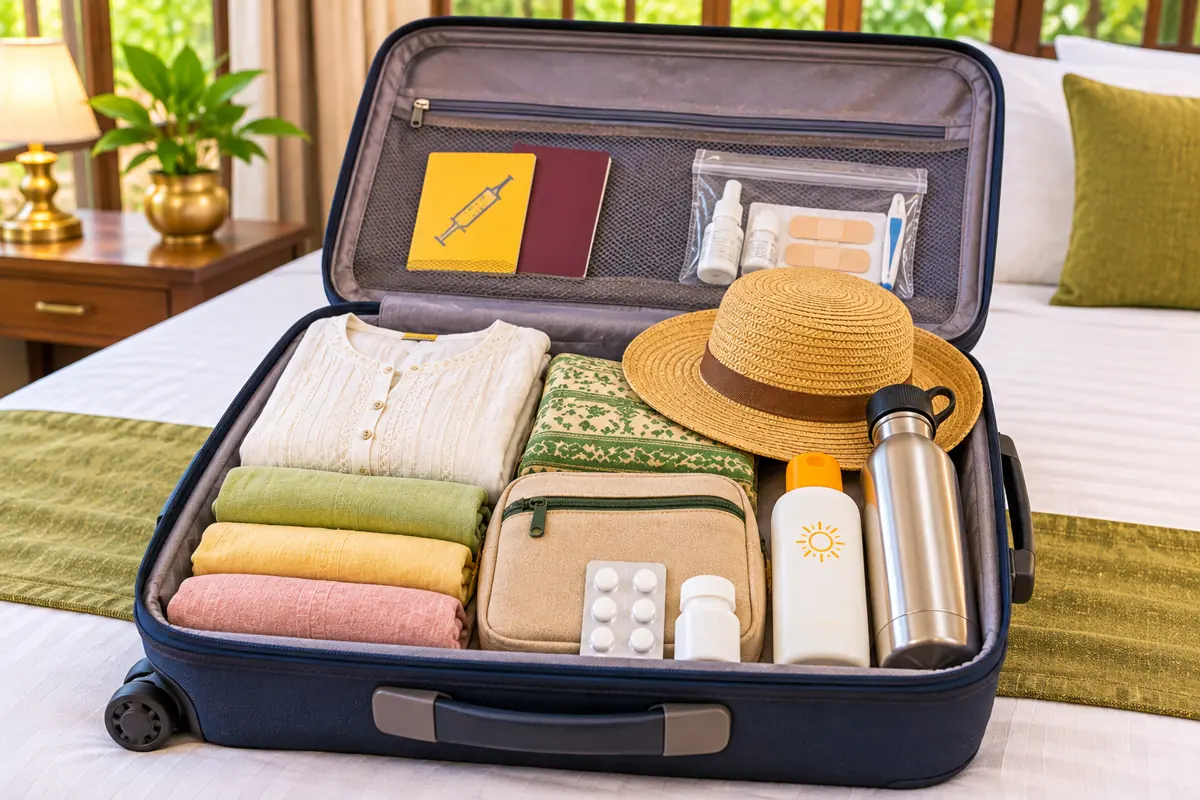
A practical packing list
- Light cotton clothes and a thin jacket.
- Comfortable sandals and walking shoes.
- Sun hat, sunscreen and sunglasses.
- Insect repellent.
- Reusable water bottle.
- Hand sanitiser and tissues.
- Universal adapter and phone charger.
- Copies of passport, visa, hospital letter and insurance.
Insurance and emergency numbers
Choose travel insurance with medical evacuation. Save India's emergency number 112 and your centre's number on your phone.
Staying hydrated
Carry a refillable bottle and sip regularly, especially in the warm weather. Your centre may recommend warm water or herbal drinks.
Sun and skin care
Use sunscreen and a hat, and choose breathable fabrics. Moisturise lightly after treatments if your doctor advises.
Your travel health kit
- Any prescribed medicines.
- Pain relief and rehydration salts.
- Plasters and antiseptic.
- A thermometer.
- Your doctor's contact.
Sleeping well
Pack an eye mask and earplugs, and keep a regular bedtime. Rest is part of the treatment.
Hand hygiene
Wash hands before meals and carry sanitiser for travel days. It is a simple habit that keeps you well.
After you return
If you feel unwell in the weeks after returning, tell your doctor you have travelled to India. It helps them advise you correctly.
A few words on pacing
Many guests are surprised by how much the unhurried pace helps. Treat the first few days as a time to settle in rather than to achieve anything, and let the routine of meals, rest and treatment do its quiet work.
Staying connected with home
A local SIM or an international plan makes it easy to message family and share photos. A short daily call home is often enough to keep loved ones reassured and lets you enjoy the rest of your time fully present.
Keeping a simple journal
A few lines each evening about your sleep, digestion, energy and mood help you notice changes, and they give your physician useful detail at your next review. They also make a lovely record of your stay.
Dressing for comfort
Light cotton clothing in soft colours, comfortable sandals and a thin shawl or jacket for air-conditioned rooms suit most programmes. Your centre can tell you whether treatment robes are provided.
Asking questions freely
Good care is a conversation. Ask your physician to explain each treatment, the reason for each medicine and what to expect. A caring doctor will welcome your curiosity and adjust the explanation to what is most helpful for you.
Rest is part of the treatment
Early nights, a quiet afternoon and time outdoors are not extras; they are part of the plan. Give yourself permission to rest without guilt, and let your body settle into the rhythm of the programme.
Choosing a comfortable room
When you discuss accommodation with your centre, mention any needs such as a quiet room, ground-floor access or a bathroom with a shower stool. Small details make a big difference to comfort during your stay.
Looking forward to home
Think ahead to how you will carry your routine home. Even two or three habits, such as warm morning water, a regular dinner time and a short evening walk, can keep the benefits going long after the trip.
Take your time
There is no prize for rushing. Good decisions about travel and treatment are made calmly, with the facts in front of you and your questions answered. If something feels unclear, pause and ask.
Small habits that help
Keep one folder for every document, write down your questions as they arise, and set reminders for key dates. These tiny habits turn a long to-do list into an easy routine.
Asking for things in writing
Whenever a detail matters, such as dates, inclusions or arrangements, ask for it in a short written message. It protects everyone, avoids misunderstandings and gives you a record to refer back to.
Involving your family
Share your plans with someone at home, including your itinerary and your centre's contact details. Many people find that talking the plan through with family brings both reassurance and useful questions.
Checking official sources
Rules, schedules and portals can change. A quick look at the relevant official website shortly before you act is the simplest way to keep your information current.
Trusting your instincts
If an arrangement feels rushed, vague or too good to be true, step back and ask more questions. Genuine centres welcome careful, informed guests.
Looking after yourself on the way
Stay hydrated, eat lightly, rest when you can and keep your usual medicines close. Arriving comfortably matters as much as arriving on time.
How MyVaidyam can support you
MyVaidyam is happy to help you prepare so that you arrive comfortable and ready.
- A packing checklist tailored to your programme.
- Guidance on questions to ask your doctor or travel clinic.
- Advice on food, water and daily routine at your centre.
- A friendly point of contact during your stay.
You are welcome to reach out at any stage with questions.