It shows itself in a handful of everyday things: who sees you, how your plan is written, how clean the rooms are, what happens if you feel unwell and how openly questions are answered.
This guide is a calm, practical checklist for international guests. It describes what good looks like in each area, offers questions you can ask before you book and on arrival, and shows how MyVaidyam can walk beside you as your friend and guide.
Ayurveda is offered here as a complementary, supportive approach that works alongside your own doctor's care, never as a replacement for it. The best centres are glad to be asked these questions, and many guests find that the answers are part of what helps them decide.
Quick Facts - International Patient Safety Checklist for a Residential Wellness Centre
| Topic | Summary |
|---|---|
| Purpose | To help you recognise a well-run, caring residential centre |
| Key areas | People, medical backup, written plan, medicines, hygiene, food, privacy, honesty |
| Best moments to check | Before booking, on arrival, during the stay and before leaving |
| Who can help | The centre's physician, and your own doctor at home |
| Standards | Government recognition and NABH accreditation are useful signs, not guarantees |
| Your right | To ask questions, take time to decide and pause a therapy |
| Visa | e-Medical visa: 60 days from first arrival, triple entry, non-extendable |
| Your companion | MyVaidyam: planning, coordination and support before, during and after |
Why a checklist helps
A checklist is not a sign of worry. It is a way of turning a large decision into small, easy questions. When you know what to look for, you can enjoy the experience with more ease, and you can tell the warm and well-run centres from those that are less so.
Most good centres take pride in their standards and welcome questions. The way a centre responds to yours is often the best guide of all.
Four moments for a quiet safety check
Before you book
From home
- Physician's qualifications
- Written plan and inclusions
- Nearest hospital named
On arrival
First day
- Doctor meets you in person
- Allergies and medicines noted
- Emergency contact shared
During your stay
Daily
- Daily physician review
- Clean therapy rooms and kitchen
- You may ask or pause any time
Before you leave
Closing
- Written summary
- Herbal preparations listed
- Follow-up arranged
You do not need to do everything at once. Work through the list as you go, and let a trusted adviser or companion help you with the details.
The people who care for you
Everything begins with the people. Look for:
- A qualified physician. An Ayurvedic doctor with a recognised degree (BAMS or MD Ayurveda), registered with the appropriate state or national board.
- A physician who sees you personally. Not only at the start, but regularly through your stay.
- Trained therapists. Therapists who have been formally trained in the therapies they perform.
- Nursing support. Someone on duty, including at night.
- Clear names and roles. You should know who is responsible for your care.
Medical backup and emergency readiness
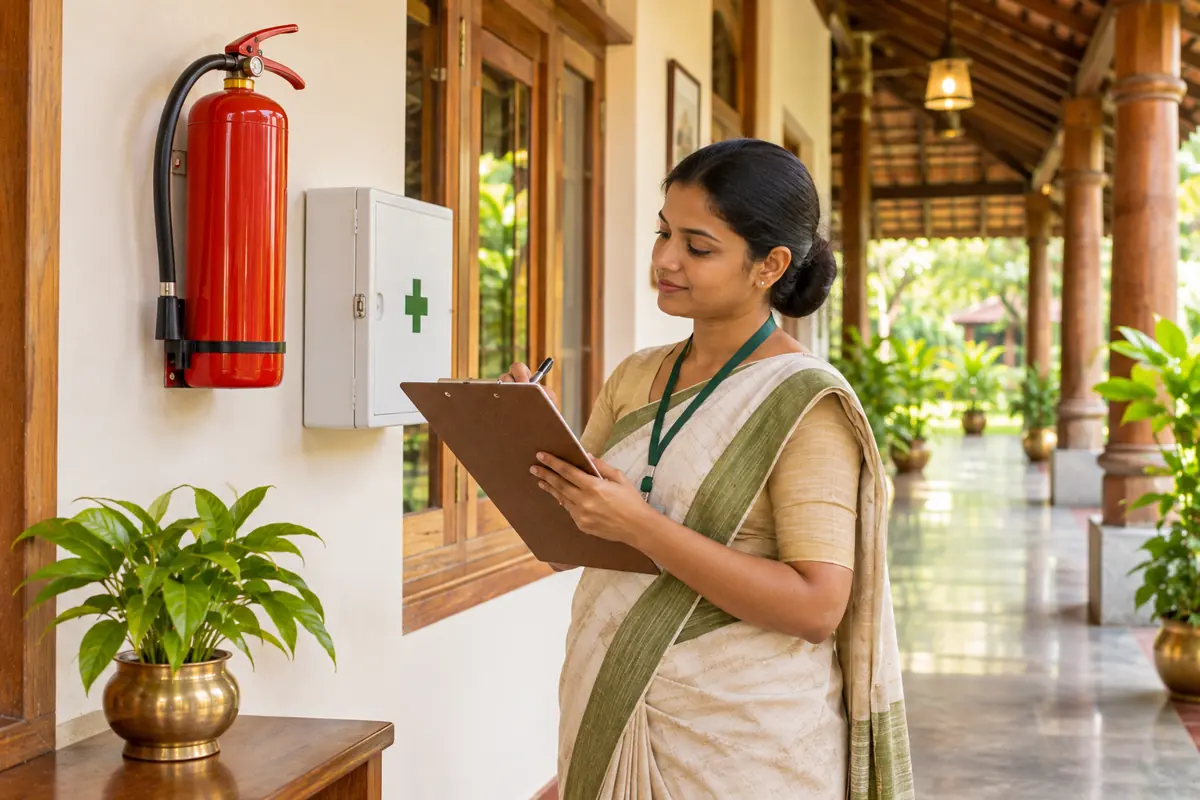
Even in the calmest setting, a good centre plans for the unexpected. Ask where the nearest hospital is, how long it takes to reach, how the centre transports a guest in need and who calls your family and your companion. Ask whether a doctor is available at night and how emergencies are handled. A centre that has thought these through will answer easily and will be happy to show you the arrangements.
A written plan and your consent
Before treatment begins, you should receive a plan in writing, explained in a language you understand. It should cover the therapies proposed, the diet, the length of the programme, what is included and what is arranged separately, and how progress will be reviewed. You should feel free to ask what each therapy involves and to say no to any part of it. Consent is not a form to be signed in a hurry. It is a conversation.
Medicines and herbal preparations
If your programme includes herbal preparations, you have every right to know what they are. Ask for a list of the names and, where possible, the manufacturer. Reputable centres use preparations from recognised makers and are comfortable explaining them. Share the list with your own doctor, particularly if you take regular medicines, and keep taking your prescribed medicines unless your own doctor advises otherwise.
Hygiene, therapy rooms and the kitchen
You will notice the cleanliness of a centre within minutes. Good signs include fresh linen for each guest, clean therapy tables, well-kept steam chambers, tidy bathrooms, safe drinking water and a kitchen that is clearly maintained. Oil on floors can be slippery, so non-slip surfaces and handrails matter, particularly for older guests.
Food and allergies
Tell the centre about allergies and dietary needs before you arrive, and again on your first day. A good kitchen will ask the right questions, adapt meals to your plan and tell you what is in each dish. If you follow a particular diet for medical or personal reasons, ask how it will be handled.
Privacy, dignity and comfort
You should feel respected at every step. This includes private consultations, appropriate draping during therapies, the option of a therapist of your own gender and careful handling of your records. A centre that respects your privacy will happily explain how it does so.
Honest communication
Warm, plain communication is one of the best signs of a safe centre. Good signs include clear answers about what a programme can and cannot do, no promises of a cure, no pressure to decide quickly or to add extras, and staff who speak a language you are comfortable with. If something is unclear, ask again. A good centre will not mind.
What a good first-day welcome includes
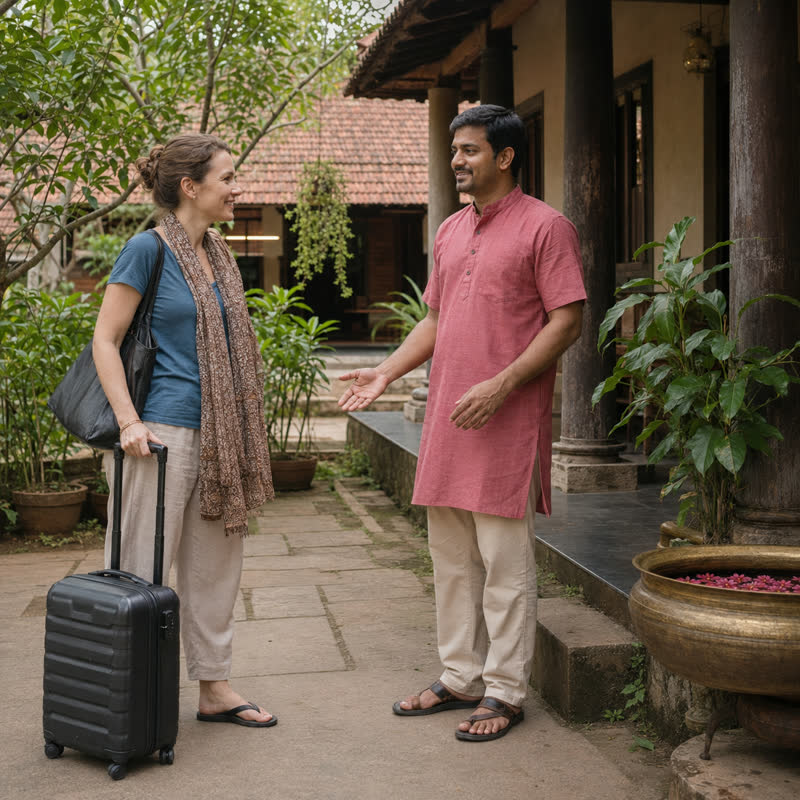
The first day tells you a great deal. A well-run centre will usually have the physician meet you in person, read your reports and confirm your medicines and allergies. They will walk you through your room, the dining arrangements and the daily schedule, and show you who to call at any hour. You will be given the emergency contact for the centre, and your companion's details will be noted. If any of this is missing, simply ask. Most centres are delighted to help.
Extra care for older guests and those with health conditions
If you are older, have a long-standing condition or need help with mobility, tell the centre in advance and ask how they will look after you. Good centres can describe room access, handrails, bathroom arrangements, nursing support and how your plan will be adjusted. Ask whether a physician reviews you daily, and share your own doctor's contact details so that the two teams can speak if needed.
Questions and good signs at a glance
Here is a short table you can take with you:
| Question to ask | A good answer sounds like |
|---|---|
| Who will be my doctor? | A named, registered Ayurvedic physician who meets me in person |
| What is my plan? | A written plan with therapies, diet, inclusions and review |
| What if I feel unwell? | A named nearby hospital and a clear emergency process |
| What herbal preparations will I take? | A written list I can share with my doctor |
| How is hygiene maintained? | Clean rooms, fresh linen, safe water and a tidy kitchen |
| Can I pause or decline a therapy? | Yes, at any time |
Working alongside your own doctors
Please keep your own doctors informed. Share your medical summary, bring your reports and keep taking whatever you have been prescribed. Ask your Ayurvedic physician to write down any herbal preparations so that you can show them at home. Please do not change medicines without medical advice.
Planning the journey
Apply for your e-Medical visa on India's official portal, usually with a hospital letter, a few weeks before travel. It is valid for 60 days from first arrival, allows three entries and cannot be extended. Book flights after approval, arrange travel insurance and choose an arrival time that gives you a rested first day. Check the portal for current rules before you apply.
Your friend and hand-holder on the way to a safe and welcoming stay:
MyVaidyam
You should not have to inspect a centre alone from thousands of miles away, and that is where MyVaidyam comes in. We walk with you from your very first question to the day you return home, answering every question patiently and making sure that nothing is left to chance.
- An online consultation with an Ayurvedic physician to discuss your goals and what to look for.
- Help preparing your health summary and a list of questions for the centre.
- Guidance on choosing a reputable centre with qualified physicians and medical backup.
- Help checking the written plan, inclusions and herbal preparation list.
- Support with your e-Medical visa documents, flights, airport pickup and accommodation.
- A warm point of contact during your stay, and follow-up after you return home.
You are welcome to reach out at any stage. We would be delighted to help you choose with confidence.