This guide explains the Ayurvedic view, what a stay typically includes and how to plan with confidence. Ayurveda is offered as a complementary, supportive approach alongside your own doctor's care, never a replacement for it.
Quick Facts - Is Ayurvedic Treatment Safe?
| Topic | Summary |
|---|---|
| Who regulates practitioners | NCISM, the National Commission for Indian System of Medicine |
| Where care matters most | Sourcing, manufacturing and testing of medicines |
| Metal-containing formulations | A specific classical category (rasashastra), not most herbal medicines |
| What supports safety | Registered doctors, accredited centres, tested and traceable medicines |
| Before you start | Disclose your medical history and current medicines |
| Alongside | Advice from your own doctor on existing conditions and medicines |
Why safety is a team effort
Safety in Ayurveda is shared between you, your doctor and the centre. The centre provides registered doctors, clean facilities and traceable medicines, your doctor plans around your history, and you provide complete information and follow the plan. When all three do their part, a stay is a calm and reassuring experience.
Is Ayurvedic treatment generally safe?
When practised by a registered doctor at a properly regulated centre, Ayurvedic treatment is generally considered safe for most people. Safety questions usually trace back to unregulated products or self-medication, which is why supervised practice matters. A good centre welcomes your questions and answers them plainly.
Who regulates Ayurvedic doctors?
The National Commission for Indian System of Medicine (NCISM) oversees registration and education standards for Ayurvedic practitioners in India. Ask your doctor for their registration number, and look for it on display at the centre.
Understanding the metals question
Ayurveda has sometimes drawn attention over reports of heavy-metal contamination in certain products. It helps to know that most Ayurvedic herbal formulations do not involve metals at all. A specific category of classical medicines, prepared through a process called rasashastra, intentionally includes processed minerals and metals, and these are the formulations where sourcing, manufacturing standards and testing matter most.
How quality is managed
Manufacturers follow Good Manufacturing Practice, state authorities license Ayush drug manufacture, and recognised pharmacopoeial standards describe the identity and quality of medicines. Accreditation schemes such as NABH's Ayush certification recognise hospitals and centres that meet defined standards. Ask your centre which of these it follows.
Testing and traceability
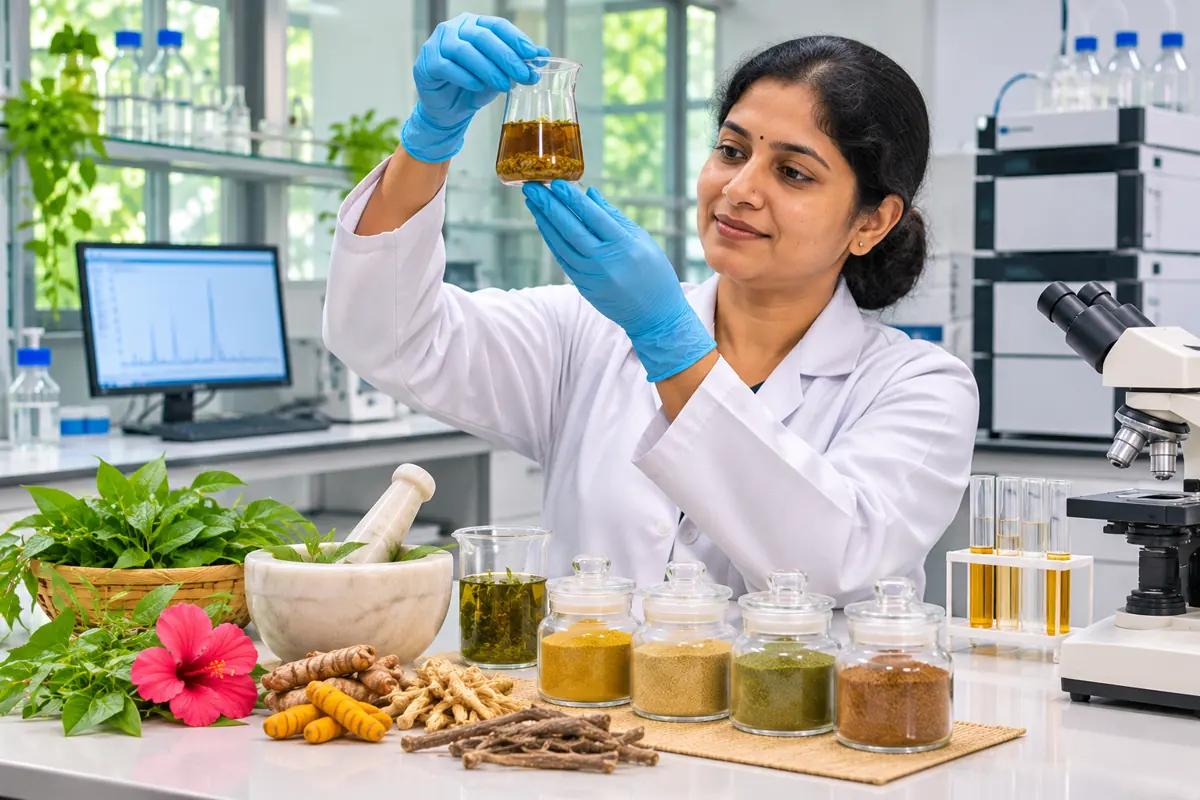
A reputable centre can tell you where its medicines are manufactured, whether that facility follows Good Manufacturing Practice, and whether formulations are tested against recognised standards. Ask for the manufacturer, the batch and the ingredient list for every medicine you receive, and keep a copy.
Registered doctors and accredited centres
Look for the doctor's name, degree and registration number on display, and the centre's registration certificate. Accreditation by schemes such as NABH's Ayush certification recognises hospitals and centres that meet defined standards. A confident centre shows these gladly.
What a safe consultation looks like
A thorough consultation covers your history, current medicines, allergies, digestion, sleep and goals, with notes kept in a record. The doctor explains the plan, asks for your consent and invites questions. Ask for a copy of your plan and, at the end, a discharge summary.
Medicines you take alongside Ayurveda
Some combinations need spacing or adjustment, so discuss every prescription, supplement and herbal product with your treating doctor before you start. Never stop or change a prescribed medicine on your own, and bring your complete list to the first consultation. Our guide to Ayurveda and your current medications covers this in detail.
Planning with extra care
Pregnancy, breastfeeding, kidney or liver conditions, heart conditions and older age call for extra care, and the doctor tailors the programme accordingly. Share these at the outset, and your plan will be shaped around them from the first day.
Hospitals nearby
Good centres have a clear plan for medical needs, including a nearby hospital and a doctor on call. Ask where the nearest hospital is, how a transfer would be arranged and whether your travel insurance covers it. Knowing this simply adds to your peace of mind.
What traveling guests tell us
Guests who prepare, ask questions and choose registered, well-run centres usually describe their experience as calm and well looked after. They value clear communication, simple routines and a team that explains every step.
Kerala, climate and the best season
Many Ayurveda centres are in Kerala, where the warm, humid climate is traditionally considered kind to the body and the monsoon months are popular for oil therapies. The drier months from October to March are comfortable for travel and sightseeing. For your treatment, ask each centre which season it recommends, and whether rooms are air-conditioned or well ventilated. Ask about the season, treatment rooms and the calm of the surroundings. Our guide to the best time to travel compares the seasons.
Keeping a simple diary
A small notebook is one of the most useful things to bring. Each evening, jot down how you feel before and after each session, your sleep and your mood. After a week or two the pattern often becomes clear, and you and the physician can fine-tune the plan. A few notes each evening help your physician adapt the plan. The same notes give your own doctor a helpful picture when you return.
Travelling comfortably
A little planning makes the journey smoother. Book an aisle seat so you can stand and stretch, keep your medicines and reports in your hand luggage, and choose a flight that arrives at a comfortable hour. Plan a restful journey, arrive a day early and keep your medicines in your hand luggage. Ask the centre to arrange the transfer and a restful first day. Our guide to the attendant visa explains how a family member can travel with you.
Conversations to have before you travel
A short chat with your own doctor makes the stay smoother. Many guests ask:
- Are my medicines and plans up to date for the programme?
- How should I continue in the weeks after I return?
- Is there anything you would like the Ayurveda team to know?
- When would you like to see me after I return?
Sharing the answers with the Ayurveda physician helps the two teams work in step, and leaves you feeling confident and well supported.
Who tends to enjoy a stay
Guests who enjoy this therapy are often people who would like a calm, supervised treatment, those who value an unhurried pace and anyone who would like practical routines to take home. If you are unsure whether a stay suits you, a free online consultation is a good first step, before you book anything.
Your first day
Most centres keep the first day deliberately quiet. After a warm welcome and a light meal, you rest, meet your physician for a full consultation and receive a written plan for the days ahead. Bring your reports and medicine list to that conversation, ask any questions and tell the team how you are feeling after the journey. Bring your reports and medicine list to this first meeting. Our guide to your first day at an Ayurveda centre explains what to expect.
Travelling with family or a companion
Many guests travel with a spouse, a friend or an adult child, and a companion can make the whole experience easier. Ask each centre whether companions can share your room or stay nearby, whether they can join meals, yoga and walks, and whether there is a pleasant place for them to relax while you have therapies. A companion can share the quiet days, and many centres welcome them. Our guide to the attendant visa explains the paperwork.
Making the most of your free time
Between therapies there is time to enjoy the setting: strolls in the garden, reading in the shade, listening to music, gentle conversation with other guests or a visit to a nearby temple or backwater. The team can suggest easy outings that fit your energy. Garden walks, reading and quiet time are popular. Many guests find that this unhurried time is part of what helps them relax and recover.
After you return
Many guests keep up a simple diet, an earlier bedtime and gentle daily movement for several weeks, and review their health with their own doctor. Ask the centre for a written summary of your programme, your diet and your exercises, and share it with your own doctor at your next visit. A follow-up video call with the physician a few weeks later is a good way to review how you are feeling. Our guide to continuing Ayurveda at home explains how to keep the benefits going.
Common questions
Do I keep my medicines? Yes, unless your doctor advises otherwise. Can I ask for a written plan? Yes. Can a companion join me? Many centres allow it. How long should I stay? Your physician advises after a consultation.
Choosing a centre
Rather than looking for a ranking, compare what matters to you: a qualified Ayurveda physician, a clear assessment, a written day-by-day plan, hygiene standards, accessible rooms and good access to a hospital. Ask each centre the same questions:
- Who will be my physician, and what are their qualifications?
- Which therapies and oils are planned for me, and why?
- How do you protect my comfort and privacy?
- How are herbal medicines sourced, and can I see the ingredient list?
- What does the quote include, and what is extra?
The role of classical texts and modern standards
Ayurveda has a long tradition of describing how medicines should be prepared, and modern India layers licensing, manufacturing standards and pharmacopoeial references on top. Together they describe the identity, purity and preparation of each formulation, and centres that follow them can usually tell you so plainly.
Questions that build confidence
- Who is my doctor, and what is their registration number?
- Where were my medicines made, and which batch are they from?
- Do you test your formulations against recognised standards?
- How do you coordinate with my own doctor?
- What is your plan if I feel unwell during the stay?
Medicines taken home
Ask for names, doses and manufacturers in writing, check airline and customs rules for carrying medicines, and keep everything in labelled original packaging. Share the list with your own doctor and pharmacist when you return.
Where to read more
The World Health Organization, the National Commission for Indian System of Medicine and NABH publish information on traditional medicine standards and accreditation. Your own doctor is also a valuable partner, so share what you learn.
A confident, informed approach
Asking about safety is a sign of a careful traveller, and a good centre welcomes it. With a registered doctor, a transparent centre, traceable medicines and an open conversation with your own doctor, you can approach your stay with real confidence.
Safety in the treatment room
Hygiene and comfort matter as much as medicines. Look for clean treatment rooms, fresh linen, trained therapists who explain each step, appropriate privacy and a doctor who reviews you daily. Do not hesitate to ask for adjustments to temperature, pressure or pace.
Travel insurance and your own doctor
Check that your travel insurance covers wellness or medical travel, and keep your insurer's contact details with you. Share your plans with your own doctor before you travel and arrange a review on your return, so that your care at home continues smoothly.
Your questions are welcome
A good centre sees questions about safety as a sign of a thoughtful guest. Write your questions in advance, ask them at booking and again at your first consultation, and keep the written answers with your records. Clear, patient answers are one of the best signs of a well-run centre.
Consent and records
Before therapies begin, the doctor explains the plan and asks for your consent. Records of your assessment, therapies and medicines are kept, and a discharge summary is provided at the end. Keep copies with your own medical records for future reference.
Preparing for your stay
Bring your complete medicine list and medical history. Tell the doctor about pregnancy, breastfeeding, kidney or liver conditions, allergies and planned surgery so that the plan can be tailored. Never change a prescribed medicine on your own.
Planning your budget
Cost depends on room, length, therapies, physician time and medicines. Ask each centre for an itemised, dated quote for the same dates and inclusions, and add visa, flights, insurance and transfers. See the cost guide and verifying a doctor.
Travelling with confidence, and how MyVaidyam can help
- Share your reports and current medicines with the Ayurveda physician before you travel.
- Continue your prescribed medicines, and let your own doctor know your plans.
- Ask for ingredient lists for any herbal medicine, and choose labelled preparations.
- Plan rest after the flight so you can begin your stay comfortably.
- Disclose your full history and medicines to your treating doctor.
MyVaidyam can arrange a free online pre-consultation, have your reports reviewed by an Ayurvedic physician and request day-by-day plans and itemised quotes from centres so you can compare them calmly. Contact MyVaidyam to book your free online consultation.