Ayurveda and physiotherapy fit together naturally in this kind of approach, each offering something the other does not.
This guide explains how the two may be combined for chronic back pain: what each contributes, how a shared plan works, what a typical day looks like, why your own doctor should assess the pain first, how to choose a centre and what to continue at home. And throughout, it shows how MyVaidyam can walk beside you as your friend and guide.
Ayurveda is offered here as a complementary, supportive approach that works alongside your own doctor's care, never as a replacement for it. It does not promise to remove pain.
Quick Facts - Ayurveda and Physiotherapy for Chronic Back Pain
| Topic | Summary |
|---|---|
| Definition | Back pain lasting beyond about three months |
| Physiotherapy | Assessment, strength, posture, movement |
| Ayurveda | Warm therapies, diet, routine, relaxation |
| Key | One shared plan |
| First step | Review by your own doctor |
| Not | A promise of pain relief |
| Visa | e-Medical visa: 60 days from first arrival, triple entry, non-extendable |
| Your companion | MyVaidyam: planning, coordination and support before, during and after |
Why combine approaches?
Chronic back pain has many contributors: muscles that are weak or tight, joints and discs that have changed, habits of posture and sitting, stress, poor sleep and fear of moving. No single therapy addresses all of these. A combination of approaches, working together, gives the best chance of helping you feel more comfortable and confident.
Warmth and movement together
Ayurveda
Warmth, relaxation, diet, rhythm
Physiotherapy
Assessment, strength, posture
In the overlap: relaxed muscles, confident movement
The aim is a single plan in which relaxation and movement support each other.
See your doctor first
Before planning a stay, have your back assessed. Ask what is likely causing the pain, whether scans are needed, which movements to avoid and whether you are fit to travel. Numbness, weakness, loss of bladder or bowel control, fever, unexplained weight loss, pain after injury or severe night pain should be seen by a doctor without delay. Bring a short letter and copies of your reports.
What physiotherapy contributes
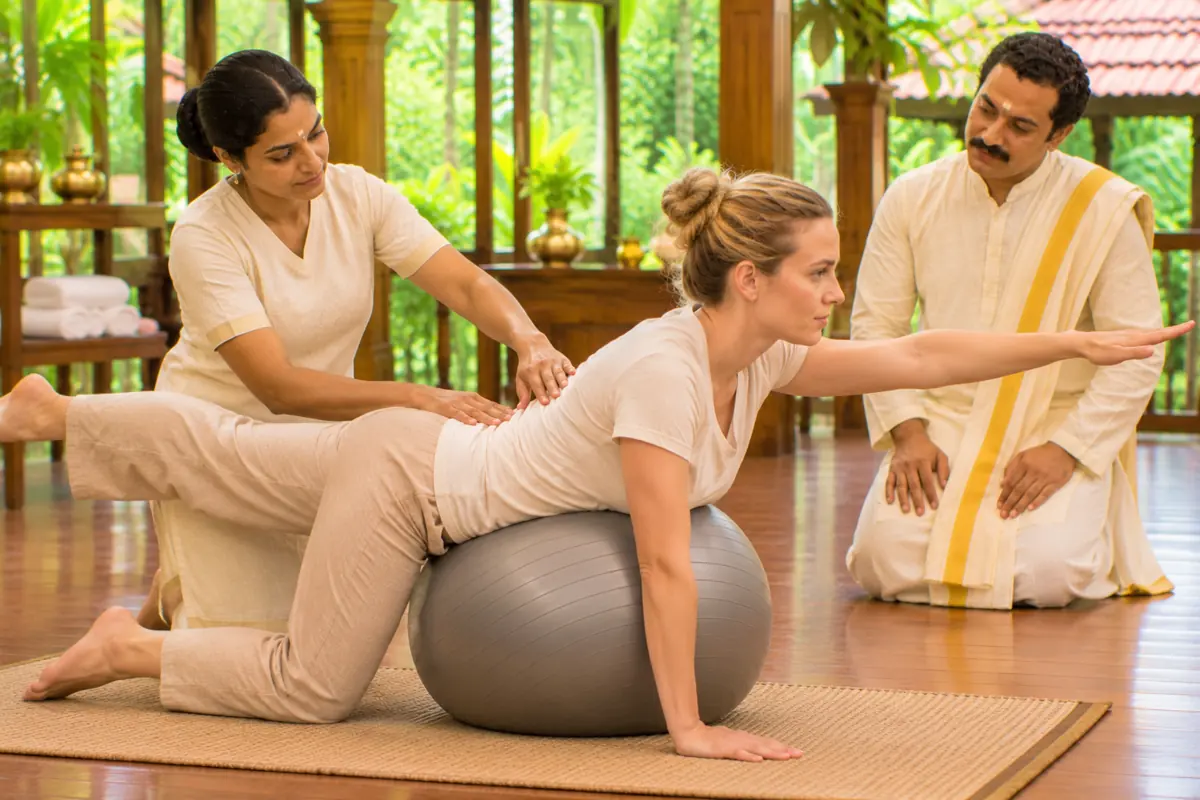
A physiotherapist assesses your posture, movement, strength and flexibility, and builds a plan. Typical elements include strengthening the deep muscles of the core and hips, mobility and stretching exercises, posture and lifting advice and graded return to activity. Importantly, physiotherapy teaches you to move confidently, which is often the key to long-term improvement.
What Ayurveda contributes
Ayurveda offers warmth and relaxation: herbal oil massage, gentle steam, local warm therapies such as kati basti, a warm, simple diet, a regular daily rhythm and attention to sleep. These are traditionally described as soothing and supportive, and many guests find that relaxed muscles make exercise feel easier and less daunting.
How the two work together
| Step | What happens | Why it helps |
|---|---|---|
| Warm therapy first | Oil massage and warmth relax tight muscles | Movement feels easier |
| Then physiotherapy | Graded exercises, posture practice | Builds strength and confidence |
| Rest and diet | Light meals, good sleep, calm | Supports energy and recovery |
| Review together | Physician and physiotherapist compare notes | Plan adapts as you respond |
A day at a residential centre
- Early: warm water, gentle stretching or yoga.
- Morning: warm therapy for the back and legs.
- Late morning: physiotherapy and posture practice.
- Midday: light, freshly cooked meal and rest.
- Afternoon: walking, relaxation or a second, lighter session.
- Evening: light supper, calm, early sleep.
Pain, fear and movement
It is common to be afraid of moving when the back hurts, and that fear can itself lead to stiffness and weakness. A good programme gently rebuilds trust in the back, with explanations, small achievable steps and encouragement. Learning that movement is safe, at the right pace, is one of the most valuable gifts of a stay.
Setting honest expectations
People respond differently, and no programme can promise freedom from pain. A thoughtful team will speak of comfort, movement and healthier habits. The most lasting improvements often come from what you continue at home, which is why a written routine and follow-up are an essential part of any programme.
Taking it home
- Keep up your strengthening and mobility exercises.
- Change position often and avoid long sitting.
- Walk daily, and increase gradually.
- Keep a regular, calm routine and sleep well.
- Follow up with your own doctor and share the centre's summary.
Sleep, stress and the back
Back pain and stress often travel together. Tension tightens muscles, and poor sleep makes pain feel larger. The calm rhythm of a residential programme, with early nights, relaxation and time away from screens, may help you feel more at ease. Breathing and gentle meditation can be learned quickly and used anywhere.
Planning around your visa
Most programmes for chronic back pain run for two to four weeks, well within the e-Medical visa, which is valid for 60 days from first arrival, with triple entry and no extension. Choose dates with your physician, and leave a few spare days at the end.
Working alongside your own doctors
Please keep your own doctors informed. Share your medical summary, bring your reports and keep taking whatever you have been prescribed. Please see your own doctor about back pain before you travel, and keep taking prescribed medicines as advised. Please do not change medicines without medical advice.
Choosing a centre
Look for a qualified Ayurvedic doctor (BAMS or MD Ayurveda), registered with the appropriate board, a qualified physiotherapist on the team, a clear written plan and a team that communicates. Be cautious of anyone who promises to cure chronic pain, offers the same package to everyone or ignores your own doctor's advice.
Planning the journey
Apply for your e-Medical visa on India's official portal, usually with a hospital letter, a few weeks before travel. It is valid for 60 days from first arrival, allows three entries and cannot be extended. Book flights after approval, arrange travel insurance and choose an arrival time that gives you a rested first day. Check the portal for current rules before you apply.
Your friend and hand-holder in finding the right combined programme:
MyVaidyam
A good plan starts with a good conversation, and that is where MyVaidyam comes in. We walk with you from your very first question to the day you return home, answering every question patiently and making sure that nothing is left to chance.
- An online consultation with an Ayurvedic physician to discuss your back and goals.
- Help preparing your health summary, scans and reports.
- Guidance on choosing a reputable centre with physiotherapy on the team.
- Help understanding your written plan.
- Support with your e-Medical visa documents, flights, airport pickup and accommodation.
- A warm point of contact during your stay, and follow-up after you return home.
You are welcome to reach out at any stage. We would be delighted to help you begin.