This guide explains what postural neck and back pain is, why it arises, how supportive Ayurvedic care approaches it with warmth, movement, routine and rest, what desk workers in particular can learn, when to see a doctor first and how to plan a stay. It also covers desk-related neck and shoulder pain. And throughout, it shows how MyVaidyam can walk beside you as your friend and guide.
Ayurveda is offered here as a complementary, supportive approach that works alongside your own doctor's care, never as a replacement for it. It does not promise to remove pain, and any persistent or unusual pain should be assessed by your own doctor.
Quick Facts - Ayurveda Support for Postural Neck and Back Pain for International Patients
| Topic | Summary |
|---|---|
| Cause | Sustained postures and repetitive use |
| Common areas | Neck, shoulders, upper and lower back |
| First step | A check with your own doctor if pain persists |
| Ayurvedic support | Warm therapies, movement, diet, routine |
| Typical length | Often two weeks |
| Not | A promise of pain relief |
| Visa | e-Medical visa: 60 days from first arrival, triple entry, non-extendable |
| Your companion | MyVaidyam: planning, coordination and support before, during and after |
What is postural pain?
Postural pain is discomfort that comes from the way we hold and use our bodies over time. Muscles held in one position for hours tire and tighten, joints get less movement than they like and the strain collects in the neck, between the shoulder blades and in the lower back. It is typically worse at the end of the day, eased by movement and rest, and it is not a sign of damage.
It is still important to have persistent pain assessed by your own doctor, particularly if it is severe, spreads into an arm or leg, comes with numbness or weakness, follows an injury or is getting steadily worse.
Four small habits for a posture-friendly day
- S
Set up
Screen at eye level, feet flat, back supported
- P
Pause
Stand and stretch every 30 to 45 minutes
- M
Move
Walk, shoulder rolls, gentle neck turns
- R
Rest
Warmth, relaxation, good sleep
These simple habits matter as much as any therapy, and they are the part you take home.
How Ayurveda approaches it
Ayurveda looks at the whole person: constitution, digestion, sleep, activity, stress and the habits of daily life, as well as the sore area. Stiffness and tightness are traditionally associated with dryness and overuse, and the response is warmth, oil, rest and a gentler rhythm. A physician examines you, hears your story and shapes a plan that suits your life and work.
Warm therapies often used
Programmes commonly offer warm herbal oil massage for the neck, shoulders and back, gentle steam and, for the neck and upper back, local warm therapies. Many guests find these deeply relaxing, and the relaxation itself helps tight muscles let go. Your physician chooses what suits you, and explains why.
Movement, stretching and strengthening
A physiotherapist or yoga teacher can show you gentle neck and shoulder mobility, upper-back stretches and exercises for the deep postural muscles. Breathing practices help release tension in the chest and shoulders. Many guests say that learning a short routine, such as five minutes every two hours, is the most useful thing they take home.
A day at a residential centre
| Time | Typical activity |
|---|---|
| Early morning | Warm water, gentle stretching or yoga |
| Morning | Warm therapy for neck, shoulders and back |
| Midday | Light meal and rest, away from screens |
| Afternoon | Physiotherapy or posture practice, a gentle walk |
| Evening | Light supper, relaxation, early sleep |
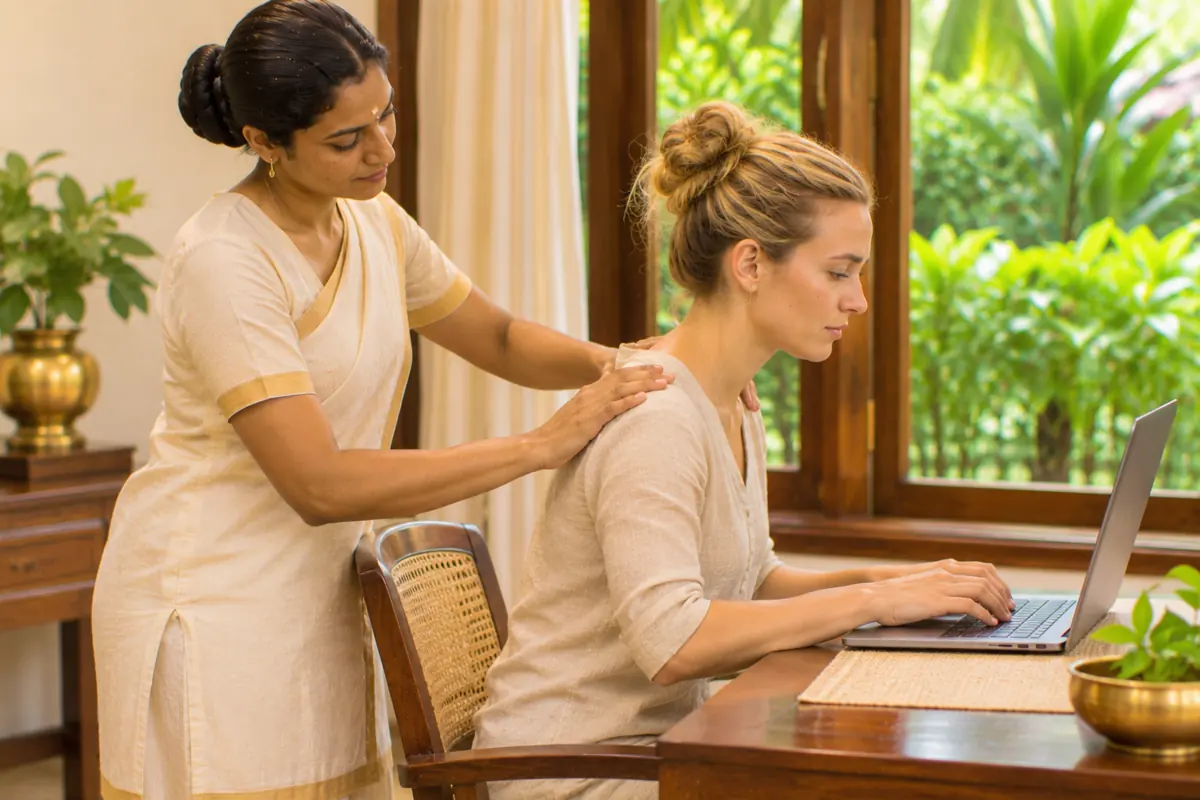
Taking it back to the desk
- Raise your screen to eye level and sit back in your chair.
- Set a timer to stand and stretch every 30 to 45 minutes.
- Keep your phone near eye level.
- Do a few shoulder rolls and gentle neck turns each hour.
- Walk during breaks, and take lunch away from the desk.
- Keep a warm, regular evening routine and sleep well.
Stress, sleep and tight shoulders
Tension gathers in the shoulders and neck when we are tired or worried, and poor sleep makes muscles feel tighter the next day. The calm rhythm of a residential programme, with early nights, relaxation and time away from screens, often brings real relief from this cycle.
Working alongside your own doctors
Please keep your own doctors informed. Share your medical summary, bring your reports and keep taking whatever you have been prescribed. Please see your own doctor about persistent neck or back pain before you travel, and keep taking prescribed medicines as advised. Please do not change medicines without medical advice.
Choosing a centre
Look for a qualified Ayurvedic doctor (BAMS or MD Ayurveda), registered with the appropriate board, a physiotherapist or yoga teacher on the team, trained therapists and a clear written plan. Be cautious of anyone who promises to cure pain quickly or ignores your own doctor's advice.
Planning the journey
Apply for your e-Medical visa on India's official portal, usually with a hospital letter, a few weeks before travel. It is valid for 60 days from first arrival, allows three entries and cannot be extended. Book flights after approval, arrange travel insurance and choose an arrival time that gives you a rested first day. Check the portal for current rules before you apply.
Your friend and hand-holder in finding the right programme: MyVaidyam
A good plan starts with a good conversation, and that is where MyVaidyam comes in. We walk with you from your very first question to the day you return home, answering every question patiently and making sure that nothing is left to chance.
- An online consultation with an Ayurvedic physician to discuss your pain, work and goals.
- Help preparing your health summary and reports.
- Guidance on choosing a reputable centre with physiotherapy and yoga.
- Help understanding your written plan.
- Support with your e-Medical visa documents, flights, airport pickup and accommodation.
- A warm point of contact during your stay, and follow-up after you return home.
You are welcome to reach out at any stage. We would be delighted to help you begin.