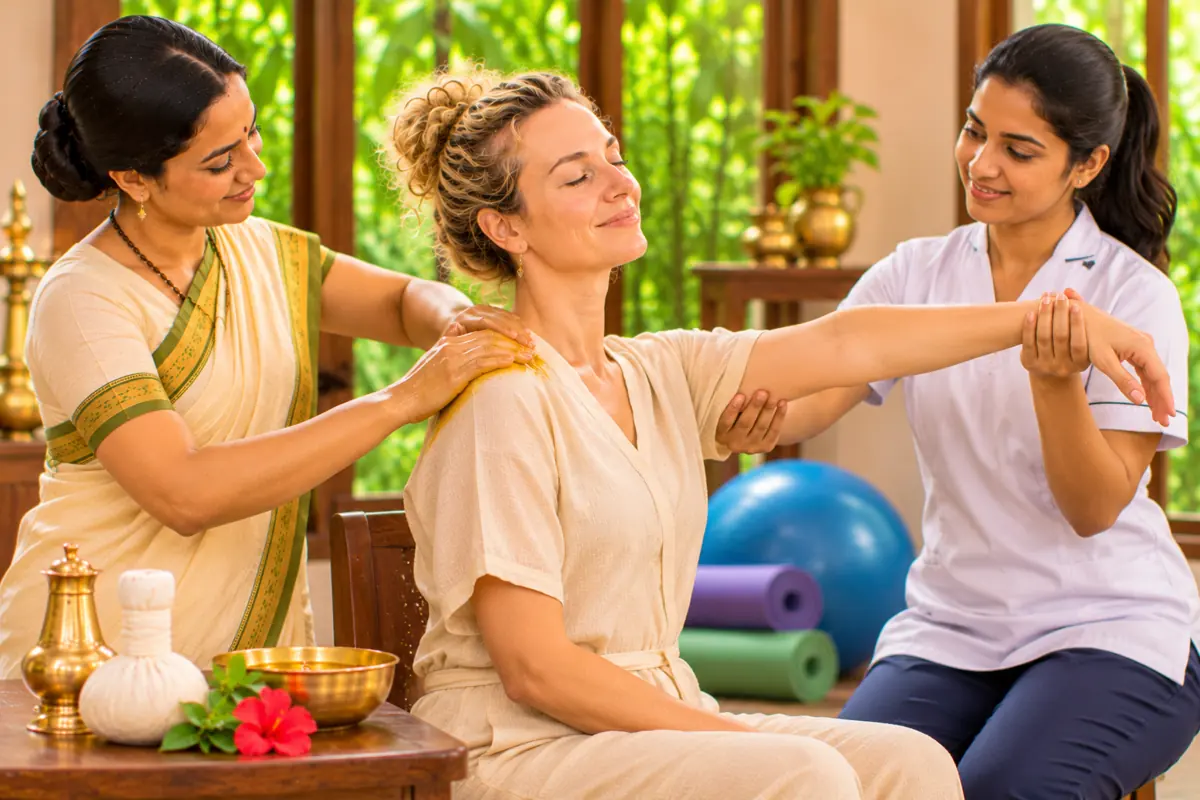
When the two are brought together thoughtfully, many guests find that each supports the other: relaxed tissues are easier to move, and regular movement keeps the benefit of the warmth alive.
This guide explains how Ayurveda and physiotherapy may be combined for chronic joint problems, what a combined plan looks like, how the two teams work together, what to ask, and how to continue at home. And throughout, it shows how MyVaidyam can walk beside you as your friend and guide.
Ayurveda is offered here as a complementary, supportive approach that works alongside your own doctor's care, never as a replacement for it. It does not promise to reverse joint conditions.
Quick Facts - Ayurveda and Physiotherapy for Chronic Joint Problems
| Topic | Summary |
|---|---|
| Combination | Ayurvedic therapies plus physiotherapy |
| Ayurveda offers | Warm oil therapies, diet, routine |
| Physiotherapy offers | Assessment, exercise, movement guidance |
| Key | The two teams share one plan |
| First | Your own doctors' diagnosis |
| Not | A promise of cure or reversal |
| Visa | e-Medical visa: 60 days from first arrival, triple entry, non-extendable |
| Your companion | MyVaidyam: planning, coordination and support before, during and after |
Two ways of helping
Physiotherapy looks closely at how your joints and muscles move, and builds strength and flexibility through exercise. Ayurveda considers the whole person, offering warmth, oil therapies, diet and a restful routine. Each has something the other does not, and together they form a broad, gentle approach to long-standing joint problems.
Two approaches, one set of joints
Ayurveda
Warmth, oil, diet, routine
Physiotherapy
Assessment, strength, movement
In the overlap: relaxed joints that move more easily
The aim is a single, joined-up plan, not two separate programmes running in parallel.
How they may work together
| Step | What happens | Why it helps |
|---|---|---|
| Warm therapy first | Oil massage and warmth relax stiff tissues | Movement feels easier afterwards |
| Movement next | Physiotherapist guides gentle, graded exercise | Builds strength and confidence |
| Rest and diet | Light meals, good sleep, calm routine | Supports energy and recovery |
| Review together | Physician and physiotherapist compare notes | Plan adjusts to how you respond |
Starting with assessment
Your first consultations cover your history, your diagnosis, your scans and reports, your medicines and what you hope for. The Ayurvedic physician and the physiotherapist each assess you, and then agree on a shared plan. If you have an established diagnosis from your own doctor, bring it, since it guides which therapies and exercises are appropriate.
The Ayurvedic side
Depending on your condition and comfort, the physician may suggest warm herbal oil massage, steam, localised warm oil therapies, gentle herbal applications, a simple diet and a calm daily routine. These are traditionally described as soothing and supportive, and they are adapted to your constitution and the state of your joints.
The physiotherapy side
A physiotherapist will observe how you stand, walk and move, then teach exercises for strength, flexibility and balance, using props or water-based exercise where helpful. They will also show you how to pace activity, protect sore joints and build up gradually. Many guests value that this part gives them something concrete to carry home.
A single, coordinated plan
The most helpful centres have a physician and physiotherapist who talk to each other. They agree on timing, so that you are not tired from therapy before an exercise session, or overloaded with both in one day. They review you together, and adjust the plan as you respond. Ask how this works in practice at the centre you are considering.
Pacing and listening to your body
Joints that have been stiff for a long time need patience. Good programmes begin gently and progress only as you are ready. If something causes pain, say so at once. Rest is part of the plan, and a quiet day is not a wasted day.
Taking it home
- Ask for a written exercise routine, with pictures if possible.
- Continue the gentle warm-up habits you learned.
- Keep simple, regular, freshly cooked meals.
- Arrange follow-up with your own physiotherapist and doctors.
- Share the centre's summary with them.
Which joints and conditions
Combined programmes are commonly considered for long-standing knee, hip, shoulder, hand and spine complaints, including conditions such as osteoarthritis. The details differ for each joint, and some conditions, such as inflammatory arthritis, need particular care and close coordination with your own specialist. Your physician will explain what is suitable in your case.
Questions to ask before you choose
- How do the physician and physiotherapist work together?
- What will my typical day look like?
- How will progress be reviewed?
- How will my own doctors be kept informed?
- What routine will I take home?
Planning around your visa
Combined programmes usually run for two to four weeks, within the e-Medical visa, which is valid for 60 days from first arrival, with triple entry and no extension. Plan dates with your physician, and leave a few spare days at the end for rest before your flight.
Why the combination feels different
Many guests say that the combination feels more complete than either approach alone. The warm, slow therapies bring a feeling of ease, while the exercises give a sense of progress and agency. Together they invite you to take an active part in your own care.
Working alongside your own doctors
Please keep your own doctors informed. Share your medical summary, bring your reports and keep taking whatever you have been prescribed. Please keep taking prescribed joint medicines and share your combined plan with your own doctors. Please do not change medicines without medical advice.
Choosing a centre that combines well
Look for a qualified Ayurvedic doctor (BAMS or MD Ayurveda), registered with the appropriate board, a qualified physiotherapist, a team that communicates and a clear written plan. Be cautious of anyone who offers a one-size-fits-all programme or promises to reverse joint damage.
Planning the journey
Apply for your e-Medical visa on India's official portal, usually with a hospital letter, a few weeks before travel. It is valid for 60 days from first arrival, allows three entries and cannot be extended. Book flights after approval, arrange travel insurance and choose an arrival time that gives you a rested first day. Check the portal for current rules before you apply.
Your friend and hand-holder in joining up your care: MyVaidyam
A joined-up plan is easier with a friend to coordinate it, and that is where MyVaidyam comes in. We walk with you from your very first question to the day you return home, answering every question patiently and making sure that nothing is left to chance.
- An online consultation with an Ayurvedic physician to discuss your joints and goals.
- Help preparing your health summary, scans and reports.
- Guidance on choosing a reputable centre with physiotherapy on the team.
- Help understanding your written plan.
- Support with your e-Medical visa documents, flights, airport pickup and accommodation.
- A warm point of contact during your stay, and follow-up after you return home.
You are welcome to reach out at any stage. We would be delighted to help you begin.