This guide explains in plain language the therapies commonly seen in joint-care programmes, what each involves, how they are chosen, which ones are used with care and how they work alongside physiotherapy and your own doctors' advice. And throughout, it shows how MyVaidyam can walk beside you as your friend and guide.
Ayurveda is offered here as a complementary, supportive approach that works alongside your own doctor's care, never as a replacement for it. It does not promise to reverse joint conditions.
Quick Facts - Which Ayurvedic Therapies Are Commonly Used in Joint-Care Programs?
| Topic | Summary |
|---|---|
| Common themes | Warmth, oil, herbs and touch |
| Chosen by | Your Ayurvedic physician |
| Often combined with | Physiotherapy, diet and rest |
| Duration | Typically two to four weeks |
| Adapted for | Your joints, comfort and constitution |
| Not | A cure, or a menu to pick from alone |
| Visa | e-Medical visa: 60 days from first arrival, triple entry, non-extendable |
| Your companion | MyVaidyam: planning, coordination and support before, during and after |
The idea behind joint-care therapies
In Ayurveda, stiff and aching joints are traditionally associated with dryness and cold, and the response is warmth, oil and nourishment. Therapies are applied to relax the tissues and make movement more comfortable, and they sit within a broader plan of diet, rest and gentle exercise. The result is meant to be soothing rather than strenuous.
Common therapies at a glance
Abhyanga
Warm herbal oil massage
Swedana
Gentle herbal steam
Patra pinda sweda
Warm herbal poultice massage
Janu basti
Warm oil held around the knee
Kati basti
Warm oil held on the lower back
Lepa
Herbal paste applications
Names vary a little between centres, and your physician will explain any that are unfamiliar.
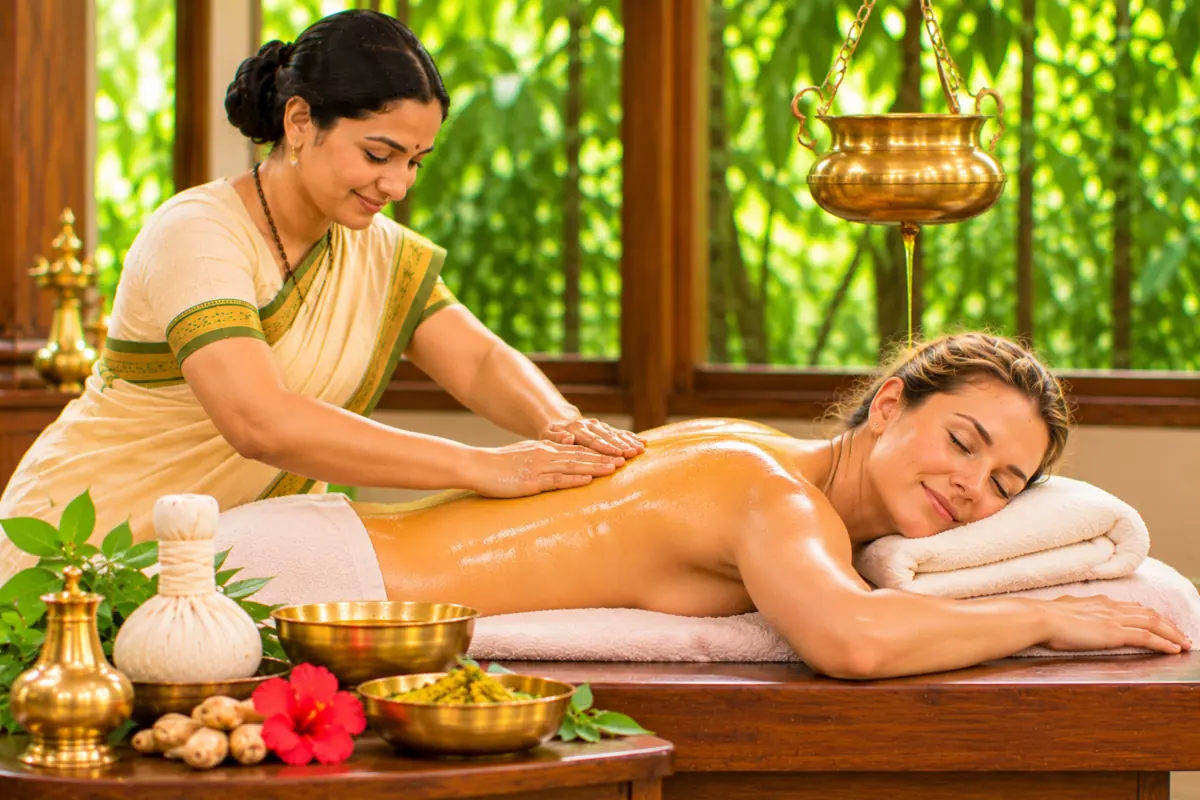
Abhyanga: warm oil massage
Abhyanga is the foundation of many programmes: a rhythmic massage with warm herbal oil, often by two therapists, followed by gentle steam or a warm bath. It is relaxing, and it prepares the body for other therapies. The oil is chosen by the physician to suit your constitution and your joints.
Swedana: herbal steam
Swedana uses gentle, herbal-scented warmth, either over the whole body or on a particular area, to relax stiff tissue. Sessions are short, comfortable and supervised, with the therapist checking regularly. It is not suitable for everyone, and your physician will decide whether and how to use it.
Warm poultice and local therapies
For particular joints, there are targeted therapies. Patra pinda sweda uses warm bundles of herbs, leaves and oil to massage the joints. Janu basti holds a pool of warm medicated oil around the knee within a ring of dough, and kati basti does the same on the lower back. Lepa is a herbal paste applied to a joint. Guests often find these particularly soothing.
Herbal medicines and diet
Alongside external therapies, physicians commonly prescribe herbal medicines and a diet of warm, simple, freshly cooked food. Please share all your current medicines with the physician, and do not stop prescribed medicines without medical advice. Herbal preparations should come from reputable sources, with clear labels.
How therapies are chosen
Your physician considers your joints, your diagnosis, your constitution, your digestion, your age and your medicines. They may begin gently and adjust as you respond. If you have inflammatory arthritis, a recent injury or other medical conditions, they will adapt carefully, and may avoid some therapies altogether.
Therapies and movement together
Therapies work best alongside movement. Many centres have a physiotherapist or yoga teacher on the team, so that warmth is followed by gentle, guided movement, and you leave with exercises for home. Ask how the two are combined at the centre you are considering.
What to ask your physician
- Why have these therapies been chosen for me?
- How many days will each last?
- Are there any therapies I should avoid?
- How will progress be checked?
- What will I continue at home?
What a day of therapy may look like
A typical day begins with warm water and gentle stretching, followed by a therapy session of an hour or so, such as oil massage with steam. A simple midday meal and rest follow, and in the afternoon there may be physiotherapy, a short walk or a second, lighter therapy. Evenings are quiet, with an early supper and sleep. The rhythm is steady, and many guests find it deeply restful.
Hygiene, privacy and comfort
Therapies should be given in clean, private rooms by trained therapists, with fresh linen and properly prepared oils. You are covered appropriately and may ask to pause or stop at any time. Skin sensitivities and allergies should be mentioned before any oil or paste is used, and a small patch test is a sensible precaution.
Setting honest expectations
Everyone's joints are different, and responses to supportive care vary. A thoughtful physician will describe comfort, relaxation and movement, and be honest about what a residential programme can and cannot do. The routines you take home are often what matter most.
Working alongside your own doctors
Please keep your own doctors informed. Share your medical summary, bring your reports and keep taking whatever you have been prescribed. Please tell your own doctors which therapies you plan to have, and keep taking prescribed joint medicines as advised. Please do not change medicines without medical advice.
Choosing a centre
Look for a qualified Ayurvedic doctor (BAMS or MD Ayurveda), registered with the appropriate board, trained therapists, clean treatment rooms and a clear written plan. Be cautious of anyone who promises to cure arthritis or who offers the same package to everyone.
Planning the journey
Apply for your e-Medical visa on India's official portal, usually with a hospital letter, a few weeks before travel. It is valid for 60 days from first arrival, allows three entries and cannot be extended. Book flights after approval, arrange travel insurance and choose an arrival time that gives you a rested first day. Check the portal for current rules before you apply.
Your friend and hand-holder in understanding your programme:
MyVaidyam
Unfamiliar names are easier with a trusted friend, and that is where MyVaidyam comes in. We walk with you from your very first question to the day you return home, answering every question patiently and making sure that nothing is left to chance.
- An online consultation with an Ayurvedic physician to discuss your joints and goals.
- Help preparing your health summary and reports.
- Guidance on choosing a reputable joint-care centre.
- Help understanding the therapies in your written plan.
- Support with your e-Medical visa documents, flights, airport pickup and accommodation.
- A warm point of contact during your stay, and follow-up after you return home.
You are welcome to reach out at any stage. We would be delighted to help you begin.